

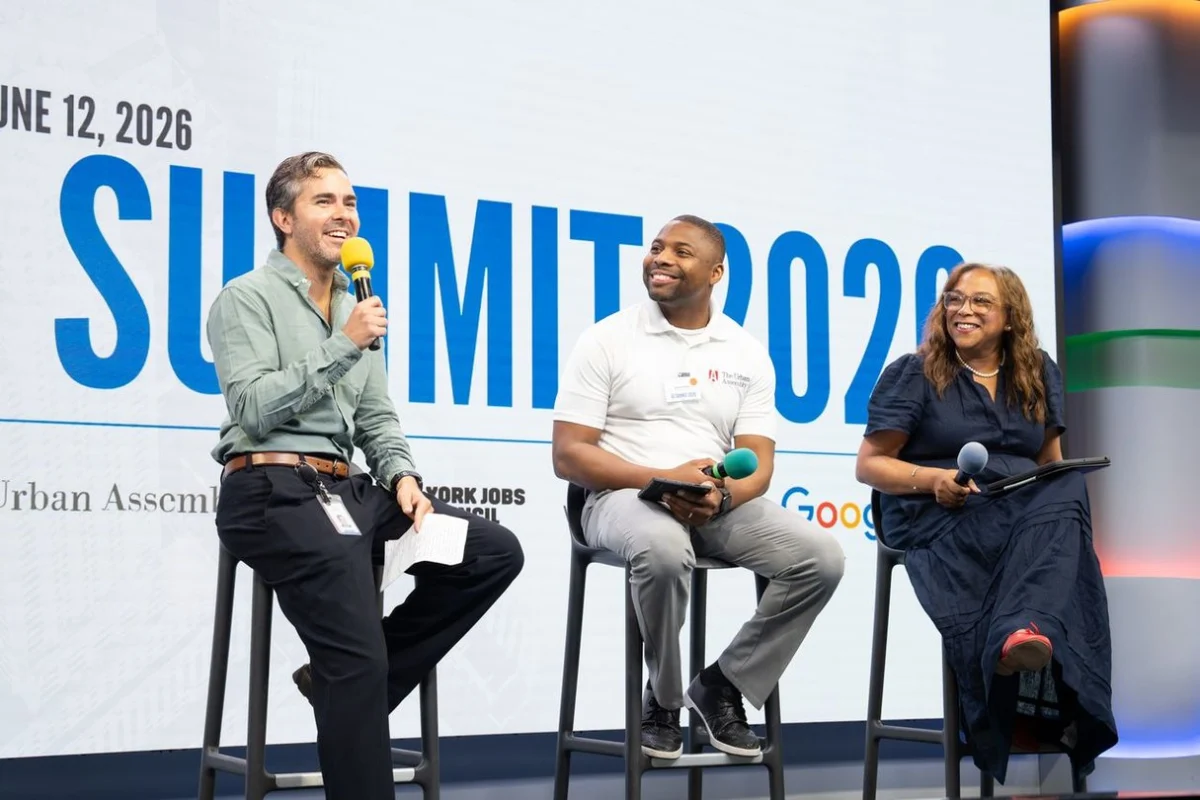
The rapid evolution of generative artificial intelligence has prompted a significant shift in the educational landscape, forcing a reevaluation of how students are prepared for a labor market in flux. To address this transition, Google’s New York City headquarters recently served as the staging ground for a high-level summit involving 150 of the city’s most influential educators, policymakers, and industry executives. Hosted in collaboration with the New York Jobs CEO Council and Urban Assembly, the event sought to bridge the widening gap between the skills currently taught in secondary and post-secondary institutions and the technical proficiencies demanded by the modern corporate environment.
The summit arrived at a critical juncture for New York City’s Department of Education, which has navigated a complex relationship with AI since the public release of advanced large language models in late 2022. While initial reactions in many global school districts leaned toward restriction, the consensus among leaders at this summit was that technological innovation must happen in direct partnership with schools rather than occurring in a vacuum. The day’s proceedings focused on three primary pillars: hands-on literacy for educators, the identification of essential "human skills" in an automated age, and the establishment of ethical frameworks for privacy and equitable access.
A Strategic Framework for Education and Industry Alignment
The partnership between Google, the New York Jobs CEO Council, and Urban Assembly represents a multi-sector approach to workforce development. The New York Jobs CEO Council, a coalition of CEOs from the city’s largest employers, aims to provide high-potential New Yorkers from underserved communities with access to career pathways. Urban Assembly, a non-profit organization that designs and manages small public schools, focuses on social-emotional learning and innovation in the classroom. By combining these perspectives with Google’s technological infrastructure, the summit aimed to create a cohesive strategy for AI integration.
The fundamental objective of the gathering was to facilitate direct knowledge sharing. Industry leaders shared insights into the specific AI-driven workflows now standard in sectors ranging from finance to software engineering. In turn, educators provided feedback on the logistical and pedagogical challenges of implementing new tools in diverse classroom settings. This dialogue is increasingly necessary as data suggests a growing disparity between student interest in AI and formal classroom instruction.
Chronology of the Summit: From Literacy to Implementation
The summit was structured to move participants from theoretical understanding to practical application. The morning sessions focused on the current state of the AI industry, featuring briefings from Google’s engineering leads on the capabilities of the latest multimodal models. These presentations provided the groundwork for understanding how AI has moved beyond simple text generation into complex data analysis and creative problem-solving.
Midday sessions transitioned into interactive workshops. One notable session, titled "Vibe Coding" and led by the non-profit aiEDU, explored the concept of natural language programming. In this framework, students use descriptive language—the "vibe" or intent of a project—to guide AI in generating code, allowing those without traditional computer science backgrounds to build functional applications. This shift democratizes technical creation, prioritizing logic and vision over syntax.
Concurrently, Google showcased its "Meet LEA" (Learning Environment Assistant) platform. LEA is designed to serve as a pedagogical aid, helping teachers personalize lesson plans and provide real-time feedback to students. Educators also explored NotebookLM, an AI-powered research and writing assistant that uses a user’s specific documents to create grounded, fact-based summaries and citations. The hands-on nature of these sessions allowed principals and teachers to move past the "hype" of AI and evaluate the tools based on their actual utility in a 40-minute class period.
The Shift Toward Human-Centric Skills
A recurring theme throughout the summit was the paradox of automation: as technical tasks become easier to automate, "human skills" become more valuable. Industry leaders from the New York Jobs CEO Council emphasized that while AI can streamline data entry, basic coding, and administrative workflows, it cannot replicate high-level human judgment.
The summit identified three core competencies that will define the successful worker of the 2030s:
- Adaptability: The ability to pivot as AI tools evolve and old workflows become obsolete.
- Collaboration: The capacity to work across diverse teams, including the ability to manage the interface between human talent and AI systems.
- Critical Judgment: The essential skill of "hallucination detection" and ethical reasoning—knowing when to trust an AI’s output and when to override it.
By focusing on these "soft skills," educators can prepare students for a world where the technical landscape may change every six months, but the need for rigorous analysis and empathetic collaboration remains constant.
Supporting Data: The Economic and Educational Imperative
The urgency of the summit is underscored by recent economic data and labor market projections. According to a 2023 report by the McKinsey Global Institute, up to 30% of hours currently worked across the US economy could be automated by 2030, a trend accelerated by generative AI. However, the report also suggests that AI could add the equivalent of $2.6 trillion to $4.4 trillion annually to the global economy, provided the workforce is sufficiently trained to utilize these tools.
In the educational sector, the "Digital Divide 2.0" is a growing concern. While 70% of students in high-income districts report having used AI for schoolwork or personal projects, that number drops significantly in Title I schools where access to high-speed internet and modern hardware is less consistent. The summit participants noted that if AI literacy is not standardized across the New York City school system, the technology could inadvertently widen the achievement gap rather than close it.
Furthermore, a survey conducted by the Walton Family Foundation found that while one-third of teachers are using AI for lesson planning or grading, only 10% have received formal training from their school districts. The Google summit served as a localized response to this national training deficit.
Official Responses and Stakeholder Perspectives
While the summit was closed to the general public, the reactions from participating leaders suggested a unified vision for the future. Representatives from Urban Assembly noted that AI integration is not merely about teaching students how to use a chatbot, but about fostering a sense of agency. By mastering AI, students from marginalized backgrounds can bypass traditional barriers to entry in the tech sector.
Google’s education leads emphasized the company’s commitment to "Responsible AI." They argued that the development of tools like NotebookLM and the Gemini models must be accompanied by robust data privacy protections, particularly when used by minors. This includes ensuring that student data is not used to train foundational models without explicit, informed consent from educational authorities.
Industry participants from the Jobs CEO Council highlighted the need for "stackable credentials." They suggested that instead of waiting for a four-year degree to be completed, students should be able to earn certifications in AI literacy and data ethics that are recognized by major New York City employers immediately upon high school graduation.
Privacy, Equity, and Ethical Considerations
The summit did not shy away from the risks associated with AI in schools. A significant portion of the closing plenary was dedicated to the "uncompromising" need for privacy. Educators raised concerns about the potential for AI to be used for surveillance or for automated grading systems to harbor algorithmic bias against students of color or English Language Learners.
The consensus reached was that AI should serve as a "co-pilot" for teachers, not a replacement. By automating routine tasks like attendance or basic grading, AI can free up educators to spend more time on one-on-one mentorship. However, the attendees agreed that human oversight must remain the final authority in any assessment of student performance.
Equitable access was also a primary focus. Participants discussed the "Empire AI" initiative, a $400 million project spearheaded by New York Governor Kathy Hochul to create a statewide AI computing center. The summit leaders explored how NYC schools could leverage such public-sector resources to ensure that every student, regardless of their zip code, has access to the high-computational power required to run advanced AI models.
Implications for the Future of New York City Schools
The long-term impact of the Google AI summit will likely be seen in upcoming curriculum revisions and professional development schedules. As a direct result of these conversations, there is a push to integrate AI literacy into the "Career Readiness and Modern Youth Apprenticeship" (CRMYA) programs already active in many NYC high schools.
The broader implication is a shift in the definition of "career ready." In the past, this meant proficiency in specific software or vocational skills. In the AI era, it means being an "expert generalist" who can prompt AI to perform specific tasks while maintaining the critical eye necessary to ensure the output is accurate, ethical, and useful.
As the summit concluded, the overarching takeaway was clear: the integration of AI into the classroom is an inevitability, but its success depends on intentional collaboration. By bringing the creators of the technology together with the educators who shape the next generation and the CEOs who will eventually hire them, New York City is attempting to build a model for how urban centers can navigate the most significant technological shift of the 21st century. The success of this initiative will be measured not by the complexity of the tools deployed, but by the readiness of NYC students to lead in an increasingly automated world.
