

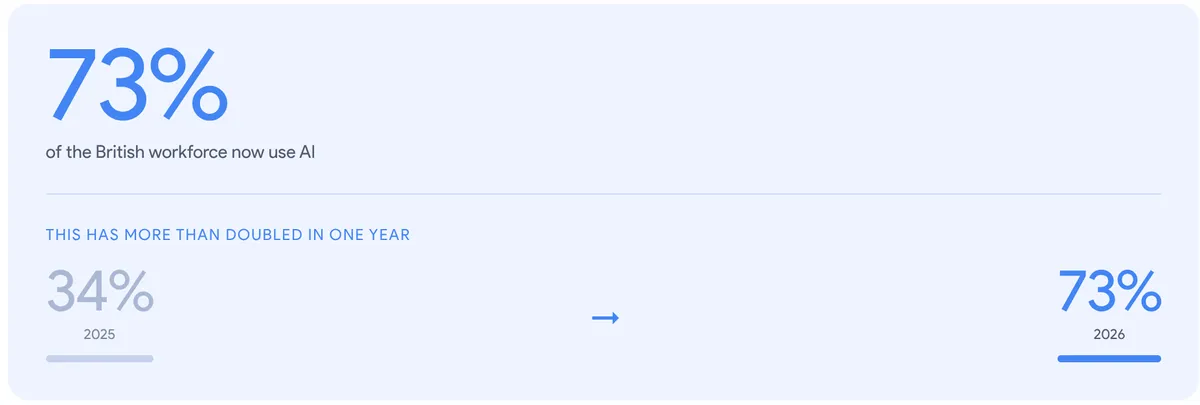
The United Kingdom is currently navigating a pivotal transition in its economic history, as new research indicates that workplace adoption of artificial intelligence (AI) has more than doubled within a single year. A comprehensive study conducted by Public First in collaboration with Google UK reveals that AI integration in the British workforce surged from 34% in 2025 to 73% by mid-2026. However, this rapid acceleration has birthed a "productivity divide," where a small elite of high-frequency users—termed "AI Trailblazers"—are reaping disproportionate professional rewards compared to the rest of the population. While the majority of the workforce has begun experimenting with these tools, only the top 15% are seeing significant gains in salary, promotion frequency, and time management, signaling a critical need for a nationwide upskilling initiative to ensure equitable economic growth.

The Emergence of the AI Productivity Divide
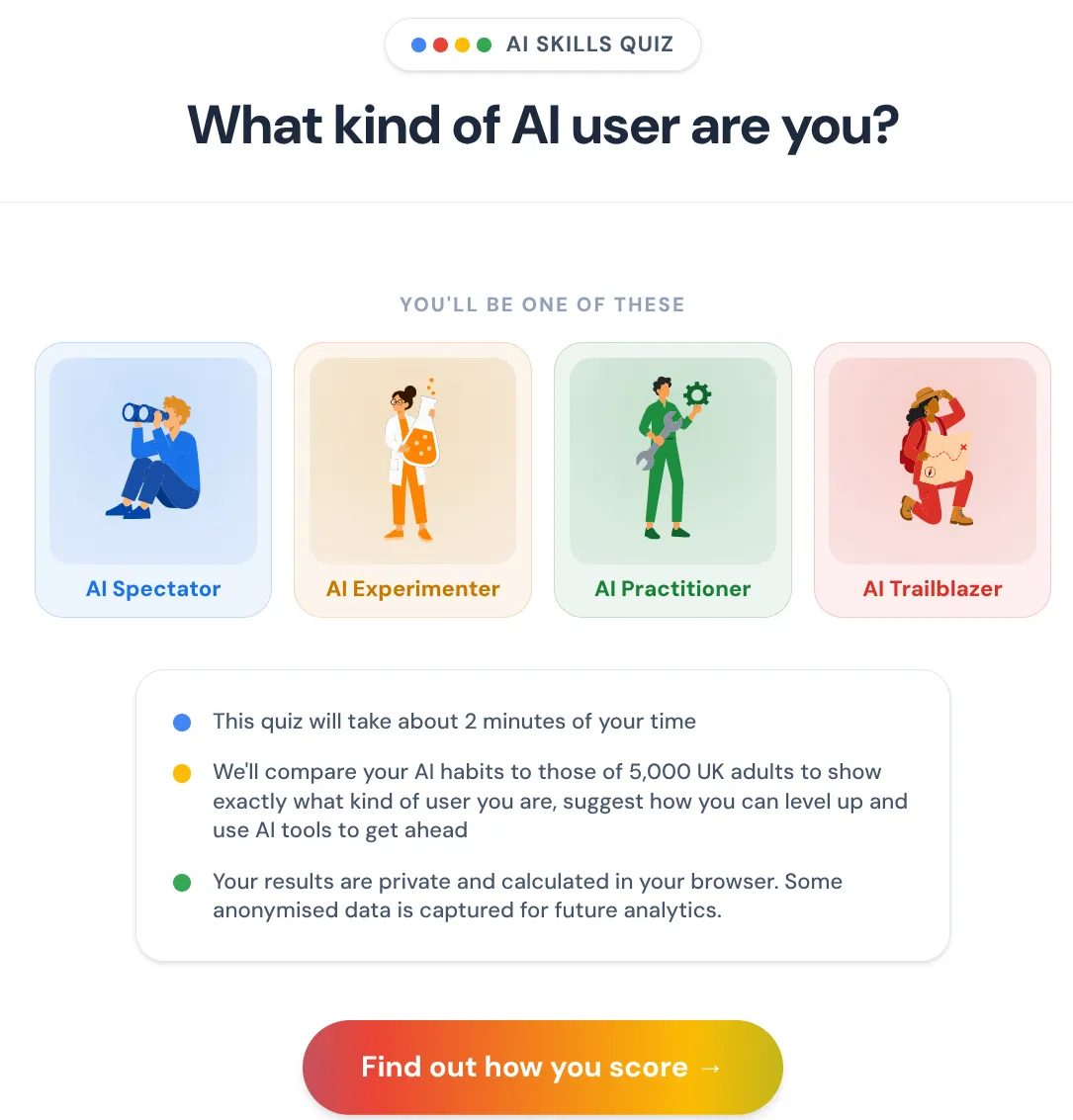
The research identifies a clear hierarchy of AI usage within the British labor market, categorizing workers into four distinct stages of adoption. At the base of this pyramid are the "AI Spectators," comprising 10% of the workforce, who have yet to integrate AI into their daily professional lives. Above them are the "AI Experimenters" (38%), who utilize AI intermittently for basic tasks such as drafting simple emails or seeking quick answers to queries. The "AI Practitioners" (37%) represent a more advanced cohort, using the technology regularly for research, problem-solving, and complex drafting.
At the apex sit the "AI Trailblazers," a group constituting 15% of the workforce. This minority uses AI as a creative and strategic partner, employing agents to automate workflows and handle sophisticated data analysis. The data suggests that these Trailblazers have established a new benchmark for modern professional efficiency, saving an average of eight hours per week—effectively gaining an extra working day through automation and enhanced processing speeds. This efficiency correlates directly with career momentum; Trailblazers are significantly more likely to report positive performance reviews and pay increases than their peers, even when controlling for variables such as age, sector, gender, and education level.

A Chronology of British AI Integration
The trajectory of AI in the UK has moved with unprecedented speed over the last three years. In 2023 and 2024, the narrative was dominated by the initial "Generative AI boom," characterized by widespread curiosity but limited practical application in corporate environments. By 2025, the adoption rate stood at 34%, as businesses began to pilot internal AI policies and provide basic access to large language models.
The leap to 73% in 2026 represents the "Normalization Phase," where AI moved from a niche technical tool to a standard workplace utility. However, the 2026 data highlights that while access is now nearly universal, proficiency remains localized. This uneven adoption curve is particularly visible across demographic and geographic lines. Younger workers in London and the South East are more likely to fall into the Trailblazer category, whereas older workers and those in regional manufacturing or traditional service hubs remain largely in the Experimenter or Practitioner stages. This disparity has prompted calls from both the private sector and government bodies to address the "literacy gap" before it hardens into a permanent structural disadvantage for certain regions or age groups.
Quantifying the Economic Impact and the Productivity Puzzle
For decades, the UK has grappled with a "productivity puzzle," where output per hour worked has lagged behind that of other G7 nations. The integration of AI tools is now viewed as the most viable solution to this long-standing economic stagnation. In 2025, Google’s suite of AI-enhanced products—including Search, Cloud, and YouTube—supported an estimated £140 billion in economic activity across the UK. This figure is roughly equivalent to the entire annual economic output of Greater Manchester.
Of this £140 billion, approximately £60 billion was generated by small and medium-sized businesses (SMBs), which have used AI to scale operations without the traditional overhead costs of expansion. Furthermore, the time-saving benefits of these tools are immense; Google’s services alone are credited with saving British workers 51 million hours per week. To put this in perspective, this time-saving is equivalent to the total weekly output of the National Health Service (NHS) workforce. If the 85% of the workforce currently trailing behind the Trailblazers could be upskilled to a similar level of proficiency, the potential boost to the UK’s Gross Domestic Product (GDP) would be transformative, potentially adding several percentage points to national growth figures by the end of the decade.

Identifying and Overcoming Barriers to Adoption
The Public First study highlights that the barriers preventing the remaining 85% of the workforce from becoming Trailblazers are not primarily technical. Contrary to popular belief, becoming a high-level AI user does not require coding skills or deep computer science knowledge. Instead, the obstacles are categorized as behavioral, cognitive, and organizational.
- Behavioral Barriers: Many workers suffer from "automation anxiety" or a lack of habit-forming routines. While they may know an AI tool can help, they often default to manual processes due to familiarity.
- Cognitive Barriers: There is a widespread misunderstanding of what AI is capable of. Many Experimenters view AI as a "better search engine" rather than a "reasoning engine" capable of complex logic and multi-step task execution.
- Organizational Barriers: In many British firms, especially in more traditional sectors, rigid hierarchies and outdated IT policies prevent employees from exploring AI agents. Without a culture of experimentation encouraged from the top down, workers remain stuck in the Practitioner phase.
To address these hurdles, Public First has launched an interactive "AI skills quiz" designed as a diagnostic tool for the British public. This tool allows individuals to benchmark their current skills against national averages and receive a personalized roadmap for advancing their AI literacy.
Official Responses and the National Upskilling Strategy
The findings have resonated within the halls of government, where the Department for Science, Innovation and Technology (DSIT) has reinforced its commitment to digital transformation. The UK Government has set an ambitious target to train 10 million workers in AI skills by 2030. This goal is being supported by a strategic partnership with Google through the "AI Works for Britain" initiative.
This program builds upon the existing Google Digital Garage, which has already provided digital skills training to over 1.2 million people in the UK over the past decade. The new initiative will focus specifically on "deeper" AI adoption—moving beyond basic prompts to the use of AI agents, data synthesis, and creative automation.
Kate Alessi, Vice President and Managing Director of Google UK & Ireland, emphasized that the challenge is no longer about providing access to technology, but about fostering the confidence to use it creatively. "The top 15% of AI users are already seeing the rewards in their paychecks and their work-life balance," Alessi noted. "The task now is to ensure those benefits are democratized across every sector and every region of the country."
Broader Implications for the Future of Work
The rise of the AI Trailblazer suggests a fundamental shift in the "skills of value" in the British economy. As AI takes over routine drafting, research, and data entry, the premium on human labor is shifting toward "AI Orchestration"—the ability to direct, audit, and integrate the output of various AI systems.

For the UK to maintain its position as a global tech hub, the focus must shift from basic digital literacy to advanced AI fluency. If the current trends continue, the "extra day" gained by Trailblazers will become the standard requirement for professional competitiveness. This has implications for labor laws, four-day workweek discussions, and the education system.
The data from 2026 serves as both a success story and a warning. While the doubling of AI adoption proves that British workers are willing to embrace new technology, the concentration of benefits among a small group suggests that the "next era of productivity" will only be fully realized if the nation can bridge the gap between those who use AI and those who master it. The roadmap to becoming a nation of AI Trailblazers is now clear, but it requires a coordinated effort between government, industry, and the individual worker to ensure that no one is left behind in the automated economy.
