


Growth is an intrinsic human desire, a fundamental drive that propels individuals and societies forward. Yet, this pursuit is rarely a smooth, untroubled journey. The undeniable reality is that significant growth, whether personal, professional, or societal, is almost invariably intertwined with discomfort and pain. This isn’t a novel observation; history is replete with examples of transformative change born from struggle, and contemporary life offers constant reminders of this enduring principle.
The Universal Nature of Growth Pains
The analogy of childhood growing pains, though often dismissed as a minor inconvenience, serves as a powerful metaphor for the broader experience of development. Children undergoing rapid physical maturation frequently experience nocturnal discomfort, a tangible manifestation of their bodies stretching and adapting. While they may not comprehend the biological processes at play, they understand the sensation of pain. This primal experience mirrors the more complex challenges encountered throughout adulthood.
For instance, individuals who have pursued rigorous physical disciplines like powerlifting, bodybuilding, or marathon running can attest to the demanding nature of such endeavors. Training regimens often push participants to their physical and mental limits, frequently resulting in nausea, extreme fatigue, persistent muscle soreness, and the specter of injury. The decision to continue, to push through these adverse sensations, is a testament to the perceived value of the growth being sought. This willingness to endure physical hardship in the pursuit of enhanced strength, endurance, or physique highlights a fundamental truth: physical development is intrinsically linked to discomfort.
However, the author posits that the most profound and challenging growth is not physical but personal. This encompasses the development of character, relationships, and spiritual understanding. Becoming a better spouse, parent, leader, friend, or person of faith often involves navigating emotional landscapes far more turbulent than any gym or racecourse.
The Crucible of Personal Relationships
The interpersonal sphere is a fertile ground for demonstrating the painful nature of growth. In marital relationships, for example, the admission of wrongdoing, encapsulated in the phrase "I’m sorry," can be exceptionally difficult. This requires a significant degree of humility, a willingness to set aside pride and acknowledge the pain caused to another. The remorse that accompanies such an apology is a form of emotional pain, a necessary component of reconciliation and relational growth.
Conversely, extending forgiveness, often articulated as "I forgive you," can be equally, if not more, challenging. This act necessitates acknowledging that one has been wounded, a vulnerability that many perceive as weakness. Yet, from a perspective emphasizing authenticity, admitting hurt is an act of courage, a prerequisite for genuine emotional healing and the deepening of trust within a relationship. Research in social psychology consistently demonstrates that strong relationships are built not on the absence of conflict, but on the effective navigation of it, which frequently involves difficult conversations and acts of reconciliation. A 2020 study published in the Journal of Social and Personal Relationships found that couples who effectively managed conflict and engaged in forgiveness reported higher levels of relationship satisfaction and longevity.
Spiritual and Character Development: A Proven Path of Hardship
The principle of painful growth extends to spiritual and character development. A close examination of religious texts, such as the Holy Scriptures, reveals a consistent pattern: individuals who achieve profound spiritual insight and closeness to the divine rarely tread an easy path. Prophets, apostles, and numerous other figures throughout history faced immense hardship, including disappointment, rejection, and suffering. Their faith, often admired from a distance, was forged in the crucible of adversity. The cost of their spiritual growth, though often overlooked, was substantial.
This historical context underscores that the pursuit of a deeper faith or a more robust moral compass is not exempt from the universal law of growth through trial. Whether one aims for improved physical health, stronger interpersonal connections, enhanced leadership capabilities, or a more profound spiritual life, there comes a pivotal moment of decision. This is when the perceived value of future gains must be weighed against the immediate pain of the present challenges. Such decisions, often requiring faith, are the bedrock of personal transformation.
The Enduring Value of Adversity in Shaping Character
Looking back on significant life achievements, whether in professional endeavors, personal relationships, or athletic pursuits, the author asserts that the answer to the question of whether the painful growth was worth it has consistently been affirmative. The individuals who have made the most significant positive impact are not those who have systematically avoided discomfort, but rather those who have allowed challenging experiences to fundamentally reshape their character.
The author’s work in the field of influence has reinforced a critical lesson: people are inherently drawn to individuals whose character has been demonstrably forged through adversity. While competence may initially capture attention, it is character that ultimately earns trust. The synergistic combination of strong character and demonstrable competence establishes individuals as credible authorities, a quality that endures and forms the foundation of lasting influence. A 2018 meta-analysis published in the Academy of Management Journal found a significant positive correlation between adverse experiences and the development of leadership qualities such as resilience, adaptability, and ethical decision-making.
The Cycle of Growth and Confidence
It is crucial to understand that embracing painful growth does not magically render subsequent developmental phases easy. Each personal milestone or achievement often necessitates another cycle of demanding effort. For the athlete, another bodybuilding competition means another season of rigorous training. For the runner, a new marathon goal demands another disciplined training regimen. In personal relationships, every significant breakthrough, particularly in marital harmony, often requires further difficult conversations and a renewed commitment to understanding and empathy.
The pain associated with growth may not disappear entirely. Instead, what transforms is one’s confidence. Through repeated experiences of navigating hardship and emerging stronger, individuals develop a deep-seated belief that growth and positive outcomes lie on the other side of discomfort. This cultivated resilience is a powerful asset, enabling individuals to face future challenges with greater fortitude.
The "Man in the Arena": A Call to Action
The enduring wisdom of Theodore Roosevelt’s iconic "Man in the Arena" speech resonates deeply with this philosophy. Roosevelt championed the individual who dares to step into the arena of life, to risk failure, endure hardship, and persist in striving towards their goals. He eloquently articulated that true defeat is not found in stumbling or falling, but in the decision to abandon the pursuit of growth because the perceived cost is too high.
The implications of this perspective are far-reaching. In organizational settings, leaders who have weathered crises and guided their teams through difficult periods often command greater respect and loyalty. In educational contexts, students who persevere through challenging coursework and emerge with a deeper understanding often develop a more profound intellectual curiosity. On a societal level, communities that have collectively overcome significant obstacles often emerge with a stronger sense of unity and purpose.
The Cost of Stagnation
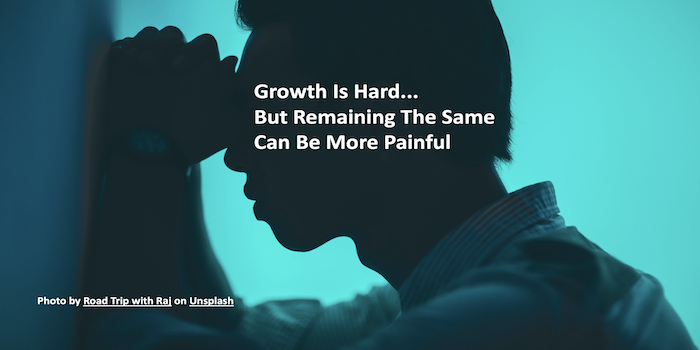
While growth is undeniably difficult and often painful, the alternative—stagnation—carries a far greater cost. A life devoid of challenge and discomfort is often a life devoid of deep learning, meaningful connection, and significant accomplishment. The potential for personal fulfillment and positive impact remains unrealized when the fear of pain overrides the drive for growth.
Therefore, the critical question for each individual to consider is: When reflecting on the tapestry of their own life, what season of painful growth are they most profoundly thankful they did not abandon? It is in these moments of perseverance through adversity that the most valuable lessons are learned, the strongest character is built, and the most enduring achievements are realized. The embrace of this uncomfortable truth is not a call to seek out suffering, but a recognition that the path to a richer, more impactful life is paved with challenges that, when met with courage and resilience, ultimately lead to invaluable growth.
