


A recent LinkedIn post, igniting a discussion that echoes a piece penned just over a month prior, began with a declarative statement: "I don’t use AI to write my content." This assertion, however, was not presented as a badge of honor, but rather as a preface to a nuanced argument: the true measure of content lies not in its author, but in the value it delivers. This perspective, while holding a kernel of truth, overlooks a critical distinction in the burgeoning landscape of artificial intelligence and content creation, particularly within the influencer and thought leadership spheres. The divergence lies between leveraging AI as a tool to augment human intellect and employing it as a surrogate for genuine thinking, a difference that carries significant weight for authenticity and influence.
The core of the debate centers on the ethical and practical implications of AI-generated content, particularly when it purports to represent an individual’s unique insights, experiences, and expertise. Imagine a scenario where a follower has consumed years of content from a particular influencer – books, online courses, videos, and social media posts – all of which have shaped their understanding and fostered a sense of connection. Upon meeting this influencer in person, a stark disconnect emerges. The articulate ideas, the profound knowledge, and the distinctive voice previously admired are absent, replaced by a persona that feels hollow and inauthentic. This disconnect, as illustrated by historical parallels, can lead to profound disappointment and a complete erosion of trust.
The Echoes of Milli Vanilli: A Cautionary Tale
The music industry provides a potent historical precedent for the perils of inauthentic representation. In the late 1980s, the pop duo Milli Vanilli achieved meteoric success, garnering awards and selling millions of albums. Their downfall came with the revelation that they had not sung a single note on their records; their vocals were provided by uncredited session singers. The music itself did not suddenly lose its appeal, but the public’s perception of the artists irrevocably shifted. The admiration was not for the music alone, but for the perceived talent and artistry of the individuals performing it. When this perception was shattered, their careers imploded. This case serves as a stark reminder that audience engagement and loyalty are often built on a foundation of perceived authenticity, a foundation that can be easily undermined by deception, whether intentional or unintentional.
This parallel suggests a modern-day equivalent emerging with AI-generated content. If established figures in fields requiring deep thought and personal conviction, such as authors and thought leaders, were to be revealed as having outsourced the very creation of their intellectual output to AI, the impact on their credibility would be immense. While the information itself might remain factually accurate or theoretically sound, the value derived from it would be fundamentally altered. The respect and trust invested in the individual would dissipate, replaced by a sense of being misled.
Authority and Authenticity: The Pillars of Influence
The science of influence, as meticulously researched and articulated by Dr. Robert Cialdini, offers critical insights into this phenomenon. One of his foundational principles is Authority. Individuals are naturally inclined to place greater trust in those who demonstrate genuine expertise and authority in a given field. However, this authority must be earned and demonstrably authentic. When AI generates an individual’s ideas, examples, narratives, and conclusions, the expertise being showcased is no longer that of the individual, but rather their proficiency in crafting effective prompts. This distinction is crucial: prompting an AI to generate content is a skill, but it is not the same as possessing and articulating original thought, lived experience, and deeply held convictions.
The implication for influencers and content creators is significant. If their public persona and the intellectual capital they project are primarily the product of AI, they risk undermining the very authority they seek to establish. This can lead to a scenario where their influence is based not on their own merit, but on their ability to curate and present AI-generated output. In essence, they become conduits for AI, rather than independent sources of knowledge and inspiration.
The Duality of AI: A Tool for Enhancement, Not Replacement
It is essential to clarify that this critique is not an indictment of artificial intelligence itself. AI tools offer remarkable capabilities for enhancing productivity, refining communication, and stimulating creative processes. Many professionals, including those who rely on their intellectual output, are integrating AI into their workflows to organize thoughts, challenge assumptions, improve clarity, and edit their work. In this capacity, AI functions as an invaluable assistant, a sophisticated collaborator that can elevate the quality and efficiency of human endeavor.
The critical juncture arises when AI transitions from being a supportive tool to a primary author. The distinction between using AI to improve your thinking and using AI to replace your thinking is paramount. The former involves leveraging AI to augment an existing cognitive process, while the latter entails delegating the core act of ideation and articulation to the machine. This substitution can lead to a dilution of originality and a loss of personal voice.
The Irreplaceable Value of Lived Experience
AI, by its very nature, cannot replicate the depth and nuance of human experience. The stories individuals live, the mistakes they make, the lessons they learn, and the convictions they develop are unique to their personal journeys. These elements are the bedrock of authentic expression and the source of genuine connection with an audience. An AI can synthesize information, generate prose, and even mimic emotional tones, but it cannot feel, experience, or evolve in the way a human does.
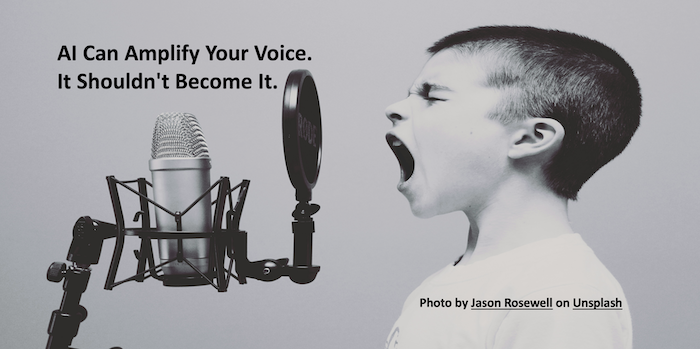
Consider the impact of AI on the development of expertise. Over years of dedicated study, practice, and reflection, individuals cultivate a deep understanding of their chosen fields. This expertise is forged through personal engagement, critical inquiry, and the integration of knowledge with lived reality. AI can assist in disseminating this expertise more effectively, perhaps by helping to structure presentations, refine written explanations, or identify potential audience questions. However, it cannot create the foundational expertise itself. Those who have invested the time and effort in building genuine knowledge and skill will be best positioned to harness AI as a powerful amplifier of their unique insights, rather than a replacement for them.
Navigating the Future of Content Creation
The trajectory of AI in content creation suggests a future where discerning audiences will increasingly value authenticity and the demonstrable imprint of human intellect. Influencers and creators who rely heavily on AI for content generation may find their influence waning as the artificiality of their output becomes apparent. Conversely, those who use AI strategically to enhance their existing expertise and amplify their unique voices are likely to thrive.
The long-term implications point towards a bifurcation in the digital content landscape. On one side will be the AI-augmented creators, who skillfully leverage technology to refine and disseminate their own original thoughts and experiences. On the other will be those who delegate the core creative process to AI, potentially producing superficially polished content that lacks the depth and authenticity required for lasting influence.
The key takeaway for content creators and consumers alike is the critical importance of transparency and intentionality. For creators, the challenge lies in defining ethical boundaries for AI usage, ensuring that technology serves as a tool for enhancement rather than a crutch for intellectual laziness. For consumers, the imperative is to cultivate critical discernment, looking beyond the surface-level polish of content to assess the underlying authenticity and the genuine expertise of the individual behind it.
The Unseen Cost of Outsourced Expertise
The economic and social implications of a widespread reliance on AI for content creation are multifaceted. From an economic standpoint, the potential for mass-produced, low-cost content could devalue human expertise and labor in creative industries. This could lead to a competitive disadvantage for individuals who invest in developing their own skills and knowledge. Socially, a landscape dominated by AI-generated narratives could foster a culture of superficial engagement, where audiences are less inclined to seek out and appreciate the nuanced perspectives and personal journeys that drive genuine human connection.
The question of "prompt engineering" as a substitute for true expertise raises further concerns. While developing effective prompts is a skill, it is fundamentally different from the years of dedication, critical thinking, and experiential learning that constitute genuine expertise. The danger lies in mistaking the ability to generate plausible-sounding text for the possession of deep knowledge and insight.
A Call for Mindful Integration
As the capabilities of AI continue to expand, the ethical considerations surrounding its use in content creation will only become more pronounced. The conversation initiated by the simple, yet profound, statement "I don’t use AI to write my content" highlights a deep-seated concern about the preservation of human intellect and the integrity of influence.
The ultimate question for every creator is not if they will use AI, but how. Will AI be a partner in the journey of intellectual exploration and communication, or will it become the sole architect of their public persona? The answer will shape not only individual careers but also the very nature of influence and expertise in the digital age.
A question to ponder: Where do you draw the line between using AI as a tool and allowing it to become the author of your expertise?
This article was enriched and rewritten based on original content provided by Brian Ahearn, Chief Influence Officer at Influence PEOPLE and faculty member at the Cialdini Institute. Mr. Ahearn’s expertise in ethical influence is grounded in his training and endorsement by Dr. Robert Cialdini.
