

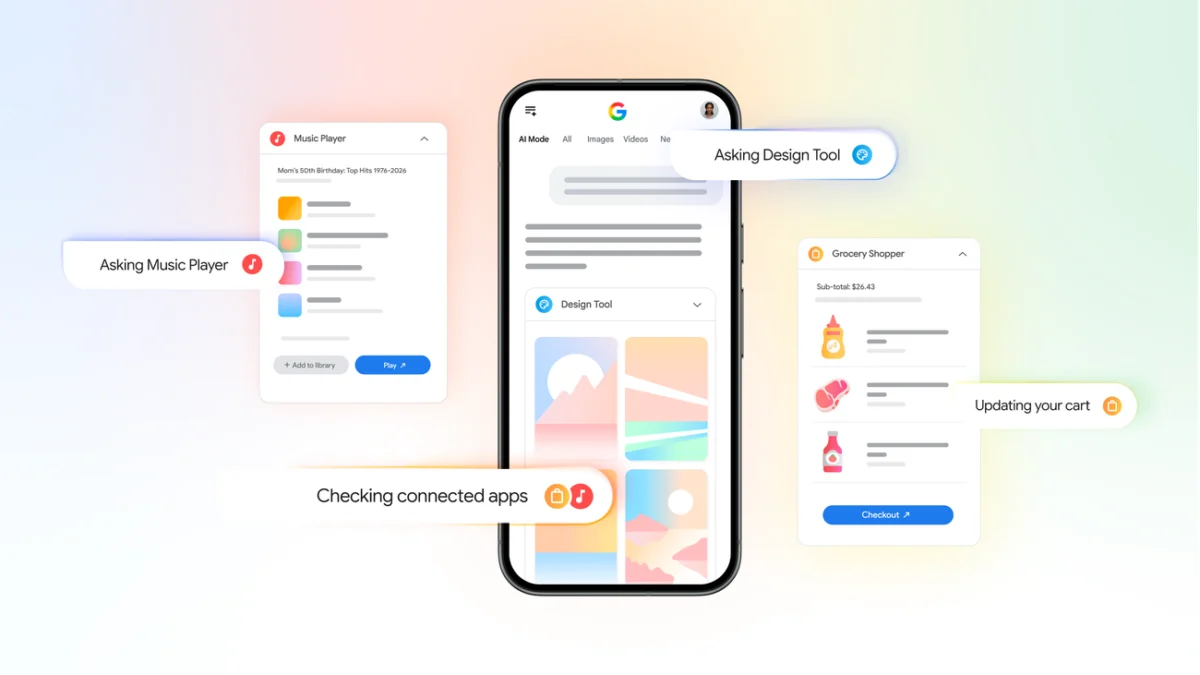
Google has officially announced a significant update to its Search ecosystem, enabling users to securely link and interact with third-party applications directly within its AI Mode. This development, spearheaded by Senior Product Manager Chips Mistry and Engineering Lead Biharck Araújo, marks a pivotal shift in how the search engine functions, transitioning from a portal for information retrieval to a functional platform for task execution. Starting this week, the feature is rolling out to users in the United States, offering integrations with popular services such as Instacart, Canva, and YouTube Music. This move follows the earlier integration of similar capabilities within the standalone Gemini app, signaling Google’s broader strategy to embed generative AI actions across its most high-traffic surfaces.
The introduction of connected apps in Search AI Mode is designed to reduce the friction between discovery and action. Under the previous search paradigm, a user might research a recipe, navigate to a separate grocery application, and manually input items into a cart. With the new integration, a user interacting with AI Mode can generate a grocery list and, with a few taps, export those items directly into an Instacart shopping cart. Similar efficiencies are being introduced for creative and entertainment workflows; users can prompt the AI to find design templates which then open directly in Canva, or curate music playlists that are instantly saved to a YouTube Music library.
The Evolution of Search: From Information to Action
The transition toward "actionable search" represents the latest phase in Google’s multi-year overhaul of its core product. For over two decades, Google Search operated primarily as an indexer of the web, directing traffic to external sites through a list of ranked links. However, the rise of large language models (LLMs) and generative AI has altered user expectations. Modern users increasingly seek direct answers and the ability to complete tasks without leaving the search interface.
This evolution began in earnest with the introduction of the Knowledge Graph in 2012, which provided direct facts at the top of the page. It accelerated with the launch of the Search Generative Experience (SGE) in 2023, which utilized AI to synthesize complex information. The current rollout of connected apps in AI Mode takes this a step further by introducing "agentic" qualities to Search. By allowing the AI to interact with third-party APIs (Application Programming Interfaces), Google is positioning its search engine as a personal assistant capable of cross-platform coordination.
Chronology of Google’s AI Integration Strategy
The path to the current announcement has been marked by several key milestones in Google’s development of generative AI.
In May 2023, at the annual I/O developer conference, Google first unveiled SGE, testing the waters for an AI-first search interface. By late 2023, the company rebranded its primary AI efforts under the Gemini name, launching a dedicated app that featured "Extensions." These extensions allowed Gemini to pull data from Google’s own ecosystem, including Gmail, Drive, and Maps.
In early 2024, Google expanded these capabilities to include third-party developers, recognizing that a truly useful AI assistant must interact with the apps users rely on daily. The rollout of AI Overviews in May 2024 integrated generative summaries into the standard search results page for millions of users. This week’s announcement of connected apps within "AI Mode" represents the convergence of these two paths: the broad reach of Google Search and the functional utility of Gemini’s third-party extensions.
Technical Infrastructure and User Security
According to the announcement by Mistry and Araújo, security and user consent are central to the implementation of connected apps. The process utilizes secure authentication protocols to link a user’s Google account with their third-party service accounts. Users must explicitly grant permission for AI Mode to access their data or perform actions on their behalf within these external apps.
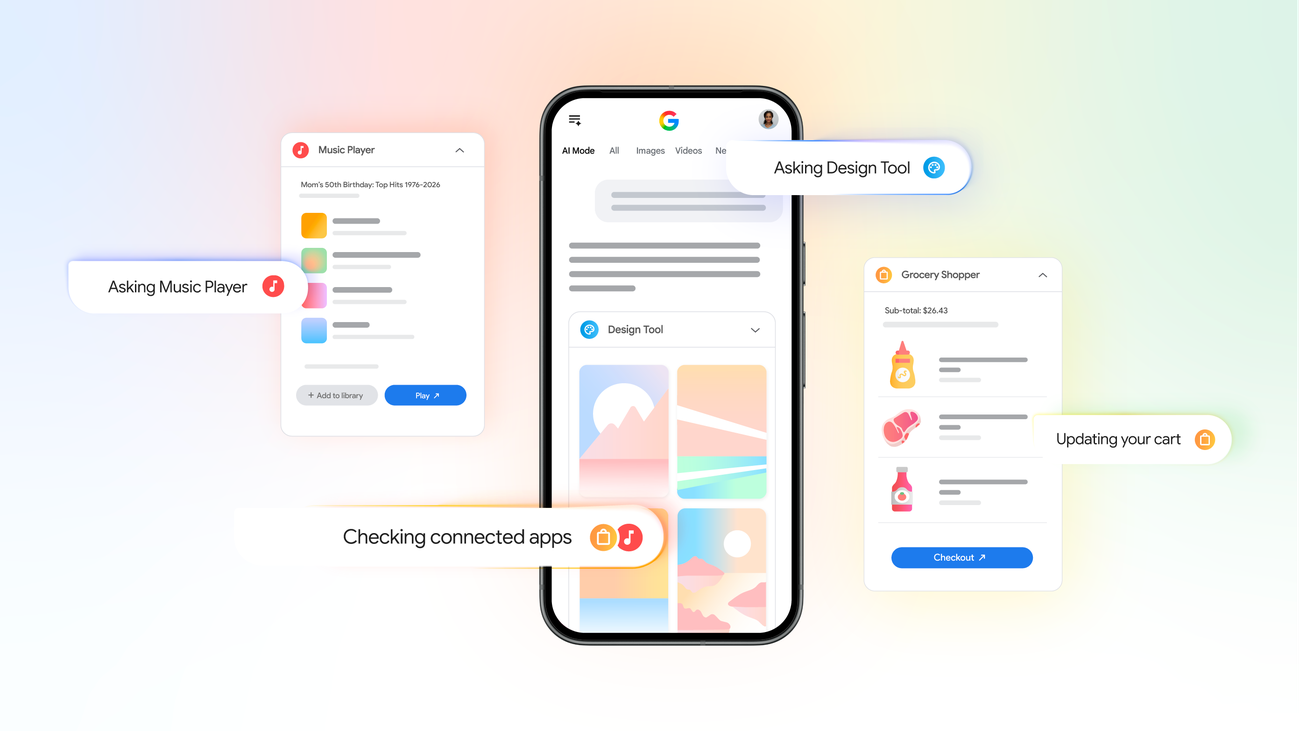
From a technical standpoint, these integrations rely on advanced natural language processing to map user intent to specific API calls. When a user asks AI Mode to "add these ingredients to my Instacart," the system identifies the intent, parses the list of items, and communicates with Instacart’s backend to populate the cart. Google has emphasized that this data exchange is encrypted and that users maintain control over which apps are connected through a centralized "Connected Apps" settings menu.
Supporting Data and Market Context
The shift toward integrated AI actions comes at a time of intense competition in the search and AI markets. According to data from Statcounter, Google maintains a dominant share of the global search market, consistently hovering around 90%. However, the emergence of AI-native search tools like Perplexity AI and OpenAI’s SearchGPT has put pressure on Google to innovate.
Market research from Gartner suggests that by 2026, traditional search engine volume will likely drop by 25% as users pivot toward AI chatbots and other virtual agents. By integrating third-party apps, Google is attempting to defend its market share by offering a level of utility that goes beyond what a standard chatbot can provide. The inclusion of Canva and Instacart is particularly strategic, as it taps into high-value user segments: the "prosumer" creator market and the high-frequency e-commerce market.
Strategic Value for Partners and the Ecosystem
For partners like Instacart and Canva, being among the first to integrate with Search AI Mode offers a significant competitive advantage. These integrations place their services at the very beginning of the consumer journey.
In a statement regarding the partnership, the integration is framed as a way to meet users where they are. For Instacart, this means capturing intent the moment a user decides what to cook. For Canva, it means becoming the default tool for a user who is in the brainstorming phase of a project. This "top-of-funnel" placement is highly valuable in a digital economy where customer acquisition costs are steadily rising.
However, the move also raises questions for the broader web ecosystem. As Google Search becomes more capable of fulfilling tasks internally, there is a risk that traffic to smaller, non-integrated websites may decline. This phenomenon, often referred to as "zero-click searches," has been a point of contention between Google and digital publishers for years.
Broader Implications and Industry Analysis
The move toward connected apps in Search suggests that the industry is moving toward "Agentic AI"—systems that don’t just talk, but act. This has profound implications for the future of the internet.
- The Shift to Transactional Search: Google is moving away from being a "referral engine" and toward being a "transactional engine." This could change the fundamental business model of the web, prioritizing platforms that can integrate deeply with AI over those that rely on traditional SEO and ad impressions.
- Privacy and Data Silos: As users link more of their digital lives to a single AI interface, the concentration of data becomes a concern. Google’s challenge will be to maintain user trust while handling the sensitive information required to manage shopping carts, design files, and personal preferences across multiple services.
- The Competitive Landscape: By leveraging its massive search footprint, Google is creating a "moat" that is difficult for smaller AI startups to replicate. While a startup can build a great LLM, it is much harder to build the ecosystem of partnerships and the massive user base that Google already possesses.
- Standardization of AI Interactions: As Google rolls out these features, it may set the standard for how AI agents interact with third-party software. This could lead to a new set of protocols for "AI-to-App" communication, similar to how HTTP standardized web browsing.
Future Outlook
Google has indicated that the current rollout is only the beginning. The company is actively working with a range of additional partners to bring more services into AI Mode. Potential future integrations could include travel booking services, project management tools, and fitness tracking apps.
As the rollout progresses in the U.S., the tech community will be watching closely to see how users adopt these features. The success of this initiative will likely depend on how seamlessly the AI can handle complex requests and whether the time-saving benefits outweigh the effort required to set up and manage these connections. For now, Google has taken a definitive step toward turning Search into a comprehensive digital concierge, fundamentally changing the nature of the world’s most visited website.
