

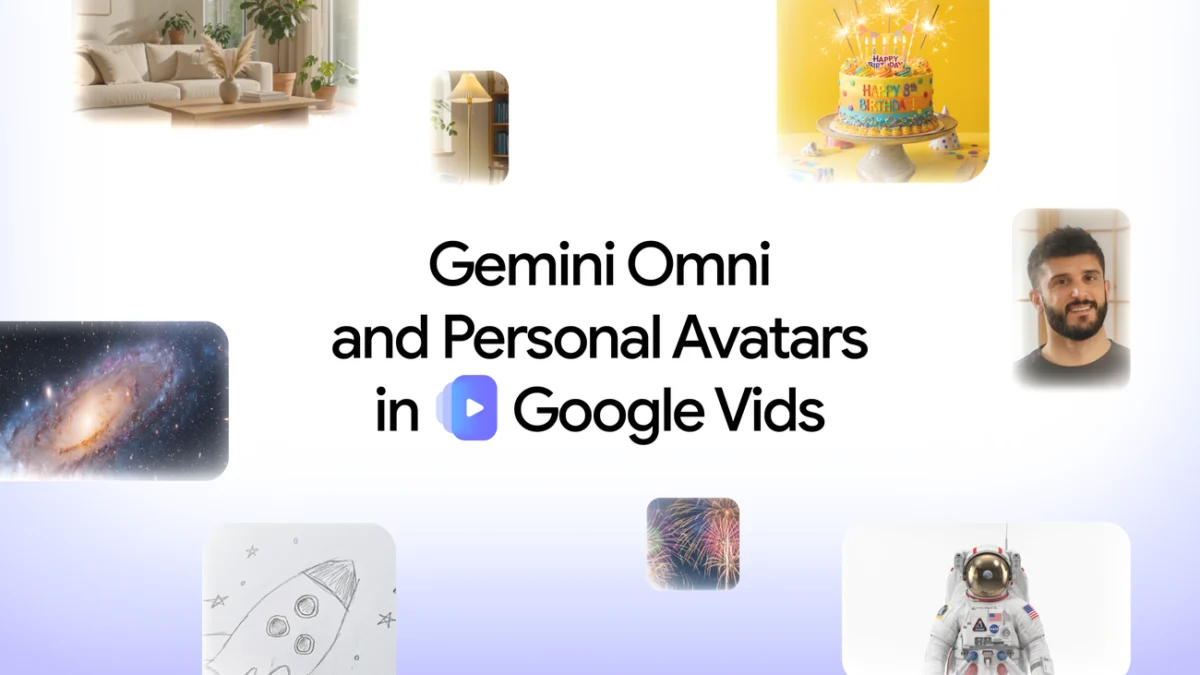
Google has officially announced a significant expansion of its video creation platform, Google Vids, introducing two major features powered by advanced generative artificial intelligence: Gemini Omni and Personal Avatars. These updates, announced by Justin Luk, Product Manager at Google, represent a strategic shift toward making professional-grade video production accessible to corporate users who may lack traditional editing skills. By integrating the multimodal capabilities of the Gemini model directly into the Workspace ecosystem, Google aims to streamline the workflow of internal communications, training, and marketing.
The introduction of these features follows the initial launch of Google Vids earlier this year, a tool designed specifically for the workplace to sit alongside Docs, Sheets, and Slides. While the platform previously offered basic AI-assisted storyboarding and stock footage integration, the new updates allow for the creation of entirely original content through natural language processing and personalized digital representation.
The Evolution of Gemini Omni in Video Production
At the core of this update is Gemini Omni, a multimodal model capable of processing and generating content across various formats, including text, image, and video. Unlike previous iterations of AI video tools that functioned as standalone generators, Gemini Omni within Google Vids is designed for an iterative, conversational workflow.
Users can now initiate the video creation process by providing a simple text prompt. For instance, a manager could type, "Create a three-minute safety training video for new warehouse employees," and the AI will generate a structured clip. However, the true innovation lies in its "Chat to Edit" functionality. This feature allows users to refine the output through subsequent natural language commands. Rather than manually adjusting timelines or applying filters, a user can simply instruct the AI to "make the background look like a modern office" or "increase the brightness and add a professional cinematic filter."
Furthermore, Gemini Omni supports image references. Users can upload a photograph or a rough hand-drawn sketch to serve as a visual anchor, ensuring the generated video aligns with specific brand guidelines or aesthetic preferences. This "multimodal mixing" reduces the friction typically associated with translating a conceptual idea into a finished visual product.
Personal Avatars: The Rise of the Digital Twin
The second major update, Personal Avatars, addresses a common pain point in corporate communication: the time and technical requirements of being "camera-ready." This feature allows users to create a high-fidelity digital version of themselves that can deliver scripts without the need for a physical recording session.
To generate a personal avatar, a user must upload a high-quality selfie and a short voice recording to the Google Vids platform. The AI then synthesizes these inputs to create a digital likeness that replicates the user’s appearance and vocal cadence. Once the avatar is established, the user can simply type a script, and the avatar will perform it with synchronized lip movements and natural-looking gestures.
This technology is positioned as a productivity tool for busy executives and educators. Instead of spending hours re-recording takes for a personalized shout-out or a weekly project update, the user can generate the video in minutes. Google has implemented strict guardrails for this feature: avatars are currently restricted to the account holder’s own likeness, and access is limited to users aged 18 and older in specific geographic regions.
Historical Context and Chronology of Google Vids
The development of Google Vids has been a rapid progression within the Google Workspace roadmap. Understanding the timeline of these updates provides context for the company’s aggressive pursuit of the generative AI market:
- April 2024: Google first unveiled Google Vids at the Google Cloud Next conference, positioning it as an AI-powered video creation app for work.
- June 2024: The platform entered a "Workspace Labs" testing phase, allowing a select group of enterprise users to experiment with early AI storyboarding tools.
- February 2024 (Retrospective Integration): Google integrated Veo 3.1, its high-definition video generation model, into the Vids environment, allowing users to generate b-roll and background clips.
- Current Release: The rollout of Gemini Omni and Personal Avatars marks the transition of Google Vids from a secondary editing tool to a primary content generation engine.
This chronology highlights Google’s strategy of incremental deployment, ensuring that the underlying AI models are refined through user feedback before broader commercial release.
Technical Infrastructure and Transparency
A critical component of this announcement is the focus on AI safety and content provenance. As deepfake technology becomes more sophisticated, the potential for misuse in corporate environments—such as fraudulent executive messages—has become a primary concern for IT departments.

To mitigate these risks, Google has integrated SynthID into all videos generated via Gemini Omni. Developed by Google DeepMind, SynthID is an invisible digital watermark embedded directly into the pixels of the video. This watermark is designed to be imperceptible to the human eye but detectable by specialized software, even if the video is cropped, compressed, or edited. This ensures a layer of transparency, allowing viewers or automated systems to verify that the content was synthesized by AI.
Furthermore, the data used to train and run these models within the Workspace environment is subject to Google’s enterprise-grade privacy standards. The company has stated that customer data is not used to train its global AI models without explicit permission, a crucial assurance for businesses handling sensitive internal information.
Market Impact and Industry Reactions
The integration of Gemini Omni into Google Vids places Google in direct competition with specialized AI video startups such as Runway, HeyGen, and Luma AI, as well as established giants like Adobe and Microsoft. While standalone AI video generators have existed for several years, Google’s advantage lies in its distribution network. By embedding these tools within Workspace, Google provides millions of employees with video production capabilities without requiring them to leave their existing ecosystem of Docs and Drive.
Industry analysts suggest that this move could disrupt the corporate training and internal communications sectors. According to recent market data, the global corporate training market is valued at over $350 billion, with a growing emphasis on video-based learning. By reducing the cost and time of video production to near zero, Google Vids could lead to a massive influx of video content within organizations.
"The democratization of video production is the next frontier for the digital office," says a market analyst specializing in productivity software. "We saw it with desktop publishing in the 90s and presentation software in the 2000s. Now, the ‘video-first’ culture is becoming a reality because the technical barriers have been removed."
Broader Implications for the Future of Work
The introduction of Personal Avatars and Gemini Omni raises significant questions about the future of professional identity and human-to-human interaction. As digital twins become indistinguishable from their human counterparts, the concept of "presence" in a digital workspace is being redefined.
For remote and hybrid teams, these tools offer a way to maintain visual connection without the exhaustion of constant video conferencing. However, it also introduces a layer of abstraction. If a manager delivers a difficult message via an avatar, the emotional resonance and authenticity of that communication may be scrutinized.
Economically, these updates may shift the demand for specialized video editors within large corporations. While high-end marketing campaigns will likely still require human creative directors and professional cinematographers, the "middle-tier" of corporate content—internal memos, basic tutorials, and status updates—is increasingly moving toward full automation.
Availability and Subscription Tiers
Google has confirmed that the new Gemini Omni and Personal Avatar features are not available to the general public on free accounts. Access is currently limited to:
- Google AI Pro and Ultra subscribers: Individual users who pay for premium AI features.
- Google Workspace Business Customers: Specifically those on Gemini Business, Enterprise, and Education tiers.
This tiered rollout reflects the high computational costs associated with generating video and the company’s focus on monetizing its AI investments through enterprise subscriptions.
As Google Vids continues to evolve, the company has signaled that further integrations with other Workspace apps are on the horizon. The goal is a seamless environment where a text-based project plan in Google Docs can be converted into a full-scale video presentation with a single click, narrated by a digital avatar that reflects the project lead’s identity. With the inclusion of SynthID and strict likeness restrictions, Google is betting that transparency and security will be the keys to winning over the cautious enterprise market.
