

Google’s developmental trajectory in July 2026 represents a significant pivot toward the deployment of "agentic" artificial intelligence, characterized by systems that do not merely respond to prompts but actively execute complex workflows across digital and physical environments. Throughout the month, the technology giant unveiled a suite of updates ranging from specialized large language models (LLMs) to planetary-scale climate monitoring systems. This expansion signifies Google’s intent to move beyond the experimental phase of generative AI and into a period of deep integration within global infrastructure, consumer electronics, and scientific research.
Strategic Expansion of the Gemini Model Family
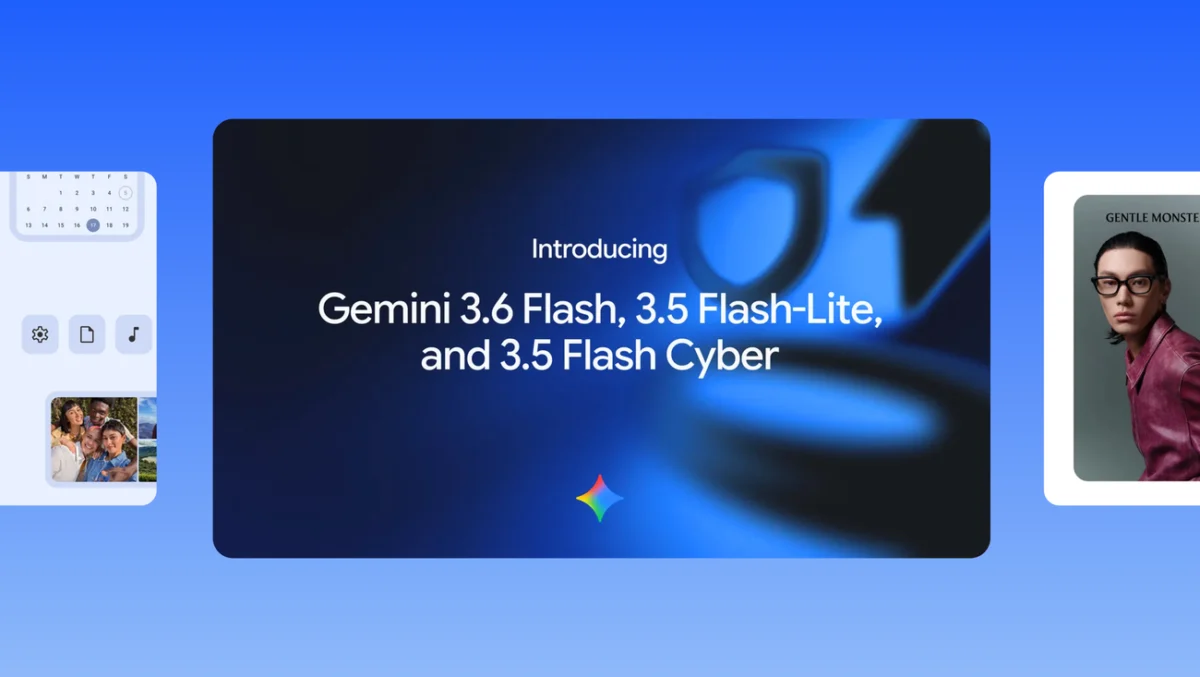
At the core of the July announcements is the release of three specialized Gemini models: Gemini 3.6 Flash, 3.5 Flash-Lite, and 3.5 Flash Cyber. These models are engineered to address the specific demands of developers building autonomous AI agents. Unlike general-purpose models, the "Flash" series prioritizes high token efficiency and ultra-low latency, which are critical for agents that must make real-time decisions.
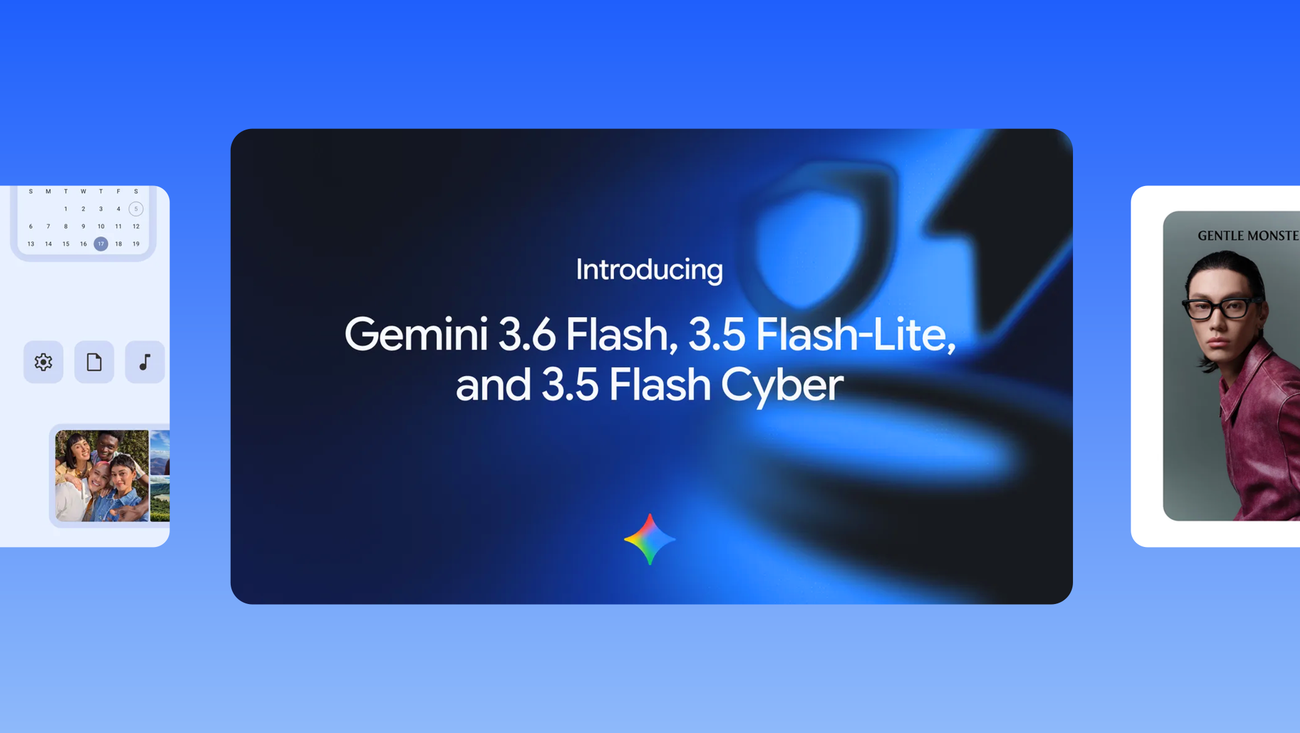
Gemini 3.6 Flash is positioned as the high-performance workhorse for production-grade agents, offering a balance between reasoning depth and speed. Gemini 3.5 Flash-Lite is designed for high-frequency, low-cost tasks, making it feasible for developers to scale agentic workflows to millions of users without prohibitive computational overhead. Most notably, Gemini 3.5 Flash Cyber introduces a specialized layer of security-focused reasoning. This model is trained to identify vulnerabilities in code and resist prompt-injection attacks, a necessary evolution as AI agents gain more control over sensitive user data and system permissions.
Industry analysts suggest that this granular approach to model releases reflects a maturing market where "one-size-fits-all" AI is no longer sufficient. By providing models tailored for speed, cost, and security, Google is attempting to solidify its Gemini ecosystem as the primary platform for the burgeoning agent economy.
Bridging the Digital and Physical: Gemini Robotics ER 2
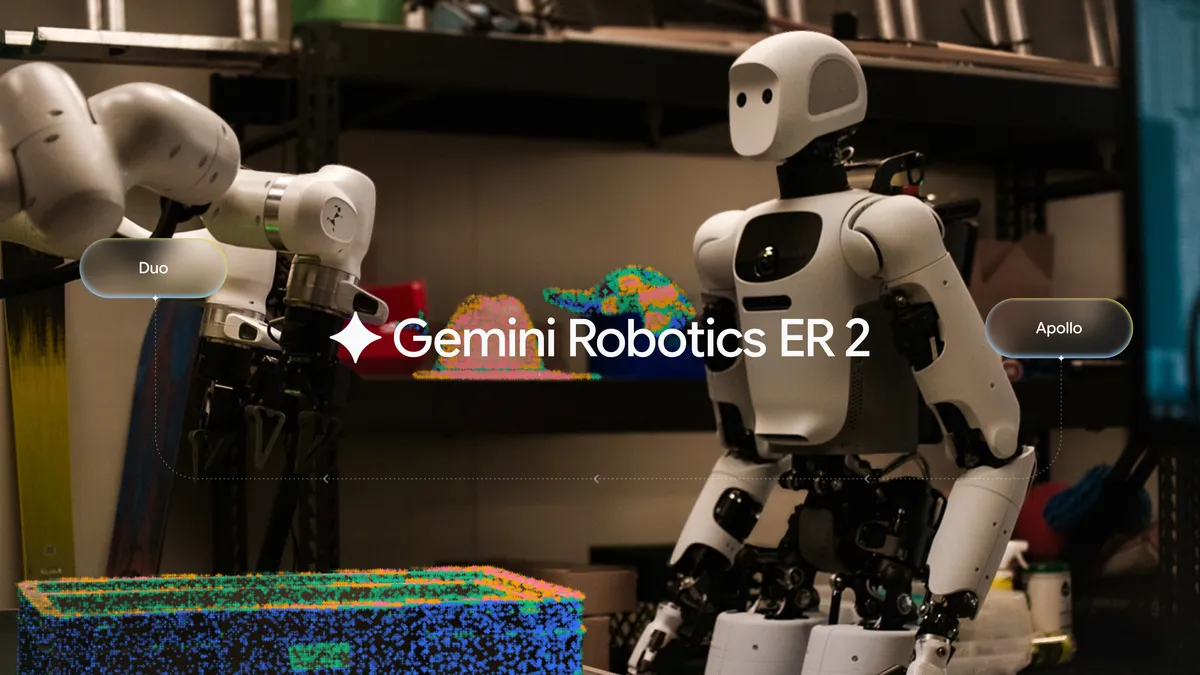
In a significant leap for the field of robotics, Google introduced Gemini Robotics ER 2 (Embodied Reasoning). This model serves as the cognitive engine for next-generation machines, allowing them to bridge the gap between abstract digital intelligence and physical execution. ER 2 enables robots to engage in natural language dialogue with humans while simultaneously processing multimodal sensory data to navigate complex, unpredictable environments.

The ER 2 model is capable of multi-step reasoning, allowing a robot to receive a high-level command—such as "find the leaking pipe and mark it for repair"—and break it down into constituent physical actions. This development builds upon years of research from Google DeepMind’s robotics division, moving away from hard-coded movements toward a philosophy where the robot "understands" the context of its task. The release of ER 2 is expected to accelerate the adoption of AI-driven automation in logistics, manufacturing, and domestic assistance.
Consumer Hardware and the Launch of Android 17
The July 2026 Galaxy Unpacked event served as the debut for the Samsung Galaxy Z Fold8 Ultra, Fold8, and Flip8, all of which feature deep integration with "Gemini Intelligence." This collaboration between Google and Samsung highlights the shift toward on-device AI processing. Gemini Intelligence provides users with context-aware assistance that operates across the operating system, rather than being confined to a single application.
Simultaneously, Google provided a first look at Android 17, which introduces a native, wireless migration experience. This feature allows users to transition from iOS to Android by transferring comprehensive data types without the need for third-party applications. This move is seen as a strategic effort to lower the barrier to entry for the Android ecosystem, leveraging AI to handle the complex reformatting and mapping of data between competing platforms.

Productivity and the Evolution of Research Tools
Google has rebranded and expanded its research-centric AI, NotebookLM, into Gemini Notebook. This tool is now a centralized hub within the Google ecosystem, integrated directly into the Gemini app and Google Search. The July update includes a "secure cloud computer" environment, allowing users to run code and analyze massive datasets within a protected sandbox.
This evolution from a simple note-taking assistant to a robust research platform indicates Google’s focus on the "knowledge worker" segment. By providing a secure environment for data analysis, Gemini Notebook addresses enterprise concerns regarding data privacy and the "hallucination" risks associated with LLMs, as the tool strictly grounds its responses in the user’s uploaded source material.
The AI Economy and Workforce Development
In an effort to quantify the societal impact of these technologies, Google released the first iteration of the AI & Economy ATLAS. This large-scale, de-identified study tracks how AI is being utilized in professional and daily life. Preliminary data from the ATLAS report suggests that while AI is automating routine administrative tasks, it is also creating a demand for new hybrid roles that combine technical oversight with creative strategy.
To address the shifting labor market, Google announced the Alliance for America’s Skilled Trades. Partnering with BlackRock, Carhartt, and Ford, Google aims to utilize AI-driven training modules to bolster the pipeline for essential trades. This initiative acknowledges that while AI dominates the digital sphere, the physical economy requires a skilled workforce capable of maintaining the infrastructure that supports these advanced systems.
For enterprise developers, the general availability of AlphaEvolve on the Gemini Enterprise Agent Platform marks a new chapter in software engineering. AlphaEvolve is an AI code-optimization agent that uses evolutionary algorithms to find the most efficient logic for complex problems. Unlike standard autocompletion tools, AlphaEvolve iterates on baseline algorithms to provide human-readable, optimized code that can significantly reduce cloud computing costs for large organizations.
Creative Innovation and Historical Preservation
July also saw a series of updates to Google’s creative suite. Google Vids now includes Gemini Omni and personal avatars, allowing users to generate high-quality video content using natural language prompts. The addition of personal avatars enables creators to generate digital likenesses that can deliver presentations or star in videos, further blurring the line between professional production and accessible consumer tools.

In the realm of music, Google Flow Music, powered by the Lyria 3.5 model, was released to provide creators with granular control over lyrics, vocals, and musicality. This model represents a significant upgrade in audio fidelity and emotional resonance compared to its predecessors.
One of the most culturally significant applications of DeepMind’s technology announced this month was the reconstruction of Pelé’s "lost" goal. Using archival descriptions and physics-based AI modeling, Google reconstructed the legendary 1959 goal that was never captured on film. This project serves as a case study for how AI can be used for historical preservation, bringing lost cultural moments back to life for new generations.
Search and Personal Intelligence
Google Search continues its transition into a proactive personal assistant. The "Connected Apps" feature now allows users to securely link services like YouTube Music and Instacart directly to the Search interface. In "AI Mode," Search can perform actions across these apps, such as creating a playlist for a specific mood or adding ingredients from a recipe directly to a shopping cart.

Furthermore, Gemini Spark has been expanded to handle "complex web errands." With user permission, Spark can navigate the live web using saved credentials to perform tedious tasks like scheduling apartment viewings or managing multi-leg flight bookings. This represents a fundamental change in the user experience of the internet, moving from a "search and click" model to a "delegate and verify" model.
Global Resilience and Climate Action
Perhaps the most impactful announcements of July 2026 involve the application of AI to global crises. Google Cloud and the National Oceanic and Atmospheric Administration (NOAA) have partnered to modernize weather forecasting. By utilizing Google’s H4D virtual machines, NOAA can run massive atmospheric simulations at unprecedented speeds, providing earlier warnings for extreme weather events.
In tandem with a United Nations report on multi-hazard early warning systems, Google shared its progress in using AI for flood and wildfire detection. The successful launch of three FireSat satellites, a collaboration with the Earth Fire Alliance, provides a new level of orbital surveillance. These satellites use specialized infrared sensors to detect wildfires at their inception, allowing emergency services to intervene before they become uncontrollable.

Finally, Google DeepMind and Isomorphic Labs introduced a joint "bioresilience" program. This initiative focuses on the dual-use nature of biological AI models. The program is designed to prevent the misuse of biological data by threat actors while simultaneously empowering legitimate scientists to use AI for drug discovery and pandemic preparedness.
Analysis of Implications
The breadth of Google’s July 2026 announcements suggests a company that is no longer defensive about its AI position but is instead aggressively shaping the infrastructure of the future. The shift toward "embodied reasoning" and "agentic workflows" indicates that the next phase of the digital revolution will be defined by AI that acts, rather than just AI that speaks.
By integrating AI into everything from skilled trades training to orbital wildfire detection, Google is positioning itself as an indispensable utility for both the individual and the state. However, this level of integration also brings increased scrutiny regarding data privacy, algorithmic bias, and the security of autonomous agents. As Google moves forward, the success of these initiatives will likely depend as much on public trust and regulatory compliance as on technical breakthrough.

The vision shared by Demis Hassabis at the end of the month emphasizes that we are at a "frontier" moment. The developments in July 2026 are not merely incremental updates; they are the building blocks of a world where AI is a constant, quiet collaborator in every aspect of human endeavor.
