

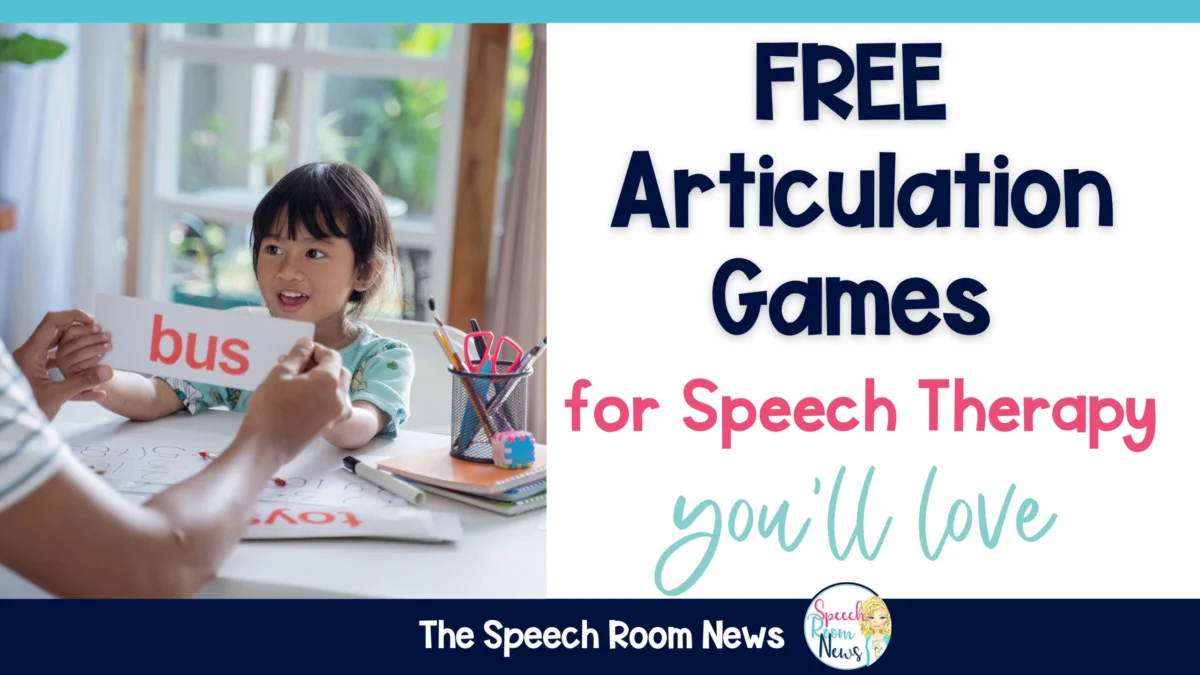
The integration of play into therapeutic interventions has long been recognized as a cornerstone for fostering engagement, retention, and the successful generalization of learned skills, particularly within the field of speech-language pathology. For students addressing articulation challenges, the dynamic nature of games transforms what might otherwise be repetitive practice into an enjoyable and memorable experience, creating myriad opportunities to embed target sounds into functional, everyday communication. Speech-Language Pathologists (SLPs) operating across diverse settings—be it virtual, in-person, or hybrid models—are consistently seeking innovative, yet accessible, methods to maintain student motivation and maximize therapeutic outcomes. This comprehensive overview explores a curated selection of free articulation games and resources, providing SLPs, educators, and parents with invaluable tools to support speech sound development without incurring additional costs.
The landscape of speech therapy is constantly evolving, driven by advancements in pedagogical research and technological innovation. Articulation disorders, characterized by difficulties in producing speech sounds correctly, affect a significant portion of the pediatric population. Studies suggest that approximately 8-9% of young children experience some form of speech sound disorder, with many requiring intervention from an SLP. Effective therapy hinges not only on clinical expertise but also on the ability to sustain a child’s attention and active participation. This is where play-based learning, and specifically gamification, proves indispensable. By making therapy feel less like work and more like play, children are more inclined to engage, practice more frequently, and generalize their skills into spontaneous speech. Moreover, the availability of free resources addresses a critical need for budget-conscious schools, private practices, and families, ensuring that high-quality therapeutic support remains accessible.
The Pedagogical Power of Play: Why Games Work in Speech Therapy
The effectiveness of incorporating games into speech therapy sessions is rooted in several key pedagogical principles. Firstly, games inherently increase motivation and engagement. Children are naturally drawn to play, and when therapeutic tasks are embedded within a game structure, the perceived effort decreases while intrinsic motivation to participate and succeed rises. This heightened engagement leads to more frequent and consistent practice, which is paramount for habituating new speech patterns.
Secondly, games provide a natural context for generalization. Articulation skills, once mastered in isolation, must be transferred into conversational speech. Games, particularly those involving social interaction or imaginative scenarios, offer authentic opportunities for students to use their target sounds in varied linguistic contexts, moving beyond rote drills. For instance, a child practicing the /s/ sound might use it repeatedly in a game describing objects ("sun," "snake," "spoon") or during a turn-taking activity ("It’s suzy’s turn!").
Thirdly, play reduces anxiety and fosters a positive learning environment. The pressure often associated with direct instruction can be alleviated through play, allowing children to experiment with sounds in a low-stakes setting. Success in a game provides immediate, positive reinforcement, building confidence and encouraging further effort. Furthermore, games often involve problem-solving and strategic thinking, which can indirectly enhance cognitive skills beneficial to language development. The interactive nature of many games also facilitates real-time feedback from the SLP, enabling immediate corrections and scaffolding.

Navigating the Digital Landscape: Free Online Articulation Tools
The digital age has ushered in a wealth of online resources that can be seamlessly integrated into both traditional and teletherapy settings. These interactive platforms leverage technology to make articulation practice dynamic and appealing to tech-savvy students.
-
ABCya’s "Alphabet BINGO": Foundation for Phonemic Awareness
ABCya is a well-regarded educational platform offering a variety of games for elementary students. Their "Alphabet BINGO" game, while primarily focused on letter recognition and initial sound identification, serves as an excellent foundational tool for younger learners. By associating letters with their corresponding sounds, children begin to build crucial phonemic awareness skills, a precursor to precise articulation. SLPs can adapt this game by focusing on specific target sounds represented by the letters called out, encouraging students to produce the sound and identify words starting with it. Its simplicity makes it accessible for early intervention and for introducing the concept of sound-letter correspondence in a playful manner. -
Articulation Station App (Lite Version): Mobile-First Practice
The Articulation Station App, developed by Little Bee Speech, is a widely recognized tool among SLPs. Its free "Lite Version" offers a robust introduction to its capabilities, providing several sound options and interactive games. Available for download on mobile devices, it allows for convenient, on-the-go practice. The app typically features flashcards, matching games, and sentence-level practice, enabling students to work on sounds at various linguistic levels (isolation, syllables, words, sentences). The visual and auditory feedback provided by the app can be particularly beneficial for students who struggle with auditory discrimination or need clear models for sound production. Its portability also makes it ideal for home practice, bridging the gap between therapy sessions and daily life. -
Language Playroom: A Growing Hub for Speech Development
Language Playroom stands out as a dedicated online portal offering a growing collection of free games specifically designed for speech and language therapy. With over 20 articulation games currently available, and plans to expand into fluency, language, and social communication, it represents a valuable, continually updated resource. The games are typically web-based, requiring no downloads, making them easy to access from any internet-connected device. SLPs can browse by target sound or game type, selecting activities that align with individual student goals. The variety of formats keeps therapy fresh and engaging, preventing monotony often associated with repetitive drills. -
Phoneme Pop: Interactive Sound Discrimination
"Phoneme Pop," available on platforms like Topmarks, is an online game designed to help children distinguish between different phonemes within words. In this interactive activity, children often pop bubbles or select objects that contain their target sounds. This game not only reinforces articulation production but also enhances auditory discrimination skills, which are vital for self-monitoring and correcting speech errors. For instance, a child working on the /sh/ sound might be presented with bubbles containing words like "ship," "sip," and "chip," requiring them to identify and "pop" only the words with the /sh/ sound, thereby practicing both reception and production of the phoneme. -
Boom Cards: Digital Decks for Targeted Practice
Boom Cards have become a phenomenon in educational technology, offering interactive, self-grading digital task cards that can be used for a myriad of therapeutic goals. Platforms like Teachers Pay Teachers and Boom Learning host a vast array of free Boom Card decks specifically for articulation practice. These decks are versatile, covering various phonemes, word positions (initial, medial, final), and linguistic levels. SLPs can assign decks for independent practice, use them in teletherapy sessions via screen sharing, or integrate them into in-person therapy on tablets or interactive whiteboards. The immediate feedback provided by Boom Cards helps students correct errors in real-time, making them an efficient tool for high-repetition drill work, which is crucial for articulation remediation.
Tangible Benefits: Printable Games for Hands-On Learning
While digital resources offer convenience, printable games provide invaluable hands-on engagement, tactile feedback, and a welcome break from screen time. They are also easily reproducible for home practice and suitable for various group sizes.
-
"Whack-a-Sound /S/ Self-Checking Articulation Freebie": Phoneme Position Identification
This engaging printable game, often found on Teachers Pay Teachers, is ideal for preschool through second-grade students. It focuses on helping children identify the position (initial, medial, or final) where they hear a target sound, such as the /s/ phoneme. The "self-checking" aspect empowers students to take ownership of their learning, providing immediate feedback without constant SLP intervention. Activities like this not only reinforce sound production but also develop phonological awareness skills, which involve understanding the sound structure of language. SLPs can laminate these printables for durability and use them with dry-erase markers or small manipulatives. -
Articulation Worksheets from Super Duper Publications: Classic Reinforcement
Super Duper Publications is a well-known name in speech-language pathology resources. They offer a selection of free printable articulation worksheets, ranging from coloring pages with target words to simple drill sheets. These resources provide straightforward, no-prep activities for practicing specific sounds. While perhaps less "game-like" than others, their simplicity makes them excellent for quick warm-ups, homework assignments, or for students who prefer a more structured approach. They are particularly useful for reinforcing learned sounds and tracking progress through repetitive trials. -
Hot Chocolate Articulation Board Game: Seasonal Engagement
Themed games, like the "Hot Chocolate Articulation Board Game" (often available on Teachers Pay Teachers), add an element of novelty and seasonal relevance to therapy. Perfect for the winter months, this board game is highly adaptable. SLPs can prepare flashcards with target words for various phonemes. The gameplay typically involves a student drawing a card, producing the target word correctly, and then rolling a die to move their game piece. This format encourages high-repetition practice within a motivating framework. The game’s adaptability means it can be used with diverse articulation goals simply by changing the flashcards, making it a versatile tool for group or individual sessions. -
100 Trial Challenges by Peachie Speechie: High-Repetition Practice
Achieving 100 trials of a target sound in a therapy session is often a goal for SLPs, as high-repetition practice is critical for motor learning in articulation. Peachie Speechie’s "100 Trial Challenges" are themed printable sheets that make this repetitive practice engaging. Covering various themes and holidays, these sheets allow students to mark off or color an item each time they correctly produce their target sound. This visual tracking of progress is highly motivating for students and provides clear data for SLPs. They are excellent for individual sessions where intensive drill is required and can also be sent home for continued practice. -
Color & Play Ocean Articulation Bingo: Group Therapy Fun
Bingo is a classic game that adapts perfectly to group therapy settings. "Color & Play Ocean Articulation Bingo" cards, often found on resource sites, feature target words embedded within an ocean theme. Each student receives a card, and as the SLP calls out target words (or shows picture cards), students mark off the corresponding image on their card. The first to get Bingo practices a multitude of target words and receives a sense of accomplishment. This game facilitates peer modeling, provides a fun, low-pressure environment for articulation practice, and allows for simultaneous work on multiple students’ goals if cards are customized. The "color & play" aspect also adds an artistic element, further enhancing engagement.
Therapy on the Go: Material-Free Games for Everyday Practice
One of the most powerful ways to promote generalization of articulation skills is to integrate practice into natural, everyday routines. Material-free games, playable anywhere and anytime, are invaluable for this purpose, fostering consistent practice beyond the therapy room.
-
"I Spy": Environmental Sound Targeting
The classic "I Spy" game can be ingeniously modified to target specific articulation sounds. Instead of "I spy with my little eye something blue," the SLP (or parent) can say, "I spy with my little eye something that starts with the /s/ sound," or "I spy something that has the /k/ sound in the middle." This encourages the child to actively listen for sounds in their environment and produce target sounds in the context of identifying objects. It’s excellent for auditory discrimination, sound identification, and spontaneous articulation practice in natural settings like a car ride, a grocery store, or a waiting room. -
"20 Questions": Enhancing Descriptive Language and Articulation
"20 Questions" is a superb game for fostering both articulation and descriptive language skills. One person thinks of an object, and the other players ask up to 20 yes/no questions to guess what it is. To adapt this for articulation therapy, the SLP can guide the child to ask questions that elicit their target sounds (e.g., if working on /sh/, "Is it a shape?" or "Does it have a shiny surface?"). When guessing, the child must carefully articulate their questions and potential answers. This game naturally encourages the use of adjectives, categories, and inferential reasoning, all while providing ample opportunities for targeted sound production in meaningful sentences. -
"Rhyme Time": Phonological Awareness and Articulation
"Rhyme Time" is a simple yet effective game for improving both phonological awareness and articulation. Players take turns saying words that rhyme with a target word. For articulation practice, the SLP can select an initial word that contains the child’s target sound (e.g., if working on /t/, use "cat"). As the child generates rhyming words like "bat," "hat," "mat," they are repeatedly practicing the target sound in the final position (or other positions if the target word is different). This game helps children recognize sound patterns in words and produce them accurately, strengthening their phonological system. -
"The Alphabet Game": Sequential Sound Production
This popular travel game can be easily adapted for articulation practice. Players go through the alphabet, taking turns naming a word that starts with each letter. For articulation, the SLP can direct the child to focus on correctly producing the initial sound of each word, or even words that contain their target sound regardless of the initial letter. For example, if the child is working on /r/, they might be encouraged to find words like "robot" for ‘R’, "tree" for ‘T’, or "car" for ‘C’. This game provides structured, sequential practice and is particularly effective for students who benefit from predictable routines and clear linguistic boundaries.
The Broader Impact: Accessibility, Equity, and Professional Empowerment

The availability of free articulation games and resources has far-reaching implications beyond individual therapy sessions. Firstly, it significantly enhances accessibility and equity in speech-language services. Not all families can afford premium therapy materials or apps, and school budgets for SLPs are often stretched thin. Free resources ensure that quality practice materials are available to all, regardless of socioeconomic status, thereby helping to close achievement gaps in communication development.
Secondly, these resources contribute to the professional empowerment of Speech-Language Pathologists. By reducing the financial burden of acquiring materials, SLPs can allocate their budgets to other critical needs, such as professional development or specialized assessment tools. Furthermore, the collaborative nature of platforms like Teachers Pay Teachers, where SLPs share their creations, fosters a vibrant community of practice, allowing professionals to learn from each other and continually refine their therapeutic approaches.
Finally, the ease with which these materials can be sent home fosters greater parental involvement and continuity of care. When parents have access to engaging, easy-to-understand games, they are more likely to participate in home practice, which is crucial for reinforcing skills learned in therapy and accelerating progress. This collaboration between SLPs and families creates a holistic support system for the child’s speech development.
Conclusion: Fostering Engagement for Lasting Speech Development
In conclusion, the strategic integration of free articulation games into speech therapy represents a powerful and effective approach to remediation. Whether through interactive online platforms, versatile printable activities, or spontaneous, material-free games, these resources capitalize on children’s natural inclination towards play. By transforming therapeutic drills into enjoyable experiences, SLPs can significantly boost student engagement, motivation, and the crucial generalization of speech sounds into everyday communication. The widespread availability of these cost-free tools not only supports individual student progress but also promotes greater equity in access to quality therapy, empowers speech-language professionals, and strengthens the vital partnership between clinicians and families. As the field of speech-language pathology continues to evolve, these innovative and accessible resources will undoubtedly remain indispensable in fostering lasting speech development and communication success for countless children.
