

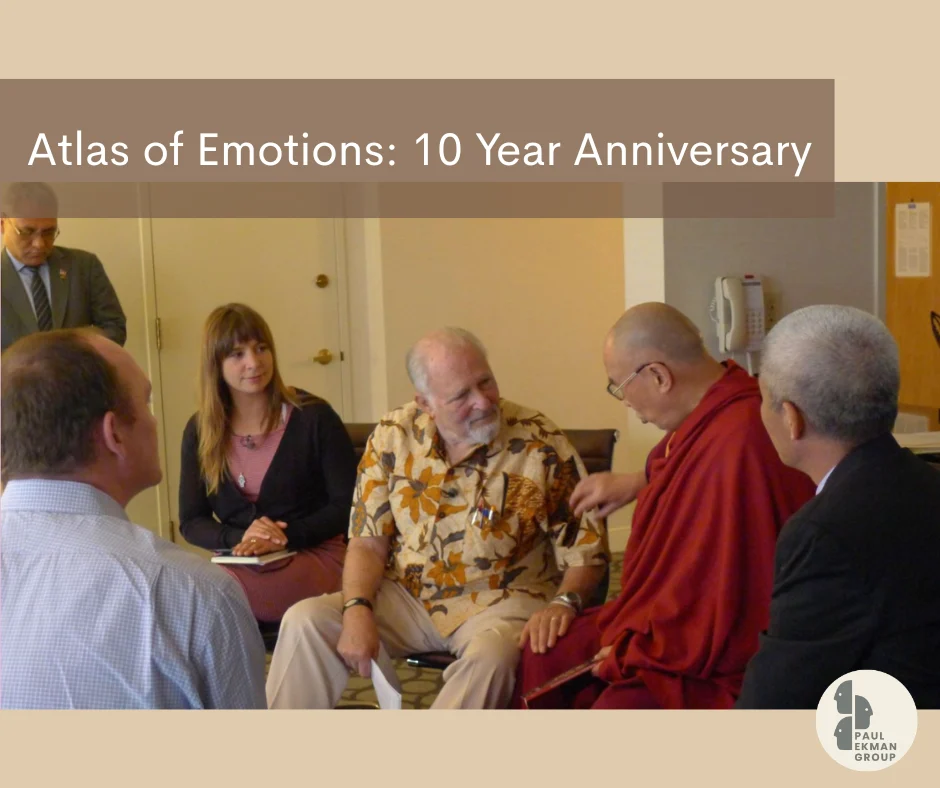
Ten years ago, the Atlas of Emotions was unveiled to the world, a groundbreaking initiative born from a unique triumvirate of scientific rigor, contemplative wisdom, and a shared vision for fostering emotional intelligence. Spearheaded by the collaborative efforts of renowned psychologist Dr. Paul Ekman, his daughter Dr. Eve Ekman, and His Holiness the 14th Dalai Lama, the Atlas embarked on an ambitious mission: to scientifically map the intricate landscape of human emotion, making complex psychological concepts both accessible and actionable for a global audience. A decade since its inception, this innovative emotional awareness framework has transcended academic circles, its influence now demonstrably rippling through educational institutions, therapeutic practices, cutting-edge research, and the everyday dialogues of individuals worldwide.
The Genesis of a Universal Emotional Compass: A Look Back
The development of the Atlas of Emotions was a meticulously planned endeavor, rooted in Dr. Paul Ekman’s extensive career studying universal human emotions. His foundational work, including a landmark survey of nearly 250 emotion scientists, established a strong consensus on the existence and nature of core, universally experienced emotions. This survey, which sought common ground among experts in the field, revealed a significant agreement on approximately seven basic emotions, providing a robust scientific bedrock for the Atlas’s conceptualization. The project aimed to translate this scientific understanding into a user-friendly, interactive tool.
To commemorate this significant tenth anniversary, a rare glimpse into the project’s formative stages has been released: previously unseen footage documenting a working meeting between the Ekman duo and His Holiness the Dalai Lama as they collaboratively reviewed the Atlas in its developmental phase. This archival material offers a compelling insight into the interdisciplinary synergy that defined the Atlas’s creation. The footage captures the essence of this unique inquiry, where rigorous psychological research, sophisticated graphic design, and the profound contemplative insights of the Dalai Lama converged. This collaborative spirit, bridging scientific methodology with spiritual wisdom, was instrumental in shaping the Atlas into a comprehensive and nuanced resource.
The project’s genesis was not merely about cataloging emotions; it was about understanding their nuances, their triggers, and their potential for both disruption and connection. Dr. Ekman’s vision was to create a tool that could empower individuals to better understand their own emotional experiences and those of others. This involved identifying the fundamental building blocks of emotion and then exploring the vast spectrum of variations and combinations that give rise to the rich tapestry of human feeling. The Dalai Lama’s involvement brought a crucial perspective on compassion, mindfulness, and the ethical implications of emotional understanding, emphasizing the potential of the Atlas to foster greater empathy and peace.
From Digital Launch to Enduring Legacy: A Decade of Impact
The official launch of the Atlas of Emotions in 2016 garnered immediate international attention, a testament to its innovative approach and the caliber of its creators. Prominent media outlets, including The New York Times, featured the Atlas, highlighting its pioneering method of mapping emotional states and its success in demystifying complex psychological concepts for the general public. This early recognition served as a powerful catalyst, propelling the Atlas into widespread adoption across diverse sectors.
Over the past decade, the Atlas has been instrumental in various contexts:
- Educational Institutions: The Atlas has been integrated into curricula, from primary schools to universities, providing students with foundational knowledge in emotional literacy. Educators have utilized its interactive features to teach children and adolescents about identifying, labeling, and managing their emotions, fostering healthier social-emotional development. For example, studies on social-emotional learning (SEL) programs in schools have consistently shown a correlation between enhanced emotional awareness and improved academic performance, reduced behavioral issues, and stronger peer relationships. The Atlas offers a structured yet engaging way to deliver these crucial SEL components.
- Mental Health Professionals: Therapists and counselors have found the Atlas to be an invaluable tool in their practice. It serves as a visual aid to help clients articulate their feelings, explore underlying emotional patterns, and develop coping mechanisms. The framework’s ability to differentiate between subtle emotional states allows for more precise therapeutic interventions, aiding in the treatment of conditions ranging from anxiety and depression to trauma-related disorders. Research in clinical psychology frequently points to the efficacy of emotion-focused therapies, where a detailed understanding of emotional experiences is paramount.
- Research Laboratories: Academic researchers have employed the Atlas as a framework for investigating various aspects of human emotion, including cross-cultural emotional expression, the neurobiology of affect, and the development of emotional intelligence. Its standardized structure facilitates comparative studies and the collection of consistent data, contributing to a growing body of scientific knowledge on the human emotional experience. The Atlas’s structured approach aids in the design of experiments and the interpretation of findings related to emotional reactivity and regulation.
- Personal Development and Everyday Conversations: Beyond professional applications, the Atlas has empowered countless individuals to enhance their self-awareness and improve interpersonal relationships. By providing a common language and framework for discussing emotions, it has facilitated more open and honest communication in personal and professional settings. Its accessibility has made it a valuable resource for anyone seeking to navigate the complexities of their inner world and build stronger connections with others. The widespread availability of the Atlas online has democratized access to psychological insights, moving emotional intelligence from a niche concept to a widely discussed aspect of well-being.
The impact can be further quantified by the growing body of academic literature referencing the Atlas of Emotions, with hundreds of scholarly articles and dissertations utilizing its framework since its launch. Its translation into multiple languages further underscores its global reach and its capacity to resonate with diverse cultural contexts.
Charting the Future: Seeking User Insights for Evolution
As the Atlas of Emotions celebrates this significant tenth anniversary, the project team is actively looking towards the future, recognizing that continuous evolution is key to its enduring relevance. To that end, they are actively seeking input from the global community of users. This proactive approach underscores a commitment to user-centric development, ensuring that the Atlas remains a vital and responsive resource.
An invitation has been extended to all users to share their experiences with the Atlas: "How have you used the Atlas of Emotions? What has it helped you see, understand, or change?" This direct appeal for feedback highlights the project’s dedication to understanding the practical applications and the personal transformations facilitated by the Atlas. By actively soliciting these insights through a dedicated feedback form, the project aims to gather crucial data that will inform the next phase of its development. This collaborative approach to innovation is crucial for adapting to evolving needs and uncovering new ways in which the Atlas can serve its users. The data collected will be instrumental in identifying areas for enhancement, potential new features, and the most impactful applications of the framework.
Expanding Horizons: Upcoming Developments in the Atlas of Emotions
The anniversary year is also marked by significant upcoming developments that promise to further enrich the Atlas of Emotions. The online, interactive Atlas is slated for substantial updates, aiming to enhance its user experience, introduce new functionalities, and potentially incorporate more nuanced emotional states or contextual applications. These enhancements are expected to build upon the existing strengths of the platform, making it even more intuitive and comprehensive.
Furthermore, Dr. Eve Ekman is currently engaged in developing an Atlas of Emotions book, a significant undertaking set for release in 2027. This forthcoming publication is poised to serve as a definitive expansion of the original Atlas. It will delve deeper into the scientific underpinnings of emotions, offer updated insights informed by a decade of research and application, and explore new methodologies for engaging with the intricate emotional landscape that profoundly shapes human lives. The book is anticipated to provide a more in-depth theoretical framework, practical exercises, and case studies, making the principles of the Atlas accessible to an even broader audience. This expansion into a book format signifies a commitment to providing multiple avenues for learning and engagement with emotional intelligence.
For those eager to stay informed about these exciting developments, particularly the release of the Atlas of Emotions book, an announcement list has been established. Joining this list will ensure that individuals receive timely notifications regarding the book’s availability and other future updates from the Atlas of Emotions project. This forward-looking strategy demonstrates a sustained commitment to the project’s mission and its potential to continue fostering emotional understanding and well-being across the globe. The continued investment in both digital and print mediums signals a robust and enduring vision for the Atlas of Emotions as a cornerstone resource for emotional literacy.
