

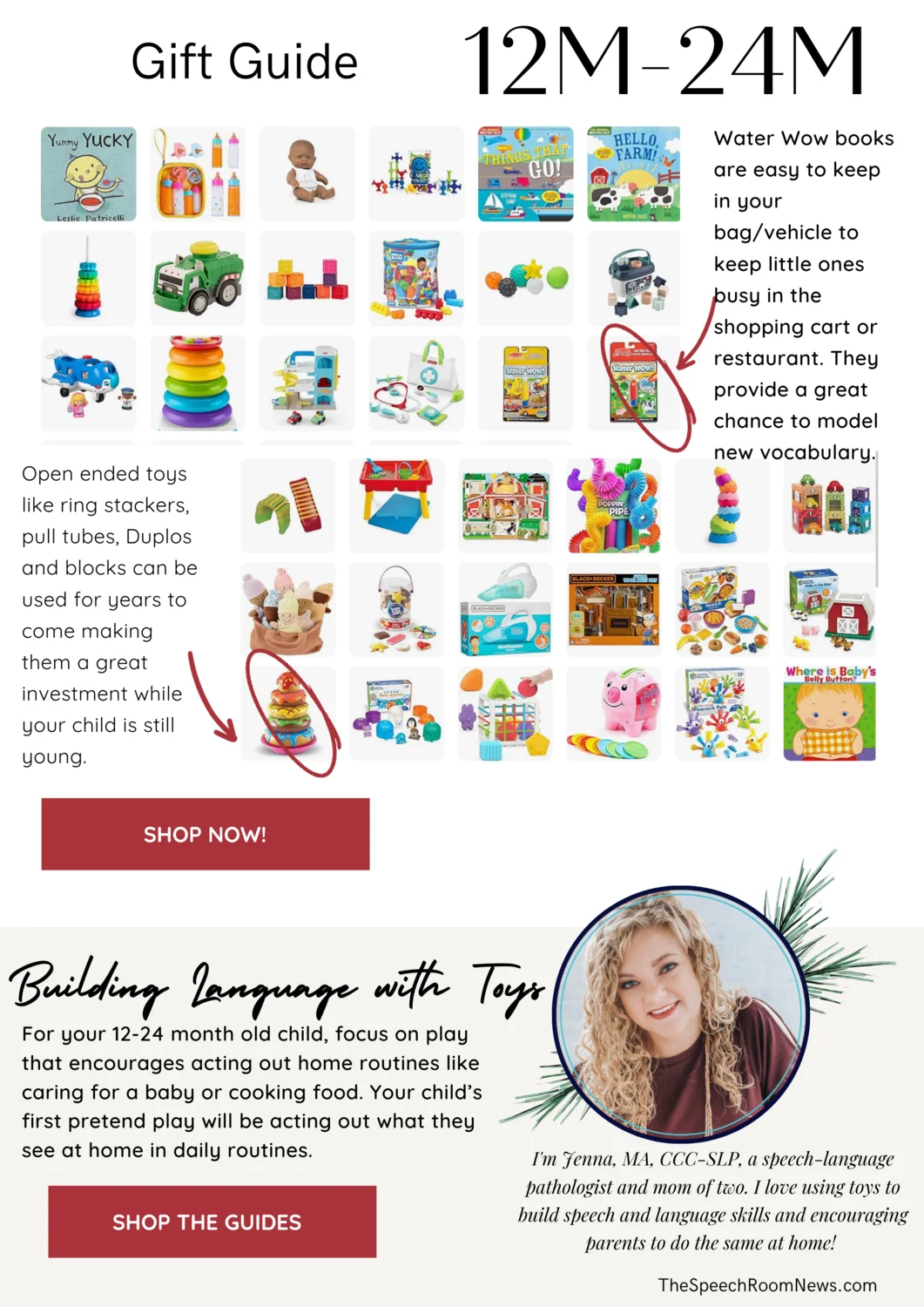
A comprehensive set of holiday gift guides, curated by pediatric Speech-Language Pathologist (SLP) Jenna Kirk, MA, CCC-SLP, has been released to assist parents and educators in selecting toys that actively foster speech and language skills in children. These resources, accessible via Amazon and as a downloadable PDF, categorize recommendations by age group and include specific suggestions for stocking stuffers, emphasizing the critical role of purposeful play in early childhood development. The initiative aims to provide expert-backed recommendations during a peak gift-giving season, helping families make informed choices that contribute significantly to a child’s communicative growth.

The importance of play in a child’s developmental trajectory, particularly concerning speech and language acquisition, is well-documented in pediatric research. Early childhood is a critical window for language development, with the brain rapidly forming neural connections that support communication skills. Engaging in play provides a natural, low-pressure environment for children to experiment with sounds, words, and social interactions, which are foundational to language learning. Structured and unstructured play alike offer myriad opportunities for vocabulary expansion, grammatical understanding, narrative development, and pragmatic skills. For instance, imaginative play with dolls or action figures encourages role-playing and storytelling, requiring children to develop characters, plotlines, and dialogue. Constructive play, such as building with blocks or LEGOs, can prompt descriptive language as children explain their creations or follow instructions. Sensory play, involving materials like sand or water, often elicits rich descriptive vocabulary related to textures, temperatures, and actions. These forms of engagement are not merely entertainment but vital educational tools that underpin cognitive and linguistic development.

Statistics underscore the prevalence and impact of speech and language disorders, making resources like these gift guides particularly relevant. According to the Centers for Disease Control and Prevention (CDC), approximately 1 in 12 children aged 3-17 years in the United States has had a disorder of speech, voice, language, or swallowing in the past 12 months. The American Speech-Language-Hearing Association (ASHA) reports that about 8-9% of young children have a speech sound disorder, and 5% of children have a language disorder. Conditions such as Childhood Apraxia of Speech (CAS), a neurological speech sound disorder where the brain has difficulty planning the movements needed for speech, present unique challenges. Ms. Kirk’s personal experience includes parenting a child diagnosed with Childhood Apraxia of Speech, providing her with a unique dual perspective as both a seasoned clinician and a parent navigating the complexities of speech development. This lived experience deeply informs her approach to toy selection, prioritizing items that can effectively support diverse communicative needs and developmental stages.

Ms. Kirk, drawing on her extensive professional background as a pediatric speech-language pathologist, developed these guides based on specific criteria known to foster speech and language development. While the original outline for these criteria was not explicitly detailed in the announcement, standard SLP principles for toy selection typically emphasize several key attributes:

- Interaction-Focused: Toys that naturally encourage turn-taking, conversation, and joint attention between a child and a caregiver or peers. Examples include board games, simple puzzles that require collaboration, or dramatic play sets.
- Open-Ended and Imaginative: Toys that do not have a single "right" way to play, fostering creativity, storytelling, and flexible language use. Building blocks, play-doh, dress-up clothes, dolls, and animal figures fall into this category, allowing children to create their own narratives and expand their descriptive vocabulary.
- Cause-and-Effect: For younger children, toys that demonstrate clear cause-and-effect relationships can help build understanding of action-reaction sequences and introduce early communication concepts. Pop-up toys, simple musical instruments, or buttons that activate sounds are examples.
- Sensory-Rich: Toys that engage multiple senses can provide a wealth of vocabulary opportunities related to touch, sight, and sound. Sand and water tables, textured blocks, or musical toys can be highly beneficial.
- Problem-Solving: Toys that require children to think critically and articulate their thought processes, such as shape sorters, simple construction kits, or matching games, can enhance logical reasoning and expressive language.
- Durability and Safety: As with all children’s products, safety and durability are paramount, ensuring the toys are appropriate for the child’s age and developmental stage, free from hazards, and built to withstand repeated play.
The structure of the gift guides reflects a meticulous approach to developmental appropriateness. By categorizing toys by age, Ms. Kirk ensures that the recommendations align with typical developmental milestones. For instance, toys for infants and toddlers often focus on early vocalizations, receptive language (understanding words), and basic social interactions, while recommendations for preschoolers and early elementary children might target more complex sentence structures, narrative skills, and phonological awareness. The inclusion of "stocking stuffer" ideas further expands the utility of the guides, recognizing that smaller, often portable items can also be powerful tools for language stimulation, facilitating brief, focused interactions that reinforce learning in various settings. These smaller items often include things like mini-books, card games, fidget toys that can encourage descriptive language, or small figures for imaginative play.

The broader implications of such specialized gift guides extend beyond individual families. They serve as a valuable educational resource for early childhood educators, therapists, and even extended family members who may be seeking meaningful gifts. By demystifying the process of selecting developmentally beneficial toys, the guides empower adults to move beyond purely entertainment-driven purchases and instead invest in tools that foster foundational skills. This proactive approach to child development, especially during a time when consumer choices can be overwhelming, underscores the importance of informed decision-making in supporting children’s growth. The emphasis on play-based learning aligns with modern pedagogical philosophies that recognize children learn best through active engagement and exploration rather than passive reception.

The availability of these curated lists, particularly through accessible platforms like Amazon, simplifies the procurement process for busy parents and caregivers. The option to download a PDF version also provides a tangible resource that can be shared or referenced offline. This initiative represents a concerted effort to bridge the gap between clinical expertise in speech-language pathology and practical consumer choices, ensuring that the act of giving a gift can simultaneously be an act of nurturing a child’s critical communication abilities. In a world increasingly dominated by digital entertainment, these guides serve as a timely reminder of the enduring power of tangible play in shaping young minds and voices.

Families and educators interested in leveraging these expert recommendations can access the full range of gift guides directly through Ms. Kirk’s curated Amazon storefront at amazon.com/shop/speechroomnews. Additionally, a comprehensive downloadable PDF guide detailing all recommendations is available at thespeechroomnews.com/wp-content/uploads/2023/11/Christmas-Toy-Guide.pdf. These resources offer a practical pathway for fostering robust speech and language development in children, transforming holiday gift-giving into an opportunity for profound developmental support.
