

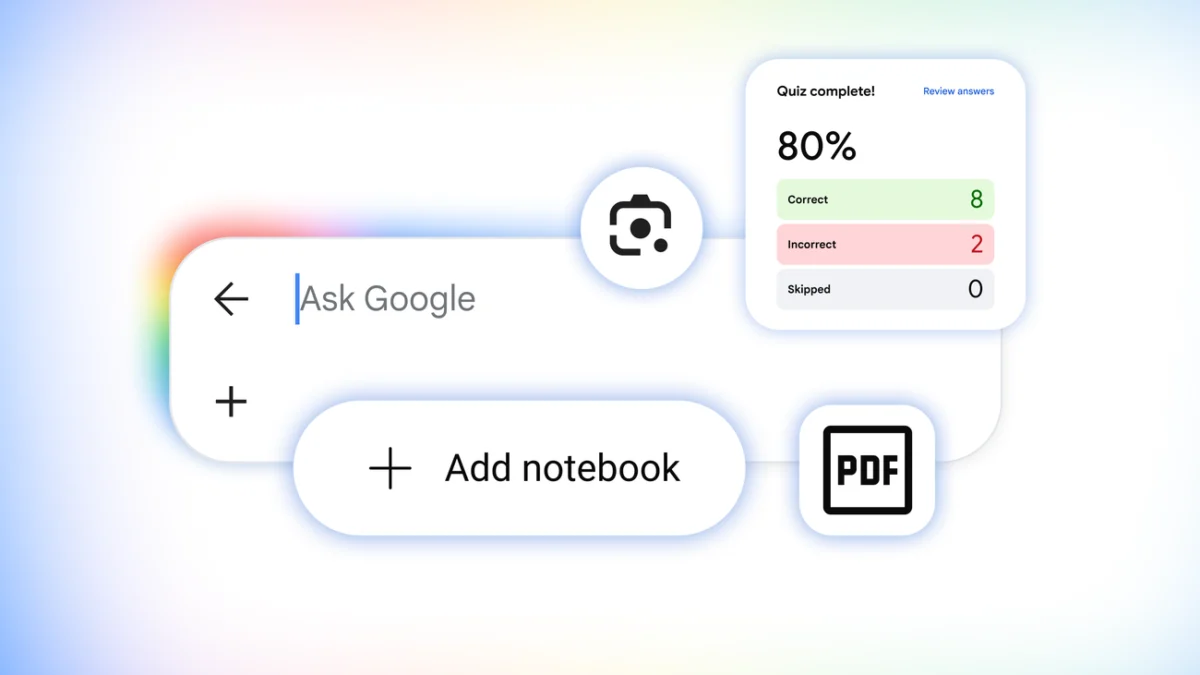
Google has announced a significant suite of updates to its Search platform, integrating advanced generative artificial intelligence to transform the search engine from a directory of links into an interactive educational companion. Led by Awaneesh Verma, Distinguished Product Manager for Search, the initiative introduces five primary features designed to assist students and lifelong learners in mastering complex concepts, practicing for high-stakes examinations, and organizing academic materials. These tools, which leverage Google’s Gemini models and Lens technology, are being positioned as "safe by design" educational aids intended to supplement traditional classroom learning during the 2026 back-to-school season.
The updates represent a pivot in how Google handles educational queries. Rather than providing static snippets of text, the platform will now generate dynamic simulations, customized practice assessments, and structured study guides. These features are rolling out globally in English, with specific integrations for mobile applications on both Android and iOS platforms.
Generative UI and Interactive Simulations for Conceptual Clarity
One of the most technically significant updates is the introduction of generative user interface (UI) capabilities within AI Overviews and the dedicated "AI Mode." This feature allows Search to go beyond text-based explanations by creating custom tools and visual simulations in real-time. For instance, a student researching the pH scale will no longer be limited to viewing a static chart; the AI can now generate an interactive visual that allows the user to plot specific items, such as citrus fruits or household chemicals, to see their chemical properties in action.
This shift toward interactive visuals is grounded in educational psychology principles regarding active learning. By allowing users to manipulate variables within a simulation, the platform encourages a deeper cognitive engagement than passive reading. Google has confirmed that these generative UI capabilities have launched globally in English within AI Mode and are currently expanding into the standard AI Overviews found on the main search results page.
Data-Driven Practice Quizzes and Educational Partnerships
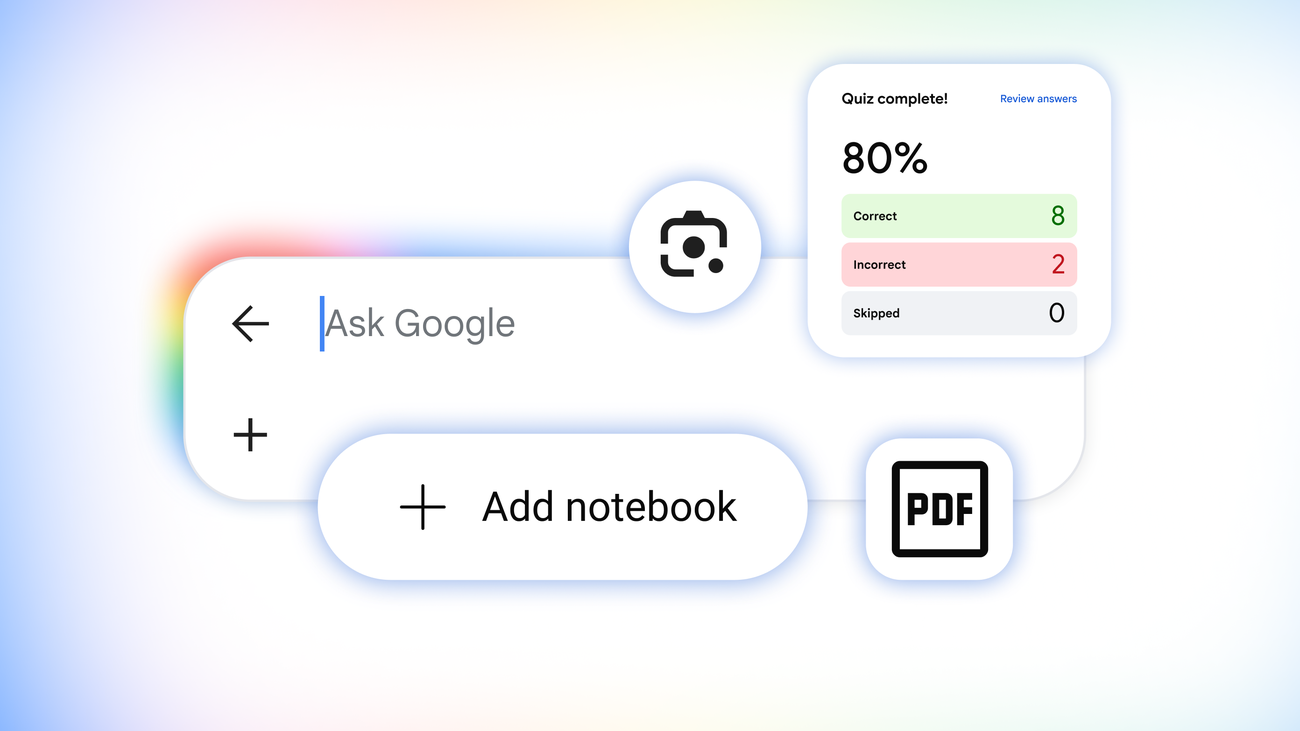
To address the needs of students preparing for standardized testing, Google has integrated interactive practice quizzes directly into the Search interface. These quizzes cover a broad spectrum of subjects, including mathematics, the humanities, and foreign languages. Notably, the system is specifically calibrated to assist with major international and domestic examinations, including the SAT, ACT, GRE, LSAT, MCAT, AP exams, and international tests such as the JEE and NEET in India, and the ENEM in Brazil.
To ensure the pedagogical accuracy of these materials, Google has entered into strategic partnerships with established education and test-prep organizations. These partners include:
- The Princeton Review
- PhysicsWallah
- Careers360
- Akira Enem
By utilizing content from these authoritative sources, Google aims to provide students with high-quality, relevant practice questions that mirror the rigor of actual exams. The quizzes include detailed explanations for each response and provide links to external resources for further study. This feature is currently available free of charge in English-speaking markets globally.
The Evolution of Google Lens: Step-by-Step Problem Solving
Google Lens is receiving a substantial update that transitions it from a visual identification tool to a functional academic coach. Through a new "Check My Work" feature, students can use their smartphone cameras to photograph handwritten or printed assignments. The AI then analyzes the problem—whether it be a complex algebraic equation or a physics problem—and provides an AI Overview that breaks down the necessary steps for a solution.
Rather than simply providing a final answer, the tool is designed to identify specific points of error in a student’s work and offer "coaching" to help them overcome conceptual hurdles. If a student requires further clarification, they can transition the session into AI Mode to ask follow-up questions. This feature is scheduled for a global rollout in English over the coming weeks, targeting the mobile user base that increasingly relies on smartphones for academic tasks.
Integration of NotebookLM and Centralized Study Management
Google is also merging its specialized learning tool, formerly known as NotebookLM and now rebranded as Gemini Notebook, directly into the Search environment. This integration allows users to create dedicated digital notebooks for specific classes or research projects within AI Mode.
Students can populate these notebooks with a diverse array of source materials, including:
- Classroom lecture slides and syllabi
- Web articles and research papers
- Transcripts of previous AI Mode conversations
- Personal notes
The notebook feature utilizes Retrieval-Augmented Generation (RAG) to ensure that the AI’s responses are grounded in the specific documents provided by the user. This reduces the risk of AI "hallucinations" and ensures that the insights generated are relevant to the student’s specific curriculum. Existing notebooks created in the Gemini app or the standalone NotebookLM site will automatically sync with Search, maintaining a consistent workflow across more than 180 countries.
Automated Document Generation and Study Guide Synthesis
The fifth pillar of the update is the ability for Search to generate structured documents based on scattered raw data. Students can now prompt AI Mode to synthesize various inputs—such as a photo of handwritten notes combined with a PDF of a textbook chapter—into a cohesive "one-pager" or study guide.
This file generation capability supports multiple formats, including Google Docs, Slides, and Sheets, as well as standard text files. For example, a student could upload a week’s worth of lecture materials and ask the AI to generate a summary of key terms or a structured spreadsheet of historical dates and events. This feature has launched globally in English for AI Mode, with plans to integrate it into AI Overviews in the near future.
Chronology of AI Integration in Google Search
The current rollout is the latest phase in a multi-year effort to reinvent Search for the generative AI era.
- May 2023: Google introduces the Search Generative Experience (SGE) as an experimental feature in Search Labs.
- Late 2023: The introduction of "Socratic" features in Lens begins, allowing for basic math problem solving.
- May 2024: AI Overviews officially launch to the general public in the United States.
- August 2024: Google announces the global expansion of AI Overviews to over 100 countries and introduces the current suite of educational tools.
- September 2024: Scheduled rollout of the Lens "Check My Work" coaching feature and expanded language support for notebooks.
Industry Context and Competitive Landscape
Google’s focus on education comes at a time of intense competition in the EdTech sector. Since the launch of ChatGPT in late 2022, traditional education platforms like Chegg and Khan Academy have had to pivot rapidly to incorporate AI. By integrating these features directly into the world’s most-used search engine, Google is positioning itself as the primary gateway for student inquiries, potentially disrupting the market for third-party study aids.
Data from the educational sector suggests a high demand for these tools. According to recent industry reports, over 70% of college students have utilized some form of AI to assist with their coursework. However, concerns regarding academic integrity and the accuracy of AI-generated information remain prevalent among educators. Google’s "safe by design" approach and its reliance on authoritative partners like The Princeton Review are seen as attempts to mitigate these concerns and build trust with the academic community.
Analysis of Broader Implications
The shift toward "AI-as-tutor" within Google Search has significant implications for the future of digital literacy and the digital divide. On one hand, these tools democratize access to high-quality test preparation and personalized coaching, which were previously often hidden behind paywalls or required expensive private tutoring. The availability of these tools free of charge could potentially level the playing field for students in under-resourced environments.
On the other hand, the automation of study guide creation and problem-solving raises questions about the development of critical thinking skills. If an AI can synthesize a one-pager from a week of lectures, students may be less inclined to engage in the cognitively demanding task of summarizing and organizing information themselves—a process that is often vital for long-term retention.
Furthermore, the integration of personal documents into "Notebooks" signals a move toward a more personalized, data-heavy search experience. As Google Search becomes a repository for a student’s entire academic life, the importance of data privacy and the security of educational records becomes paramount.
As these tools continue to roll out globally, the educational community will likely monitor their impact on student performance and academic honesty. For now, Google’s latest updates represent one of the most comprehensive attempts to date to harness generative AI for the specific purpose of structured, curriculum-based learning.
