

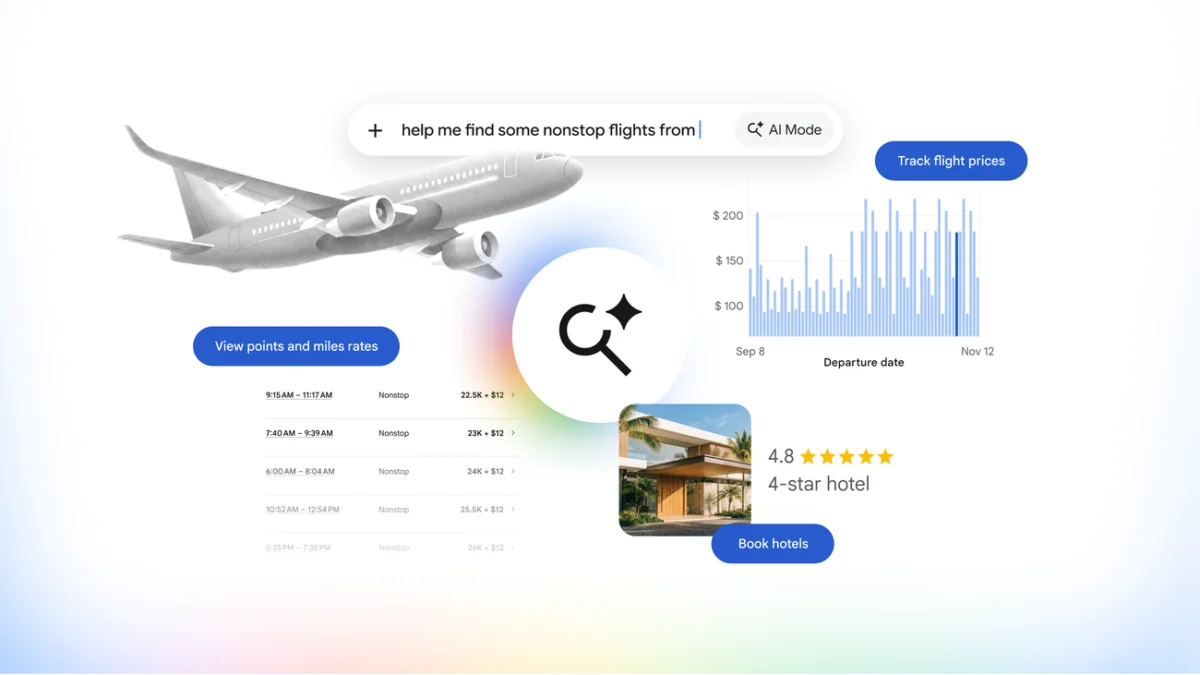
Google has announced a significant expansion of its AI-integrated search capabilities, introducing three transformative features designed to streamline the travel planning and booking process. These updates, integrated directly into the Search Generative Experience (SGE)—referred to as AI Mode—allow users to track flight price fluctuations, view redemption rates for loyalty points and miles, and complete hotel reservations without leaving the search interface. As the travel industry increasingly pivots toward artificial intelligence to manage complex logistics, Google’s latest deployment marks a decisive move toward transforming its search engine into a comprehensive "AI travel agent."
The enhancements are part of a broader strategy to leverage Large Language Models (LLMs) to synthesize vast amounts of real-time data, providing users with actionable insights rather than a mere list of hyperlinks. By consolidating flight tracking, loyalty program management, and secure payment processing via Google Pay, the company aims to reduce the "tab fatigue" and cognitive load traditionally associated with organizing international and domestic trips.
The Integration of Real-Time Flight Price Monitoring
The first major update brings the core functionality of Google Flights directly into the conversational AI Mode. For over a decade, Google Flights has been a staple for travelers seeking to optimize their budgets through historical price data and trend forecasting. Now, users can initiate these complex queries through natural language. Instead of manually inputting dates and destinations into a grid, a user can describe their specific needs to the AI, such as "Find me the cheapest flights to Tokyo next spring," and the system will present a curated list of options from more than 300 partner airlines and travel sites.
A critical component of this update is the "track price" command. In the past, setting up a price alert required navigating to a specific tool; now, users can simply state, "Track these flight prices for me," during a chat. The AI Mode then monitors the specific route and dates, sending automated email notifications the moment a significant price drop occurs. This feature is being launched on a massive scale, with availability in more than 180 countries and territories. This global rollout reflects the universal demand for price transparency in a volatile post-pandemic aviation market where ticket prices are influenced by fluctuating fuel costs, labor shortages, and high demand.
Navigating the Complexity of Loyalty Points and Miles
Perhaps the most technically complex addition to AI Mode is the ability to view costs in points or miles. The "points and miles" ecosystem is notoriously opaque, with redemption values varying wildly depending on the date, route, and carrier. Traditionally, travelers had to log into individual airline or hotel portals to check availability for reward stays or flights.
Google’s new feature allows users to query their specific loyalty programs directly. For instance, a traveler can ask, "How many American Airlines miles do I need for a flight from New York to London in December?" The AI then retrieves real-time redemption data from Google’s partners. Initial support includes major players such as Alaska Airlines, Hawaiian Airlines, American Airlines, Choice Hotels International, Hilton, and Wyndham Hotels & Resorts.
Google has confirmed that the program will expand rapidly. In the coming weeks, the system will integrate data from Accor, Flying Blue (Air France-KLM), Hyatt, LATAM Airlines, and the Lufthansa Group. By aggregating this data into a single interface, Google is addressing a significant pain point for the estimated 3.3 billion loyalty program members worldwide who often struggle to maximize the value of their earned rewards.
Seamless Hotel Booking and the "Merchant of Record" Model
The third and most significant shift is the introduction of direct hotel booking within AI Mode. This feature effectively closes the loop between discovery and transaction. When a user finds a hotel through the AI’s recommendations—which include synthesized guest reviews and comparisons of key amenities—they can now proceed to book the room without being redirected to a third-party site in the traditional sense.
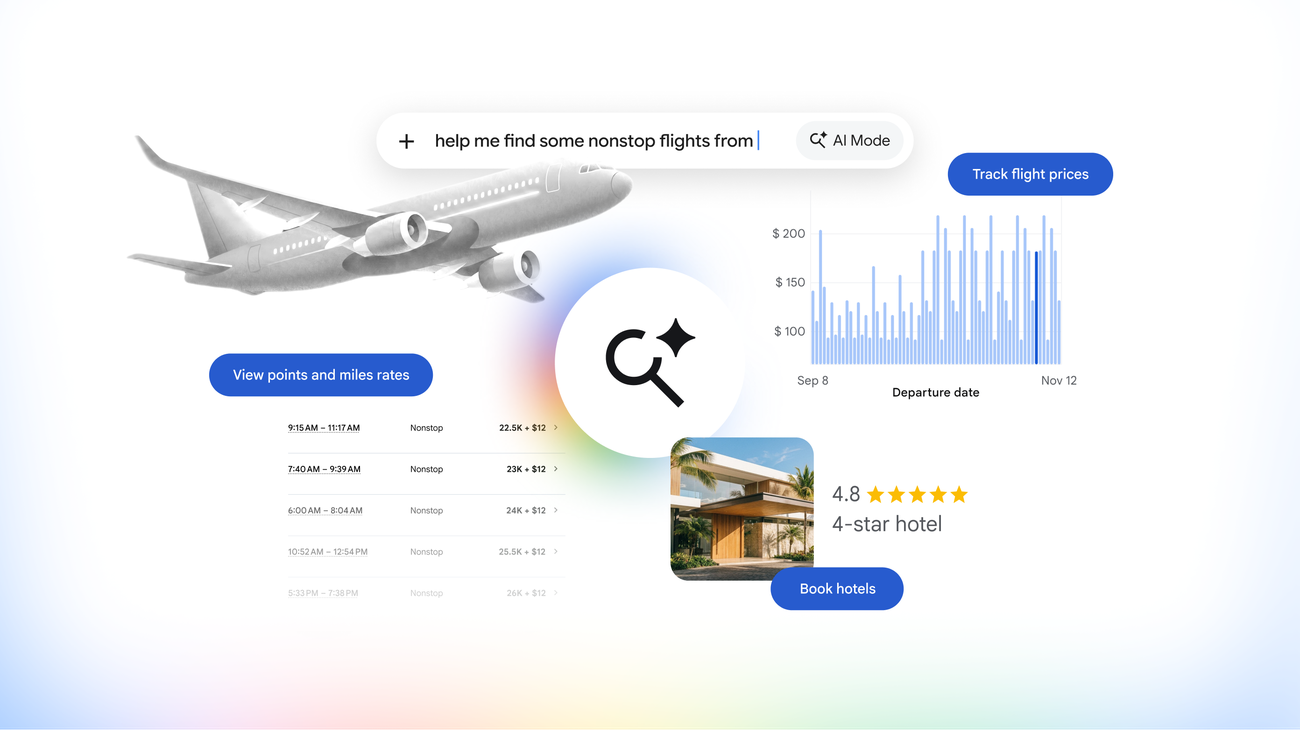
By selecting the "Continue on Google" option, users can choose their room type, review cancellation policies, and finalize the transaction using Google Pay. This streamlined checkout process is powered by integrations with major industry partners, including Booking.com, Expedia, Marriott International, IHG Hotels & Resorts, and Priceline.
Importantly, Google is maintaining a distinction in its business model: while the booking happens within the Google interface, the hotel or the online travel agency (OTA) remains the "merchant of record." This means that the partner handles the actual reservation, payment processing, and subsequent customer service. This approach allows Google to provide a frictionless user experience while avoiding the logistical burdens of becoming a traditional travel agency. This feature is currently rolling out in the United States in English, with plans for broader deployment following the initial pilot phase.
Contextual Background: The Evolution of Google Travel
To understand the impact of these updates, one must look at the chronology of Google’s involvement in the travel sector. The journey began in 2010 with the $700 million acquisition of ITA Software, which provided the data backbone for what would become Google Flights in 2011. Over the next decade, Google gradually integrated hotel search, vacation rentals, and "Things to Do" into its primary search results.
However, the launch of the Search Generative Experience (SGE) in 2023 marked a paradigm shift. Rather than just organizing the world’s information, Google began using AI to interpret it. The transition from "Search" to "AI Agent" is the logical conclusion of this evolution. These new travel features represent the "agentic" turn in AI development, where the system doesn’t just provide information but performs tasks on behalf of the user.
Industry Analysis: Implications for the Travel Ecosystem
The enrichment of AI Mode in Search has profound implications for the travel industry, particularly for Online Travel Agencies (OTAs) and meta-search engines. By keeping users within its own ecosystem for longer periods, Google is challenging the traditional "click-through" model that has defined the internet for decades.
- For Travelers: The primary benefit is efficiency. The average traveler visits up to 38 different websites before booking a trip. Consolidating flight tracking, loyalty redemption, and booking into a single conversational interface could significantly reduce this fragmentation.
- For Airlines and Hotels: Direct integration into AI Mode offers a new channel for customer acquisition. For hotel chains like Hilton or Marriott, appearing in the "points and miles" search results provides a direct line to high-value loyalty members.
- For OTAs: The impact on companies like Expedia and Booking.com is nuanced. While they are partners in the hotel booking feature, they also face increased competition from Google’s own interface. If a user can complete a booking on Google, they may feel less inclined to visit an OTA’s standalone app or website.
- The Regulatory Lens: These updates arrive at a time when big tech companies are under intense scrutiny regarding "self-preferencing." In Europe, the Digital Markets Act (DMA) has already forced Google to change how it displays travel results to ensure fair competition. The global rollout of these AI features will likely be monitored closely by antitrust regulators to ensure that Google does not unfairly disadvantage smaller competitors in the travel space.
Technical Foundation and Future Outlook
The technical architecture behind these features relies on "grounding" the AI in real-world data. Unlike standard chatbots that may hallucinate information, AI Mode in Search is connected to live APIs (Application Programming Interfaces) from airlines and hotel groups. This ensures that the prices and points requirements shown are accurate at the time of the query.
Furthermore, the use of Google Pay as the transactional layer provides a level of security and familiarity that may encourage users to adopt this new booking method. As biometrics and one-tap payments become the standard, the friction of entering credit card details on a mobile device is being eliminated.
Looking ahead, the logical next step for Google’s AI travel tools would be the integration of ground transportation—such as rail and ride-sharing—and the ability to manage mid-trip changes. If the AI can track a flight’s price before booking, it could eventually monitor for delays in real-time and automatically suggest alternative routes or hotel extensions.
Conclusion
The latest updates to AI Mode in Search represent a milestone in the commercialization of generative AI. By moving beyond simple text generation and into the realm of complex transaction management and data synthesis, Google is redefining the expectations for digital travel planning. As these features roll out globally, the success of this initiative will be measured by its ability to balance user convenience with the complex competitive dynamics of the global travel industry. For now, the "dream hotel" and the "perfect itinerary" are no longer just search results; they are becoming integrated components of a single, AI-driven conversation.
