

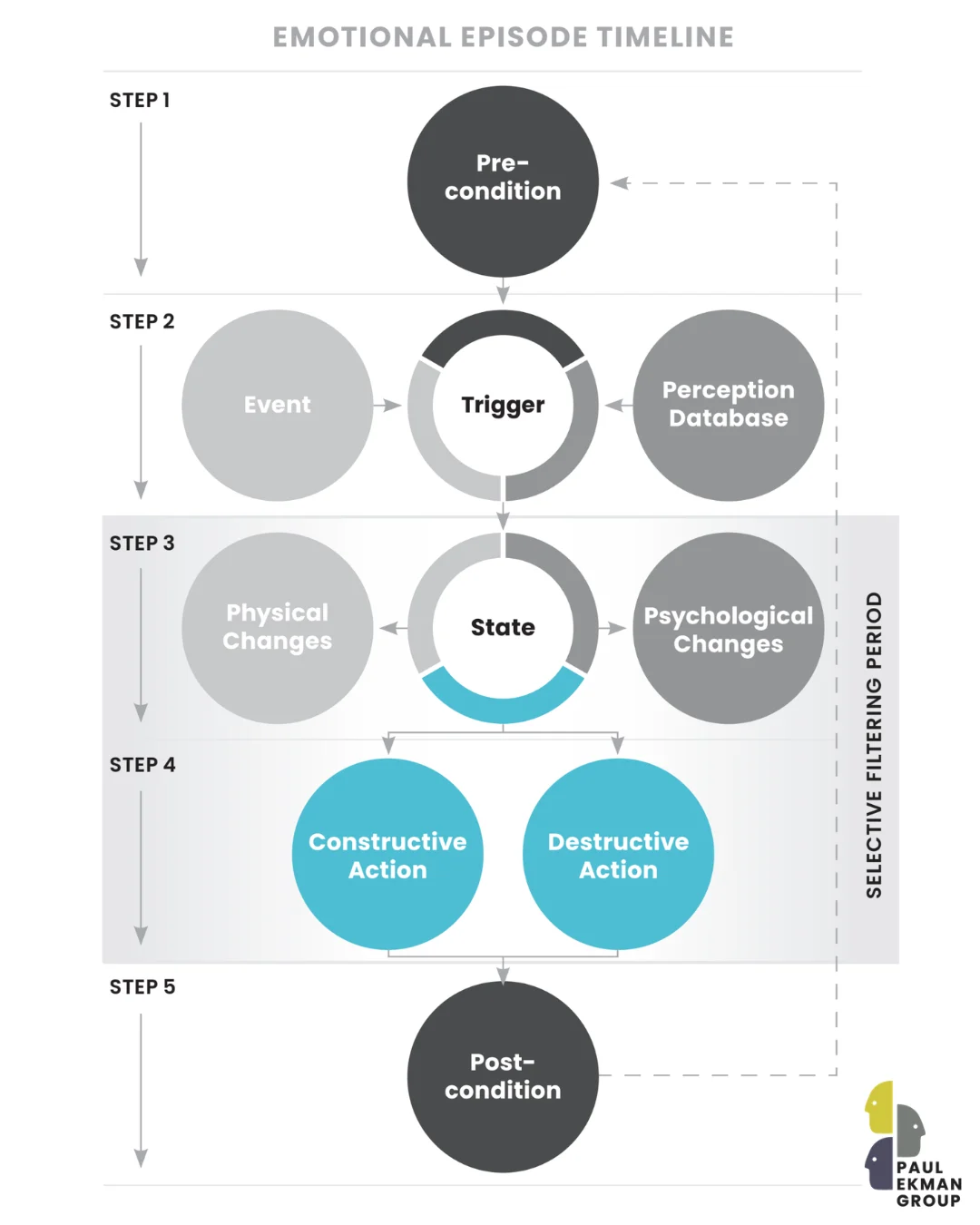
Have you ever found yourself reacting emotionally before you even realized what was happening? This seemingly instantaneous surge of feeling, whether it’s a flash of anger, a wave of sadness, or a spark of joy, is a fundamental aspect of the human experience. While these emotional responses can feel sudden and unpredictable, scientific inquiry has revealed that they actually follow a discernible, albeit complex, process. Understanding this "Emotional Episode Timeline" is not merely an academic pursuit; it offers a powerful framework for recognizing our emotions earlier, responding more skillfully, and ultimately, fostering greater emotional intelligence and well-being. Every emotional experience unfolds through a sequence of events shaped by a confluence of our current circumstances and our deeply ingrained past experiences.
The Three-Step Foundation of Emotional Experience
At its most fundamental level, an emotion can be understood as a three-step process: Trigger – Experience – Response. This basic sequence occurs countless times throughout each day. Many of these small emotional episodes, such as minor frustrations over misplaced keys or a fleeting annoyance at a delayed notification, may not even register in our conscious memory. However, even these seemingly insignificant occurrences carry valuable information about our underlying habits and patterns. For instance, the inclination to blame another for lost items or to engage in harsh self-criticism reveals deeper tendencies. To further illuminate the intricate habits and patterns that shape this three-step process, the Emotional Episode Timeline expands this model into a more detailed five-step progression.
Deconstructing the Emotional Episode Timeline
Step 1: The Pre-Condition – Setting the Emotional Stage
The initial stage of any emotional experience is the "Pre-condition." This refers to the physical and emotional context that an individual brings into any given moment, essentially their "emotional starting point." This pre-condition can significantly influence how susceptible we are to experiencing certain emotions and the intensity with which they manifest. Factors contributing to our pre-condition are diverse and can include:
- Physiological State: This encompasses elements like fatigue from inadequate sleep, hunger, or the lingering effects of physical exertion. A well-rested and nourished individual is likely to have a different emotional baseline than someone experiencing significant physical discomfort.
- Psychological State: This involves our current mental and emotional landscape. Are we feeling stressed from work pressures, elated after receiving positive news, or simply in a state of calm and relaxation? Even subtle shifts in mood, such as feeling generally content or slightly anxious, contribute to our pre-condition.
- Environmental Factors: The immediate surroundings can also play a role. A noisy, chaotic environment might increase irritability, while a peaceful setting could foster a sense of ease.
When we are feeling neutral or at ease, the pre-condition may be minimal. However, when we are already experiencing heightened stress, fatigue, or distress, our pre-condition makes us more vulnerable to emotional triggers, lowering the threshold for an emotional response. For example, a person who has had a sleepless night due to a looming deadline is more likely to experience intense frustration over a minor inconvenience, such as a slow internet connection, compared to someone who is well-rested and relaxed.
Step 2: The Trigger – Event Meets Perception
The "Trigger" is the catalyst that initiates an emotional episode. It is not a singular event but rather a dynamic interplay between an external or internal event and our unique internal "perception database," all filtered through our current pre-condition.
- The Event: An event is anything we encounter, whether it originates externally in our environment or internally within our minds. This can range from interacting with another person, being in a specific place, encountering a particular situation, or even a spontaneous thought, memory, or fantasy. Our sensory portals – sight, smell, sound, taste, and touch – are constantly gathering information about these events.
- Automatic Appraisal: Our minds are wired for survival, and this manifests as a continuous, rapid, and often unconscious process of evaluation. We are constantly monitoring our surroundings and internal states, assessing for potential opportunities or threats. This rapid assessment is known as "automatic appraisal." For instance, a sudden swerve of a car to avoid an animal on the road is a direct result of automatic appraisal recognizing an immediate danger. Similarly, not receiving a text back from a new acquaintance might be automatically appraised as a sign of rejection, even before conscious deliberation.
- The Perception Database: Each individual possesses a unique "Perception Database," an internal repository of emotional memories, learned responses, and ingrained interpretations. This database acts as an "emotional alert system," enabling our minds to quickly determine the significance of an event. It is shaped by two primary sources:
- Past Experiences: Every emotional encounter leaves a trace, influencing how we interpret similar situations in the future. A childhood experience of being publicly embarrassed might lead an adult to be overly sensitive to perceived criticism.
- Innate Predispositions: Evolutionary psychology suggests that humans are born with certain innate predispositions that influence emotional processing, such as an innate fear of snakes or a predisposition to respond to social cues.
Step 3: The State – The Embodied Experience
The "State" represents the emotion itself – the "Experience" step from the simpler model. This is a holistic mind-body phenomenon, characterized by both physical and psychological shifts. This is where the subjective feeling of an emotion comes to life.
- Physical Changes: This dimension of the emotional state involves the body’s physiological responses. Depending on the specific emotion, individuals might experience a racing heart, a flush of heat in the face, tension in the jaw, a churning sensation in the stomach, the welling of tears, muscle contractions, or alterations in breathing patterns. Research consistently demonstrates that each of the universally recognized emotions is associated with a distinct and characteristic pattern of physiological changes that prepare the body for action. For example, fear often triggers a "fight or flight" response, characterized by increased heart rate and respiration, while sadness might be accompanied by a sense of lethargy. It is crucial to note that sometimes we become aware of the trigger only after noticing these bodily sensations.
- Psychological Changes: This refers to the internal, subjective experience of the emotion – the "felt sense." Each emotion possesses a unique "flavor" that colors our conscious awareness. Sadness might be perceived as heavy and slow, while anger can feel hot and sharp. These psychological shifts influence our thoughts, perceptions, and overall mental landscape.
Step 4: The Action – Responding to the Emotion
Emotions are inherently động lực, driving us to act. These actions can be outward and observable, such as yelling in anger or embracing someone in joy, or they can be internal, like suppressing anger or choosing to respond with compassion. Rather than categorizing emotions as inherently "positive" or "negative," a more constructive approach is to evaluate the nature of our actions in response to the emotion. Are these actions:
- Constructive: These actions are beneficial for ourselves and others, leading to resolution, understanding, or positive outcomes. For example, expressing frustration calmly to address a problem is constructive.
- Destructive: These actions are harmful to ourselves or others, leading to conflict, regret, or negative consequences. Yelling uncontrollably in anger or resorting to physical aggression would be considered destructive.
The distinction between constructive and destructive actions is paramount. For instance, while anger is often perceived negatively due to its association with destructive behaviors, "constructive anger" can be a powerful force for positive change. It can motivate individuals to stand up against injustice, advocate for themselves, or set boundaries. The key lies in how this energy is channeled.
Step 5: The Post-Condition – The Lingering Impact and Learning Opportunity
Every emotional episode leaves a residual effect, a "Post-condition." This is the state of affairs after the initial emotional response has occurred. If an individual yelled in anger, the recipient might respond with their own anger, or perhaps with fear. If anger was suppressed, a lingering irritation might persist, potentially influencing future interactions. These post-conditions can act as seeds for subsequent emotional episodes, initiating a new cycle. For example, regret over past actions might trigger anxiety or shame.
However, these post-conditions also present a vital opportunity for reflection and learning. By pausing and examining what transpired – the trigger, the physical and psychological state, and the subsequent actions – we can gain invaluable insights into our emotional patterns. This self-awareness is the cornerstone of developing more adaptive and skillful emotional responses over time.
The Selective Filtering Period: A Crucial Modifier
It is important to understand that a "Selective Filtering Period" is not a distinct sixth step but rather a phenomenon that occurs during Steps 3 (State) and 4 (Action). When an emotion is actively being experienced, our perception tends to narrow. We engage in "selective filtering," prioritizing information that aligns with the prevailing emotion and often disregarding contradictory evidence.
- In Fear: Individuals may become hyper-focused on perceived threats, both real and imagined, potentially overlooking elements of safety or reassurance.
- In Anger: The focus might shift exclusively to the frustrating aspects of a situation, leading to a tuning out of anything that is proceeding smoothly or positively.
This filtering mechanism is a survival adaptation, designed to help us react quickly to perceived dangers. However, if we are unaware of this process, it can significantly distort our perception of reality, leading to biased judgments and potentially exacerbating emotional distress. Recognizing this filtering effect is crucial for maintaining a more balanced and objective perspective, especially during intense emotional states.
Implications for Emotional Intelligence and Well-being
The understanding of the Emotional Episode Timeline offers profound implications for enhancing emotional intelligence and overall well-being. By dissecting the intricate stages of emotional experience, individuals can cultivate:
- Enhanced Self-Awareness: Recognizing the pre-condition allows individuals to identify their vulnerabilities and understand why certain situations might be more emotionally charged on particular days. Awareness of the trigger stage, particularly the role of automatic appraisal and the perception database, helps in deconstructing the origins of emotional responses.
- Improved Emotional Regulation: By understanding the physical and psychological manifestations of emotions (the State), individuals can learn to identify the early signs of an unfolding emotion and intervene more effectively. This allows for a greater ability to manage the intensity and duration of emotional experiences.
- Skillful Action: The emphasis on the action stage shifts the focus from passively experiencing emotions to actively choosing how to respond. This empowers individuals to move beyond impulsive or destructive reactions towards more constructive and beneficial behaviors.
- Pattern Recognition and Change: The post-condition stage provides a crucial window for reflection. By analyzing the outcomes of emotional episodes, individuals can identify unhelpful patterns and consciously work towards changing them, fostering personal growth and resilience.
A Deeper Dive into Emotion Science
The exploration of emotional experience is an ongoing field of scientific inquiry. Resources like "The Feelings Field Guide" delve deeper into these concepts, offering practical exercises and activities designed to build emotional awareness. Furthermore, the "Atlas of Emotions," a free interactive tool developed by Drs. Paul and Eve Ekman, provides a comprehensive framework for understanding how emotions arise, unfold, and influence our actions, with an accompanying book currently in development to further expand on these insights.
Frequently Asked Questions
- Why do I react before I even know what’s happening? Automatic appraisal, a core component of the trigger stage, operates unconsciously. Your brain evaluates situations for potential help or harm at a speed that often outpaces conscious awareness. This rapid, pre-cognitive processing means your emotional response can begin before you’ve had time to consciously process the event.
- Why do small things set me off more on some days than others? Your "pre-condition" is the primary driver here. Factors like fatigue, hunger, stress levels, or even hormonal fluctuations can significantly lower your emotional threshold, making you more susceptible to even minor provocations. On days when your pre-condition is optimal (well-rested, fed, and calm), you are likely to be more resilient.
- Why can’t I think clearly when I’m upset? During intense emotional states (the State and Action stages), you enter a "selective filtering period." Your perception narrows to focus on aspects of the situation that align with your current emotion. This cognitive bias can hinder rational thought and problem-solving as your brain prioritizes immediate emotional processing over broader situational awareness.
- Can I control how I react to an emotion? While the trigger and state stages are largely automatic and less amenable to direct control, the action stage is where conscious choice becomes possible. By developing awareness of the unfolding emotional process, you can learn to pause, choose your response deliberately, and intervene to select more constructive actions, even when the initial emotional surge feels overwhelming. This is the essence of emotional regulation.
