

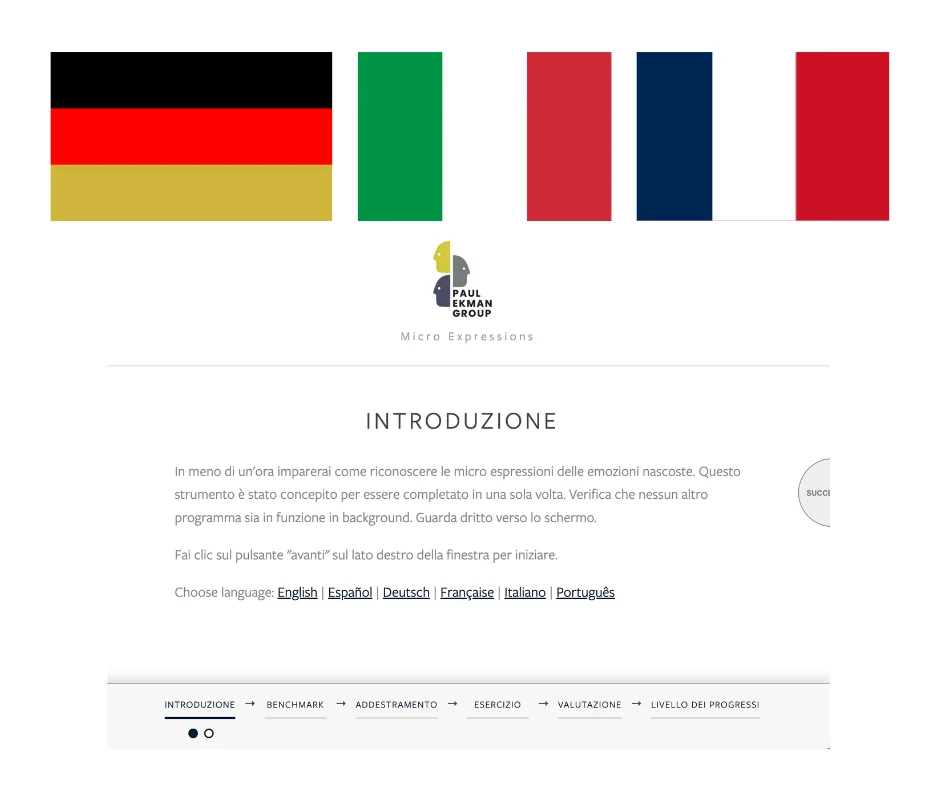
The Paul Ekman Group, a leading authority in the science of emotions and facial expressions, has significantly broadened the accessibility of its renowned online micro expression training tools with the official launch of Italian, French, and German language versions. This strategic expansion marks a pivotal moment in the organization’s mission to democratize emotional intelligence and foster deeper interpersonal understanding on a global scale. The newly translated modules now offer individuals, educators, mental health professionals, law enforcement officers, corporate leaders, and anyone interested in human behavior the opportunity to enhance their observational and analytical skills in their native tongue.
This initiative represents a substantial investment by the Paul Ekman Group in making its science-based emotional skills training more inclusive and impactful. For years, the organization has been at the forefront of research into micro expressions – fleeting, involuntary facial movements that can betray a person’s true emotional state, often before they are consciously aware of it themselves. These subtle cues, which can last for as little as 1/25th of a second, are critical for discerning honesty, understanding hidden feelings, and navigating complex social dynamics. The ability to accurately detect and interpret these expressions has profound implications across various professional fields and personal relationships.
The expansion into Italian, French, and German follows previous successful translations into Spanish and Portuguese, indicating a sustained commitment to serving a diverse international clientele. All seven of the core online micro expression training tools, previously available only in English, are now fully integrated into the new language platforms. Users will be guided through a seamless selection process, prompted to choose their preferred language at the commencement of each training module. This user-centric approach ensures an immersive and effective learning experience, removing language barriers that might have previously limited participation.
A Deeper Dive into the Science of Micro Expressions
The concept of micro expressions was pioneered by Dr. Paul Ekman, a renowned psychologist and expert in human emotions. His groundbreaking research, building upon the work of earlier scientists like Carroll Izard, established a universal set of seven basic emotions – happiness, sadness, anger, fear, surprise, disgust, and contempt – that are expressed through distinct facial configurations across all human cultures. Micro expressions are the rapid, involuntary manifestations of these emotions. Unlike deliberate facial expressions, they are difficult to suppress or fake, making them invaluable indicators of underlying feelings.
The Paul Ekman Group’s training programs are meticulously designed to equip learners with the ability to identify these subtle facial cues. Through a rigorous curriculum that combines theoretical knowledge with practical application, participants learn to recognize the specific muscle movements associated with each emotion, the speed and duration of their appearance, and their contextual significance. This training is not merely about identifying emotions; it’s about developing a more nuanced understanding of human behavior, enhancing empathy, and improving communication.
The Strategic Significance of Multilingual Offerings
The decision to translate the micro expression training into Italian, French, and German is strategically significant for several reasons. Firstly, these languages are spoken by hundreds of millions of people across Europe and beyond, representing substantial markets for professional development and personal growth. By offering the training in these native languages, the Paul Ekman Group is tapping into a broader audience that may have previously found the English-only content to be a barrier.
Secondly, the nature of micro expression analysis often requires a high degree of cultural nuance and context, even when the core expressions are universal. While the fundamental facial movements are the same, how they are displayed, interpreted, and responded to can be influenced by cultural norms. Providing training in local languages allows for a more culturally sensitive and relevant learning experience. It ensures that the scientific principles are conveyed in a manner that resonates with the linguistic and cultural backgrounds of the learners.
Timeline and Development Process
The expansion into these new languages has been a meticulous process, likely spanning several months, if not longer. The development of such comprehensive translation projects involves not only linguistic accuracy but also the careful adaptation of cultural references and the technical integration of the localized content into the online platform.
The initial phase would have involved identifying the target languages based on market research and demand. Subsequently, a team of professional translators, likely with expertise in psychological and scientific terminology, would have been engaged to translate all textual content, including course materials, instructions, and user interfaces. This would be followed by a rigorous review process by subject matter experts to ensure fidelity to the original scientific content and cultural appropriateness. Finally, technical teams would have worked to integrate the translated content seamlessly into the existing digital infrastructure, ensuring a smooth user experience.
While the exact timeline for this specific expansion was not detailed, the Paul Ekman Group’s previous translations suggest a systematic approach to global outreach. Their presence in over 230 countries indicates a long-standing commitment to international accessibility. This latest rollout is a continuation of that trajectory, building upon established multilingual capabilities.
Supporting Data and the Impact of Emotional Intelligence
The importance of emotional intelligence, of which micro expression recognition is a key component, is increasingly supported by data from various fields. Studies have consistently shown a strong correlation between high emotional intelligence and success in both professional and personal spheres.
For instance, research published in the Journal of Applied Psychology has indicated that emotional intelligence is a significant predictor of job performance, particularly in roles requiring interpersonal interaction and leadership. Companies that invest in emotional intelligence training for their employees often report improvements in team cohesion, conflict resolution, and overall productivity. A meta-analysis of studies on emotional intelligence and workplace performance, published in Human Resource Management Review, found a positive and significant relationship between EI and various job-related outcomes.
In law enforcement, the ability to read micro expressions can be crucial for interrogation, witness assessment, and de-escalation. In mental health, understanding a patient’s true emotional state, even when they are struggling to articulate it, can lead to more effective therapeutic interventions. In business, it can aid in negotiation, customer service, and leadership. The Paul Ekman Group’s training aims to provide these critical skills, fostering a more empathetic and accurate understanding of human interactions.
Official Statements and Future Outlook
While specific direct quotes from key personnel were not provided in the initial announcement, the statement "We’re excited to share that Paul Ekman Group’s online micro expression training tools are now available in Italian, French, and German: making our science-based online emotional skills training more accessible than ever before!" clearly articulates the organization’s enthusiasm and strategic intent. The underlying sentiment is one of commitment to their mission.
The statement further elaborates on the mission: "At Paul Ekman Group, our mission is to help people around the world better understand themselves and others by improving emotional awareness skills." This highlights the core purpose driving these global expansions. The ease of access for "individuals, educators, professionals, and organizations across Europe and beyond" underscores the broad applicability and intended reach of these newly translated resources.
Looking ahead, the Paul Ekman Group has indicated a forward-looking strategy with the statement, "Coming Soon: We’re actively working on expanding our offerings to additional languages. If there’s a language you’d like to see added, let us know here." This proactive approach suggests a continuous effort to identify and address unmet needs in the global market. This open invitation for feedback demonstrates a user-centric development philosophy, allowing the community to influence the direction of future language expansions.
Broader Implications and Accessibility
The expansion into Italian, French, and German represents more than just an increase in language options; it signifies a crucial step towards global equity in access to high-quality emotional intelligence training. In a world where understanding and navigating complex emotions is increasingly vital, making these tools available in native languages removes significant barriers for non-English speakers. This democratizes access to scientific knowledge and practical skills that can empower individuals to improve their lives and professional effectiveness.
The foundation of Dr. Ekman’s work, which emphasizes the universality of emotions and facial expressions, is inherently global. These new translations are a natural extension of this philosophy, ensuring that the science of emotion can be understood and applied by a wider demographic. The Paul Ekman Group’s commitment to making emotional awareness and deception detection skills more available worldwide is evident in their consistent efforts to bridge linguistic and cultural divides.
Conclusion: A Global Community United by Emotion
The introduction of Italian, French, and German language options for the Paul Ekman Group’s micro expression training tools is a landmark achievement. It reinforces the organization’s dedication to its global mission and its understanding of the universal human need for emotional literacy. By making these powerful tools more accessible, the Paul Ekman Group is not only expanding its reach but also fostering a more connected and understanding global community. As the organization continues to develop and translate its offerings, it remains a vital resource for anyone seeking to deepen their understanding of themselves and the people around them, regardless of the language they speak. The invitation for user input on future language expansions signals a collaborative approach, promising further growth and accessibility in the years to come.
