

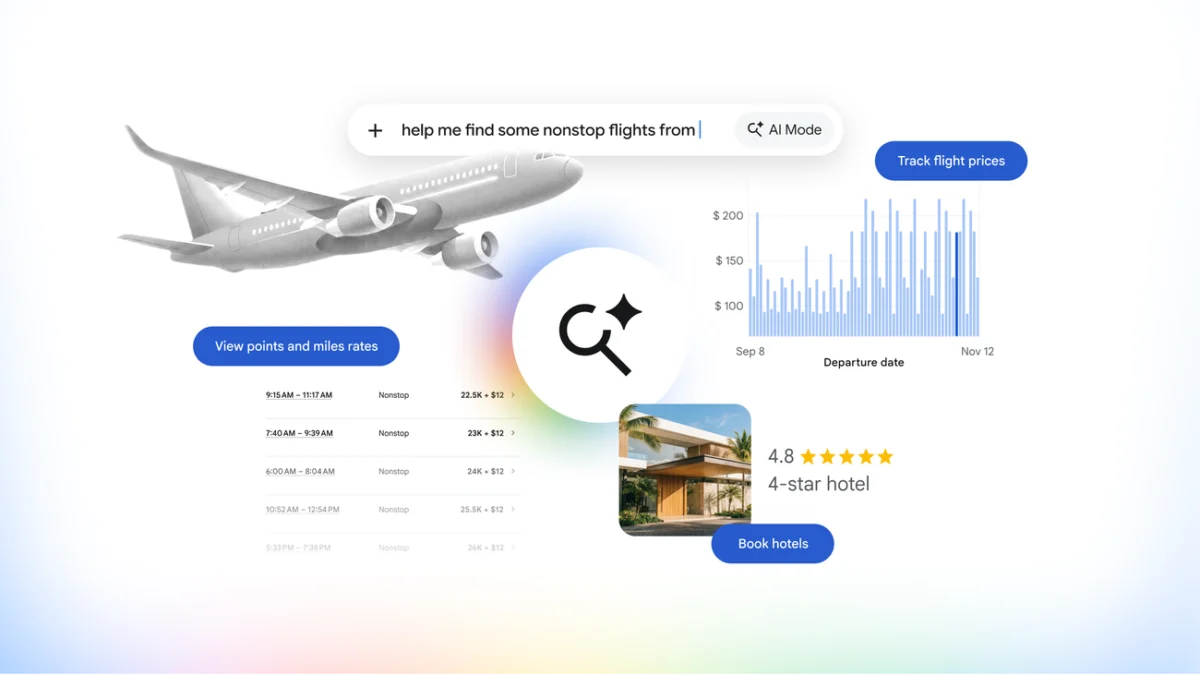
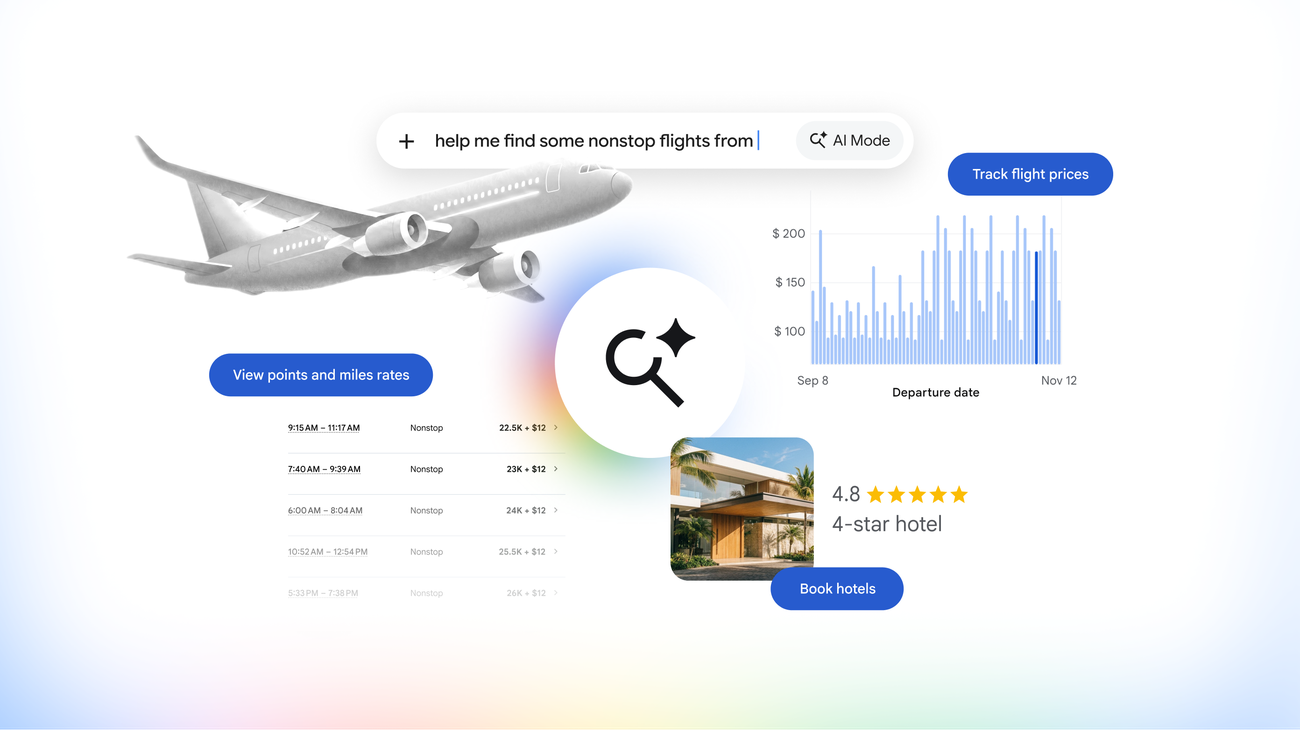
Google has unveiled a significant suite of upgrades to its artificial intelligence-driven search capabilities, signaling a transformative shift in how consumers interact with travel data. By integrating advanced generative AI directly into the travel planning and booking pipeline, the technology giant aims to consolidate the fragmented experience of organizing trips. The latest enhancements to AI Mode in Search introduce three primary functionalities: integrated flight price tracking, the ability to view costs in loyalty points or frequent flyer miles, and a seamless end-to-end hotel booking process. These updates represent a strategic move to evolve Google Search from a mere directory of links into a proactive digital travel assistant capable of executing complex transactions and monitoring market fluctuations in real-time.
The announcement, led by James Byers, Group Product Manager for Search, underscores a broader industry trend toward "agentic" AI—systems that do not merely provide information but take action on behalf of the user. As the travel industry continues its post-pandemic recovery, the demand for streamlined digital tools has intensified. Google’s latest foray into this space leverages its vast ecosystem, including Google Flights and Google Pay, to create a "walled garden" experience that keeps users within the Search interface from the initial inspiration phase through to the final reservation.
The Evolution of Intelligent Flight Price Tracking
One of the most significant additions to the AI Mode toolkit is the integration of Google Flights’ sophisticated price tracking technology directly into the conversational interface. Previously, users had to navigate away from search results to a dedicated flights portal to monitor fare changes. Under the new system, travelers can initiate price alerts through natural language. By describing a desired destination and timeframe to the AI, users receive a curated list of options sourced from over 300 partner airlines and travel sites.
If a user is not yet ready to commit to a purchase, they can simply command the AI to "track these flight prices for me." This action triggers an automated monitoring system that sends email notifications the moment a significant price drop occurs. This feature is now being deployed in more than 180 countries and territories, marking a massive global rollout. The technical backbone of this feature relies on real-time data API integrations that allow the AI to parse millions of fare combinations instantly, providing users with the "best" options based on price, duration, and stopovers.
Transparency in Loyalty Rewards and Points Redemption
Recognizing the growing importance of loyalty programs in the travel sector, Google has introduced a feature that allows users to view the cost of flights and hotels in points or miles. For many "mileage hackers" and frequent travelers, calculating the value of rewards has traditionally been a manual and often tedious process involving multiple browser tabs and complex conversions.
AI Mode now simplifies this by allowing queries such as, "I want to travel from Atlanta to Miami using my AA miles. Help me find some options for nonstop flights." The AI retrieves live data from airline and hotel partners to display the exact reward requirements for specific itineraries. This capability has launched with initial support for major domestic and international players, including Alaska Airlines, American Airlines, Choice Hotels International, Hilton, and Wyndham Hotels & Resorts.
Google has also outlined a roadmap for rapid expansion in the coming weeks, intending to add support for Accor, Flying Blue, Hyatt, LATAM Airlines, and the Lufthansa Group. By including these partners, Google is positioning itself as a central clearinghouse for loyalty data, a move that could shift how consumers interact with individual airline and hotel apps.
Seamless Hotel Reservations via AI Interface
Perhaps the most ambitious update is the introduction of direct hotel booking within AI Mode. This feature allows users to discover, compare, and reserve accommodations without ever leaving the Search environment. The AI provides a visual list of hotel options that includes essential data points such as guest reviews, location highlights, and amenity comparisons.
Once a selection is made, the user can select a "Continue on Google" option. This pathway utilizes Google’s integrated payment infrastructure, allowing for secure transactions via Google Pay. While the booking occurs within the Google interface, the company clarified that the hotel or the respective booking platform remains the "merchant of record." This means that while Google facilitates the technology and the transaction, customer service and the actual fulfillment of the stay are handled by the partner entity.
The initial rollout of this feature is concentrated in the United States for English-language users. Google has secured a robust list of launch partners for this initiative, including industry giants such as Booking.com, Expedia, Marriott International, IHG Hotels & Resorts, and Priceline.
Chronology of Google’s AI Travel Integration
The current upgrades are the culmination of a multi-year development cycle aimed at making Search more intuitive.
- May 2023: Google introduces the Search Generative Experience (SGE) at its annual I/O conference, testing the waters for AI-generated summaries in search results.
- Early 2024: Google begins testing "agentic" planning tools, allowing AI to draft full multi-day itineraries including restaurant recommendations and local attractions.
- Mid-2024: The company transitions "SGE" into a more permanent "AI Mode," focusing on real-time data accuracy and transactional capabilities.
- August 2024: The current suite of travel tools is officially launched, moving AI from a research assistant to a transactional tool.
Market Context and Competitive Landscape
The integration of booking and price tracking into AI Search comes at a time when the travel technology sector is becoming increasingly competitive. According to industry data from Phocuswright, the global online travel market is projected to exceed $600 billion by 2025. Traditional Online Travel Agencies (OTAs) like Expedia and Tripadvisor have already begun implementing their own AI chatbots based on OpenAI’s GPT models.
Google’s advantage lies in its massive user base and its existing dominance in the "top of the funnel" search. By moving further "down the funnel" into booking and price monitoring, Google is challenging the traditional dominance of OTAs. However, by including these OTAs as booking partners within AI Mode, Google is maintaining a delicate balance—acting as both a platform for these companies and a potential competitor for the direct relationship with the consumer.
Industry analysts suggest that this move is also a preemptive strike against emerging AI search competitors. With rumors of OpenAI developing a standalone search product and the rise of Perplexity AI, Google is under pressure to prove that its search engine remains the most utility-rich platform on the web.
Official Responses and Industry Implications
James Byers emphasized that these updates are designed to eliminate the "moving parts" that make trip planning stressful. While official statements from partner airlines and hotels have been generally positive, focusing on the increased visibility Google provides, some industry observers raise questions regarding data privacy and market neutrality.
"When a single platform controls the discovery, the price comparison, and the payment processing, it creates a powerful monopoly on consumer data," noted a digital commerce analyst who requested anonymity. "However, for the end-user, the convenience of not having to manage 15 different apps for one vacation is a value proposition that is hard to ignore."
From a technical standpoint, the "Merchant of Record" distinction is crucial. It allows Google to avoid the regulatory and operational burdens of being a travel agency while still capturing the user engagement and data associated with the transaction. This model ensures that if a flight is canceled or a hotel room is unavailable, the liability remains with the service provider, not the search engine.
Broader Impact on Consumer Behavior
The shift toward AI-managed travel planning is expected to significantly alter consumer behavior. Historically, the average traveler visited up to 38 different websites before booking a trip. Google’s AI Mode aims to reduce this number to one.
The inclusion of points and miles data is particularly impactful for the "loyalty economy." By making it easier to see the value of points, Google may drive higher engagement with loyalty programs, benefiting the airlines and hotels that have partnered with the platform. Conversely, brands that are not integrated into Google’s AI ecosystem may find themselves at a disadvantage as users increasingly rely on AI-generated recommendations that favor integrated partners.
As Google continues to refine these tools, the focus will likely shift toward even deeper personalization. Future iterations of AI Mode could potentially scan a user’s Gmail for past travel preferences or calendar for availability, creating a truly automated travel concierge. For now, the current updates represent a major milestone in the journey toward a more efficient, AI-centric travel experience.
Travelers can now access these features by navigating to AI Mode in Google Search. As the rollout continues globally for price tracking and points visibility, and domestically for hotel bookings, the travel industry will be watching closely to see how these tools redefine the relationship between search engines and the global tourism market.
