

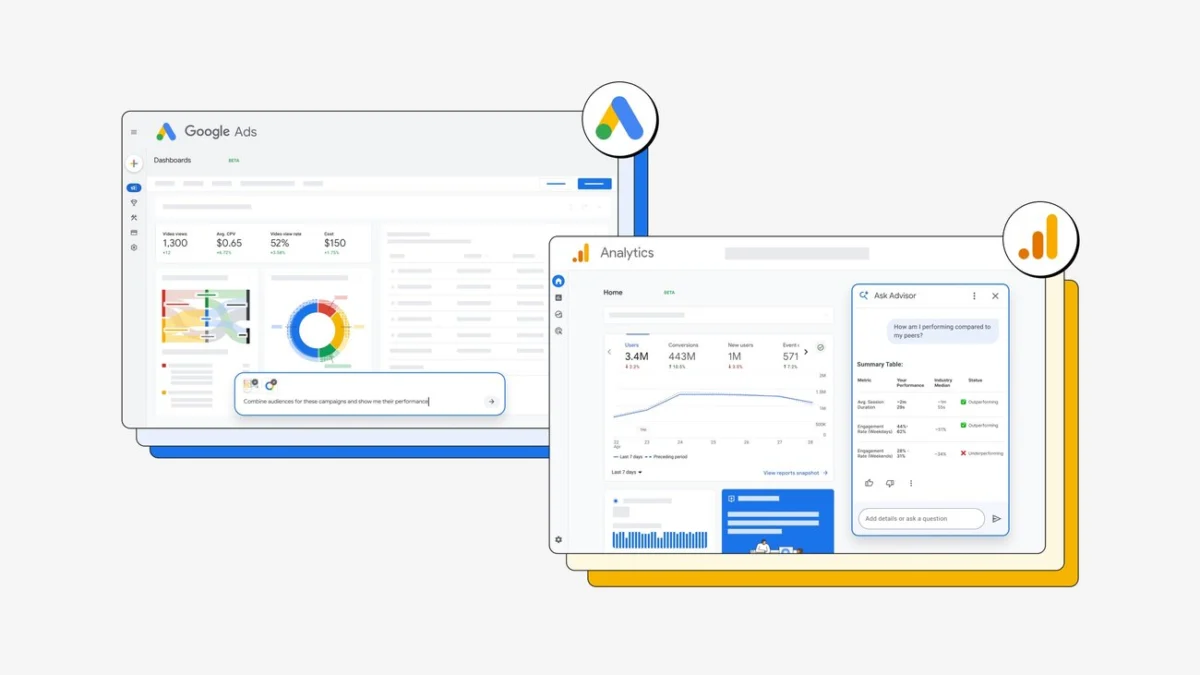
The digital advertising landscape is currently undergoing a fundamental transformation as Google integrates sophisticated agentic artificial intelligence across its primary marketing platforms, Google Ads and Google Analytics. This strategic rollout, led by Josh Moser, Senior Director of Product Management at Google, aims to address the increasing complexity of modern data ecosystems by providing marketers with "Ask Advisor," an in-product AI agent designed to bridge the gap between raw data measurement and strategic execution. By leveraging the Gemini generative AI model, Google is transitioning its tools from passive reporting interfaces into proactive assistants capable of uncovering insights, generating visual reports from text prompts, and benchmarking performance against industry standards.
The Shift Toward Agentic Marketing Ecosystems
The introduction of agentic experiences marks a significant milestone in the evolution of MarTech (Marketing Technology). Unlike traditional automation, which follows pre-defined rules, agentic AI is characterized by its ability to understand intent, navigate complex workflows, and provide recommendations based on real-time shifts in consumer behavior. This shift comes at a time when the digital advertising industry—a market projected to exceed $700 billion globally by 2025—is grappling with the loss of third-party cookies and the subsequent reliance on first-party data.
Google’s "Ask Advisor" serves as the central pillar of this new ecosystem. By integrating this AI agent directly into the workflow, Google aims to reduce the "analysis paralysis" often experienced by digital marketers who must juggle thousands of variables across Search, YouTube, and Display campaigns. The primary objective is to expedite the path to business growth by simplifying the user experience and providing immediate answers to complex performance questions.
Real-Time Intelligence: The New Google Analytics Homepage
One of the most immediate changes for data analysts is the implementation of AI Overviews at the top of the Google Analytics homepage. For years, the transition from Universal Analytics to Google Analytics 4 (GA4) was met with industry friction due to the platform’s steeper learning curve. The new AI Overviews are designed to mitigate this by providing an instant, natural-language summary of important updates that have occurred since a user’s last login.
These summaries are not merely descriptive; they are designed to be diagnostic. For instance, if a retail brand experiences a sudden seasonal peak in sales or a significant drop in referral traffic, the AI Overview highlights the change immediately. Users can then click on these data cards to carry the context into the Ask Advisor interface for a deeper "root cause" analysis. To ensure that stakeholders remain informed without needing to be constantly logged in, Google has introduced customizable notification settings, allowing users to receive these smart summaries via email or mobile alerts at a chosen frequency.
Personalized Strategy in Google Ads
Parallel to the updates in Analytics, the Google Ads homepage has been redesigned to surface personalized, AI-powered insight cards. These cards are tailored to the specific business goals of the advertiser, focusing on areas such as impression share, competitor movement, and emerging search trends.
A notable addition to this interface is the custom prompt box located above the insights cards. This feature allows marketers to generate bespoke insights by typing specific queries, such as "How is my competitor’s increased bidding on [Keyword X] affecting my ROI?" or "What creative elements are driving the highest conversion rates in my video campaigns?" This conversational layer allows for strategic agility, enabling advertisers to capture new demand the moment it appears rather than waiting for end-of-week manual audits.
Visual Reporting and the Democratization of Data Science
The reporting process has historically been one of the most time-consuming aspects of marketing management. To address this, Google is introducing a new Dashboard experience in Google Ads, with a rollout for Google Analytics expected to follow shortly. This feature utilizes text-to-visualization technology, allowing users to transform raw data sets into comprehensive charts and graphs through simple text commands.
Beyond just creating visuals, the system automatically generates a real-time summary for every report. This summary explains the "why" behind the data trends, providing marketers with a ready-made narrative to present to clients or internal executives. By automating the interpretative phase of reporting, Google is effectively democratizing data science, allowing team members without advanced technical training to extract sophisticated insights from their campaign data.
Competitive Benchmarking and Strategic Growth
Identifying room for growth requires context that extends beyond an individual company’s own historical data. To provide this, Google has introduced a new benchmarking feature within Google Analytics. Through Ask Advisor, marketers can now compare their campaign performance against anonymized averages from similar businesses within their industry or vertical.
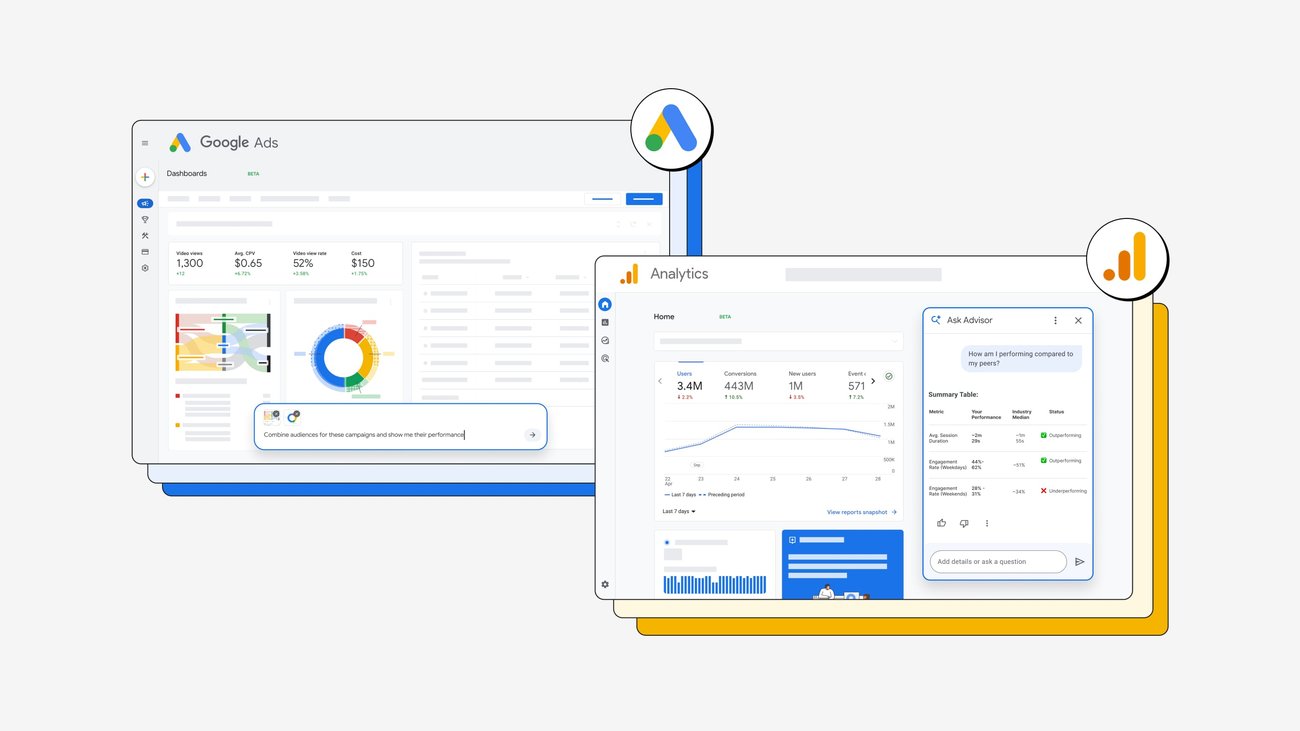
This feature is built on a foundation of data privacy, using aggregated and anonymized data points to ensure that individual business secrets remain protected while still providing valuable competitive context. For a business owner, this means being able to see if a 2% conversion rate is an industry-leading figure or an underperformance relative to the market average, thereby allowing for more confident budget allocation and strategy refinement.
Industry Reaction and Real-World Application
Early adopters of the "Ask Advisor" technology have noted significant improvements in operational efficiency. Kevin Marshall, the Paid Media Director at Gardyn, stated that the tool has become his primary resource for directional checks on paid media performance. Marshall emphasized that the speed provided by the AI agent allows his team more time to "dig deeper and make shifts that improve performance sooner," highlighting a shift from manual data gathering to strategic optimization.
Industry analysts suggest that these updates are a direct response to the increasing competition in the ad-tech space from companies like Meta and Amazon, both of which have been aggressive in deploying generative AI for ad creation and targeting. By focusing on the "advisor" aspect of AI, Google is positioning its tools as a partner to human expertise rather than a replacement for it.
A Chronology of Google’s AI Integration in Marketing
The current rollout is the culmination of a multi-year roadmap focused on automation and machine learning:
- 2018–2021: Focus on "Smart Bidding" and "Responsive Search Ads," using machine learning to automate auction-time decisions.
- 2022: The launch of Performance Max (PMax) campaigns, which used AI to manage assets and bidding across all Google channels simultaneously.
- 2023: Integration of generative AI for creative asset production (images and headlines) within the Google Ads interface.
- 2024 (Current): The transition to "Agentic AI" with Ask Advisor, focusing on conversational data analysis and proactive strategic guidance.
Technical Foundations and Data Ethics
The technology powering these new tools is rooted in Google’s Gemini models, which are specifically fine-tuned for marketing and business contexts. Unlike general-purpose LLMs, these models are designed to understand the specific nomenclature of digital advertising—metrics like ROAS (Return on Ad Spend), CTR (Click-Through Rate), and attribution models.
Google has maintained a focus on "responsible AI," ensuring that the generative summaries and insights are grounded in the actual data found within the user’s account to minimize "hallucinations" or inaccurate reporting. Furthermore, the company continues to navigate the complex landscape of global privacy regulations, such as GDPR and CCPA, by ensuring that the AI tools operate within the secure boundaries of the Google Ads and Analytics privacy frameworks.
Implications for the Future of the Marketing Profession
The introduction of these agentic tools suggests a significant shift in the required skillset for future marketers. As the "how" of data analysis becomes increasingly automated, the value of the human marketer will shift toward the "what" and the "where"—setting the high-level objectives, defining the brand voice, and making final ethical and strategic calls.
The ability to prompt an AI advisor effectively will likely become a core competency. Furthermore, as the barrier to entry for complex data analysis drops, the competitive advantage for businesses will move away from having the best "data crunchers" toward having the most creative and strategically nimble teams.
Conclusion
The integration of Gemini-powered agentic experiences into Google Ads and Google Analytics represents a pivotal moment in the history of digital marketing. By providing tools like Ask Advisor, AI Overviews, and automated visual reporting, Google is attempting to solve the problem of data overload that has plagued the industry for the last decade.
As these tools become available to a broader range of advertisers, the focus of the industry will likely shift from the mechanics of platform management to the art of strategic growth. Marketers can now access these features within their existing Google Ads and Google Analytics accounts, marking the beginning of a new era where the "advisor" is always on, and insights are only a prompt away.
