

Speech-Language Pathologists (SLPs) are increasingly leveraging dynamic visual aids, particularly bulletin boards, as integral components of therapeutic and educational environments, moving beyond mere decoration to strategic tools that support student learning, engagement, and home-based practice, especially as seasonal themes like winter offer fresh opportunities for thematic integration. In the specialized field of speech-language pathology, where effective communication and skill generalization are paramount, the thoughtful design and implementation of therapy spaces play a critical role in facilitating progress for individuals across various age groups and communicative needs. The challenges faced by SLPs often include not only direct intervention but also creating an inclusive atmosphere, engaging diverse learners, and fostering robust parent involvement. Against this backdrop, bulletin boards emerge as highly versatile, low-cost, and impactful resources capable of addressing multiple therapeutic objectives simultaneously.
The contemporary practice of speech-language pathology emphasizes a holistic approach, where the physical environment of the therapy room or clinic contributes significantly to the overall therapeutic outcome. For many SLPs, planning for the academic year involves a deliberate rotation of display themes and functionalities to maintain novelty and relevance, thereby enhancing student motivation and learning. This proactive planning is particularly evident during transitional periods, such as the back-to-school season or the onset of new seasons like winter, when there is an influx of new students and families. During these times, bulletin boards serve as initial points of contact, providing foundational information about speech therapy, showcasing activities, and offering practical strategies that extend learning beyond the therapy session. This strategic deployment helps demystify speech therapy for newcomers and reinforce its value for ongoing participants.

The effective utilization of bulletin boards in speech therapy can be categorized into three primary types: demonstrative, interactive, and functional. Each category serves distinct pedagogical and therapeutic purposes, contributing to a comprehensive and engaging learning environment. This structured approach allows SLPs to tailor their displays to specific goals, whether it’s celebrating student achievements, facilitating active practice, or educating parents and caregivers.
Demonstrative Bulletin Boards: Showcasing Progress and Inspiring Engagement
Demonstrative bulletin boards are designed primarily to display the work produced by students during their therapy sessions, offering tangible evidence of their efforts and progress. These displays often feature crafts that students complete, serving as a source of pride and a visual reminder of learned skills. The integration of craft activities into speech therapy is a well-established practice, rooted in the understanding that multi-sensory engagement enhances learning, memory retention, and fine motor skill development, which can indirectly support speech production. For instance, the act of cutting, gluing, and assembling requires following directions, sequencing, and developing vocabulary, all critical language skills.
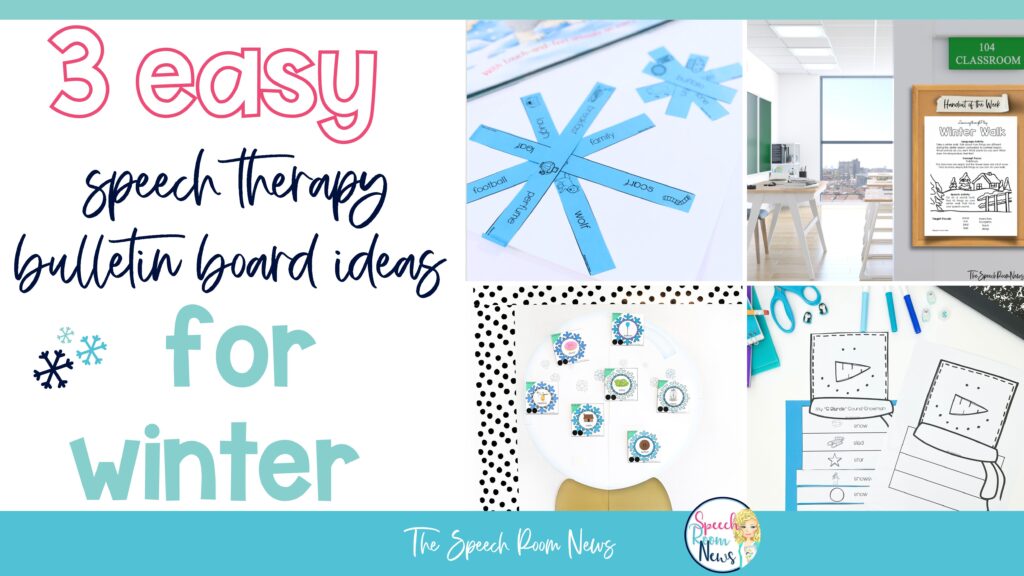
One highly effective and easily replicable demonstrative winter craft is the Snowflake Paper Strip Craft. This activity, often described as "fake crafting" due to its minimal prep and high impact, involves students using pre-cut paper strips to form a snowflake shape. The simplicity of the craft belies its therapeutic potential. While students are engaged in the motor task of manipulating paper, the SLP can seamlessly integrate articulation drills, targeting specific sounds or phonological patterns embedded within words related to the craft (e.g., /s/ in "strip," "snowflake"; /p/ in "paper"). For students with fine motor challenges, printing the strips on cardstock rather than regular computer paper can provide increased resistance, aiding in grip and cutting precision. Displaying these unique snowflakes, each representing a student’s therapeutic journey and creative output, transforms the bulletin board into a vibrant gallery of achievement, fostering a sense of accomplishment and belonging. This visual affirmation is crucial for building self-esteem and motivating continued participation in therapy.
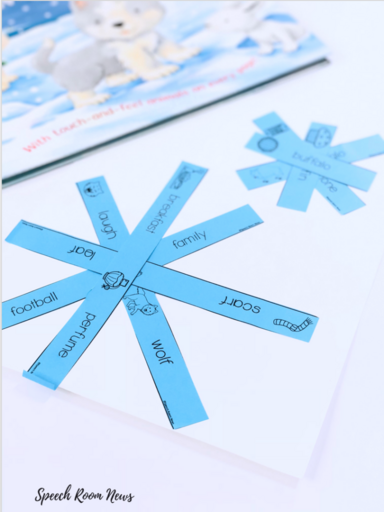
Another popular craft for demonstrative displays is the Snowman Articulation Chop. This activity combines cutting practice with articulation drills, where students "chop" (cut) strips of paper containing target words and then assemble them to form a snowman. The repetitive nature of cutting and practicing target words reinforces sound production in a fun, hands-on manner. For example, an SLP might provide strips with words targeting the /sn/ cluster for a student working on initial consonant blends, or words with final /t/ for a student addressing stopping. The physical act of cutting can be linked to the segmentation of sounds or syllables, enhancing phonological awareness. The completed snowmen, often adorned with colorful noses and hats, become personalized artifacts of therapy, showcasing not just artistic endeavor but also the successful production of targeted speech sounds. When displayed, these crafts serve as visual testimonials to the therapeutic process, allowing students to see their collective progress and encouraging peer interaction around their shared creations.
Interactive Bulletin Boards: Fostering Active Learning and Skill Generalization

Interactive bulletin boards transcend passive observation, inviting students to actively manipulate components of the display, thereby transforming the bulletin board into a dynamic learning station. This approach aligns with constructivist learning theories, which posit that learners construct knowledge through active engagement with their environment. For speech therapy, interactive elements are invaluable for reinforcing learned skills, promoting generalization, and providing opportunities for independent practice outside of direct therapy sessions.
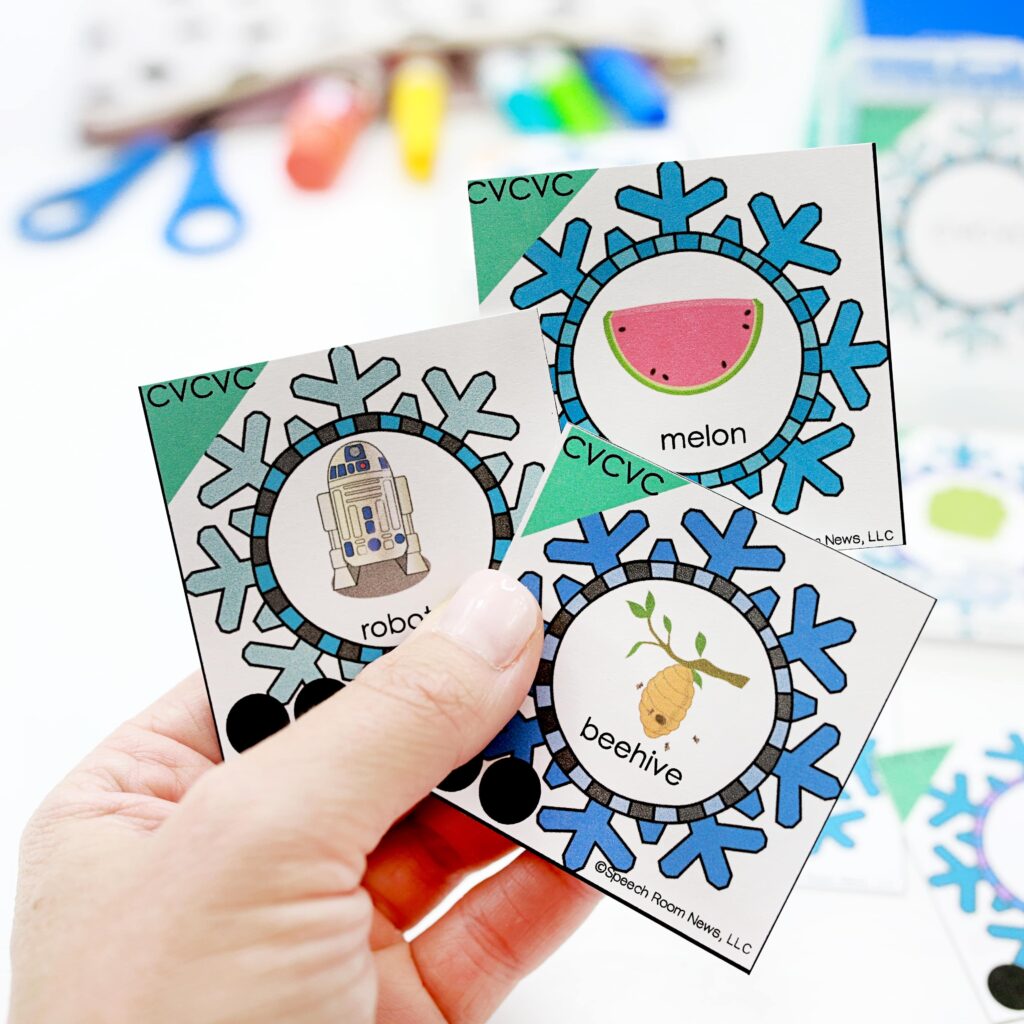
A prime example for winter is the "Falling Flakes: Apraxia Snowflakes" set. Childhood Apraxia of Speech (CAS) is a neurological motor speech disorder that makes it difficult for children to plan and program the precise movements needed for speech. Therapy for CAS often involves multisensory cues and repetitive practice of syllable structures. This interactive bulletin board addresses these needs by featuring snowflake cards, each with an image, a target word, and crucially, black dots in the bottom left corner. These dots visually represent the number of syllables and provide a tactile cue for students to touch as they produce each syllable, thereby emphasizing multisensory practice and aiding in motor planning. The cards are also color-coded and patterned by syllable structure (e.g., CV, CVC, CVCV) in the top left corner, facilitating organization and targeted practice. The interactive component involves a large poster of a snow globe affixed to the bulletin board with velcro dots. Students then attach and remove the snowflake cards to the globe, practicing the words as they do so. This kinesthetic engagement significantly enhances the learning process, making abstract phonological concepts concrete and reinforcing the rhythmic and sequential nature of speech.
Similarly, the "Falling Flakes: Phonology Activities" set employs an interactive format to target phonological disorders using minimal pairs. Phonological disorders involve patterns of sound errors, and minimal pairs therapy helps children understand how changing one sound in a word can change its meaning (e.g., "pat" vs. "bat"). Each snowflake card in this set features an image and a word from a minimal pair. Like the apraxia set, these cards are color-coded and patterned for easy organization. An SLP would display a poster-sized globe with velcro dots, allowing students to select, attach, and remove snowflake cards, practicing the minimal pairs as they interact with the board. This activity not only provides visual and tactile reinforcement for sound discrimination but also encourages students to produce the target sounds in a context that emphasizes meaning. The act of physically placing a "flake" on the "globe" can symbolize the successful acquisition of a sound or the understanding of a phonological contrast. These interactive boards transform hallway waiting times or transition periods into valuable opportunities for spontaneous, self-directed practice, extending the reach of therapy beyond the structured session.
Functional Bulletin Boards: Empowering Parents and Promoting Home Carryover
Functional bulletin boards are designed to provide practical, actionable information that can be immediately applied by parents, caregivers, and other educators. The importance of parent involvement in speech and language therapy outcomes is widely recognized and supported by numerous studies. Research indicates that consistent practice and integration of therapeutic strategies into daily routines at home significantly accelerate progress and improve generalization of skills. Functional bulletin boards serve as a crucial bridge between the clinical/school setting and the home environment, offering accessible resources that empower families to support their child’s communication development.
A highly effective functional resource for winter is the "Winter Speech and Language Packet: Learning Through Play" handouts. These materials are specifically crafted to help parents and caregivers understand how to utilize common, everyday winter activities to enhance communication skills through play. The philosophy behind "learning through play" is that children acquire language most naturally and effectively when engaged in meaningful, enjoyable interactions. Instead of prescriptive drills, these handouts offer suggestions for integrating speech and language targets into naturalistic contexts.
The packet includes ideas for a variety of winter activities, such as:
- Snowball Fight: Parents can target action verbs (throw, catch, duck), prepositions (over, under, behind), and sequencing (first, then, last).
- Snowman Building: Opportunities for descriptive language (big, round, white, cold), body parts (head, body, arms), and requesting (more snow, hat, scarf).
- Sledding: Focus on verbs of movement (slide, glide, go fast), spatial concepts (up, down, top, bottom), and safety vocabulary.
- Snow Fort Construction: Encourages problem-solving, planning, and using comparative language (bigger, stronger, taller).
- Snow Angels: Simple action verbs, body awareness, and following directions.
- Hot Chocolate Preparation: Sequencing, requesting (marshmallows, whipped cream), descriptive language (warm, sweet, yummy), and functional vocabulary.
- Winter Clothing: Naming items, describing attributes (warm, soft), and identifying functions.
- Winter Walk: Observing and describing the environment, identifying animals, and discussing sensory experiences (cold, crunchy snow).
- Ice Skating: Action verbs, safety instructions, and social interaction.
- Making Cookies: Sequencing, requesting, sensory vocabulary, and counting.
By displaying these handouts on a functional bulletin board, SLPs provide parents with a readily available, user-friendly guide for extending therapy into the home. The inclusion of a Spanish version of this packet further underscores a commitment to inclusivity and accessibility, ensuring that linguistic diversity is accommodated within the therapeutic support system. These handouts empower parents to become active participants in their child’s therapy, fostering a collaborative partnership with the SLP and promoting consistent practice in natural, meaningful contexts. The presence of such resources on a bulletin board communicates to families that their involvement is valued and that practical support is always within reach.
Broader Impact and Future Directions
The strategic use of demonstrative, interactive, and functional bulletin boards by Speech-Language Pathologists extends far beyond mere aesthetic appeal. These carefully curated displays contribute significantly to creating an enriching, supportive, and inclusive therapeutic environment. By showcasing student work, they boost confidence and provide visual feedback on progress. Through interactive elements, they transform passive spaces into active learning zones, promoting skill generalization and independent practice. And by offering functional resources, they empower families to become integral partners in the therapeutic journey, ensuring that learned skills are consistently reinforced in everyday life.
In an era where educational professionals are often stretched thin, the judicious selection and deployment of such readily available tools highlight the SLP’s role not just as a therapist but also as an educator, communicator, and advocate within the school or clinic community. The evolution of bulletin board practices in speech therapy reflects a broader pedagogical shift towards more engaging, child-centered, and family-integrated approaches to intervention. As technology continues to advance, future iterations might see digital displays complementing physical boards, offering animated visuals, audio prompts, or scannable QR codes linking to video demonstrations for parents. However, the fundamental principles of engagement, demonstration, and functionality that underpin these traditional bulletin board categories will remain timeless, serving as cornerstones for effective speech and language intervention. The ongoing commitment to crafting these dynamic displays underscores the dedication of SLPs to fostering optimal communication development in every child they serve.
