

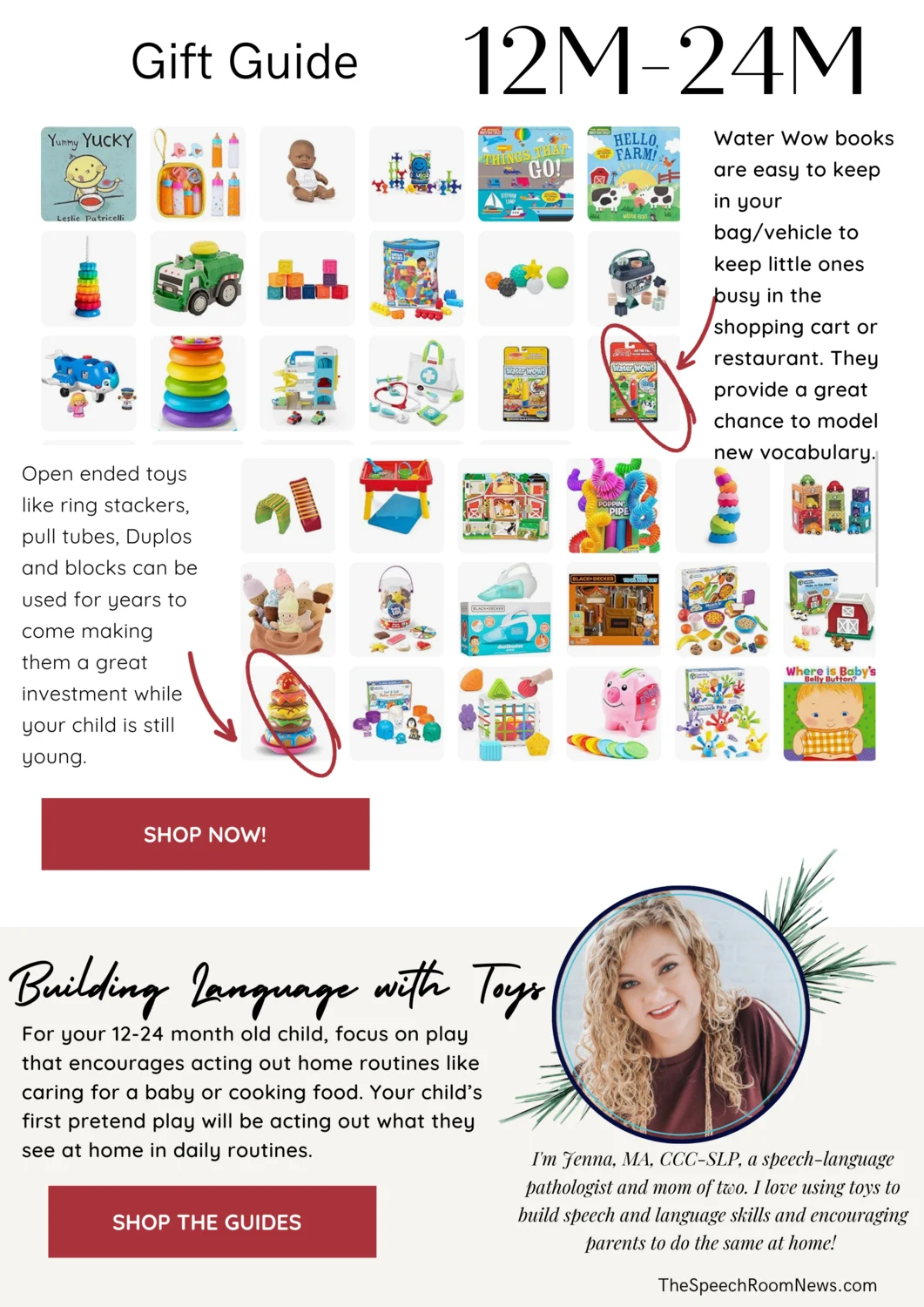
In an era increasingly recognizing the profound impact of early childhood experiences on lifelong development, a specialized initiative led by pediatric speech-language pathologist Jenna Kirk, MA, CCC-SLP, is drawing significant attention for its pragmatic approach to fostering speech and language skills through play. Kirk, a professional with firsthand experience not only in clinical settings but also as a mother of two, one of whom navigates Childhood Apraxia of Speech (CAS), has unveiled a series of meticulously curated Amazon Gift Guides and a downloadable PDF, designed to empower parents, caregivers, and educators in selecting toys that serve as powerful therapeutic tools. These guides, strategically launched ahead of the holiday shopping season, aim to transform gift-giving into an opportunity for developmental enrichment, aligning with broader educational and therapeutic objectives for children.
Understanding the Imperative of Early Speech and Language Development
Speech and language development are foundational pillars of a child’s cognitive, social, and emotional growth. From babbling in infancy to forming complex sentences in preschool, each stage is critical, laying the groundwork for literacy, academic success, and effective social interaction. The American Speech-Language-Hearing Association (ASHA) reports that approximately 1 in 12 children aged 3-17 years (7.7%) have had a disorder of voice, speech, language, or swallowing in the past 12 months. Conditions like Childhood Apraxia of Speech, a neurological speech sound disorder where the brain struggles to coordinate the muscle movements necessary for speaking, require early and targeted intervention. Similarly, expressive and receptive language delays, articulation disorders, and fluency issues can significantly impede a child’s ability to communicate, learn, and form relationships. Early identification and intervention are consistently emphasized by pediatricians and developmental specialists as paramount to mitigating long-term challenges and optimizing developmental trajectories. The integration of therapeutic activities into daily routines, including playtime, is a cornerstone of effective early intervention strategies.
The Therapeutic Power of Play: A Core Principle in Speech-Language Pathology
Play is not merely a pastime for children; it is their primary mode of learning and development. Through play, children naturally explore their environment, experiment with social roles, solve problems, and, crucially, develop their communication skills. Speech-language pathologists (SLPs) universally recognize play as an indispensable component of therapy. Unlike formal drills, play-based therapy creates an engaging, low-pressure environment where children are motivated to communicate spontaneously. It allows SLPs to target a wide array of skills, including:

- Vocabulary Expansion: Introducing new words through object identification and description.
- Sentence Structure: Encouraging the formation of longer, more complex sentences during narrative play.
- Articulation: Practicing specific sounds in meaningful contexts.
- Pragmatics (Social Language): Developing turn-taking, asking and answering questions, expressing emotions, and understanding social cues.
- Auditory Processing: Following directions, identifying sounds, and distinguishing between words.
- Cognitive Skills: Problem-solving, sequencing, memory, and imaginative play, all of which underpin language.
For children with specific diagnoses like CAS, play can be adapted to provide structured practice of motor planning for speech sounds while maintaining engagement. The unstructured, child-led nature of many play activities fosters intrinsic motivation, making learning enjoyable and sustainable.
Expert Criteria for Selecting Developmentally Beneficial Toys
Jenna Kirk’s approach to toy selection mirrors the evidence-based practices employed by speech-language pathologists nationwide. Her focus is not on brand names or flashy features, but on a toy’s inherent potential to elicit and support communication. Key criteria that guide the selection of such therapeutic toys typically include:

- Open-Ended Play Potential: Toys that do not have a single prescribed way to be played with (e.g., building blocks, dolls, play-doh, art supplies) encourage creativity, imaginative scenarios, and a broader range of vocabulary. They invite children to narrate stories, assign roles, and problem-solve, all of which are rich language opportunities.
- Interactive Engagement: Toys that require interaction with another person (e.g., board games, cooperative building sets, puppets) naturally foster turn-taking, negotiation, questioning, and responsive communication. This is crucial for developing social communication skills.
- Sensory Richness: Toys that engage multiple senses (e.g., varied textures, distinct sounds, vibrant colors) provide diverse stimuli that can be described, thereby expanding descriptive vocabulary and encouraging sensory exploration, which is linked to cognitive development.
- Developmental Appropriateness: Toys must align with a child’s current developmental stage, offering an optimal level of challenge without causing frustration. For infants, this might mean cause-and-effect toys; for preschoolers, imaginative play sets; and for older children, complex construction or strategic games.
- Durability and Safety: Practical considerations are paramount. Toys should be well-made to withstand repeated play and meet safety standards, particularly regarding small parts for younger children.
- Promotion of Specific Language Skills: Certain toys are particularly adept at targeting specific skills. Picture books are invaluable for narrative skills and vocabulary. Pretend play sets (kitchens, doctor kits) facilitate role-playing and script development. Puzzles and sequencing games enhance logical thought and descriptive language.
- Encouragement of Gross and Fine Motor Skills: While primarily focused on speech and language, many toys that develop fine motor skills (e.g., manipulating small objects, drawing) indirectly support language by enhancing readiness for writing and fostering attention to detail. Gross motor play, often involving outdoor activities or active indoor games, provides opportunities for descriptive language about movement and spatial concepts.
This rigorous selection process ensures that each recommendation is more than just a toy; it is a carefully chosen tool designed to unlock a child’s communication potential.
Jenna Kirk’s Curated Guides: A Resource for Parents and Professionals
Jenna Kirk’s initiative translates these expert principles into accessible, actionable recommendations for the general public. Her "Amazon Gift Guides," categorized by age, simplify the daunting task of navigating the vast toy market. These guides, supplemented by a downloadable PDF, provide a structured list of toys that she, as a seasoned SLP and a parent of a child with speech challenges, confidently endorses. The convenience of an Amazon-based list also addresses the logistical challenges many parents face in sourcing specialized therapeutic items.

The timing of these guides, preceding the peak holiday shopping season, is particularly significant. It offers parents and gift-givers an opportunity to make informed choices that extend beyond fleeting entertainment, investing in gifts that contribute meaningfully to a child’s long-term development. The inclusion of "stocking stuffer" ideas further broadens the scope, demonstrating that even small, inexpensive items can hold significant developmental value. This proactive approach aims to bridge the gap between clinical knowledge and everyday consumer decisions, transforming the holiday tradition of gift-giving into a powerful act of developmental support.
Broader Impact and Implications for Early Intervention
The proliferation of expert-curated resources like Jenna Kirk’s gift guides signifies a broader trend in early childhood development: the democratization of therapeutic knowledge. Historically, detailed guidance on integrating therapeutic strategies into home environments was often limited to those with direct access to specialized therapy services. Initiatives like this empower parents to become active participants in their child’s developmental journey, providing supplementary support that can complement professional therapy or even serve as an early intervention for mild delays.

Furthermore, these guides contribute to a heightened public awareness regarding the importance of purposeful play. In an age dominated by digital entertainment, there is a growing concern among developmental specialists about the potential impact of excessive screen time on speech and language acquisition. By highlighting tangible, interactive toys, Kirk’s guides subtly advocate for a return to traditional play, which is crucial for fostering imagination, social interaction, and foundational communication skills.
The economic implications are also noteworthy. The market for educational and developmental toys has seen steady growth, driven by increasing parental awareness and research linking specific play activities to cognitive and linguistic benefits. According to market analysis reports, the global educational toy market is projected to continue its expansion, reflecting a consumer shift towards products with demonstrable developmental value. Initiatives like these guides not only meet an existing demand but also help shape it, guiding consumers towards products that genuinely deliver on their educational promise.
Beyond the Holiday Season: Year-Round Developmental Support

While presented as holiday gift guides, the principles and recommendations offered by Jenna Kirk are applicable year-round. They serve as a perennial resource for parents seeking to enrich their child’s play environment, whether for birthdays, special occasions, or simply to refresh their toy collection. The underlying message is that every interaction, every playtime session, holds potential for language learning and developmental growth.
For children already receiving speech-language therapy, these guides can be invaluable in reinforcing therapeutic goals at home. SLPs often recommend specific types of toys or activities to practice skills learned in therapy sessions. Having a curated list from a fellow professional can streamline this process for parents, ensuring consistency between clinic and home environments. For parents who may suspect a speech or language delay but have not yet sought professional evaluation, these guides can offer a starting point for fostering communication, potentially mitigating the severity of delays while awaiting formal assessment.
A Call to Community Engagement

Jenna Kirk concludes her outreach by inviting community feedback, encouraging others to share their favorite toys that support speech and language development. This collaborative approach underscores the ongoing nature of learning and resource-sharing within the professional and parenting communities. It also reinforces the idea that fostering a child’s development is a collective endeavor, benefiting from diverse experiences and perspectives.
In conclusion, Jenna Kirk’s expertly crafted holiday toy guides represent more than just shopping lists; they are a significant contribution to the field of early childhood development. By translating complex therapeutic principles into accessible, actionable recommendations, she empowers parents and caregivers to make informed choices that can profoundly impact a child’s speech and language journey. This initiative stands as a testament to the enduring power of play and the critical role of specialized expertise in nurturing the communication skills essential for every child’s success.
