

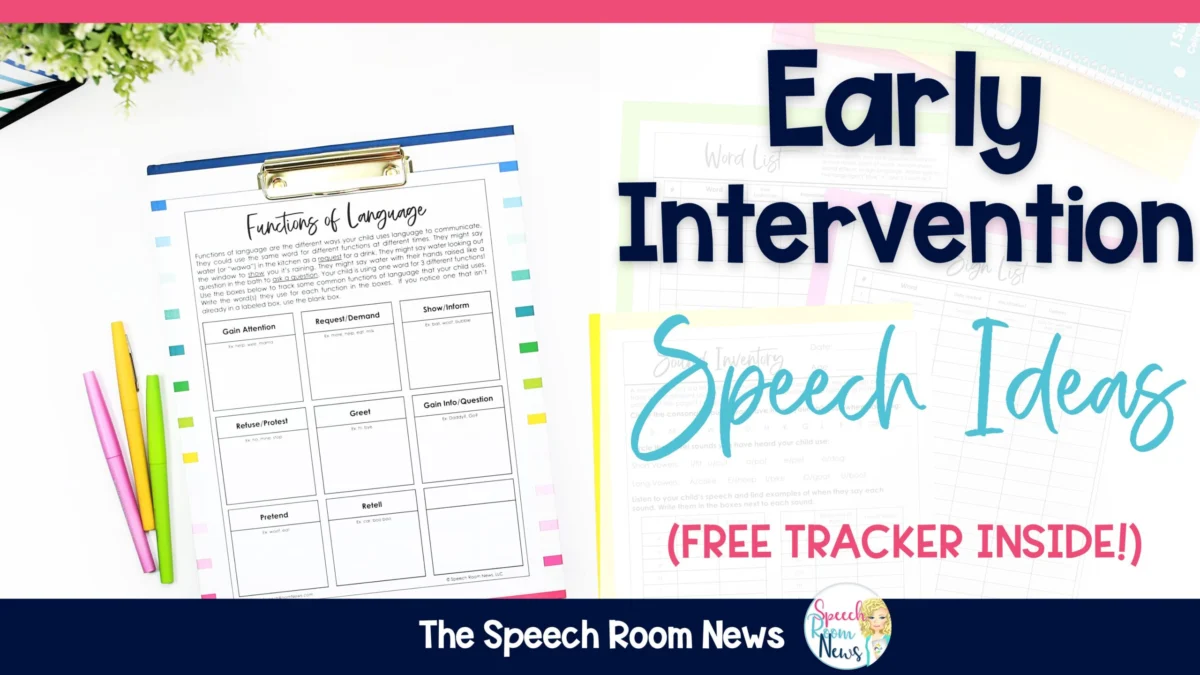
Early intervention speech therapy stands as a cornerstone in fostering optimal developmental outcomes for young children experiencing communication delays. Its critical role in shaping a child’s ability to articulate, comprehend, and interact effectively cannot be overstated, demanding a collaborative and informed approach from both speech-language pathologists (SLPs) and parents. This comprehensive understanding, coupled with practical strategies and robust data tracking, is essential to navigating the intricate journey of early speech development and ensuring every child has the opportunity to reach their full communicative potential.
Understanding Early Intervention Services
Early Intervention (EI) refers to a system of services designed to support infants and toddlers (from birth through age two) with developmental delays or disabilities, and their families. Mandated in the United States by the Individuals with Disabilities Education Act (IDEA), Part C, these services aim to minimize the impact of developmental delays and enhance a child’s capacity for learning and participating in daily life. For speech and language, EI typically involves a team of professionals, including SLPs, who work with families to address communication challenges. The philosophy is fundamentally family-centered, recognizing that parents are a child’s first and most influential teachers, and that integrating therapeutic strategies into daily routines is often the most effective approach.
The scope of EI extends beyond direct therapy, often encompassing comprehensive assessments, individualized family service plans (IFSPs), and ongoing support to equip parents with the tools and knowledge to facilitate their child’s development at home. Research consistently indicates that the period from birth to three years is a critical window for brain development, particularly for language acquisition. During this time, the brain exhibits remarkable plasticity, making early and intensive intervention significantly more effective than interventions initiated later in a child’s life.
Identifying Communication Delays: The Silent Struggle
Speech and language delays are among the most common developmental concerns in young children, affecting approximately 5-10% of preschool-aged children. These delays can manifest in various forms, including difficulties with articulation (producing sounds), expressive language (using words and sentences), receptive language (understanding language), or pragmatic language (social communication). While every child develops at their own pace, recognizing key developmental milestones is crucial for identifying potential concerns and seeking timely evaluation.
Common indicators that a child might benefit from an early intervention assessment include:
- Lack of babbling or limited vocalizations by 9-12 months.
- Not responding to their name by 12 months.
- Not pointing or using other gestures by 12 months.
- Having fewer than 10-20 meaningful words by 18 months.
- Not combining two words into phrases by 24 months (e.g., "more milk").
- Difficulty understanding simple instructions.
- Limited eye contact or shared attention.
- Frustration when trying to communicate.
It is important to differentiate between a "late talker" and a child with a speech or language delay that requires intervention. While some late talkers eventually catch up to their peers without formal intervention, a significant portion (estimated around 40-50%) may go on to experience persistent language difficulties. This uncertainty underscores the importance of a professional evaluation, as early identification allows for targeted support and can mitigate potential long-term impacts on academic achievement, social interaction, and emotional well-being.
Developmental Milestones: A Chronology of Communication
Understanding the typical progression of speech and language development provides a valuable framework for parents and professionals. While these are general guidelines, significant deviations warrant further investigation.
- Birth to 6 Months: Infants begin to communicate through crying, cooing, and gurgling. They respond to sounds, turn their heads towards voices, and begin to smile and laugh.
- 6 to 9 Months: Babbling emerges, often with repeated consonant-vowel combinations like "bababa" or "mamama." They respond to their name, recognize familiar voices, and understand simple gestures like waving "bye-bye."
- 9 to 12 Months: Children start to use gestures more intentionally, such as pointing to desired objects. They may utter their first meaningful words (e.g., "mama," "dada," "dog") and understand simple commands like "come here." They also begin to imitate sounds and actions.
- 12 to 18 Months: Vocabulary expands, typically to 10-20 words, primarily nouns. They can follow one-step commands and point to body parts or pictures in a book when asked. They enjoy playing social games like peek-a-boo.
- 18 to 24 Months: A vocabulary explosion often occurs, with children acquiring 50 or more words. They begin to combine two words into simple phrases (e.g., "want juice," "big dog"). They can follow two-step commands and engage in pretend play.
- 24 to 36 Months: Vocabulary grows to 200-300 words or more, and children start using three- and four-word sentences. They can ask "what" and "where" questions, understand concepts like "in" and "on," and speak clearly enough to be understood by familiar listeners most of the time.
When a child consistently misses several milestones within a particular age range, or exhibits a regression in previously acquired skills, it serves as a critical signal to consult a pediatrician or an SLP.
The Power of Proactive Engagement: The Role of Data Tracking
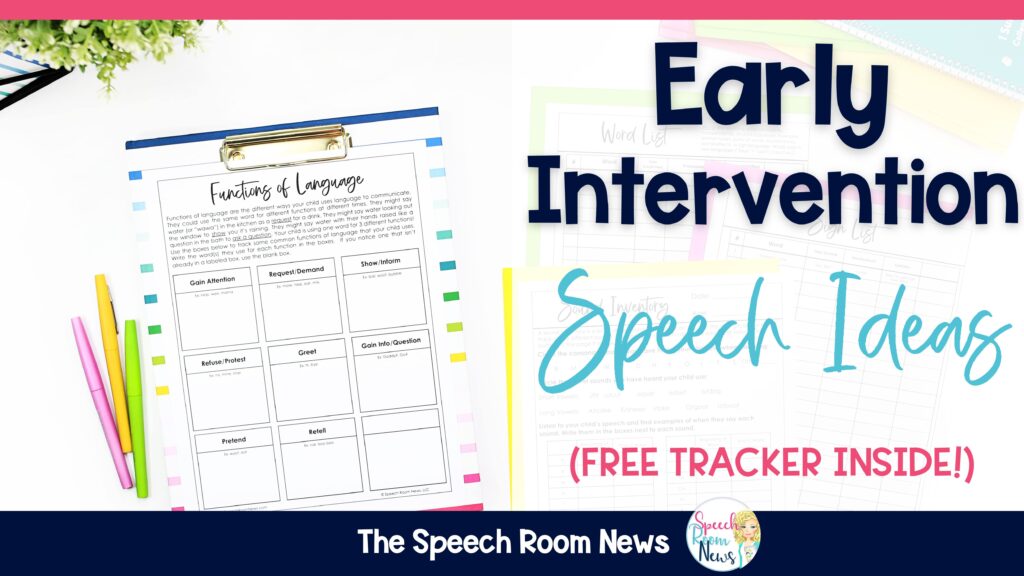
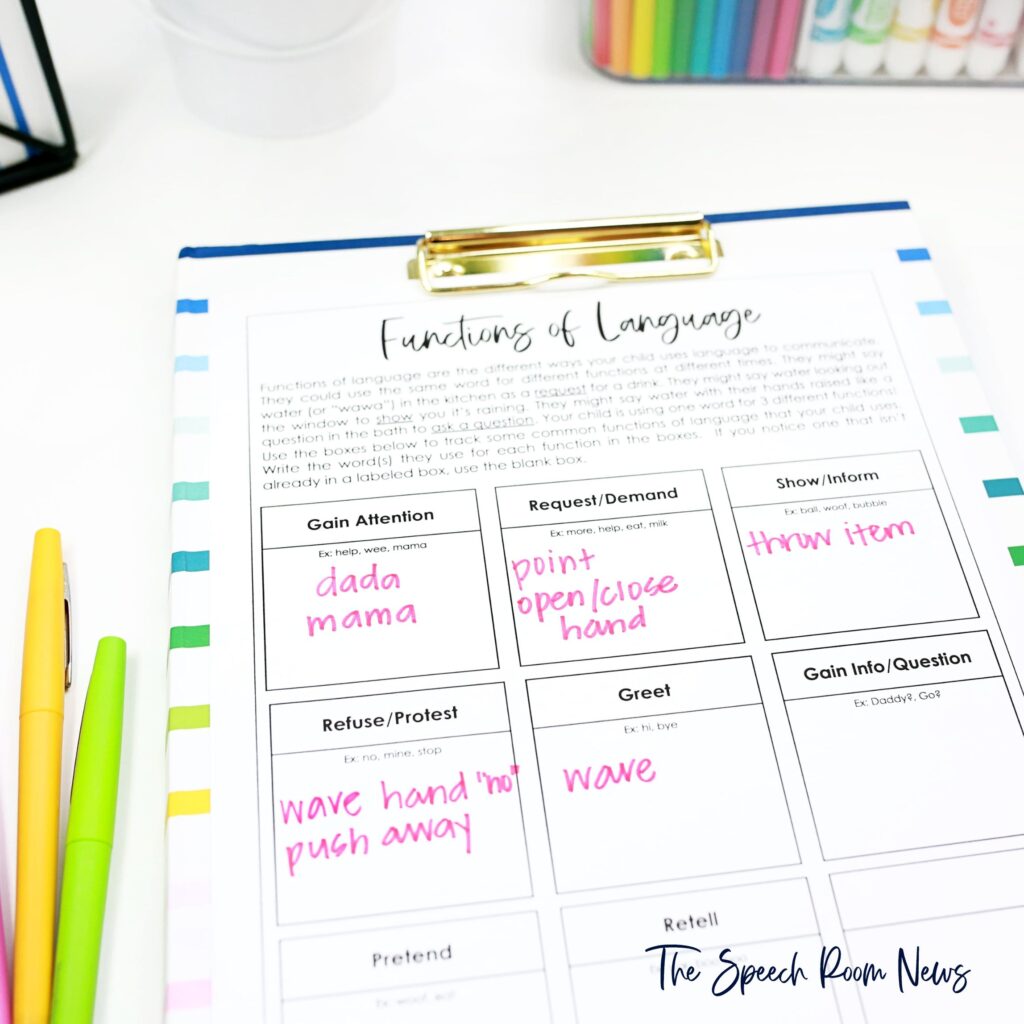
For both parents and speech-language pathologists, systematic tracking of a child’s emerging sounds and words is an invaluable tool in early intervention. This data collection moves beyond anecdotal observations, providing objective evidence of a child’s communicative growth and change over time. As one SLP-turned-parent of a late talker noted, the experience shifted her perspective, highlighting the practical necessity of organized data to effectively monitor progress and inform therapeutic strategies.
Tracking serves several crucial purposes:
- Objective Measurement: It provides concrete data points regarding the number and type of sounds and words a child is producing, offering a clear picture of progress that might otherwise be difficult to recall.
- Pattern Identification: By documenting early sounds, syllable shapes (e.g., consonant-vowel (CV) like "go," vowel-consonant (VC) like "up," CVCV like "mama," or CVC like "cat"), and word usage, therapists can identify specific strengths and areas needing support. This allows for highly individualized intervention plans.
- Informed Communication: Organized data facilitates effective communication between parents and therapists during coaching sessions. Parents can share precise observations, leading to more targeted advice and adjustments to the intervention plan.
- Motivation and Awareness: For parents, seeing tangible progress documented can be highly motivating. Often, once intentional tracking begins, families are surprised by the number of sounds and word approximations their child is actually making, fostering a sense of accomplishment and encouraging continued engagement.
Resources such as "first words trackers" empower parents to become active participants in the data collection process, transforming daily observations into meaningful information that drives therapeutic decisions.
Expert Perspectives and Official Recommendations
Leading professional organizations, such as the American Speech-Language-Hearing Association (ASHA) and the American Academy of Pediatrics (AAP), consistently advocate for early screening and intervention for speech and language delays. Their guidelines emphasize that a "wait and see" approach can be detrimental, potentially leading to more entrenched difficulties that are harder to remediate later.

Pediatricians are often the first point of contact for parents with concerns. Routine developmental screenings during well-child visits are designed to identify potential delays across various domains, including communication. If concerns arise, pediatricians are advised to make timely referrals to early intervention programs or specialists for comprehensive evaluations. The consensus among experts is that intervention should ideally begin as soon as a delay is identified, without unnecessary delay. Early intervention is not merely about "catching up"; it’s about building foundational skills during the most receptive period of a child’s development, thereby preventing secondary challenges related to social interaction, behavior, and academic learning.
Therapeutic Strategies: Integrating Learning into Daily Life
Effective early intervention speech therapy often centers on parent coaching, empowering families to embed language-rich interactions into their child’s daily routines. This approach capitalizes on the predictability and repetition inherent in routine activities, creating natural and meaningful opportunities for language learning. Rather than isolated "therapy sessions," the goal is to transform everyday moments into powerful learning experiences.
Here are some examples of integrating speech therapy activities into daily life:
-
Eating a Snack: Snack time is an ideal "communication temptation." Instead of simply handing over food, turn it into an interactive exchange.
- Modeling and Imitation: Pour snacks into a bowl while narrating: "Look, I’m pouring some [snack name] into the bowl. Yum! I love [snack name]. You like [snack name] too. Mmmm [snack name]."
- Waiting for a Response: Offer a small amount and then pause, looking expectantly at your child. Ask, "Do you want [snack name]?" Wait for a word approximation, gesture, or sound. Celebrate any attempt at communication. The goal is to provide numerous models, encouraging imitation of favorite food items.
-
Brushing Teeth: Time spent in front of the mirror offers a perfect backdrop for building connections and language.
- Social Routines: Engage in reciprocal actions like making silly faces, sticking out tongues, or making sounds back and forth.
- Descriptive Language: Narrate the entire process, explaining what you are doing and why. "It’s time to brush your teeth. We brush and clean our teeth so they stay healthy. We want healthy teeth so we can eat all kinds of foods. Let’s get your green toothbrush. Can you find the toothpaste? Squeeze just a little bit out. Now what do we do? Yes! Let’s brush the front. Now what? Yes—time to brush the back! You brushed your teeth. Now let mommy brush them too. I am brushing the front and the back. I go up and down and make sure I get all your teeth. We did it! Time to rinse our teeth and our brush so they stay clean."
- Positional Words: Explicitly use terms like "up," "down," "front," and "back" while brushing.
- Contrast: Instead of a minimal instruction like "Brush your teeth," the rich narrative provides context, vocabulary, and modeling.
Beyond structured routines, child-led play is paramount. Following a child’s lead, narrating their actions, and responding to their interests naturally fosters engagement and creates authentic communication opportunities. SLPs often provide parents with detailed handouts and guides that outline these strategies, ensuring consistency and reinforcement of therapeutic goals at home.
Long-Term Implications and Societal Benefits
The impact of early intervention extends far beyond immediate improvements in speech and language. Longitudinal studies consistently demonstrate a cascade of positive effects that ripple through a child’s development and into their adult life. Children who receive early and effective speech-language intervention are more likely to:
- Achieve Academic Success: Strong communication skills are foundational for literacy development (reading and writing), school readiness, and overall academic performance. Addressing delays early can prevent learning difficulties in later grades.
- Develop Robust Social-Emotional Skills: The ability to express needs, understand others, and engage in conversations is critical for forming friendships, resolving conflicts, and navigating social situations. Early intervention fosters confidence and reduces frustration associated with communication breakdowns, leading to healthier social-emotional development.
- Reduce the Need for Future Special Education Services: By building foundational skills early, many children can avoid or significantly reduce the need for more intensive and costly special education services later in their school careers. This represents both an individual benefit for the child and a significant economic benefit for educational systems.
- Enhance Overall Quality of Life: Effective communication empowers individuals to participate fully in their communities, pursue educational and career goals, and maintain meaningful relationships.
Investing in early intervention is widely recognized as a cost-effective public health strategy, yielding substantial returns in human potential and societal well-being. The initial investment in early services often results in long-term savings by decreasing the need for more extensive and expensive support later in life.
Accessing Support: Pathways to Intervention
Parents who suspect their child may have a speech or language delay should initiate the process by consulting their pediatrician. The pediatrician can conduct initial screenings, offer guidance, and provide referrals. Additionally, parents can directly contact their local Early Intervention program, which is typically administered through state or county health departments or school districts. These programs are mandated to provide evaluations at no cost to families to determine eligibility for services.

Advocacy plays a crucial role for parents. Being informed about developmental milestones, documenting concerns, and actively participating in the evaluation and intervention planning process empowers families to secure the best possible support for their child. Numerous online resources, parent support groups, and professional organizations also offer valuable information and connections.
Conclusion
The journey of speech and language development is fundamental to a child’s overall growth and interaction with the world. The evidence overwhelmingly supports the imperative nature of early intervention speech therapy, highlighting its profound and lasting benefits. By fostering a proactive approach to identification, embracing systematic tracking, and integrating expert-recommended strategies into daily life, parents, in collaboration with dedicated speech-language pathologists, can unlock a child’s full communicative potential. This collective commitment ensures that every child, regardless of initial challenges, has the opportunity to articulate their thoughts, connect with others, and thrive in a world built on communication.
