

The Evolving Landscape of Pediatric Speech Therapy
Historically, speech therapy often relied on structured, drill-based exercises. While effective for certain goals, these methods could sometimes struggle with maintaining engagement, particularly among younger children or those with diverse learning styles. The past two decades have seen a significant pivot towards play-based and child-centered therapy models, informed by extensive research into child development and learning. Experts in the field, including those from organizations like the American Speech-Language-Hearing Association (ASHA), advocate for interventions that mirror natural learning processes, where children acquire skills through exploration, interaction, and joyful discovery. Magnetic tiles, with their inherent appeal and open-ended nature, align perfectly with this philosophy, providing a tangible, interactive medium for therapeutic objectives.
Magnetic Tiles: More Than Just a Toy
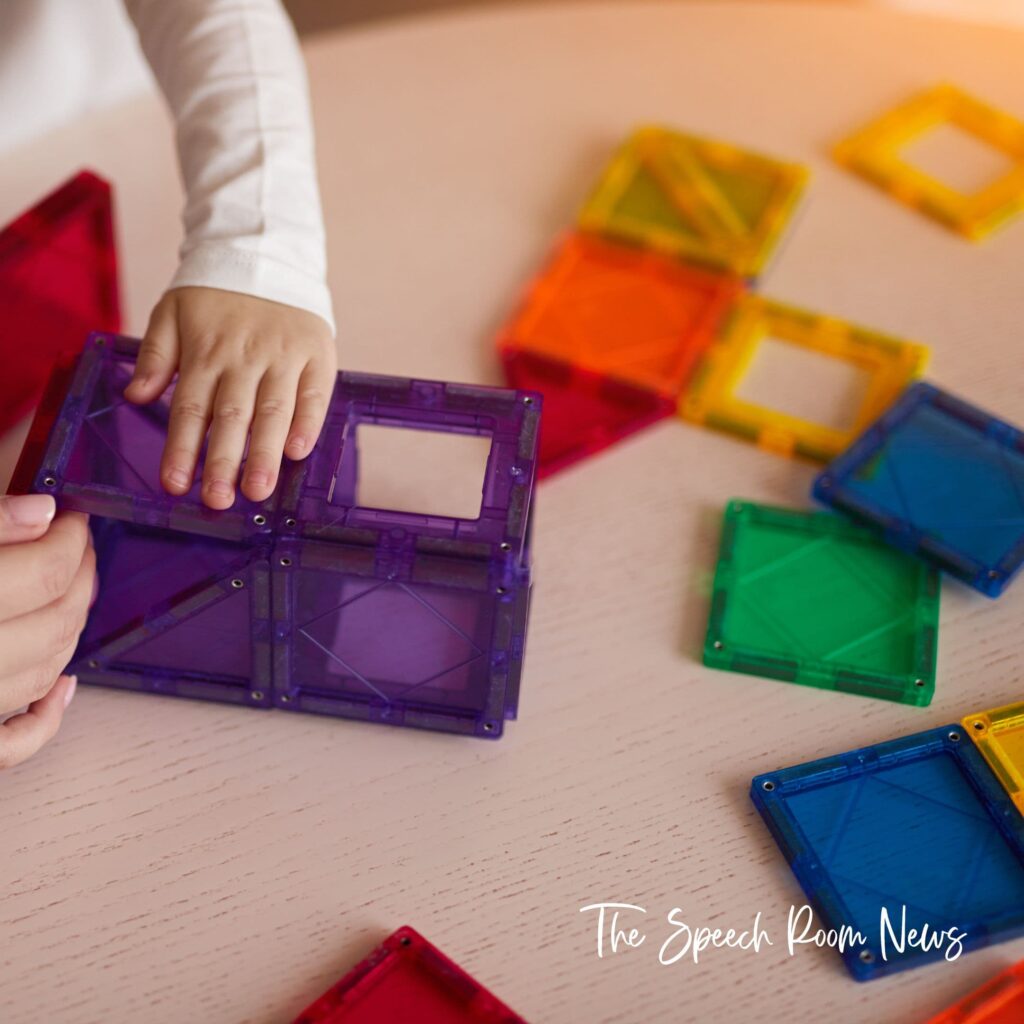
Magnetic tiles are celebrated for their simplicity and versatility, making them suitable for a wide age range, typically from toddlers through early elementary school. Their inherent design promotes creativity, fine motor skill development, and spatial reasoning. For children aged one and up, they offer a safe and engaging way to explore shapes, colors, and basic construction principles. This broad appeal and developmental utility make them an invaluable asset in a therapy room, where a single tool can be adapted for multiple clients with varying needs and ages. While the initial investment for quality magnetic tile sets can be substantial, often ranging from $50 to $200 for comprehensive sets, their durability and extensive utility are cited by clinicians as justifying the cost. Many therapists leverage grants, wish lists, or parent-teacher association funding to acquire these valuable resources, recognizing them as long-term investments in effective therapy.
Ten Core Applications in Speech and Language Intervention
The true power of magnetic tiles in speech therapy lies in their adaptability to target a diverse array of speech and language goals. Here are ten primary ways speech-language pathologists are leveraging these tools:
-
Social Cooperative Work: Magnetic tiles are an exceptional catalyst for fostering social communication skills. In group therapy settings or paired sessions, children naturally engage in collaborative building projects. This necessitates back-and-forth communication, negotiation ("Can I have that square?"), turn-taking ("My turn to add a roof!"), shared attention, and problem-solving ("How can we make it taller without falling?"). These interactions provide organic opportunities to practice requesting, commenting, agreeing, disagreeing, and expressing ideas, thereby nurturing vital social pragmatics.
-
Prepositions and Spatial Concepts: Abstract spatial concepts like "on," "under," "beside," "between," "in front of," and "behind" can be challenging for young learners. Magnetic tiles offer a concrete, hands-on method for teaching these prepositions. Therapists can instruct children to place tiles "on top of" another, "under" a bridge, or "between" two towers. This physical manipulation reinforces the meaning of these words, helping children internalize spatial relationships more effectively than through verbal drills alone.
-
Sorting by Shape and Color: This foundational activity targets categorization, descriptive language, and early cognitive skills. Children can be prompted to group all red tiles, all triangles, or to create patterns based on alternating colors or shapes. This process encourages them to articulate their choices ("I’m putting the blue squares here") and differentiate attributes, thereby expanding their vocabulary and reinforcing concepts of sameness and difference. Furthermore, therapists can construct "sorting bins" using the tiles themselves, adding an extra layer of engagement.
-
Articulation Practice: Integrating specific speech sounds into magnetic tile activities makes articulation therapy highly engaging. For instance, if a child is working on the "K" sound, the therapist might encourage building a "castle," "cage," or "car," prompting the child to say the target word each time they add a tile related to the theme. This method allows for high-frequency repetition of target sounds within a meaningful, play-based context, promoting better carryover of newly acquired sounds into spontaneous speech.
-
Irregular Verbs: Magnetic tiles provide a dynamic backdrop for practicing irregular past tense verbs. Children can build structures and then narrate what they "built," describe how a tower "fell," or recount actions using verbs like "ran," "ate," "slept," or "hit" by creating corresponding scenes or scenarios with the tiles. This contextualized practice helps solidify the correct usage of these often-tricky verbs in a storytelling format, moving beyond rote memorization.
-
Executive Functioning Practice: Building with magnetic tiles naturally exercises several executive functioning skills crucial for learning and daily life. Children engage in planning ("What do we want to build?"), sequencing ("First, we need a base, then the walls"), goal-setting, problem-solving ("It’s falling, how can we make it stronger?"), and sustained attention. Therapists can introduce challenges, such as time limits or specific design constraints, to further hone these cognitive abilities while simultaneously facilitating communication about the process.
-
Regular Plurals: Activities involving counting and describing multiple magnetic tiles provide an excellent opportunity to practice regular pluralization. As children build, they can describe "two squares," "three triangles," or "many windows." This repetitive, functional use of plural forms helps reinforce grammatical accuracy and expands utterance length, moving from single words to short phrases and sentences.
-
WH Questions: Magnetic tiles serve as a robust platform for practicing "who," "what," "where," "when," and "why" questions. Therapists can ask, "Where does this tile go?" "Who built the tallest tower?" "What are you making?" or "Why did it fall?" Children are prompted to formulate answers, enhancing both their receptive (comprehension) and expressive language skills in a playful, interrogative exchange.
-
The Pronoun "I": For children who struggle with using self-referential language, magnetic tile activities offer a natural context to practice the pronoun "I." By prompting children to describe their own actions or choices, such as "I have a red tile," "I put it on top," or "I want to build a house," therapists can reinforce the correct usage of "I" in various sentence structures, fostering a stronger sense of self-expression.
-
AAC Core Words: For children using Augmentative and Alternative Communication (AAC) devices, magnetic tiles are invaluable for reinforcing core words—high-frequency words that comprise the majority of daily communication. Therapists can model and prompt words like "more," "on," "off," "up," "down," "help," "go," "stop," "big," and "little" during building activities. This provides concrete, meaningful contexts for AAC users to practice their communication skills, making the therapy more functional and transferable to real-world interactions.
Broader Developmental Impact and Expert Endorsement
Beyond these specific speech and language targets, the consistent use of magnetic tiles in therapy contributes to a child’s holistic development. The manipulation of tiles enhances fine motor dexterity, hand-eye coordination, and visual-spatial reasoning. The open-ended nature of the play encourages imaginative thinking and problem-solving, skills that are transferable across academic and social domains. Moreover, the tactile and visual stimulation provided by the colorful tiles can be particularly engaging for children with sensory processing differences, making therapy more accessible and enjoyable.
Speech-language pathologists widely report that magnetic tiles dramatically increase client engagement and motivation. Dr. Sarah Miller, a pediatric SLP with over 15 years of experience, states, "Magnetic tiles have become an indispensable tool in my therapy room. Children are naturally drawn to them, and their inherent versatility allows me to seamlessly weave in almost any speech or language goal. The level of spontaneous communication and problem-solving I observe is far greater than with more structured activities." This anecdotal evidence is supported by a growing body of research highlighting the efficacy of play-based interventions in early childhood development and special education.
Challenges and Future Outlook
While the benefits are clear, therapists note a few considerations. The initial cost, as mentioned, can be a barrier for individual practitioners or underfunded clinics. Storage and organization of the tiles also require planning. However, these minor challenges are often overshadowed by the overwhelming positive impact on therapy outcomes.
The widespread adoption of magnetic tiles signals a dynamic evolution in pediatric speech and language therapy. As research continues to validate the effectiveness of play-based, child-led interventions, tools like magnetic tiles will likely become even more central to therapeutic practices. Their capacity to make learning engaging, functional, and deeply meaningful for young children positions them not just as toys, but as powerful therapeutic instruments shaping the future of communication intervention.
