

Magnetic tiles are rapidly gaining recognition within the field of pediatric speech-language pathology as a highly effective and versatile therapeutic modality. Increasingly adopted by Speech-Language Pathologists (SLPs), these open-ended construction toys offer a dynamic, engaging platform for addressing a wide array of speech and language goals in young children, from articulation and language comprehension to social skills and executive functioning. Their inherent appeal to children, coupled with their capacity for multi-sensory engagement, positions them as a valuable asset in modern therapy settings, fostering engagement and facilitating measurable progress across diverse developmental areas.
The landscape of pediatric speech-language therapy has undergone a significant evolution over recent decades, moving progressively towards more naturalistic, play-based, and child-centered approaches. Traditional therapy models, often characterized by rote drills and structured worksheets, have been increasingly complemented, and in many cases superseded, by methodologies that leverage a child’s natural inclination to learn through play. This shift is rooted in extensive research highlighting that children, particularly those with developmental delays, absorb and generalize skills more effectively when learning is embedded in meaningful, enjoyable, and interactive contexts. Magnetic tiles fit seamlessly into this paradigm, offering a hands-on experience that intrinsically motivates children, thereby enhancing attention, participation, and ultimately, therapeutic outcomes. The American Speech-Language-Hearing Association (ASHA), the national professional, scientific, and credentialing association for audiologists, speech-language pathologists, and speech, language, and hearing scientists, consistently advocates for evidence-based practices that prioritize engagement and functional communication, principles that magnetic tile play inherently supports.
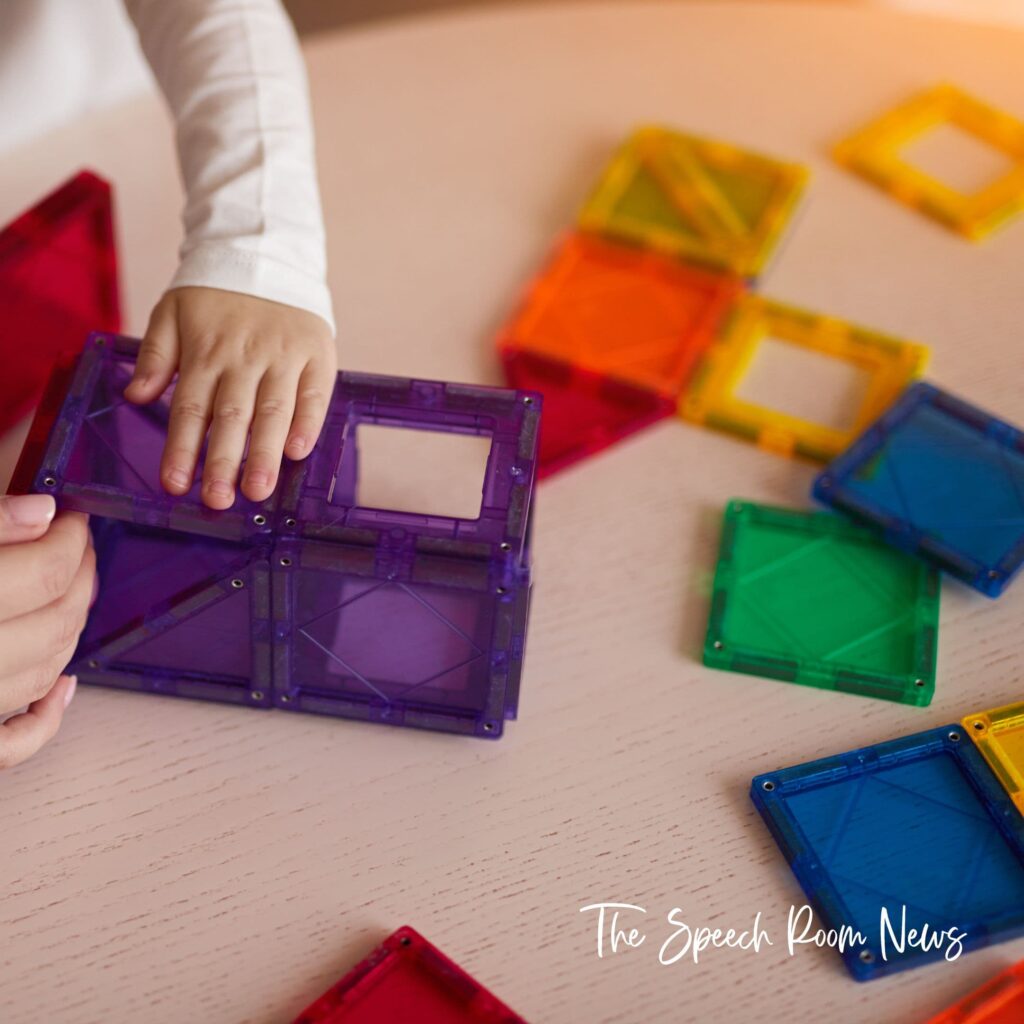
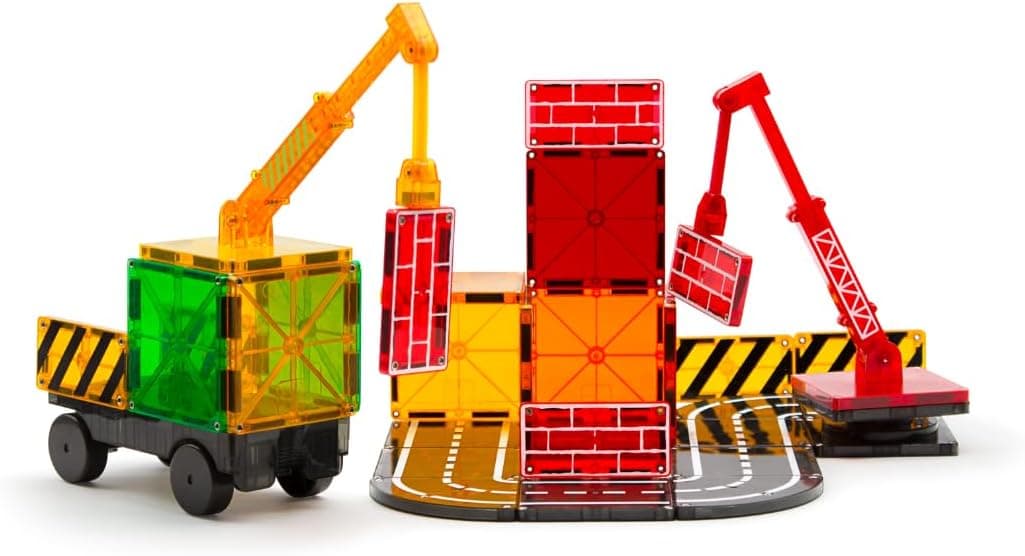
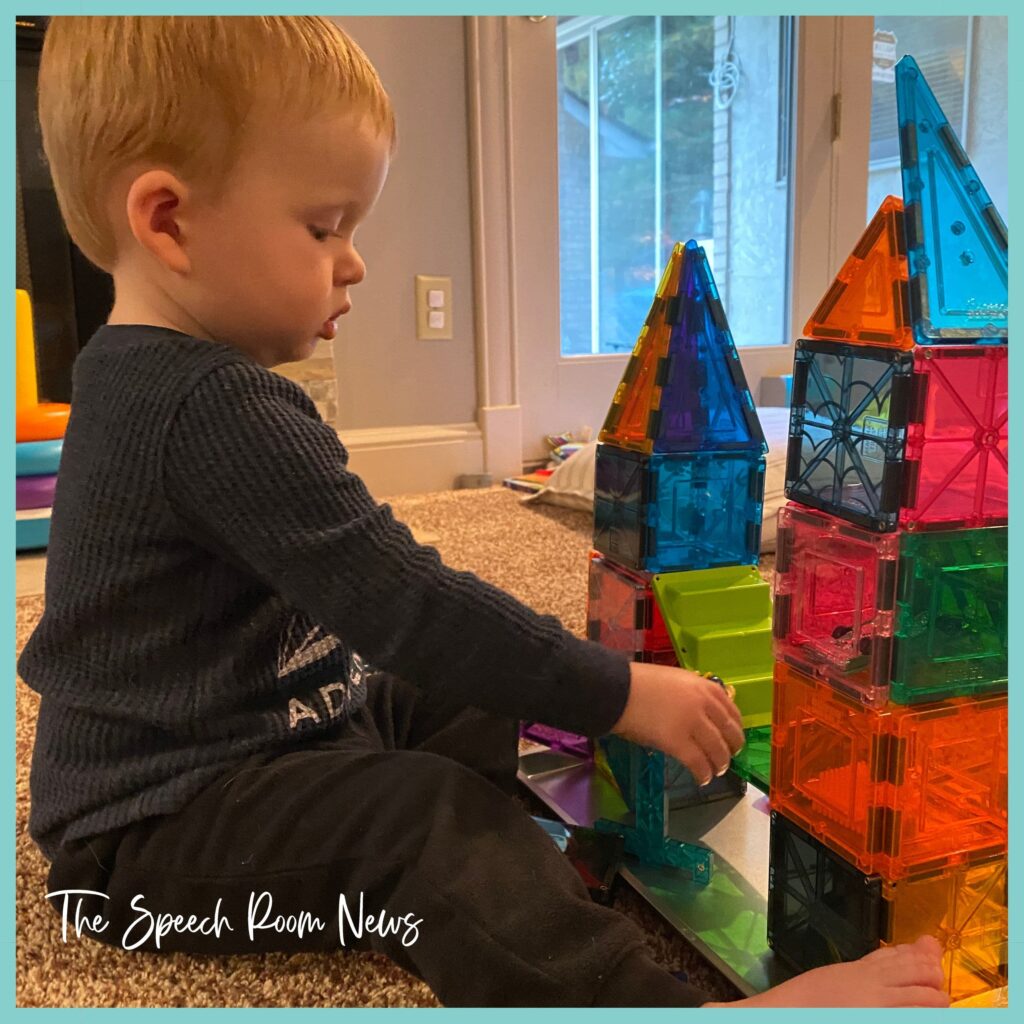
The appeal of magnetic tiles as a therapeutic tool stems from their inherent design and versatility. Comprising various geometric shapes with embedded magnets, they allow children to construct two-dimensional and three-dimensional structures with ease, promoting creativity and problem-solving. This tactile, visual, and constructive play offers numerous benefits beyond simple entertainment. They naturally encourage fine motor skill development, spatial reasoning, and visual-perceptual skills—all foundational elements that underpin successful speech and language acquisition. Furthermore, their open-ended nature means that the same set of tiles can be used to target an extensive range of objectives, making them a cost-effective and space-efficient resource for clinicians in both private practices and school settings. While the initial investment for quality magnetic tile sets can be substantial, as noted by clinicians, their durability and wide application across age groups (typically suitable for children aged one and up) justify the expenditure, often making them a priority for grant applications or therapy room wish lists.
Targeted Skill Development: A Deep Dive into 10 Key Areas
The adaptability of magnetic tiles allows SLPs to integrate them into therapy sessions to target specific speech and language goals, transforming what might otherwise be challenging or abstract concepts into concrete, interactive experiences.
1. Fostering Social-Cooperative Skills
Magnetic tiles are exceptional catalysts for promoting social interaction and cooperative play among students. In group therapy settings, the shared goal of building a structure necessitates back-and-forth communication, turn-taking, negotiation, and joint attention. Children learn to articulate their ideas ("I want to add a tall tower"), respond to peers’ suggestions ("Good idea, let’s put a roof on it"), and resolve minor conflicts, thereby nurturing vital social skills. SLPs can structure activities to assign roles, encourage planning discussions, and facilitate the reciprocal exchange of ideas, directly addressing goals related to conversational skills, pragmatic language, and peer interaction. This collaborative construction process builds not only physical structures but also the scaffolding for effective communication and teamwork.
2. Mastering Prepositions and Spatial Concepts
The concrete and manipulable nature of magnetic tiles makes them an ideal medium for teaching prepositions and spatial concepts. Abstract concepts like "on," "under," "beside," "between," "inside," "outside," "above," and "below" become tangible as students physically arrange tiles in various positions relative to each other. An SLP might instruct, "Put the red square on the blue triangle," or ask, "Where is the yellow piece?" prompting responses like "It’s under the arch." This hands-on experience reinforces understanding of spatial relationships, improves receptive language for following multi-step directions, and enhances expressive language through descriptive narratives of their creations.
3. Enhancing Categorization and Descriptive Language
Magnetic tiles inherently offer opportunities for sorting and categorization based on attributes such as shape (squares, triangles, pentagons), color, and size. Prompting students to group specific shapes or colors together not only sharpens their cognitive skills in identifying similarities and differences but also enhances their speech as they describe their categorization process. Beyond initial sorting, children can build "sorting bins" with the tiles themselves, further integrating the play material into the learning objective. This activity also naturally encourages the use of descriptive adjectives ("big," "small," "red," "shiny") and comparative language.
4. Articulatory Practice in Playful Contexts
Integrating targeted speech sounds into magnetic tile activities makes articulation therapy both fun and functional. For instance, an SLP targeting the /k/ sound might encourage students to build a "castle," a "cage," a "car," or a "park." Each time a child places a tile, they might be prompted to say a word containing their target sound. This method promotes repeated production of sounds in a naturalistic context, reducing the monotony often associated with drill-based practice. The visual and motor components of building help to embed the sound practice within a meaningful activity, aiding in generalization.
5. Navigating Irregular Verbs Through Narrative
Magnetic tiles present an excellent opportunity to practice irregular verbs, which are often challenging for children due to their unpredictable conjugations. Students can narrate stories or sequences using tiles, incorporating verbs like "built," "fell," "stood," "hid," "drew," or "made." For example, a child might build a tower and say, "First, I built a tall tower. Then, it fell down." The dynamic nature of constructing and deconstructing with tiles naturally lends itself to a wide range of action verbs, allowing for meaningful practice in a narrative context. This approach helps children internalize the correct past tense forms through repeated, contextualized usage.
6. Building Executive Functioning Capabilities
Tasks involving magnetic tiles are highly effective for honing executive functioning skills, which include planning, organization, working memory, and self-regulation. SLPs can set parameters, such as asking students to build a specific structure from memory, within a time limit, or following a multi-step instruction. This requires children to strategize, sequence actions, manage their time efficiently, and problem-solve when challenges arise. The process of conceptualizing a design, selecting appropriate pieces, and executing the build fosters organizational skills and task initiation, while verbalizing their plan and progress enhances speech and self-monitoring.
7. Reinforcing Regular Plural Forms
Engaging students in creating patterns or structures using various magnetic tile shapes (e.g., "many squares," "two triangles," "some blocks") naturally facilitates practice with regular plurals. As children build, they can be prompted to describe the quantity of each shape used ("I need more squares," "Look, I have three rectangles"). The visual representation of multiple items makes the concept of pluralization concrete, encouraging correct grammatical usage in a playful learning environment. This activity directly supports the development of morphological awareness and grammatical accuracy.
8. Stimulating WH-Question Comprehension and Expression
Magnetic tiles serve as an excellent catalyst for practicing WH questions such as "where," "who," "what," "when," and "why." The interactive building process creates natural scenarios for these questions. An SLP might ask, "Where does this piece go?" (placement), "Who built this part?" (agent), "What are you making?" (object/activity), or "When will we finish the roof?" (time/prediction). This prompts both receptive comprehension of the questions and expressive formulation of answers, enhancing both language processing and narrative skills.
9. Developing Self-Referential Language: The Power of "I"
For children who struggle with using the first-person pronoun "I" correctly, magnetic tile activities provide a functional and motivating context. By encouraging students to verbalize their actions and choices during construction, SLPs can repeatedly elicit the use of "I." For example, "I have a red tile for the top," "I want to make a big door," or "I put the square next." This consistent, self-referential commentary aids in the development of self-awareness and strengthens expressive syntax, integrating the pronoun naturally into functional communication.
10. Integrating AAC Core Words for Functional Communication
Magnetic tiles can robustly support the reinforcement of Augmentative and Alternative Communication (AAC) core words. Core words are high-frequency words that are highly functional across various contexts (e.g., "more," "on," "off," "that," "this," "help," "up," "down," "go," "stop"). During magnetic tile play, these words naturally emerge: "More tiles, please," "Put it on," "Take it off," "I need help," "Make it go up." For children using AAC devices, this provides practical exposure to these essential words in actual, meaningful contexts, fostering greater independence and spontaneity in communication.
Expert Perspectives and Clinical Endorsement
Leading speech-language pathologists and early childhood educators consistently affirm the benefits of incorporating open-ended play materials like magnetic tiles into therapeutic and educational settings. Dr. Emily R. Smith, a seasoned pediatric SLP with over 20 years of experience, states, "Magnetic tiles aren’t just toys; they are sophisticated language laboratories. They allow us to target complex linguistic structures and social competencies in a way that feels like pure play to the child, leading to faster acquisition and better generalization of skills." Research consistently shows that multi-sensory and interactive learning environments significantly improve retention and transfer of learned skills, particularly in early childhood development. This aligns with findings from studies on play-based learning and its impact on cognitive load reduction, making learning less stressful and more effective for children with diverse learning needs.
Addressing Practical Considerations
While the therapeutic advantages are clear, clinicians also acknowledge practical considerations. The initial cost of acquiring comprehensive sets of magnetic tiles can be a barrier for some individuals or underfunded therapy rooms. However, the long-term value, durability, and versatility often outweigh this initial expense. Storage solutions for the various shapes and colors also require thoughtful planning to maintain an organized and accessible therapy space. Furthermore, SLPs emphasize the importance of balancing structured activities with opportunities for unstructured, child-led play to ensure maximum engagement and spontaneous language use.
Future Outlook: The Impact on Pediatric Speech-Language Pathology
The growing adoption of magnetic tiles signals a broader trend in pediatric speech-language pathology towards embracing innovative, engaging, and evidence-based tools that enhance therapeutic efficacy. As technology and understanding of child development advance, the integration of materials that bridge the gap between play and targeted intervention will continue to expand. The success of magnetic tiles in therapy also underscores the critical role of parent involvement; their presence in many homes facilitates carryover of therapy goals into natural daily routines, amplifying progress. This shift towards functional, play-embedded learning not only improves outcomes for children but also enriches the therapeutic experience for clinicians, making sessions more dynamic and rewarding for all involved. The continued exploration of such versatile tools promises a future where speech and language development is fostered through joyful, meaningful, and deeply engaging interactions.
