

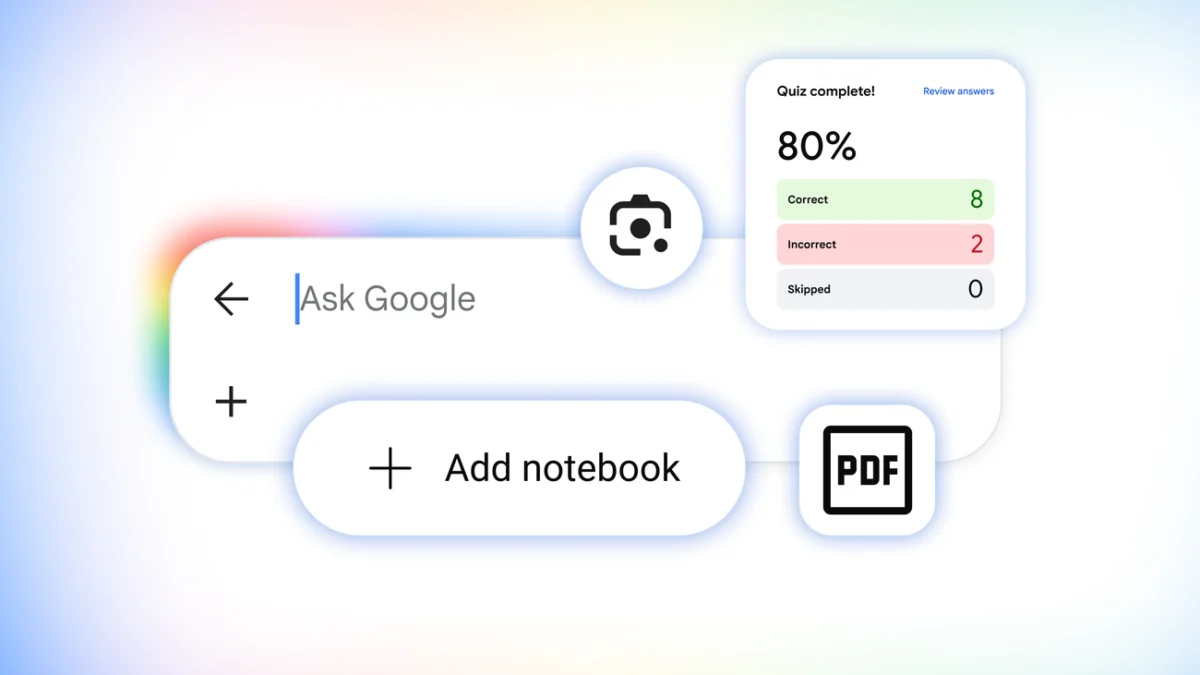
Google has unveiled a comprehensive suite of artificial intelligence-driven educational tools within its Search ecosystem, signaling a significant shift in how the technology giant approaches the academic sector for the 2026 back-to-school season. These updates, ranging from interactive simulations to AI-powered study organizers, are designed to transform Search from a repository of links into a personalized, interactive tutor. According to Awaneesh Verma, Google’s Distinguished Product Manager for Search, these tools represent a commitment to "safe-by-design" educational technology that assists students in navigating complex subjects, preparing for high-stakes examinations, and maintaining organizational efficiency across multiple disciplines.
A Paradigm Shift in Digital Pedagogy: Interactive Visuals and Generative UI
The first major update introduces interactive visuals and simulations directly within AI Overviews. Recognizing that static text often fails to convey the nuances of complex scientific or mathematical concepts, Google has deployed "Generative UI" capabilities. This technology allows Search to generate custom, functional tools on the fly based on specific user queries. For example, a student researching pH levels is no longer limited to reading a definition; instead, they can interact with a generated scale.
The system allows for hyper-specific refinements. A user can transition from a general inquiry about acidity to asking the AI to plot specific objects—such as citrus fruits or household cleaners—on a dynamic scale. This capability is powered by advanced generative models that can synthesize user intent into a functional interface. Currently launched globally in English within the "AI Mode" of Search, this feature is also beginning its rollout within the standard AI Overviews, providing a more immersive way for visual learners to grasp abstract theories in physics, chemistry, and biology.
Standardized Test Preparation and Collaborative Practice Quizzes
In a direct move to compete with dedicated test-prep platforms, Google has introduced customized practice quizzes within Search. These quizzes cover a vast array of subjects, including the humanities, foreign languages, and STEM fields. Most notably, Google has secured partnerships with major global education firms, including The Princeton Review, Careers360, PhysicsWallah, and Akira Enem.
These partnerships allow Google to tap into authoritative, expert-vetted content for standardized tests. The platform now supports specific prep for the following examinations:
- ACT and SAT (North America)
- AP (Advanced Placement)
- GRE and LSAT (Graduate and Professional studies)
- MCAT (Medical school admissions)
- JEE and NEET (Indian engineering and medical entrance exams)
- ENEM (Brazil’s national high school exam)
When a student searches for "SAT vocabulary quiz," Search generates an interactive module that provides instant feedback, detailed explanations for incorrect responses, and links to deeper resource materials. This free service aims to democratize access to high-quality test preparation, which has traditionally been gated behind expensive tutoring services.
Visual Problem Solving via Google Lens Integration
The third pillar of this update involves the integration of Lens into the learning workflow. While Lens has long been used for visual identification and translation, its new "interactive learning experience" focuses on coaching rather than simply providing answers. By capturing a photo of a math problem or a scientific diagram, students receive an AI-generated overview that breaks the problem down into sequential steps.
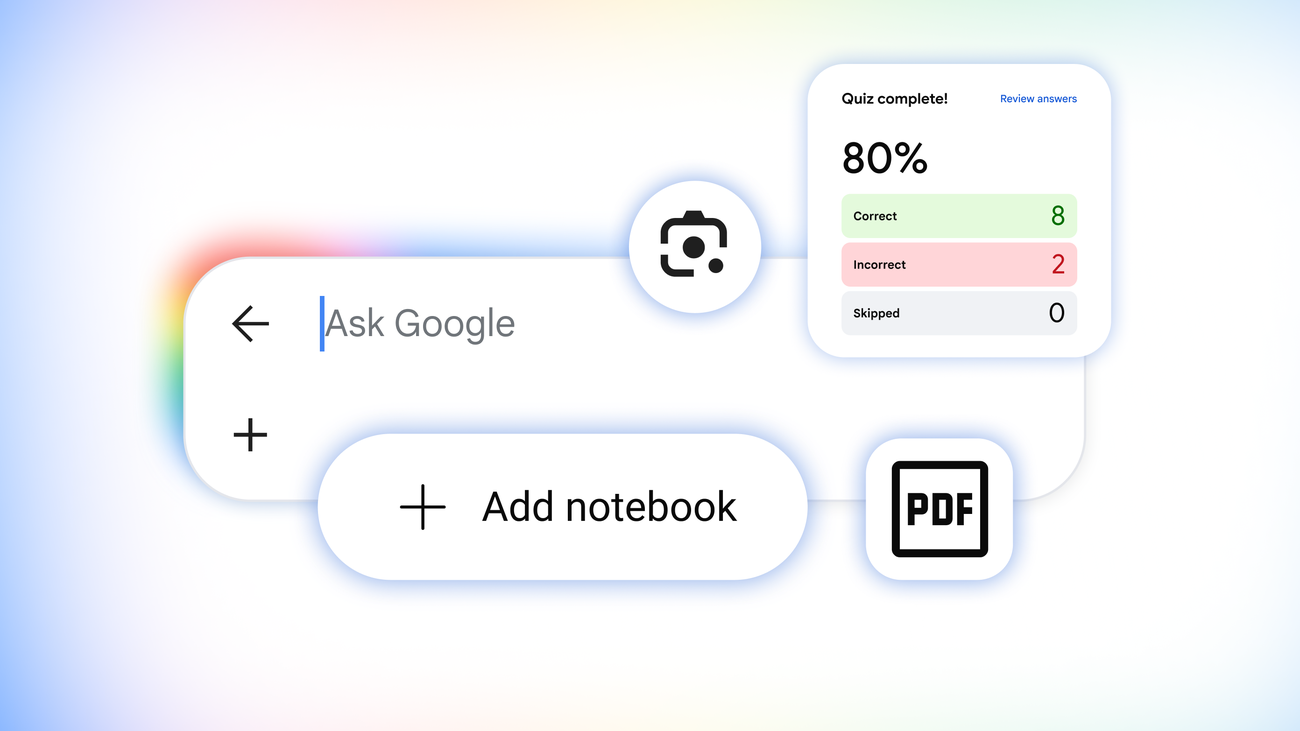
The objective of this feature is to identify specific points of failure in a student’s work. Instead of providing a final solution immediately, the AI acts as a digital coach, pinpointing where a calculation may have gone awry and offering clarifying hints. If the student remains confused, they can engage in a follow-up conversation in AI Mode to explore the underlying logic of the problem. This feature is scheduled for a global rollout in English over the coming weeks on both Android and iOS platforms.
The Evolution of NotebookLM: Centralized Study Management
One of Google’s most successful experimental projects, NotebookLM (formerly Gemini Notebook), is now being integrated directly into Search’s AI Mode. This integration allows students to create dedicated digital notebooks for specific classes or projects without leaving the Search interface.
Users can populate these notebooks with a variety of sources, including:
- PDFs of course syllabi and lecture slides.
- Relevant web articles discovered during research.
- Previous AI Mode conversation threads.
By grounding the AI in these specific reference materials, Google minimizes the risk of "hallucinations" and ensures that the insights generated are relevant to the student’s specific curriculum. The system automatically syncs across Google products, meaning a notebook started in the Gemini app will be accessible and editable within Search. This functionality is rolling out to over 180 countries in English, with localized language support expected shortly thereafter.
Document Synthesis and Custom Study Materials
The final major update addresses the logistical burden of student life: the organization of disparate notes and materials. Search now possesses the capability to generate ready-to-use study documents, such as one-page summaries, PDFs, or spreadsheets, based on uploaded files and AI interactions.
A student can, for instance, upload a photo of handwritten notes and a set of lecture slides, then request a "one-pager" that synthesizes the two into a coherent study guide. This feature supports various formats, including documents and slide presentations, and is aimed at streamlining the transition from data gathering to active revision.
Chronology of Google’s AI Integration in Search
The current suite of educational tools is the culmination of a multi-year strategy to pivot Google Search toward a generative model:
- May 2023: Google introduces the Search Generative Experience (SGE) at its I/O conference, testing the waters for AI-integrated search results.
- Late 2023: The launch of Gemini, Google’s most capable AI model, which began powering more complex reasoning tasks.
- May 2024: AI Overviews are rolled out to the general public in the United States, providing summarized answers to complex queries.
- August 2026: The launch of the current "Back to School" features, marking the first time Google has tailored its generative capabilities specifically for the global education market.
Supporting Data and Market Analysis
The integration of AI into education comes at a time when the global EdTech market is projected to reach a valuation of approximately $348 billion by 2030, according to industry reports. Recent surveys indicate that over 60% of students in higher education have utilized some form of AI to assist with their coursework, yet concerns regarding the accuracy of information remain a primary barrier to adoption.
By partnering with established names like The Princeton Review, Google is addressing the "trust gap" in AI. Data suggests that students are 40% more likely to use an AI tool if they know the underlying data source is an accredited educational institution or a recognized test-prep authority. Furthermore, the move to offer these tools free of charge positions Google as a formidable competitor to paid AI services like ChatGPT Plus or specialized platforms like WolframAlpha.
Broader Implications and Industry Reactions
The introduction of these tools has sparked a range of reactions from the educational community. While many educators welcome the potential for personalized learning, others have raised questions regarding academic integrity and the potential for over-reliance on automated problem-solving.
"The shift from ‘finding information’ to ‘understanding concepts’ is a positive step for search engines," says Dr. Elena Rossi, an educational technology consultant. "However, the challenge for Google will be ensuring that the AI ‘coaching’ doesn’t inadvertently become a shortcut that bypasses the critical thinking process. The success of the Lens integration, in particular, depends on how effectively it encourages students to show their work rather than just seeking the end result."
From a technical standpoint, the rollout of Generative UI is being viewed by analysts as a "game-changer" for user experience. By creating interactive widgets rather than just text, Google is moving closer to the concept of an "agentic" search engine—one that doesn’t just answer questions but performs tasks and creates tools for the user.
Future Outlook
As Google continues to expand these features, the focus is expected to shift toward greater localization and accessibility. The company has already committed to rolling out local language support for its notebook features and expanding the range of supported file formats for document generation.
As the 2026 academic year begins, the success of these tools will likely be measured by their ability to integrate seamlessly into the existing workflows of students. If Google can maintain the balance between ease of use and academic rigor, Search may well redefine itself not just as a tool for finding the world’s information, but as the primary engine for understanding it.
