

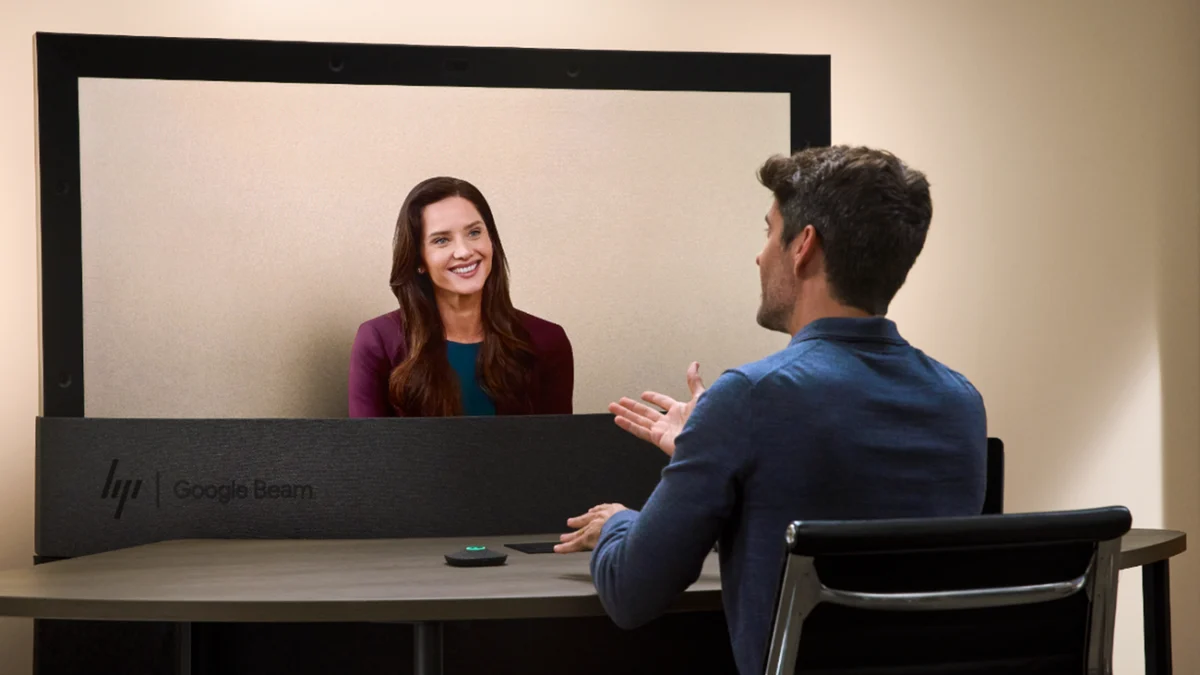
Google has officially announced a significant scaling of its immersive communication platform, Google Beam, marking a pivotal transition from experimental technology to a globally available enterprise solution. This expansion includes the deployment of Google Beam hardware to five new international markets, the establishment of a robust network of eighteen channel partners, and a strategic collaboration with Industrious to launch the first-ever "extended network" for spatial telepresence. Developed in collaboration with HP and marketed as HP Dimension with Google Beam, the technology seeks to redefine the boundaries of remote collaboration by creating a sense of "copresence"—the feeling that participants are in the same physical space despite being thousands of miles apart.
The Strategic Shift to Global Availability
The rollout marks a major milestone in Google’s efforts to commercialize its high-end communication research. Initially introduced as a conceptual project aimed at solving the "flatness" of traditional video conferencing, Google Beam has moved through rigorous internal testing and pilot programs. Today, the technology is shipping to customers in six primary regions: the United States, Canada, the United Kingdom, France, Germany, and Japan.
To facilitate this massive logistical undertaking, Google has onboarded eighteen global channel partners, including specialized audiovisual integrators and distributors. These partners are tasked not only with the physical installation of the hardware but also with providing ongoing technical support and maintenance for enterprise clients. This infrastructure is essential for the adoption of a product that relies on sophisticated hardware—including high-resolution sensors, spatial audio arrays, and specialized display technology—to function effectively.
Aaron Luber, Director of Business Development for Google Beam, emphasized that the expansion is driven by a singular vision of fostering genuine human connection. According to Luber, the goal is to transform everyday corporate meetings into authentic moments of connection, mitigating the "zoom fatigue" and emotional distance often associated with standard two-dimensional video calls.
Technical Evolution: From Project Starline to HP Dimension
The roots of Google Beam lie in "Project Starline," a research initiative first unveiled at Google I/O in 2021. The original prototype involved a massive booth filled with infrared sensors, multiple cameras, and a complex light-field display. Over the last three years, Google’s engineering teams have worked to shrink this technology into a form factor suitable for modern office environments.
The current commercial iteration, delivered by flagship hardware partner HP, is known as HP Dimension. This system integrates seamlessly with existing enterprise ecosystems, supporting both Google Meet and Zoom. By allowing the technology to work within these widely used platforms, Google has lowered the barrier to entry for organizations that are already heavily invested in specific software suites. The HP Dimension hardware utilizes advanced computer vision and machine learning to create a real-time 3D model of the user, which is then projected onto the recipient’s display with depth and parallax, allowing for natural eye contact and body language cues.
Quantifying the Impact: Data-Driven Results
The expansion is backed by substantial internal data and external case studies that suggest immersive communication provides more than just aesthetic benefits. Google conducted an extensive eight-week internal study involving its own employees to measure the efficacy of Beam compared to traditional video conferencing.
The results indicated a marked improvement in several key performance indicators:
- Perceived Connectivity: Teams using Google Beam reported feeling 50% more connected to one another than those using standard video tools.
- Communication Clarity: Participants found it 33% easier to ensure their feedback and nuances were clearly understood, likely due to the preservation of non-verbal cues like micro-expressions and hand gestures.
- Operational Efficiency: Perhaps most significantly for the corporate bottom line, there was a 21% drop in the need for follow-up meetings. This suggests that the quality of the initial interaction was high enough to resolve complex issues more quickly, reducing the overall meeting burden on employees.
These metrics highlight a growing trend in the enterprise sector where "quality of presence" is being prioritized over simple connectivity. As hybrid work becomes a permanent fixture of the global economy, the ability to resolve misunderstandings and build trust remotely is becoming a competitive advantage.
Case Study: Bain & Company’s Recruitment Transformation
Beyond Google’s internal testing, the technology has seen real-world application at Bain & Company, one of the world’s leading management consulting firms. Bain integrated HP Dimension with Google Beam into their recruitment and talent development processes to address the challenges of assessing candidates in a distributed environment.
In consulting, the ability to engage with clients effectively is a core competency. Traditional video calls often obscure the subtle nuances of body language that recruiters look for during interviews. Keith Bevans, Executive Vice President and Partner at Bain & Company, noted that the technology allows the firm to virtually understand how people will engage in person.
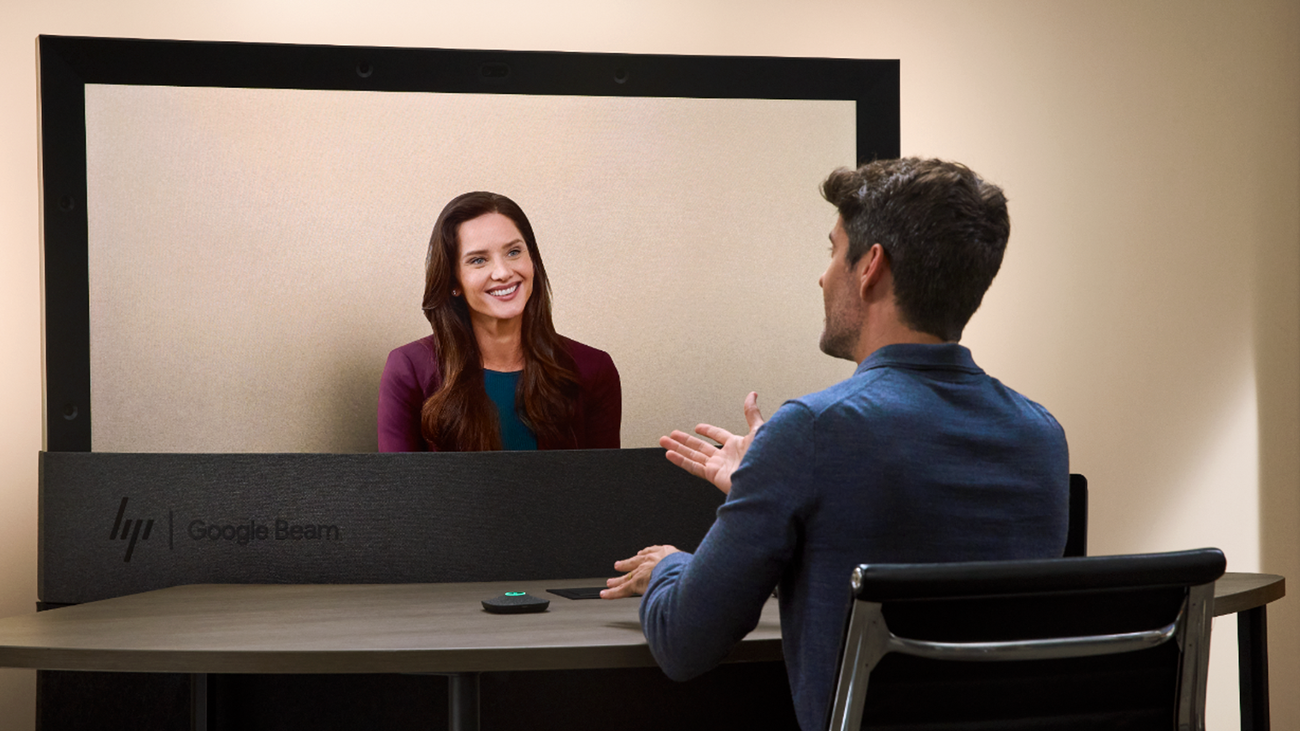
"One of the most challenging things for us to assess with candidates is how they’ll be with clients," Bevans stated. "There are so many nuances in body language and eye contact, and Google Beam allows us to virtually understand how people will engage in person, which is critically important for their success at Bain and the success of our mission with our clients."
By utilizing Google Beam, Bain was able to conduct high-stakes interviews with candidates from across the globe without the environmental and financial costs associated with extensive international travel. This use case demonstrates the potential for the technology to serve as a high-fidelity surrogate for physical travel in professional services.
The Extended Network: Partnering with Industrious
In a move to democratize access to the technology, Google has partnered with Industrious, a global operator of premium flexible workspaces. This partnership establishes the "Google Beam Extended Network," allowing businesses that may not be ready to purchase their own hardware to book and use Beam units on an as-needed basis.
Starting in October, HP Dimension with Google Beam will be available at select Industrious locations in major U.S. hubs, including New York City, Chicago, Atlanta, and Palo Alto. This "as-a-service" model is particularly relevant for startups and small-to-medium enterprises (SMEs) that require high-level client consultations or investor meetings but lack the capital for permanent installations.
The pilot program for this network showed that distributed teams utilized the spaces for manager check-ins, sensitive HR discussions, and high-value client presentations. By placing these units in co-working spaces, Google is positioning Beam as a utility for the modern mobile workforce, rather than just a luxury for the C-suite of Fortune 500 companies.
Broader Implications for the Future of Work
The global expansion of Google Beam comes at a time when the "Return to Office" debate is reaching a fever pitch. Many organizations are struggling to balance the flexibility of remote work with the undeniable benefits of in-person collaboration. Google’s investment in spatial telepresence suggests a third path: enhancing the remote experience to the point where the physical location of the employee becomes secondary to the quality of the interaction.
From a sustainability perspective, the widespread adoption of such technology could significantly reduce corporate carbon footprints by cutting down on short-haul business flights. From a psychological perspective, it addresses the "dehumanization" of digital work, where employees often feel like "heads in boxes" on a screen.
However, the technology also faces challenges. The high bandwidth requirements and the cost of specialized hardware remain potential hurdles for universal adoption. Furthermore, as digital representations of humans become more lifelike, questions regarding data privacy and the "uncanny valley" effect—where near-human likenesses can cause unease—will likely persist.
Conclusion and Industry Outlook
The expansion into six countries and the addition of major clients like Netflix and Capital Group signal that Google Beam is no longer a "moonshot" project. It is a commercial product competing in a rapidly evolving market for "spatial computing" and advanced collaboration tools.
As Google continues to refine the software and HP scales the hardware production, the industry can expect to see further integrations. Potential future applications could extend into healthcare, where specialists could conduct "near-physical" consultations with patients in rural areas, or into education, allowing for immersive remote learning experiences.
For now, Google remains focused on the enterprise sector, aiming to solve the most pressing problem of the modern office: how to stay connected in a world that is increasingly physically distant. With the launch of the Industrious network and the global rollout, the next year will be a critical test of whether the world is ready to move beyond the webcam and into the era of true digital copresence.
