

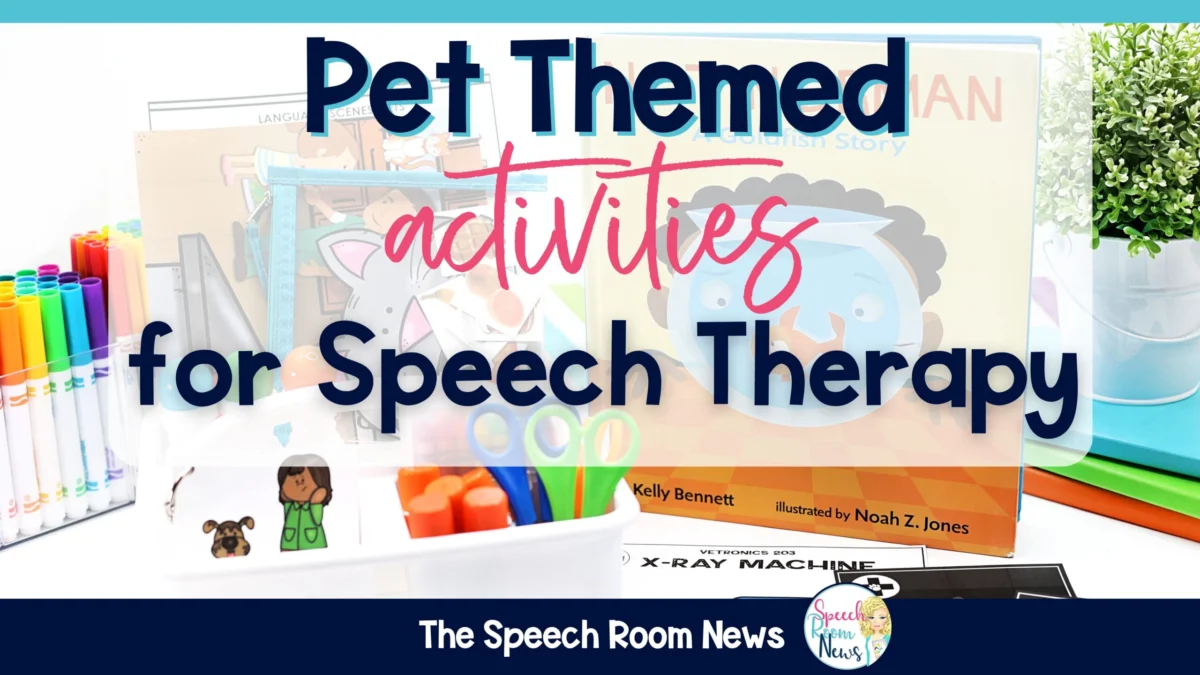
The field of speech and language pathology is continually evolving, with practitioners constantly seeking innovative and effective methodologies to enhance therapeutic outcomes. Among the most impactful pedagogical shifts observed in recent years is the widespread adoption of thematic instruction, a strategy that organizes learning around a central topic or concept. This approach has gained significant traction for its ability to foster deeper engagement, improve vocabulary acquisition, and facilitate the generalization of skills across various communicative contexts. A particularly popular and versatile theme that has emerged as a cornerstone for year-round speech and language activities is the "pets theme," offering a rich, relatable, and highly motivating framework for students across diverse developmental stages.
The Pedagogical Shift: Evolution of Thematic Instruction in SLP

Historically, speech and language therapy often relied on discrete skill drills, focusing on isolated phonemes, vocabulary words, or grammatical structures. While effective for targeted intervention, this approach sometimes lacked the contextual richness and intrinsic motivation needed to sustain long-term engagement, especially for younger learners or those with more complex communication needs. The past few decades have witnessed a significant paradigm shift, influenced by broader educational research emphasizing holistic learning, child-centered approaches, and the importance of context in skill acquisition.
This evolution saw thematic units, long a staple in early childhood education, increasingly integrated into specialized therapeutic settings. The rationale was clear: by anchoring various learning objectives around a familiar and engaging theme, therapists could create a cohesive and immersive learning environment. This not only makes lessons more enjoyable but also provides multiple opportunities for exposure to target vocabulary and concepts, reinforcing learning through repetition and varied application. Themes that are "evergreen" or non-holiday specific, such as "pets," offer distinct advantages, allowing therapists to revisit materials multiple times throughout the year, thereby maximizing resource utility and cost-effectiveness. The consensus among leading speech-language pathologists and educational researchers is that such thematic integration significantly conserves preparation time, allowing practitioners to focus more on individualized therapy delivery rather than constant material creation.
The chronological adoption of theme-based learning into speech therapy can be traced through several stages. Initially, it was a supplementary approach, used sporadically to add variety. However, as research underscored the benefits of contextualized learning for cognitive development and memory retention, thematic instruction transitioned into a best practice. This was further propelled by the demand for more engaging and naturalistic therapy environments, which better mimic real-world communication scenarios. The digital age has also played a role, with online platforms facilitating the creation and sharing of comprehensive thematic kits, making it easier for therapists to implement these robust programs.

Deep Dive into the "Pets Theme": A Multifaceted Approach to Language Development
The enduring appeal of pets stems from their universal presence in children’s lives, whether as family members, neighborhood companions, or beloved characters in stories. This inherent relatability makes a "pets theme" an exceptionally fertile ground for targeting a wide array of speech and language goals.
-
Core Principles: Pets provide a natural context for developing descriptive language (e.g., "fluffy," "striped," "fast"), action verbs (e.g., "bark," "purr," "fetch"), spatial concepts (e.g., "under the bed," "behind the couch"), and social-emotional vocabulary (e.g., "happy," "sad," "playful"). They also lend themselves to narrative development, allowing children to tell stories about their own pets or imagine adventures with fictional ones. Moreover, the predictability of pet routines can be used to teach sequencing, temporal concepts, and cause-and-effect relationships.

-
Literacy Integration: The Power of Pet-Themed Books:
Reading aloud is a foundational activity in speech therapy, offering rich linguistic input and opportunities for discussion. Pet-themed books are particularly effective due to their relatable characters and engaging storylines.- Not Norman by Kelly Bennett: This humorous tale about a boy and his unexpected goldfish, Norman, is an excellent resource for targeting several speech and language goals. It provides a natural context for discussing emotions (disappointment, acceptance, affection), contrasting concepts (exciting vs. quiet pets), and developing narrative skills through sequencing events and identifying character motivations. Therapists can use the boy’s initial desire for a "cool pet" to elicit descriptive language, and his eventual appreciation for Norman to explore themes of acceptance and unique qualities. The book’s clear problem-solution structure is ideal for practicing story grammar elements and predicting outcomes.
- Some Pets by Angela DiTerlizzi: With its vibrant illustrations and diverse cast of children and their animal companions, this book is a treasure trove for vocabulary expansion and category identification. It introduces a variety of common pets, allowing for discussions on animal names, characteristics, habitats, and care. The repetitive, rhythmic text supports phonological awareness and early literacy skills, while the focus on "joys and responsibilities" opens doors for conversations about empathy, routines, and social understanding. Therapists can use it to compare and contrast different pets, practice asking and answering "wh-" questions, and build descriptive sentences.
- Lola Gets a Cat by Anna McQuinn: This book delves into the dreams and realities of pet ownership, making it perfect for exploring imaginative play versus real-world responsibilities. Lola’s daydreams about cuddling and playing with her cat offer opportunities for discussing desires, predictions, and action verbs. The eventual realization that owning a cat requires significant care provides a context for teaching responsibility, problem-solving, and sequencing daily tasks. This narrative is also excellent for fostering inferential thinking and understanding cause-and-effect.
- Interactive Vocabulary Book about Pets: Beyond traditional storybooks, interactive vocabulary resources, often found on platforms like TeachersPayTeachers, are invaluable. These typically cover categories (e.g., types of pets), actions (e.g., eat, sleep, play), and descriptive attributes (e.g., furry, wet, fast). Such books are designed to be hands-on, allowing students to manipulate pieces, match items, and actively participate in vocabulary acquisition, thereby reinforcing concepts introduced in storybooks and preparing them for more complex activities like role-playing in a "critter vet clinic."
-
Auditory Engagement: Songs as Therapeutic Tools:
Music is a powerful tool for language development, leveraging rhythm, melody, and repetition to enhance memory and engagement. Pet-themed songs are particularly effective for young learners, as they often feature simple lyrics, repeated phrases, and opportunities for vocal imitation and motor actions.- "I Have a Pet," "Do You Have a Pet?," "I Love Dogs," and "Wag Your Tail": These songs, readily available on platforms like YouTube, are excellent for practicing animal sounds, identifying word patterns, expanding basic vocabulary (e.g., pet names, actions, feelings), and developing action words. The repetitive nature aids in auditory processing and recall, while the engaging melodies encourage participation, even from reluctant communicators. Therapists can use these songs to target phonological awareness, following simple commands (e.g., "wag your tail"), and practicing prosodic features like intonation and rhythm.
-
Interactive Learning: Games for Skill Reinforcement:
Games introduce an element of fun and competition, naturally motivating students to practice target skills.
- Color and Play Pets Bingo: This adaptable game can be utilized in numerous ways. For articulation, students can practice target sounds as they identify and color pet-related images. For vocabulary, it reinforces recognition of pet names, associated items (e.g., leash, food bowl), or actions. For language skills, therapists can prompt descriptive language (e.g., "I have a fluffy brown dog") or turn-taking. The visual nature of Bingo also supports students with diverse learning styles.
- Feed the Dog Articulation Boom Cards: Digital interactive games, such as Boom Cards, have revolutionized articulation therapy. This particular game leverages the engaging concept of "feeding" a hungry dog with target words. The interactive element, often accompanied by auditory feedback like a "crunch" sound, provides immediate reinforcement, keeping students highly motivated. It allows for high-repetition practice of all articulation sounds in an engaging, gamified format, making drill work feel less tedious and more like play. The digital format also facilitates data collection and customization for individual student needs.
-
Hands-On Learning: Toys and Manipulatives for Experiential Therapy:
Tactile and experiential learning through toys is crucial for young children, as it allows them to physically interact with concepts and develop imaginative play skills.- Critter Clinic Toy Vet Set: This highly versatile toy offers immense therapeutic value. With its lockable doors, stuffed animals, and veterinary tools, it creates a rich environment for role-playing.
- Language Goals: Students can practice requesting (e.g., "I need a bandage"), describing symptoms (e.g., "My cat has a sore paw"), following multi-step directions (e.g., "First, open the door, then check the dog’s ear"), and developing narrative skills by creating scenarios for their "patients."
- Articulation: Practicing sounds within the context of play (e.g., "vet," "sick," "fix").
- Social Skills: Turn-taking, cooperation, and problem-solving during collaborative play.
- Fine Motor: Manipulating the locks, tools, and animal figures.
The ability to adapt this toy for various themes (e.g., transforming it into a "Gingerbread House" for holiday themes) further underscores the value of versatile resources.
- Hape Family Pet Houses: This set, with its small pieces and diverse pet figures, is excellent for targeting nuanced language concepts.
- Prepositions and Spatial Concepts: Placing animals "in" the house, "on" the roof, "under" the table.
- Descriptive Language: Describing the different pets, their houses, and their actions.
- Imaginative Play: Creating stories and scenarios for the pets, fostering narrative development.
- Social Communication: Facilitating joint attention, requesting, and commenting during play.
The small pieces also naturally encourage fine motor skill development and precise vocabulary use.
- Critter Clinic Toy Vet Set: This highly versatile toy offers immense therapeutic value. With its lockable doors, stuffed animals, and veterinary tools, it creates a rich environment for role-playing.
-
Creative Expression: Pet-Themed Crafts:
Crafts provide a multisensory approach to learning, integrating fine motor skills with language production.- Clifford the Big Red Dog Craft: Inspired by the beloved character, a paper plate Clifford craft (as suggested by Crafty Morning) can be paired with reading Clifford books. This activity targets:
- Following Directions: "First, cut the red paper, then glue the ears."
- Sequencing: Recounting the steps of the craft.
- Descriptive Language: Describing Clifford’s size, color, and features.
- Vocabulary: Introducing terms like "paper plate," "scissors," "glue," "ears," "nose."
- Fine Motor Skills: Cutting, gluing, coloring.
- Clifford the Big Red Dog Craft: Inspired by the beloved character, a paper plate Clifford craft (as suggested by Crafty Morning) can be paired with reading Clifford books. This activity targets:
-
Sensory Integration: Engaging Multiple Modalities:
Sensory bins are powerful tools for engaging multiple senses, promoting exploration, and stimulating language in a play-based context.
- Pet-Themed Sensory Bin: A simple sensory bin filled with rice, beans, or shredded paper, hiding small plastic pet figures and pet-related accessories (e.g., miniature food bowls, leashes), provides a rich environment for language stimulation.
- Descriptive Language: Encouraging students to describe what they see or feel ("I feel something soft and furry," "I see a pointy black ear").
- Inferencing: "I see a tail, what pet could it be?"
- Requesting: "Can I have the cat?"
- Object Identification: Naming the pets and accessories as they are discovered.
- Tactile Exploration: Providing varied textures for sensory input.
This activity naturally promotes joint attention and shared discovery, enhancing communicative interactions.
- Pet-Themed Sensory Bin: A simple sensory bin filled with rice, beans, or shredded paper, hiding small plastic pet figures and pet-related accessories (e.g., miniature food bowls, leashes), provides a rich environment for language stimulation.
The Broader Impact and Professional Implications
The strategic integration of thematic units, particularly versatile ones like "pets," has profound implications for both speech-language pathologists and their students.
- Efficiency for SLPs: The most immediate benefit for practitioners is the significant reduction in preparation time. Comprehensive thematic kits, such as the "Pet Themed Speech Therapy Kit" (offering four weeks of lessons, printables, interactive play resources, circle time lessons, parent handouts, crafts, and book companions), provide ready-to-use materials. This allows SLPs to dedicate more time to direct therapy, individualizing interventions, and collaborating with families and educators, rather than spending hours on material creation. The reusability of year-round themes also represents a wise investment of resources.
- Enhanced Student Outcomes: Research consistently demonstrates that engaging, context-rich learning environments lead to improved motivation, better retention of new information, and more effective generalization of learned skills to real-world situations. Children are more likely to participate enthusiastically when the activities align with their interests, leading to higher rates of skill acquisition and longer-lasting therapeutic gains. Thematic therapy fosters a holistic approach, addressing cognitive, social, emotional, and linguistic development simultaneously.
- Parental Involvement: Thematic units often provide natural bridges for extending learning into the home environment. When children are enthusiastic about a "pet" theme, parents can easily reinforce concepts through related books, discussions about family pets, or visits to local pet stores or animal shelters. Therapists can provide themed handouts and activity ideas, empowering parents to become active partners in their child’s communication development.
- Professional Development and Resource Availability: The proliferation of online platforms and resource-sharing communities has made high-quality thematic materials more accessible than ever before. This fosters a collaborative environment among SLPs, allowing them to share best practices and collectively refine therapeutic approaches. The availability of well-designed kits ensures that even new practitioners can implement sophisticated thematic programming with confidence.
Experts in the field, such as Dr. Emily R. Thorne, a renowned pediatric speech-language pathologist, frequently highlight the transformative power of thematic therapy. "We’ve moved beyond rote memorization to creating rich, immersive experiences," Dr. Thorne states. "When a child is genuinely excited about a pet theme, they are more receptive to learning, their vocabulary blossoms, and they naturally begin to generalize those skills into their everyday conversations. It’s not just about teaching words; it’s about fostering a love for communication." Similarly, educational psychologists emphasize the cognitive benefits, noting that integrated learning helps children build stronger neural connections by linking new information to existing knowledge structures, leading to deeper understanding and more robust skill retention.

Future Outlook
The trajectory for thematic speech therapy remains bright, with continued innovation expected in several areas. The integration of augmented reality (AR) and virtual reality (VR) could create even more immersive pet-themed experiences, allowing students to interact with virtual animals in highly realistic scenarios. Further research will likely continue to refine best practices, identifying the most effective thematic structures for specific populations and therapeutic goals. Moreover, an increased focus on culturally responsive thematic content will ensure that materials reflect the diverse backgrounds and experiences of all students, including various types of pets and animal relationships from around the world.
In conclusion, the adoption of pet-themed lessons in speech and language therapy represents a strategic and highly effective pedagogical approach. By leveraging children’s natural affinity for animals, these thematic units create dynamic, engaging, and enriching learning environments that transcend traditional drill-based methods. They empower speech-language pathologists with efficient, adaptable tools that not only streamline their practice but, more importantly, foster deeper engagement, enhance skill acquisition, and contribute significantly to the holistic communication development of their students. The sustained success and growing popularity of the "pets theme" underscore its vital role in modern speech and language pathology, proving that therapeutic intervention can indeed be both impactful and profoundly enjoyable.
