

Google has officially introduced the Fairwind Program, a specialized initiative designed to provide governments, critical infrastructure providers, and elite cybersecurity partners with early access to the company’s most sophisticated artificial intelligence-driven defense tools. This announcement marks a significant pivot in the technological arms race between cyber defenders and malicious actors, shifting the focus from mere threat detection to autonomous, large-scale vulnerability remediation. Led by Four Flynn, Google’s Vice President of Security and Privacy, the program aims to address a long-standing dilemma in the cybersecurity industry: the trade-off between the power of massive frontier AI models and the agility of smaller, more controllable open-weight systems.
The Technological Foundation: Gemini 3.8 Flash Cyber and CodeMender
At the core of the Fairwind Program is the Gemini 3.8 Flash Cyber model, a specialized iteration of Google’s generative AI family optimized for security-specific reasoning. Unlike general-purpose models, this variant is fine-tuned to understand the nuances of software vulnerabilities, exploit patterns, and secure coding practices. When integrated with Google’s CodeMender harness, the system moves beyond theoretical advice to provide what the company calls "agentic scale" defense.
CodeMender acts as the execution environment where Gemini 3.8 Flash Cyber operates. Traditionally, when a security team identifies a vulnerability—such as a buffer overflow or a cross-site scripting flaw—the remediation process involves a manual cycle of analysis, code drafting, testing, and deployment. This process can take weeks, during which the system remains exposed. The Fairwind Program seeks to compress this timeline into minutes. By autonomously generating verified, deployment-ready patches within an organization’s secure cloud environment, the system allows defenders to fix flaws at a pace that matches or exceeds the speed of automated exploitation tools used by sophisticated threat actors.
The choice of the "Flash" model is strategic. While larger frontier models offer immense reasoning capabilities, they are often cost-prohibitive for continuous, codebase-wide scanning and remediation. The Gemini 3.8 Flash Cyber model is designed to deliver high-level specialized reasoning at a fraction of the operating cost, making it feasible for enterprises to deploy autonomous defenders across their entire digital estates without exhausting their computational budgets.
Addressing the Defender’s Dilemma: A Strategic Shift
For years, the cybersecurity community has struggled with a binary choice regarding AI implementation. On one hand, frontier models offered the reasoning necessary to handle complex codebases but were difficult to integrate securely and expensive to scale. On the other hand, smaller open-source or open-weight models provided better control and lower costs but often lacked the "reasoning depth" required to fix intricate vulnerabilities without introducing new bugs.

The Fairwind Program is positioned as a middle ground. It provides the security of a managed, trusted environment while offering the high-performance reasoning of Google’s advanced AI. This is particularly critical for government agencies and operators of national infrastructure, where the margin for error is non-existent. By providing a "harness" like CodeMender, Google ensures that the AI’s output is validated and tested before it is ever suggested for deployment, mitigating the risk of AI hallucinations—a common concern when using LLMs for software engineering.
Chronology of Google’s Cyber Defense Evolution
The launch of the Fairwind Program is the culmination of a multi-year strategy to integrate AI into the bedrock of global security.
- 2023: Google began the deep integration of generative AI into its Security Operations Center (SecOps) tools, introducing the first iterations of "Security AI Workbench" powered by Sec-PaLM 2.
- Early 2024: The company transitioned to the Gemini era, focusing on reducing the "toil" of security analysts by automating the summarization of threat intelligence.
- Mid-2024: Development of the "Cyber" specific variants of Gemini models began, focusing on the "Red Team" (offensive) and "Blue Team" (defensive) capabilities of the AI.
- Late 2024: Pilot testing of CodeMender was conducted with a select group of internal Google engineers and a handful of Fortune 500 companies.
- Present: The official launch of the Fairwind Program, expanding access to a broader ecosystem of over 650 global partners and government entities.
This timeline reflects a broader industry trend where the role of AI has moved from a "copilot" that assists humans to an "agent" that can perform end-to-end tasks autonomously.
Scaling Frontline Defense and Security Protocols
To maintain the integrity of these powerful tools, Google has implemented strict operational standards for Fairwind participants. Access is not universal; it is staged and restricted to organizations that are deemed critical to societal resilience. This includes national security agencies, public health organizations, and utilities.
Participating organizations must adhere to rigorous security mandates, including:
- Restricted Personnel Access: Access to the Fairwind tools is limited to internal cybersecurity, incident response, or authorized penetration testing teams.
- Mandatory Multi-Factor Authentication (MFA): All users must utilize advanced hardware or software-based MFA to prevent credential theft.
- Secure Environment Deployment: The AI models and the CodeMender harness operate within the customer’s secure Google Cloud perimeter, ensuring that sensitive source code never leaves the organization’s control.
These measures are designed to prevent the dual-use nature of AI from being exploited. A tool capable of fixing vulnerabilities with high precision could, in theory, be used to find and exploit them if it fell into the wrong hands. By limiting access to trusted partners and enforcing strict operational silos, Google aims to ensure the "defender’s advantage" remains with the protectors.
Industry Reactions and Ecosystem Impact
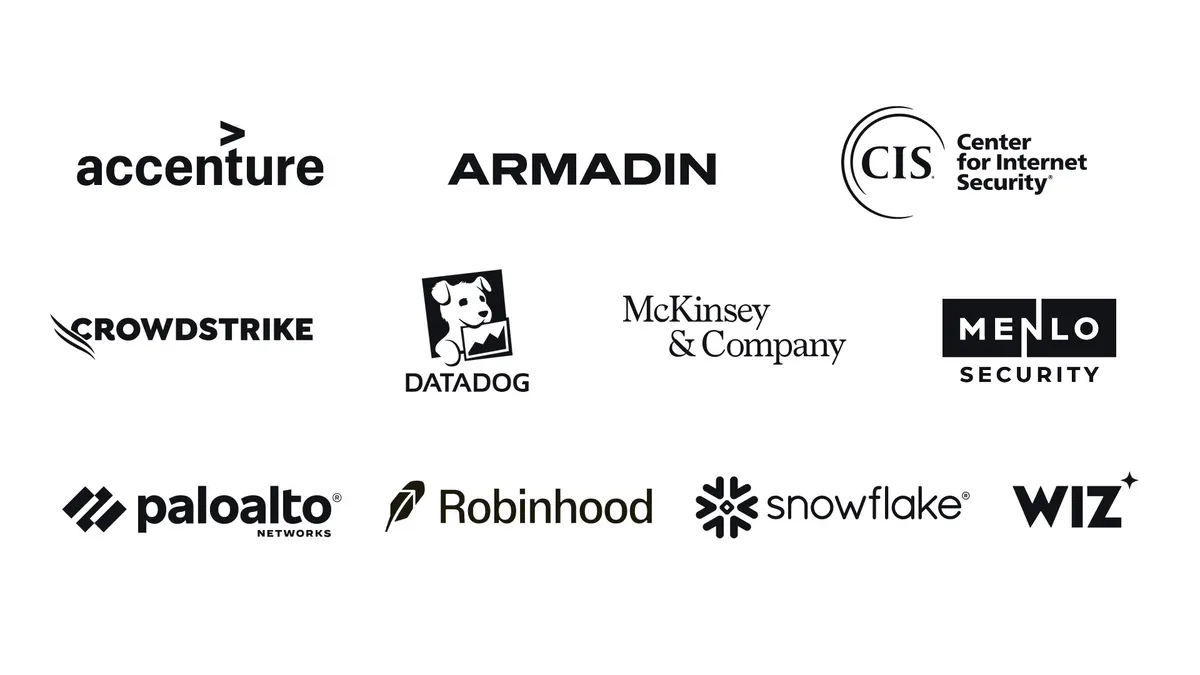
The program has already garnered support from major players in the cybersecurity industry. Organizations such as CrowdStrike, Palo Alto Networks, Snowflake, and Wiz are among the 650 partners globally participating in the ecosystem.
Industry analysts suggest that the move toward autonomous remediation is a necessary response to the rise of "agentic" threats—malicious AI agents that can scan the internet for vulnerabilities and execute exploits in real-time. Without a corresponding autonomous defense capability, human-led security teams are effectively fighting a losing battle against machine-speed attacks.
Representatives from partner companies have noted that the Gemini 3.8 Flash Cyber model’s ability to generate "verified" patches is the most critical feature. In traditional DevOps environments, the fear of "breaking the build" often prevents rapid patching. If an AI can prove, through automated testing within the CodeMender harness, that a patch is safe, it removes the primary bottleneck to securing legacy systems.
Supporting Data: Investment in Global Resilience
Beyond the technological rollout, Google has reinforced its commitment to cybersecurity through substantial financial investments. The company revealed that its total cybersecurity funding via Google.org has now surpassed $100 million globally.
A key component of this investment is the support for "grassroots" cyber defense. Along with the Fairwind announcement, Google released its 2026 U.S. Cybersecurity Impact Report. The data highlights a $36 million commitment to 35 "cyber clinics" across the United States. These clinics serve a dual purpose: they provide free, hands-on security support to under-resourced entities and serve as a training ground for the next generation of cybersecurity professionals.
To date, these clinics have provided security audits, incident response planning, and technical support to over 1,250 organizations, including:
- Municipal Utilities: Protecting local water and power grids from ransomware.
- Public School Districts: Securing student data and preventing operational disruptions.
- Hospitals: Ensuring that life-critical systems remain online during cyberattacks.
This multi-layered approach—combining high-end AI for governments with grassroots funding for local communities—suggests that Google views cybersecurity not just as a product category, but as a fundamental pillar of public safety.
Broader Implications and Future Outlook
The launch of the Fairwind Program signals a shift in the philosophy of digital security. For decades, the "defender’s dilemma" dictated that a defender had to be right 100% of the time, while an attacker only had to be right once. By utilizing agentic AI to find and fix flaws at scale, the Fairwind Program attempts to flip this script. If vulnerabilities can be closed as soon as they are created—or even before they are committed to a production codebase—the window of opportunity for attackers shrinks to near zero.
However, the program also raises questions about the future of open access to AI. Google has stated it will collaborate with "open-weight community leaders" to find a balance between open access and security. This suggests a future where the most powerful "cyber-capable" AI models might remain behind controlled gates, while less sensitive models are released to the public.

As the Fairwind Program evolves, Google intends to expand partner access and adapt its offerings based on real-world feedback from the front lines. The ultimate goal is to create an "ecosystem-scale impact," where the collective defense of 650+ partners creates a "herd immunity" effect across the internet.
In conclusion, the Fairwind Program represents a significant step toward a proactive, rather than reactive, cybersecurity posture. By providing the tools for autonomous remediation, Google is not just helping organizations find their flaws; it is giving them the means to heal them. In an era where cyber threats move at the speed of light, the ability to repair systems in minutes may be the only way to ensure the continued resilience of the world’s most critical digital infrastructure.
