

The pervasive concept of storytelling in contemporary business discourse is not merely a passing trend but a fundamental shift in communication strategy, increasingly recognized as indispensable for driving organizational success. Leaders adept at weaving information into compelling narratives are consistently demonstrating superior outcomes in critical areas such as deal closure, budget approval, and the effective navigation of teams through periods of significant change. This evolution does not necessitate the incorporation of personal anecdotes into every meeting, but rather a strategic reframing of information as a cohesive story, leveraging proven techniques to foster deep audience engagement and incite action.
A storytelling presentation transcends a mere recitation of facts and figures; it is a meticulously crafted business presentation that frames data, proposals, and visions within a narrative arc. This approach is rooted in human psychology, recognizing that the brain is wired to process and retain information presented in story form far more effectively than isolated data points. Research from cognitive psychology consistently indicates that narratives activate broader areas of the brain, engaging both logical and emotional centers, leading to enhanced comprehension, retention, and ultimately, persuasion. As organizations grapple with an ever-increasing volume of information and shrinking attention spans, the ability to distil complex concepts into memorable stories has become a critical differentiator for effective communication.
The Foundational Structures of Persuasive Narrative
The efficacy of storytelling in business presentations often hinges on adopting universally resonant narrative structures. One of the most potent is the Hero’s Journey, a monomyth identified by mythologist Joseph Campbell. This archetypal structure, found across cultures and throughout history, outlines a predictable progression: a hero embarks on an adventure, confronts a crisis, gains a mentor, overcomes challenges, and ultimately returns transformed. Applying this framework to a business presentation provides a robust and inherently engaging blueprint.
In a business context, the Hero’s Journey translates into a clear beginning, middle, and end, punctuated by moments of challenge, revelation, and resolution. The narrative typically opens by establishing the current state, which often presents a problem or an unmet need – the hero’s initial challenge. This is followed by the introduction of a guiding force or solution – the mentor. The story then details the tools, strategies, or insights provided by the mentor, enabling the hero to navigate the "messy middle" of obstacles and ultimately achieve a desired future state, the "happily ever after." Crucially, for this structure to resonate, a clear distinction must be established between who embodies the hero and who assumes the role of the mentor within the narrative.
Shifting Perspectives: Audience as Hero, Presenter as Mentor

A common pitfall in business presentations is the presenter inadvertently positioning themselves or their organization as the hero. This often manifests in presentations heavily focused on a company’s storied history, extensive client lists, or numerous accolades. While such information can build credibility, a presentation primarily centered on the presenter’s achievements tends to alienate the audience, who are primarily concerned with their own challenges and aspirations. Data from audience engagement studies frequently indicates that self-aggrandizing presentations result in lower attentiveness and reduced receptivity to the message.
In contrast, the most impactful storytelling presentations strategically position the audience as the hero. This reframing is pivotal because it is the audience who faces the challenges, who seeks solutions, and who stands to benefit from the "happily ever after." By empathizing with the audience’s pain points and aspirations, the presenter establishes a connection that transcends mere information delivery. This approach aligns with customer-centric business philosophies, where understanding and addressing customer needs is paramount.
Consequently, the presenter naturally assumes the role of the mentor. This role is not about seeking glory but about equipping the hero (the audience) with the necessary tools, insights, and solutions to overcome their challenges. Consider the stark difference in approach when selling a meal kit delivery service:
A "hero" presenter might highlight their company’s market leadership, ingredient freshness, creative menus, and glowing reviews. The focus remains on the company’s exceptional qualities. While factual, this approach often fails to deeply resonate because it doesn’t directly address the audience’s lived experience.
Conversely, a "mentor" presenter would frame the service around the audience’s struggle: "One of the most profound challenges for parents today is the constant tension between dedicating quality time to their children and ensuring they receive fresh, nutritious meals. Our meal kit delivery service steps in as your invaluable partner, designed to halve your weekly cooking time. By delivering meticulously portioned, fresh ingredients directly to your door, we empower the average family to reclaim five hours each week. This eliminates the agonizing choice between time in the kitchen and precious moments with your children, allowing you to seamlessly integrate both into your life."
This mentor-driven narrative immediately shifts the focus to the audience’s problem and offers a tangible solution, fostering empathy and demonstrating a profound understanding of their needs. This strategic positioning allows the presenter to concentrate on the value they provide, rather than merely extolling their own virtues.
The Dynamics of Contrast: The Presentation Sparkline® Framework

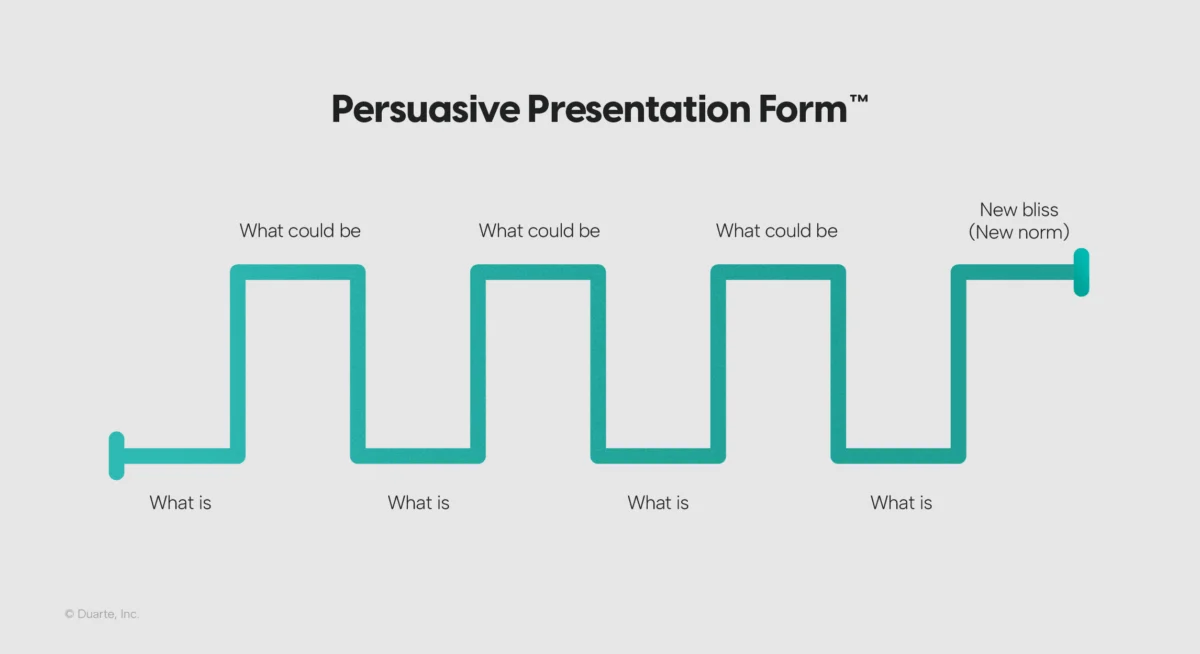
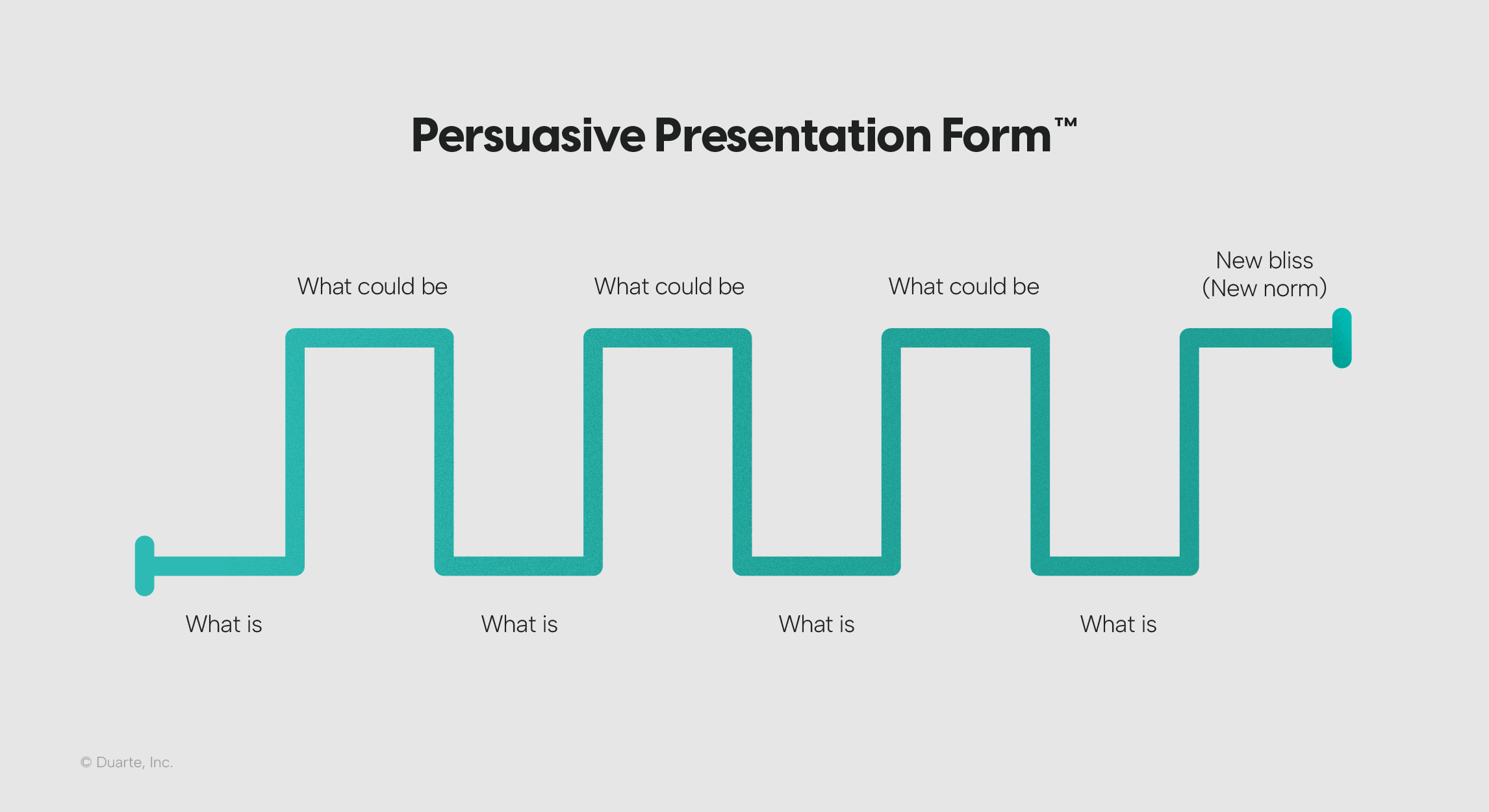
Engaging storytelling thrives on contrast. Linear narratives, characterized by a monotonous progression of "and then, and then," struggle to maintain audience attention. The most compelling stories introduce tension and dynamism through "but then" moments, creating peaks and valleys that mirror real-life experiences. This principle is elegantly captured by the Presentation Sparkline® framework, developed by communication expert Nancy Duarte.
Traditional business presentations often fall into two predictable patterns: the "report" and the "pitch." A typical report spends the majority of its time detailing the current state ("what is") – a flat line of facts, challenges, and existing conditions – before offering a single recommendation at the end that suggests "what could be." While informative, this structure often lacks the dramatic tension required for sustained engagement. Conversely, a classic pitch might open with a brief nod to "what is" before spending most of its duration painting an overly optimistic picture of "what could be." This can sound disingenuous or unrealistic due to the absence of acknowledging the journey or obstacles.
The Presentation Sparkline® framework, however, proposes a dynamic interplay between "what is" and "what could be." This approach deliberately alternates between presenting the current reality and envisioning a better future, creating a pulsating rhythm of contrast that captivates the audience. This constant oscillation between problem and solution, challenge and opportunity, mirrors the natural ebb and flow of human thought and experience. Duarte’s analysis of iconic speeches, such as Steve Jobs’ 2007 iPhone launch and Dr. Martin Luther King, Jr.’s "I Have a Dream" speech, reveals that these powerful addresses instinctively follow the Presentation Sparkline®, leveraging contrast to build anticipation, emotional resonance, and ultimately, persuade. This framework is a testament to the cognitive need for variation to sustain attention and make complex ideas more digestible and memorable.
Crafting Unforgettable Moments: S.T.A.R. Moments®
Beyond structure, effective storytelling necessitates the creation of S.T.A.R. Moments® (Something They’ll Always Remember). In an era of information overload, people struggle to recall vast quantities of data. What they do remember are specific, impactful moments that evoke emotion or surprise. These moments serve as anchors for the overall message, making the entire presentation more memorable.
A classic illustration of a S.T.A.R. Moment® comes from Al Gore’s presentation that formed the basis of his Academy Award-winning documentary, An Inconvenient Truth. When faced with the challenge of communicating the projected dramatic rise in CO2 concentration over the next half-century, Gore didn’t just display a graph. He physically ascended a hydraulic lift alongside a projected line extending beyond the chart, visually and viscerally demonstrating the alarming trajectory of carbon emissions. This experiential element transformed a dry data point into an unforgettable, emotionally charged moment that underscored the urgency of climate change. Such moments bypass purely rational processing, embedding the message deeply into the audience’s memory.
The Art of Data Storytelling

One of the most significant hurdles for business storytellers is effectively integrating data into their narratives without sacrificing engagement. Raw data, by its very nature, is often abstract and lacks inherent meaning. Its significance is unlocked only when a presenter provides context, interpretation, and a compelling narrative frame. Data storytelling involves transforming statistics into insights that resonate emotionally and intellectually with the audience.
Effective data storytelling employs several techniques: marveling at magnitude, humanizing the data, and surprising the audience with the unexpected. Marveling at magnitude involves presenting numbers in a way that emphasizes their scale and impact. Humanizing data connects abstract figures to individual experiences or relatable scenarios. Surprising the audience with the unexpected challenges preconceptions and embeds the data in a memorable context.
Steve Jobs’ 2008 MacBook Air reveal provides an exemplary case of surprising the audience with the unexpected to communicate data. Instead of simply stating the device’s thickness (.76 inches at its thickest point), Jobs slid the laptop out of a standard manila envelope. This unexpected visual demonstration immediately conveyed the MacBook Air’s unprecedented thinness in a way that mere numbers never could. The audience’s surprise and delight at seeing a fully functional laptop emerge from such an innocuous object created a powerful, unforgettable moment that cemented the product’s key selling point. This approach transforms abstract specifications into tangible, emotionally resonant experiences.
The Resolution: Ending with "New Bliss"
Every compelling story culminates in a resolution, and business presentations are no exception. The most impactful presentations conclude not just with a summary, but with a vivid, aspirational vision of "what could be"—what is often termed the "new bliss." This is the business equivalent of "happily ever after," but grounded in attainable reality.
The "new bliss" is not a fairytale; it is a concrete, desirable future state made possible by the solutions the presenter, acting as the mentor, has introduced. It articulates the tangible benefits, the improved conditions, and the positive transformations that the audience, as the hero, will experience by embracing the proposed idea, product, or strategy. This ending provides emotional closure and a clear call to action, leaving the audience inspired and motivated to adopt the vision presented. It reinforces the idea that the journey through challenges leads to a significantly better outcome, solidifying the value proposition and fostering commitment.
Broader Implications and the Future of Business Communication
The strategic integration of storytelling transcends individual presentations, permeating the very fabric of organizational communication. It is not merely a personal skill but a core competency that empowers organizations to propel initiatives forward, foster internal alignment, and successfully execute change management. From securing venture capital to onboarding new employees, every critical juncture in business benefits from a well-crafted narrative.
Industry analysts and communication experts increasingly advocate for a narrative-first approach in all forms of corporate communication. Research from institutions like Harvard Business Review and Stanford Graduate School of Business consistently highlights the correlation between compelling storytelling and leadership effectiveness, employee engagement, and brand loyalty. In a marketplace saturated with information and competitive offerings, the ability to articulate a unique value proposition through a resonant story is a powerful differentiator. Companies that master corporate storytelling are better equipped to define their mission, articulate their values, and build a cohesive culture that attracts and retains top talent.
The evolution of business communication, driven by technological advancements and shifting audience expectations, underscores the enduring power of narrative. In an age where data is abundant, the ability to contextualize that data within a human-centric story is what imbues it with meaning and drives action. The rise of platforms like TED Talks has also popularized a more narrative-driven, engaging style of presentation, setting a new benchmark for persuasive speaking in professional contexts.
In conclusion, business storytelling has evolved from a niche tactic to a cornerstone of effective organizational strategy. By understanding and applying principles such as the Hero’s Journey, positioning the audience as the hero, leveraging contrast with the Presentation Sparkline®, creating S.T.A.R. Moments®, mastering data storytelling, and culminating with a vision of "new bliss," leaders can transform mundane information delivery into powerful, persuasive experiences. This narrative-centric approach is not just about making presentations more interesting; it is about fundamentally changing how ideas are communicated, understood, and acted upon, thereby shaping organizational outcomes and securing future success in an increasingly complex global landscape. Organizations that invest in developing these storytelling competencies, whether through specialized training or expert consultation, are positioning themselves at the forefront of modern, impactful communication.
