

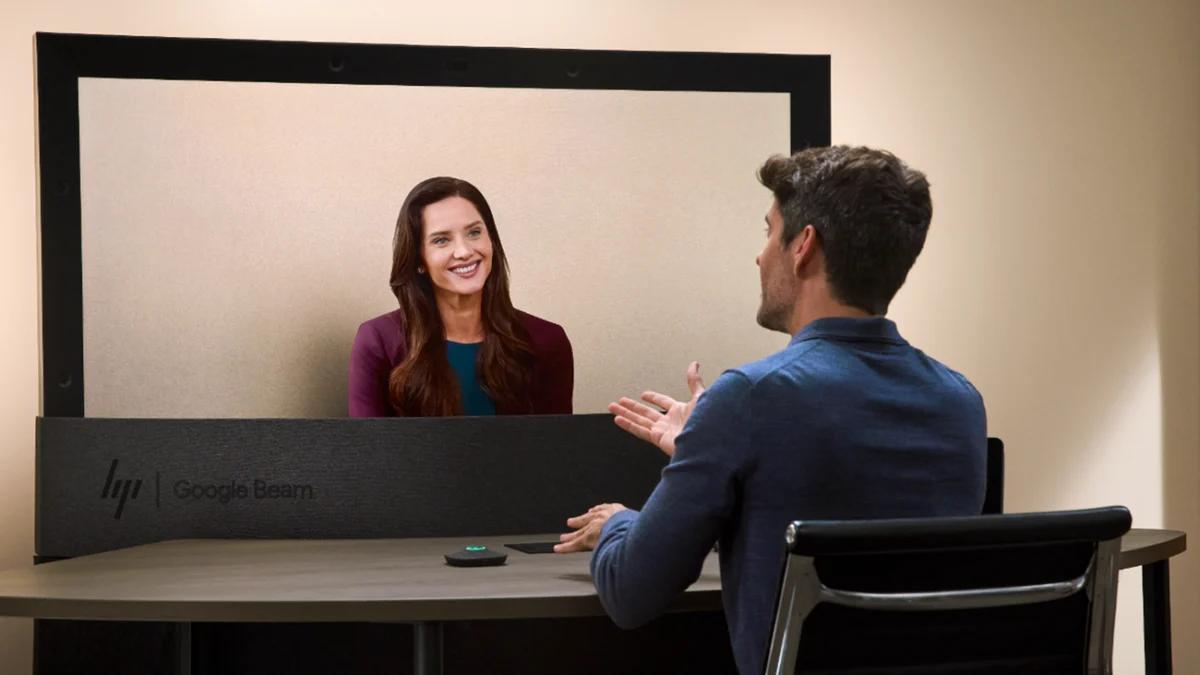
Originally developed under the internal moniker "Project Starline," Google Beam represents a leap in communication technology, utilizing advanced spatial audio and light-field display techniques to create a "copresence" experience. This technology allows participants to see one another in life-size 3D, facilitating natural eye contact and the perception of depth without the need for specialized glasses or headsets. By expanding its reach to the United States, Canada, the United Kingdom, France, Germany, and Japan, Google is positioning Beam as a critical tool for multinational enterprises seeking to maintain corporate culture and collaborative efficiency in an era of distributed workforces.
The Evolution of Copresence Technology
The journey of Google Beam began as a highly experimental research project focused on the psychology of human connection. For years, video conferencing has been the standard for remote communication, yet it often suffers from "Zoom fatigue" and a lack of non-verbal cues. Google’s engineers sought to solve the "flatness" of digital communication by capturing the nuances of body language and spatial presence.
In early 2021, the first iterations of this technology were showcased as a solution for high-stakes meetings where emotional intelligence and rapport are paramount. Since then, Google has refined the hardware, moving from a room-sized installation to a more streamlined, office-ready form factor known commercially as HP Dimension with Google Beam. This partnership with HP Inc. has been instrumental in transitioning the technology from a laboratory curiosity to a scalable enterprise product. HP’s expertise in hardware manufacturing and global logistics provides the backbone for the current six-country rollout, ensuring that organizations can integrate Beam into their existing IT infrastructure with minimal friction.
Global Expansion and Channel Ecosystem
The decision to launch in six Tier-1 markets—the U.S., Canada, U.K., France, Germany, and Japan—reflects a strategic focus on regions with high concentrations of Global 2000 companies. To support this international footprint, Google has onboarded 18 specialized channel partners. These partners, consisting of leading audiovisual integrators and technology distributors, are tasked with the end-to-end deployment, maintenance, and support of Google Beam units.
This ecosystem is vital for enterprise-grade adoption. Unlike standard webcams, the HP Dimension system requires precise calibration and network optimization to deliver its signature 3D effect. The channel partners ensure that the hardware integrates seamlessly with existing enterprise software ecosystems, specifically Google Meet and Zoom. By offering compatibility with these dominant platforms, Google is removing a significant barrier to entry, allowing companies to upgrade their "executive" or "high-impact" meeting rooms without overhauling their entire communication stack.
Quantifiable Impact: The Data Behind the Connection
The broader rollout of Google Beam is supported by a wealth of internal and external data. Google conducted an extensive eight-week internal study to measure the efficacy of Beam compared to traditional video conferencing. The results suggested that the technology offers more than just visual novelty; it provides measurable improvements in productivity and social cohesion.
According to the study, teams utilizing Google Beam reported a 50% increase in their sense of connection to one another. Perhaps more significantly for the bottom line, participants found it 33% easier to ensure their feedback was clearly understood, leading to a 21% reduction in the necessity for follow-up meetings. These metrics highlight a critical pain point in modern management: the "communication tax" paid when digital tools fail to convey tone, urgency, or nuance. By making meetings more efficient and reducing the cycle of clarification, Google Beam presents a compelling ROI for companies looking to optimize their operational cadence.
Corporate Adoption: From Recruiting to Client Relations
Several high-profile organizations have already begun integrating Google Beam into their core business processes. Bain & Company, a global management consulting firm, has utilized the technology to revolutionize its campus recruiting and candidate interview protocols. In the consulting industry, where client-facing skills and interpersonal dynamics are essential, traditional video calls often fall short of revealing a candidate’s true presence.
Keith Bevans, Executive Vice President and Partner at Bain & Company, noted the technology’s transformative potential. "One of the most challenging things for us to assess with candidates is how they’ll be with clients," Bevans stated. "There are so many nuances in body language and eye contact, and Google Beam allows us to virtually understand how people will engage in person, which is critically important for their success at Bain and the success of our mission with our clients."
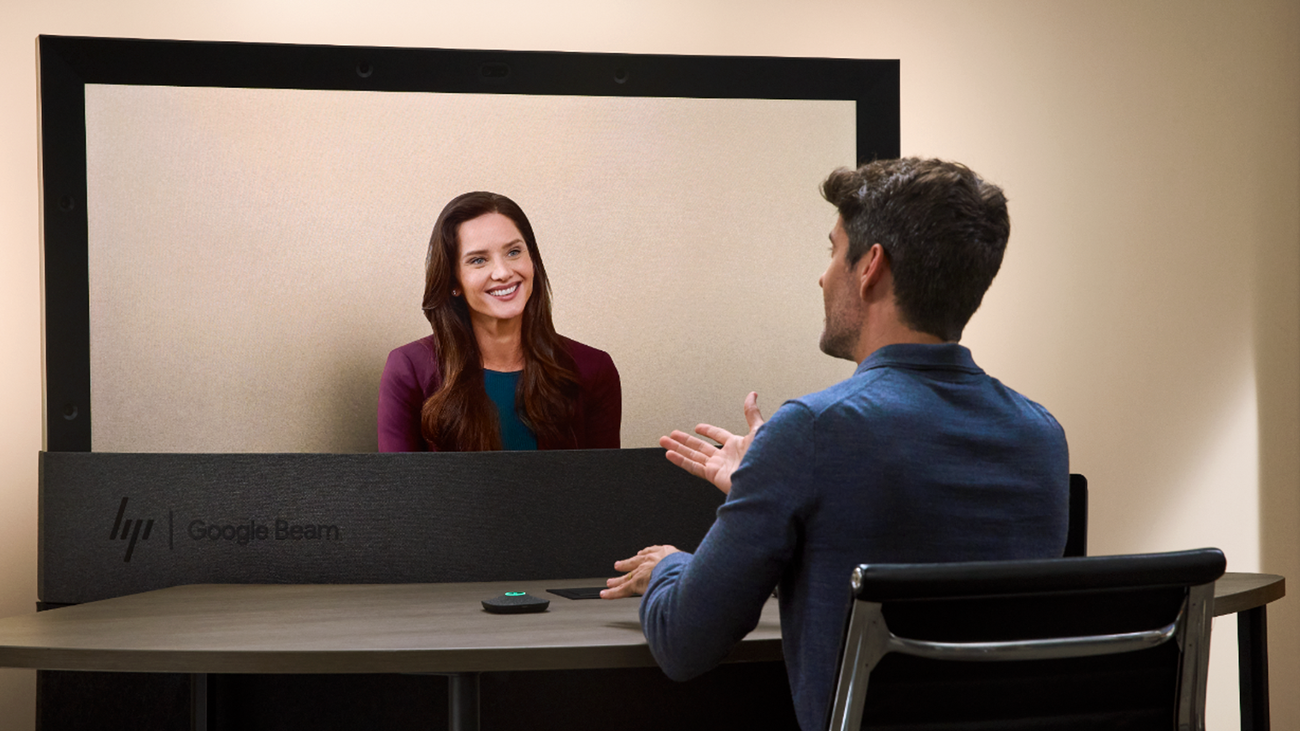
Beyond recruiting, other early adopters include streaming giant Netflix and the investment management firm Capital Group. These organizations are exploring use cases ranging from creative brainstorming sessions to high-level executive briefings, where the "human element" is considered a non-negotiable component of the interaction.
The Industrious Partnership: Democratizing Access
In a move to make high-end telepresence accessible beyond the Fortune 500, Google has partnered with Industrious, a leading provider of flexible, premium workspaces. This partnership marks the creation of the "Beam extended network," allowing businesses of all sizes to utilize the technology on an as-needed basis.
Starting in October, HP Dimension with Google Beam units will be available at select Industrious locations in major U.S. hubs, including New York City, Chicago, Atlanta, and Palo Alto. This "on-demand" model is particularly significant for startups and small-to-medium enterprises (SMEs) that may not have the budget for a permanent installation but require high-fidelity communication for investor pitches, client consultations, or crucial manager check-ins.
The Industrious pilot program, conducted earlier this year, demonstrated that distributed teams frequently used the technology for high-stakes "moments that matter." By placing Beam in co-working spaces, Google is effectively creating a public utility for professional communication, lowering the threshold for entry and encouraging a wider variety of use cases across different industries.
Analysis of Market Implications
The expansion of Google Beam arrives at a critical juncture for the technology sector. As companies like Apple and Meta invest heavily in "spatial computing" via headsets like the Vision Pro and Quest 3, Google is betting on a "glasses-free" approach to the same problem. This distinction is vital; while VR and AR offer immersive environments, they often introduce "friction" in the form of physical discomfort or the social awkwardness of wearing a device on one’s face during a professional meeting.
Google’s strategy focuses on "naturalism." By keeping the technology embedded in a display rather than on the user’s head, Google Beam preserves the social norms of eye contact and facial expression. This approach may prove more palatable for the conservative enterprise market, where reliability and ease of use often trump "total immersion."
Furthermore, the environmental and economic implications of this technology cannot be ignored. As corporations face increasing pressure to reduce their carbon footprints, high-fidelity telepresence offers a viable alternative to short-haul business travel. While it is unlikely to replace all in-person meetings, the 21% reduction in follow-up meetings suggested by Google’s internal data indicates that Beam could significantly reduce the "need to be there" for many routine corporate functions.
Future Outlook and Chronology
The timeline of Google Beam’s development suggests a steady, deliberate march toward ubiquity.
- 2021: Project Starline is unveiled as a research prototype at Google I/O.
- 2022-2023: Internal testing expands within Google offices worldwide; the partnership with HP is forged to commercialize the hardware.
- Early 2024: Pilot programs with Bain & Company and Industrious prove the technology’s utility in real-world professional settings.
- Late 2024: The official six-country rollout commences, and the first public-access network via Industrious goes live.
Looking forward, the success of Google Beam will likely depend on the continued reduction of hardware costs and the expansion of the channel partner network. As the technology moves from the boardroom to the broader office floor, it has the potential to become a standard fixture in the modern workspace.
Google’s Director of Business Development, Aaron Luber, emphasized that while the way we work is evolving, the fundamental need for human connection remains unchanged. The expansion of Google Beam into five new countries and the launch of the extended network represent a significant step toward a future where distance is no longer a barrier to genuine engagement. As more organizations adopt this "third way" of communicating—somewhere between the screen and the room—the landscape of global business collaboration is poised for its most significant transformation since the advent of the internet itself.
