

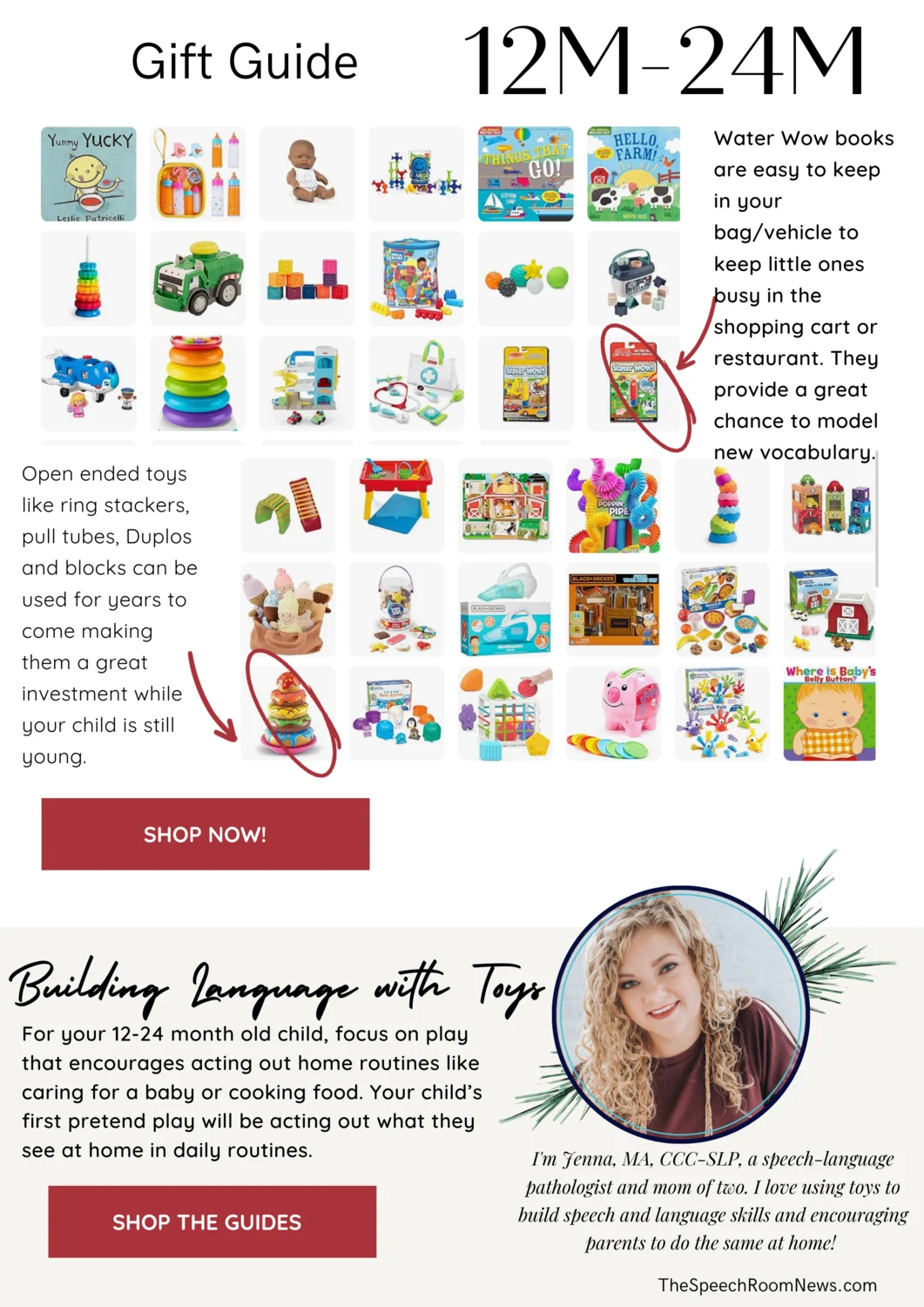
Jenna Kirk, MA, CCC-SLP, a distinguished pediatric speech-language pathologist and mother of two, including a child diagnosed with Childhood Apraxia of Speech, has launched a series of specialized holiday gift guides designed to empower parents and caregivers in selecting toys that actively foster speech and language skills in children. These meticulously curated guides, available through Amazon and as a downloadable PDF, categorize recommendations by age group, providing practical, expert-backed suggestions for developmental play during the crucial early years. The initiative underscores a growing recognition among parents and educators of the profound impact of play on cognitive and communicative development, particularly during festive seasons when toy purchasing is at its peak.
The release of these guides is strategically timed with the holiday shopping season, offering a valuable resource for families seeking gifts that go beyond entertainment to deliver tangible developmental benefits. Kirk, leveraging her extensive clinical expertise and personal experience, aims to demystify the process of selecting toys that are not only engaging but also therapeutically effective. Her approach emphasizes thoughtful consumption, encouraging a shift from purely recreational gifts to those that serve as tools for enhancing communication pathways. This effort aligns with broader public health initiatives advocating for early intervention and support for children facing developmental communication challenges.
The Foundational Role of Play in Language Acquisition

At the heart of Kirk’s recommendations is the scientifically established principle that play is not merely recreation but a fundamental mechanism for learning and development in early childhood. Research consistently demonstrates that unstructured, imaginative play is critical for cognitive growth, problem-solving abilities, social-emotional regulation, and, significantly, speech and language acquisition. During play, children naturally experiment with sounds, words, and sentence structures, engage in reciprocal communication, and develop narrative skills essential for literacy and academic success.
Developmental psychologists and speech-language pathologists widely agree that toys, when chosen thoughtfully, can serve as powerful catalysts for these processes. For instance, open-ended toys such as building blocks, dolls, animal figures, and play food encourage imaginative scenarios, prompting children to articulate ideas, assign roles, and engage in dialogue. These interactions naturally expand vocabulary, refine grammatical structures, and enhance pragmatic language skills—the social rules of language use. In contrast, toys that are overly prescriptive or screen-dependent may limit opportunities for spontaneous verbal interaction and creative expression, potentially hindering holistic language development. Kirk’s guides are predicated on identifying toys that maximize these interactive and imaginative potentials.

Understanding Speech and Language Disorders and the Value of Early Intervention
The impetus behind these specialized gift guides is further illuminated by the prevalence and impact of speech and language disorders in pediatric populations. According to the National Institute on Deafness and Other Communication Disorders (NIDCD), approximately 5% of children in the U.S. have a noticeable speech disorder by the first grade. Furthermore, statistics from the American Speech-Language-Hearing Association (ASHA) indicate that around 8-12% of preschool children have some form of speech or language disorder. Conditions like Childhood Apraxia of Speech (CAS), which Kirk’s own child experiences, present unique challenges. CAS is a neurological speech sound disorder that makes it difficult for children to accurately produce sounds, syllables, and words, despite having the muscle strength to do so. It affects the brain’s ability to plan the movements needed for speech.

For children with such diagnoses, early and consistent intervention is paramount. Integrating therapeutic principles into daily play can significantly augment formal therapy sessions, making learning more natural, enjoyable, and sustainable. Kirk’s personal journey as a mother navigating CAS has provided her with invaluable insights into the practical needs of families seeking to support their children’s communication development outside of clinical settings. This firsthand experience, combined with her professional expertise, lends a unique and empathetic dimension to her recommendations, ensuring they are both evidence-based and genuinely helpful for real-world application. The guides aim to empower parents to become active participants in their child’s therapeutic journey, transforming everyday play into meaningful developmental opportunities.
Criteria for Selecting Speech-Enhancing Toys

While the original blog post mentions focusing on "a few things" without elaborating, a speech-language pathologist like Jenna Kirk typically employs several key criteria when recommending toys for communication development. These principles likely form the bedrock of her gift guides:
- Open-Ended and Versatile Play: Toys that can be used in multiple ways, without a single "right" answer or outcome, are ideal. Examples include building blocks, magnetic tiles, play-doh, art supplies, and dress-up clothes. These encourage creativity, problem-solving, and provide endless opportunities for describing actions, objects, and ideas.
- Promoting Social Interaction: Toys that naturally encourage turn-taking, cooperation, and shared attention are crucial. Board games, cooperative building sets, and role-playing props facilitate dialogue, negotiation, and the development of pragmatic language skills.
- Encouraging Imaginative and Symbolic Play: Pretend play (e.g., kitchen sets, doctor’s kits, farm animals) allows children to practice using language to represent objects and actions, develop narrative skills, and understand different perspectives. This type of play is foundational for higher-level language and literacy.
- Facilitating Vocabulary Expansion: Toys that introduce new concepts, categories, and descriptive words are beneficial. Books with rich illustrations, puzzles featuring diverse themes, and themed play sets (e.g., zoo, construction site) offer opportunities to learn and use new vocabulary.
- Supporting Fine Motor Skills (Precursors to Speech): While not directly speech, strong fine motor skills are often linked to oral motor development. Toys that require manipulation, grasping, and precise movements (e.g., lacing beads, stacking toys, puzzles) can indirectly support the muscle coordination needed for speech production.
- Low-Tech and Interactive: Prioritizing toys that require human interaction over passive screen time or electronic toys with pre-programmed responses ensures that the child is actively engaging in communication with a caregiver or peer. This fosters genuine conversational exchanges.
By adhering to these principles, the gift guides steer parents toward selections that are not only fun but also purposefully designed to stimulate the various components of speech and language development, from phonological awareness to complex narrative construction.

Structure and Accessibility of the Gift Guides
The gift guides are structured for ease of access and utility. They are organized primarily by age, a crucial factor in developmental appropriateness, ensuring that recommended toys align with typical communication milestones for different age groups. This age-based segmentation helps parents select items that are neither too simplistic nor overly challenging for their child’s current stage of development. Furthermore, a dedicated section for "stocking stuffers" addresses the common holiday tradition of smaller, often overlooked gifts, extending the developmental focus to these items as well.

The dual availability through Amazon storefronts and as a downloadable PDF offers flexibility. The Amazon links provide direct access for purchasing, streamlining the shopping experience, while the PDF format allows for easy sharing, printing, and offline reference. This thoughtful distribution strategy maximizes reach and convenience for busy families during a demanding time of year. The clear presentation and curated selections aim to reduce decision fatigue for parents, offering confidence in their gift choices.
Broader Implications and Impact

The initiative by Jenna Kirk carries significant implications across several domains:
- For Parents and Caregivers: These guides empower parents with expert-vetted information, alleviating the guesswork often associated with toy selection. By providing clear recommendations, they enable families to make informed choices that directly contribute to their child’s developmental well-being, fostering a proactive approach to communication support. This can be particularly reassuring for parents of children with diagnosed speech disorders, offering practical ways to extend therapeutic efforts into the home environment.
- For Early Childhood Development: By promoting toys that encourage interactive and imaginative play, the guides indirectly advocate for environments rich in communication opportunities. This emphasis on play-based learning can contribute to improved communication outcomes for a wider population of children, potentially mitigating the severity of minor delays and supporting overall cognitive growth.
- For the Toy Industry: Kirk’s guides highlight a growing demand for developmentally beneficial toys. This trend may encourage toy manufacturers to invest further in research and development of products specifically designed with therapeutic goals in mind, moving beyond mere entertainment to offer demonstrable educational and developmental value. It signals a market preference for "toys with purpose."
- For the Speech-Language Pathology Community: This initiative exemplifies how speech-language pathologists can extend their expertise beyond clinical walls, providing accessible, practical guidance to the broader public. It raises awareness about the vital role of SLPs in early childhood development and reinforces their value as trusted resources for families. Such initiatives also underscore the importance of integrating therapeutic principles into everyday activities, promoting a holistic view of intervention.
In conclusion, Jenna Kirk’s holiday gift guides represent a valuable contribution to the discourse on early childhood development and responsible consumerism. By offering expertly curated lists of toys that foster speech and language skills, she provides a practical and accessible resource for parents navigating the complexities of holiday shopping while prioritizing their children’s developmental needs. This initiative not only simplifies gift selection but also champions the profound and often underestimated power of play in shaping a child’s communicative abilities, laying a robust foundation for future learning and social engagement. The commitment to informed, developmentally-focused play underscores a crucial step towards supporting every child’s potential.
