

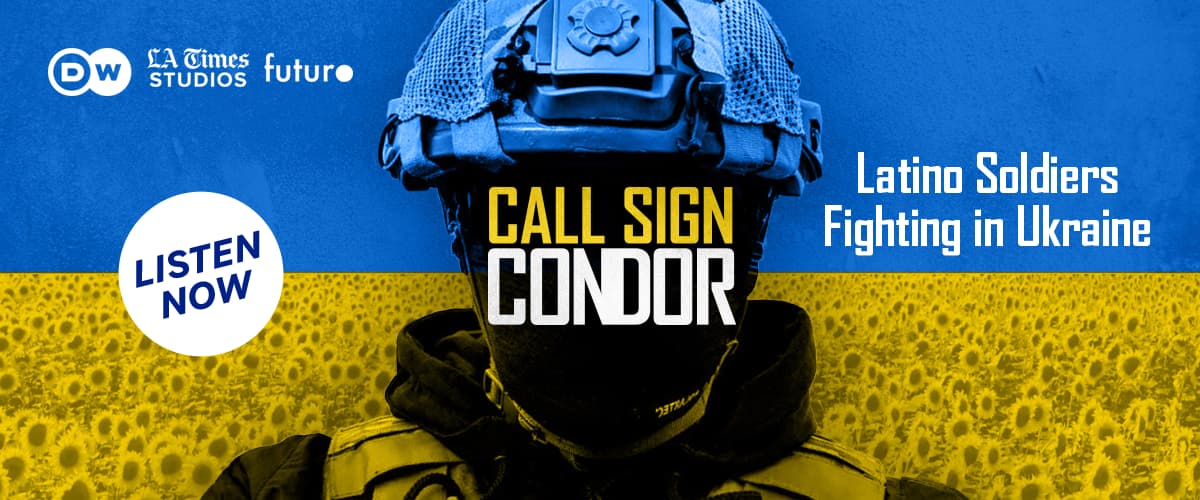
The ongoing conflict in Ukraine has drawn individuals from across the globe to its front lines, compelled by a myriad of reasons, from ideological conviction to a profound sense of solidarity. Among these international volunteers, a significant number hail from Latin America, a demographic whose motivations and experiences are explored in depth in the compelling four-part podcast series, Call Sign Condor (or Alias Cóndor in its Spanish version). Produced by DW, LA Times Studios, and Futuro Studios, this podcast offers a poignant and often harrowing look into the lives of these Latino soldiers who have chosen to fight for Ukraine.

The series centers on the experiences of its protagonist, known by the call sign "Condor," and his fellow Latin American combatants. It navigates the complex tapestry of their wartime existence, revealing the personal sacrifices, the emotional toll, and the unexpected moments of connection forged amidst the brutality of war. Host Carolina Chimoy meticulously uncovers the stories of these men and women, some of whom have been engaged in combat for years, delving into the intricate web of factors that led them to the battlefield. The podcast aims to shed light on their journeys, their perceptions of the conflict, and what they have ultimately found in Ukraine.
The Human Element of a Global Conflict
The decision to leave one’s home country and risk one’s life in a foreign war is a profound one, often driven by deeply personal convictions and a search for meaning. Call Sign Condor grapples with these fundamental questions: What compels an individual to fight for a nation not their own? What are they truly seeking on the front lines of this devastating conflict? The podcast meticulously reconstructs the paths taken by these soldiers, moving beyond the geopolitical headlines to focus on the individual human stories.
Through intimate interviews and immersive storytelling, listeners are transported to the heart of the Ukrainian struggle, experiencing the war through the eyes of those who have made it their fight. The narrative doesn’t shy away from the grim realities of combat, encompassing the pervasive fear, the devastating losses, and the profound sense of camaraderie that can emerge in the crucible of war. Equally important, the series explores themes of belonging, identity, and even love, demonstrating that even in the most extreme circumstances, the fundamental human need for connection and purpose persists.

A Multilingual Exploration of Courage and Conviction
The dual release of Call Sign Condor and Alias Cóndor underscores the producers’ commitment to reaching a broad audience and acknowledging the diverse linguistic backgrounds of the soldiers featured. This multilingual approach not only makes the podcast accessible to a wider range of listeners but also respects the cultural nuances that shape the experiences of the Latin American volunteers.

The series’ production is a testament to the collaborative efforts of established media organizations, bringing together the journalistic rigor of DW, the narrative expertise of LA Times Studios, and the innovative storytelling of Futuro Studios. This partnership has resulted in a podcast that is both deeply researched and emotionally resonant, offering a comprehensive and sensitive portrayal of a critical, yet often overlooked, aspect of the war in Ukraine.
Contextualizing the Phenomenon

The presence of foreign fighters in Ukraine is not a new phenomenon, but the scale and diversity of international participation have been notable since the full-scale Russian invasion in February 2022. While many foreign fighters have joined Ukraine’s International Legion for Territorial Defense, a significant number have also integrated into existing Ukrainian military units. These volunteers come from a wide range of backgrounds, bringing with them diverse skill sets and motivations.
For Latin Americans, the decision to join the fight can be influenced by a complex interplay of factors. These may include a strong anti-imperialist sentiment, a desire to defend democratic values, a personal connection to Ukraine through shared experiences of hardship or displacement, or a search for a cause that provides a sense of purpose and belonging. Some may also be drawn by the allure of military action or a sense of duty to resist perceived aggression. The podcast aims to unravel these individual motivations, presenting a nuanced picture that transcends simple generalizations.

Thematic Depth and Narrative Arc
Call Sign Condor is structured as a four-part series, allowing for a progressive exploration of its themes. Each episode likely delves into different facets of the soldiers’ experiences, perhaps focusing on their initial decision to join, their training and integration into Ukrainian forces, their combat experiences, and their reflections on the war’s impact on their lives and their perspectives on the future.

The narrative arc likely moves from the personal to the collective, illustrating how individual choices contribute to a larger movement. The podcast’s success will hinge on its ability to balance the harrowing realities of war with the enduring spirit of the human beings who are enduring it. By focusing on the Latin American contingent, Call Sign Condor offers a unique lens through which to understand the global dimensions of the conflict and the profound impact it has on individuals from all walks of life.
Broader Implications and Audience Reception

The podcast’s release arrives at a time when public awareness of the war in Ukraine remains high, yet the intricate details of the conflict and the diverse motivations of those involved often remain underexplored. Call Sign Condor has the potential to foster greater understanding and empathy, humanizing the conflict by focusing on the personal journeys of those on the front lines.
The reception of such a podcast will likely be multifaceted. Supporters of Ukraine’s defense will find it an inspiring testament to international solidarity. Others may approach it with a critical eye, seeking to understand the complexities and potential dangers of foreign intervention. However, the podcast’s stated aim of exploring "what they might be searching for" suggests an intention to provoke thought and encourage deeper reflection rather than simply presenting a one-sided narrative.

The podcast’s success will be measured not only by its listenership but also by its ability to spark meaningful conversations about the human cost of war, the nature of courage, and the diverse motivations that drive individuals to take extraordinary risks for causes they believe in. In its exploration of the lives of Latino soldiers fighting in Ukraine, Call Sign Condor promises to be a significant and impactful contribution to the ongoing discourse surrounding this critical global event.
Further Developments and Audience Engagement

The producers’ use of linked resources for the podcast’s visualization and accessibility across platforms like Spotify, YouTube, and LinkedIn indicates a strategic approach to audience engagement. This commitment to making the content widely available suggests a desire to reach a broad spectrum of listeners, from those deeply immersed in podcasting culture to those who may encounter the series through other digital channels. The speed at which these visualizations are being produced, "under an hour," highlights the efficient and modern production workflows employed by the studios involved, ensuring timely and relevant content delivery. This attention to detail in distribution and presentation is crucial in today’s competitive media landscape, aiming to maximize the impact and reach of this important narrative.
The ongoing nature of the conflict in Ukraine means that stories like those presented in Call Sign Condor will continue to be relevant and poignant for the foreseeable future. As the war evolves, the human narratives behind it become increasingly vital for a comprehensive understanding of its impact. The podcast serves as a powerful reminder that behind the geopolitical strategies and military maneuvers are individuals with complex lives, hopes, and fears, making choices that resonate far beyond the battlefield.
