


The crisp autumn air of the final round of the BMW Championship, held this past Sunday, delivered a dramatic conclusion that transcended the typical sporting spectacle. Wyndham Clark, who entered the day with a commanding five-stroke lead, found his advantage eroding on the back nine, a testament to the relentless pressure of elite professional golf. Yet, through a combination of strategic resilience, timely execution, and perhaps a subtle nudge from the psychological forces at play, Clark ultimately secured a hard-fought three-shot victory, etching his name into the tournament’s annals. This compelling display of athletic and mental fortitude served as a powerful reminder of enduring research into the human psyche, particularly the profound impact of loss aversion on decision-making, even at the highest echelons of sport.
The Unseen Forces on the Green: Decoding the Putting Paradox
The narrative of Clark’s triumph, marked by fluctuating fortunes and a decisive finish, echoed years of academic inquiry into the subtle, yet significant, psychological undercurrents that shape performance. A seminal 2011 study, "Is Tiger Woods Loss Averse? Persistent Bias in the Face of Experience, Competition, and High Stakes," authored by researchers Devin Pope and Maurice Schweitzer and published in the prestigious American Economic Review, offers a compelling lens through which to analyze such on-course drama. This extensive research project, utilizing precise ShotLink data that meticulously tracks every shot on the PGA Tour, delved into the putting performance of 421 golfers over a five-year span (2004-2009), encompassing an astonishing 2.5 million putts.
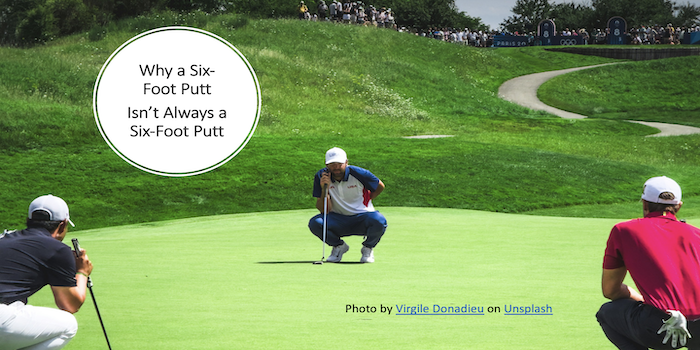
The findings of Pope and Schweitzer were both surprising and illuminating. They discovered that professional golfers, despite their immense skill and experience, exhibited a consistent pattern: they were approximately 2 to 4 percentage points more likely to make a par putt than a comparable birdie putt. This discrepancy, measured from the same distance under similar conditions, highlights a fascinating disconnect between objective scoring and subjective perception. A six-foot putt, from a purely physical standpoint, remains a six-foot putt. However, the psychological weight attached to that same putt can, as the research suggests, significantly alter the outcome.
Loss Aversion: The Psychological Underpinning
At the heart of this putting paradox lies the psychological principle of loss aversion, a concept extensively explored by Nobel laureate Daniel Kahneman and his long-time collaborator Amos Tversky. Loss aversion posits that the psychological impact of a loss is far greater than the psychological impact of an equivalent gain. In simpler terms, humans tend to feel the pain of losing something more acutely than they feel the pleasure of gaining something of equal value.
In the context of golf, this principle manifests in distinct ways depending on the putt’s objective. When a golfer faces a birdie putt, the immediate prospect is one of gain – shaving a stroke off their score relative to par. While the pressure to convert is undoubtedly present, the primary emotional framing is that of opportunity. If the putt is missed, and the subsequent putt for par is made, the golfer still achieves par, mitigating the immediate sense of setback.
Conversely, standing over a par putt carries a different psychological burden. The objective is to maintain the current score. Missing this putt results in a tangible loss – a stroke added to the scorecard. This shift in framing, from potential gain to potential loss, can trigger a heightened sense of anxiety and a more cautious approach, inadvertently increasing the likelihood of error. The scorecard may register each stroke equally, but the human mind, influenced by loss aversion, perceives them differently in the heat of competition.
The Evolving Nature of Pressure: From Par to the Leaderboard
Intriguingly, Pope and Schweitzer’s research also provided insight into how this psychological phenomenon evolves over the course of a tournament. They observed that the differential between par and birdie putting success decreased as tournaments progressed. In the first round, the gap stood at approximately 3.8 percentage points, narrowing to 2.1 percentage points in the final round. While this suggests a degree of adaptation and a growing focus on the overall leaderboard, the bias never entirely vanished.
This reduction in the loss aversion effect in later rounds is attributed to a shift in players’ primary focus. In the initial stages of a tournament, golfers are largely concerned with their score relative to par for the course. However, as the competition intensifies and the leaderboard solidifies, their attention increasingly shifts to their position relative to other competitors. The threat of being overtaken by a rival, a form of loss, becomes a more potent motivator than simply achieving par. This dynamic highlights the adaptive nature of human psychology under sustained pressure, where the framing of risk and reward can shift based on the evolving competitive landscape.
Implications Beyond the Fairway: Loss Aversion in Everyday Influence
The enduring relevance of Pope and Schweitzer’s findings extends far beyond the greens of professional golf. Their research serves as a powerful illustration of how deeply ingrained psychological biases can influence decision-making, even among individuals who operate under immense scrutiny, possess extraordinary skills, and have significant financial stakes in their performance. Professional golfers, through their relentless practice, years of experience, and ability to perform under intense pressure, represent the pinnacle of their profession. Yet, they remain susceptible to the fundamental human tendency to avoid losses more vigorously than they pursue gains.
This understanding has profound implications for how influence operates in various aspects of life, from business and sales to personal relationships. The common perception of scarcity often revolves around explicit cues: a salesperson declaring, "Only two left in stock!" or a website prominently displaying, "Sale ends at midnight!" These are overt attempts to leverage the fear of missing out on a limited opportunity.
However, as the golf research demonstrates, scarcity can also be a more subtle, inherent proposition – the potential to lose something that is already possessed or within reach. A golfer’s intense desire to avoid dropping a stroke by missing a par putt exemplifies this. The perceived loss of a stroke, even if it merely means maintaining the status quo of par, can exert a greater psychological pull than the potential gain of a birdie.
This nuanced understanding of loss aversion underscores the importance of ethical influence. The objective is not to manipulate individuals by preying on their fears, but rather to comprehend the natural patterns of human decision-making and communicate information truthfully and effectively. Recognizing that the possibility of loss often carries more weight than an equivalent opportunity for gain allows for more persuasive and impactful communication.
For instance, in a sales context, highlighting the potential downside of not adopting a particular solution – the risks or disadvantages that will persist without the change – can be more compelling than solely emphasizing the benefits of the solution itself. This does not imply fabricating negative outcomes, but rather truthfully articulating the inherent costs of inaction or the status quo.
Navigating Decisions with Awareness
The broader lesson derived from the BMW Championship and the underlying psychological research is the critical importance of self-awareness when making important decisions. The next time an individual faces a significant choice, it is beneficial to pause and introspect: Am I genuinely pursuing something I desire, or am I being disproportionately driven by the fear of losing something? This distinction can be subtle but profound.
The golfer on the 18th green, faced with a crucial putt, is not merely executing a physical action. They are navigating a complex interplay of skill, strategy, and deeply ingrained psychological responses. The pressure to make that putt is amplified not just by the proximity of victory or defeat, but by the fundamental human aversion to conceding a stroke, to accepting a loss.
This principle extends to everyday life. When considering a new venture, a significant purchase, or even a personal commitment, understanding whether the primary motivator is the allure of a potential gain or the anxiety of a potential loss can lead to more considered and ultimately more fulfilling choices. The difference between actively seeking a desired outcome and passively avoiding an undesired one can significantly shape the path taken and the ultimate satisfaction derived.
The BMW Championship, with its dramatic conclusion and the compelling narrative of Wyndham Clark’s victory, serves as a vivid, real-world case study of these enduring psychological principles. It reminds us that even in the most objective and skill-driven arenas, the human mind plays a crucial role, and understanding its biases, such as loss aversion, can offer valuable insights into performance, decision-making, and the art of ethical influence.
For those who play the game, the question remains pertinent: Does the feeling of standing over a six-foot putt differ intrinsically when it’s for a birdie versus when it’s for par? The research, and the drama witnessed at the BMW Championship, suggests that for many, the answer is a resounding, and psychologically significant, yes.
