

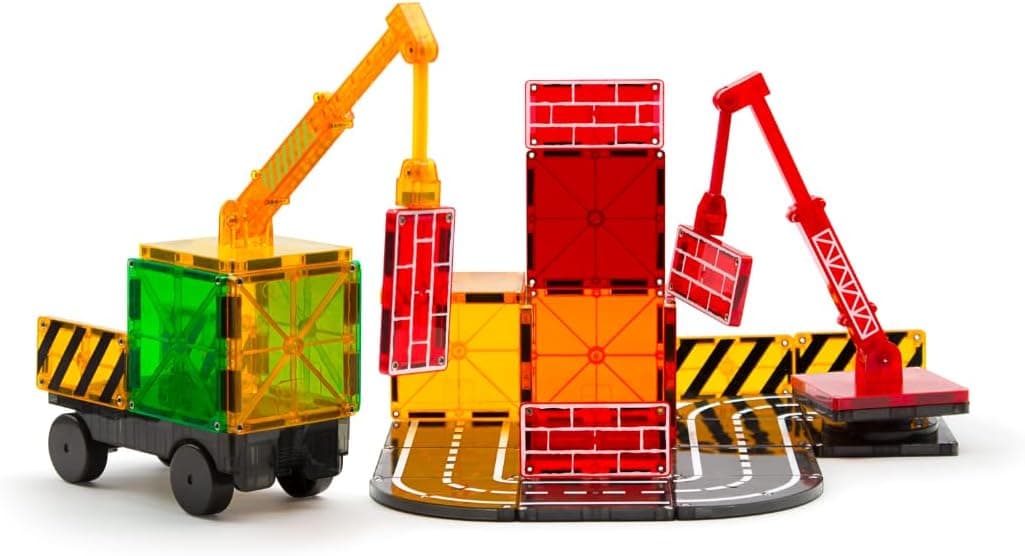
Magnetic construction tiles, long celebrated in homes and classrooms for their open-ended play potential, are increasingly being recognized and integrated into pediatric speech-language pathology (SLP) as a highly effective and versatile therapeutic tool. These vibrant, geometrically shaped tiles, with their embedded magnets, offer a unique blend of tactile engagement, visual stimulation, and creative freedom that proves invaluable for addressing a wide spectrum of speech and language goals in young children. From fostering social cooperation to enhancing cognitive functions and facilitating articulation practice, magnetic tiles are bridging the gap between playful exploration and structured therapeutic intervention, providing a dynamic environment where learning feels like discovery.
The Evolution of Play-Based Therapy in Speech-Language Pathology
The landscape of pediatric speech-language therapy has undergone a significant transformation over recent decades, moving away from highly structured, drill-based approaches towards more naturalistic, child-centered, and play-based interventions. This paradigm shift is rooted in a deeper understanding of child development and learning, recognizing that children acquire language most effectively within meaningful, interactive contexts. Play, as a child’s primary mode of learning and exploring the world, provides an ideal medium for therapy.
According to research published in journals such as the American Journal of Speech-Language Pathology, play-based interventions are highly effective because they reduce anxiety, increase motivation, and allow for the generalization of learned skills into more naturalistic settings. When children are actively engaged and enjoying themselves, their cognitive resources are more readily available for learning and skill acquisition. Therapeutic toys, therefore, are not merely distractions but carefully selected instruments designed to elicit specific speech and language behaviors. Effective therapeutic toys are typically versatile, open-ended, durable, and appealing to a broad age range, qualities that magnetic tiles embody exceptionally well. Their ability to be manipulated, combined, and reconfigured allows for endless possibilities, mirroring the dynamic nature of language itself.
A Chronology of Adoption: From Playroom to Therapy Room
Magnetic construction tiles, popularized by brands like Magna-Tiles and PicassoTiles, first gained widespread recognition in the early 2000s as a staple in educational settings and family playrooms. Their intuitive design, allowing children to effortlessly connect shapes to build two- and three-dimensional structures, quickly captivated young minds. Initially lauded for their ability to develop fine motor skills, spatial reasoning, and creativity, it wasn’t long before innovative speech-language pathologists began to observe their untapped potential in clinical settings.
The adoption of magnetic tiles within speech therapy wasn’t a top-down mandate but rather an organic, bottom-up integration driven by clinicians seeking more engaging and adaptable tools. SLPs, recognizing the inherent appeal and versatility of these manipulatives, started experimenting with them to target diverse communication objectives. The tactile nature of clicking tiles together, the visual feedback of structures taking shape, and the opportunities for collaborative building naturally lend themselves to eliciting language. This gradual integration marks a significant trend in pediatric therapy: the appropriation of mainstream educational toys for specialized therapeutic purposes, leveraging their existing popularity and developmental benefits. The "timeline" here is less about specific dates and more about the progression of understanding within the clinical community—from a general toy to a recognized therapeutic asset.
Supporting Data: The Efficacy of Tangible Manipulatives in Language Acquisition
While specific empirical studies solely focused on magnetic tiles in speech therapy are still emerging, a robust body of research supports the broader efficacy of tangible manipulatives and play-based learning in language development. Studies consistently demonstrate that hands-on activities enhance cognitive processing, memory retention, and the ability to transfer skills. The multisensory experience provided by magnetic tiles—visual (colors, shapes), tactile (texture, magnetic pull), and auditory (the click of connection)—activates multiple brain regions, reinforcing neural pathways associated with language acquisition.
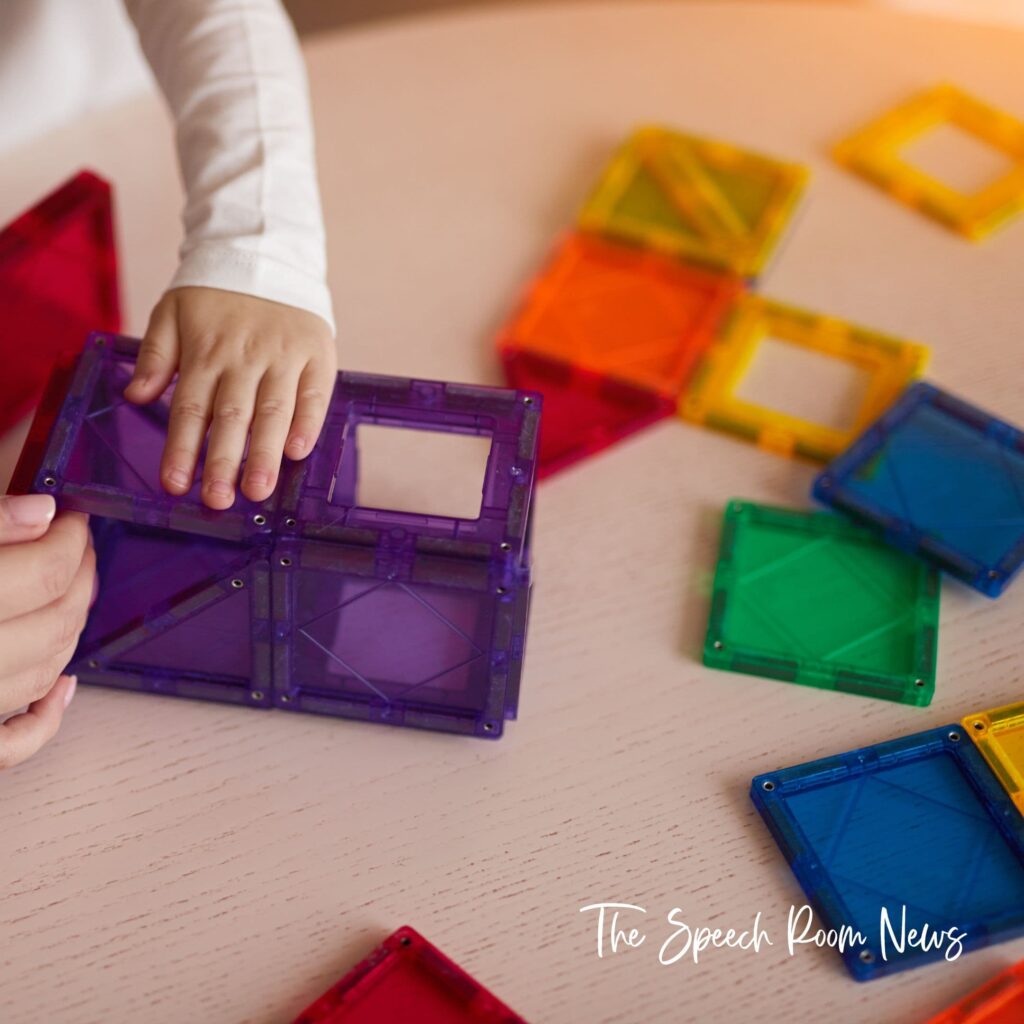
Research indicates that children learn new vocabulary and grammatical structures more effectively when they are embedded in concrete, meaningful contexts rather than abstract drills. For instance, when a child physically places a tile under another, the abstract concept of "under" becomes concrete and experiential. Furthermore, the highly engaging nature of magnetic tiles contributes to sustained attention, a critical factor for successful therapeutic outcomes, particularly in children with attention deficits or those who find traditional therapy less stimulating. Data on engagement levels in play-based therapy often shows higher participation rates and reduced behavioral challenges compared to desk-based activities, directly contributing to more frequent practice opportunities and, consequently, better progress on speech and language goals.
Ten Core Applications in Speech-Language Therapy
Magnetic tiles offer a remarkably broad spectrum of applications within speech therapy, making them a cost-effective and versatile investment for clinicians and families alike. Here are ten key areas where these manipulatives prove particularly effective:
-
Social Cooperative Work: Beyond simple turn-taking, magnetic tiles facilitate complex social interaction. Children are prompted to negotiate designs, assign roles, share materials, and offer constructive feedback. This cultivates vital pragmatic language skills, including initiating conversations, maintaining topics, problem-solving collaboratively, and understanding non-verbal cues. SLPs can structure activities that require joint attention and shared goals, such as building a specific structure together, which naturally elicits rich communicative exchanges.
-
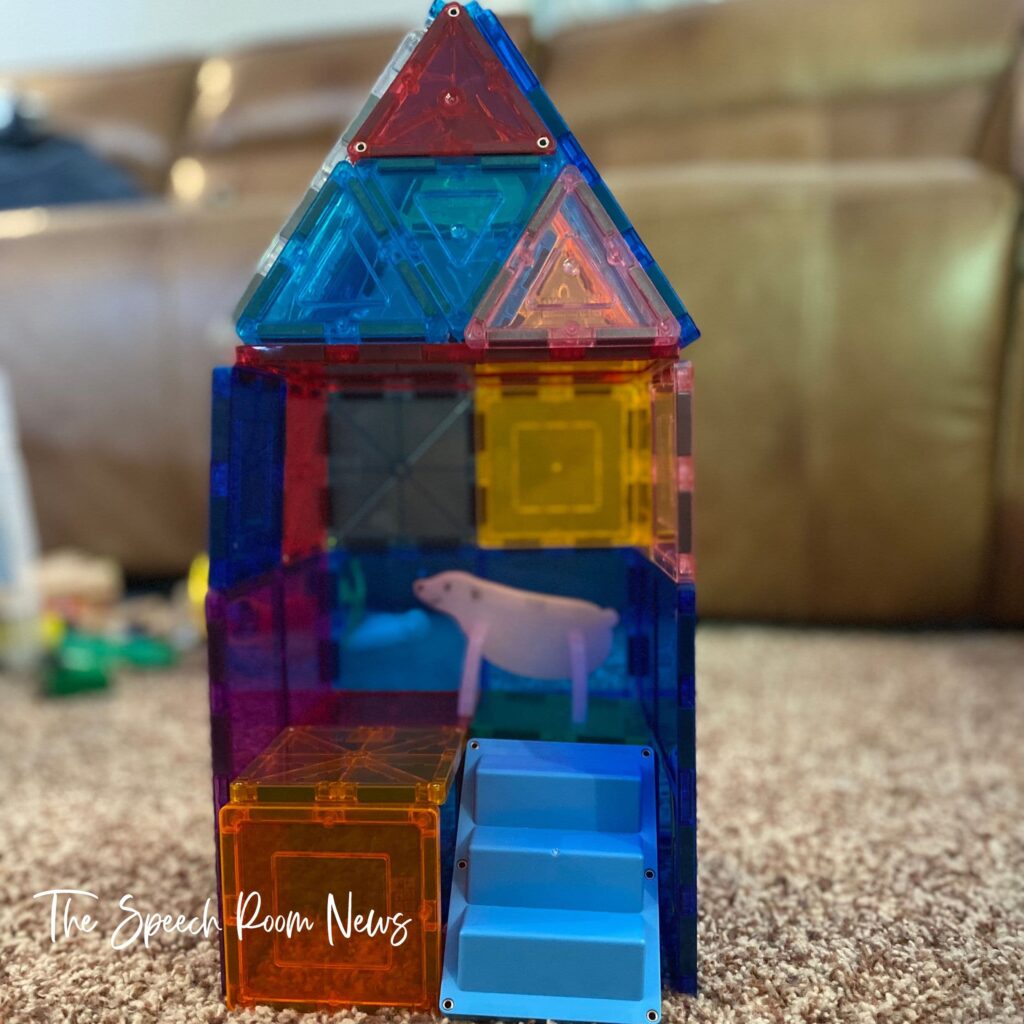
Prepositions and Spatial Concepts: Abstract spatial concepts like "on," "under," "beside," "between," "above," and "below" become tangible with magnetic tiles. Therapists can instruct children to place a red square on a blue triangle or build a tunnel through which a small toy car can pass. This physical manipulation directly reinforces understanding and expressive use of prepositions, moving beyond rote memorization to experiential learning.
-
Sorting by Shape and Color: This foundational activity targets early categorization skills, descriptive language, and the ability to follow multi-step commands. Children can be asked to sort tiles by "all the red ones," "all the triangles," or "all the big squares." This also provides opportunities to introduce comparative and superlative adjectives ("bigger," "smallest") and to practice requesting and identifying attributes.
-
Articulation Practice: Magnetic tiles can transform repetitive articulation drills into an engaging game. For a target sound like /k/, children might build a "castle," a "cage," or a "car" garage, repeating the target words or phrases with each tile added. The completion of a structure can be contingent on accurate sound production, providing immediate, positive reinforcement and context for practice.
-
Irregular Verbs: Narrative development is a powerful tool for practicing irregular verbs. Children can build a scene (e.g., a house that "fell" down, a bridge they "built") and then narrate the story, incorporating verbs like "built," "fell," "went," "ran," "hit," "saw." This encourages sentence formulation and the correct use of past tense forms in a meaningful context.
-
Executive Functioning Practice: The process of building with magnetic tiles inherently engages executive functions. Children must plan their structure, organize their materials, inhibit impulsive choices, sustain attention, and problem-solve when a design doesn’t work. Introducing constraints, such as building a tower that is "taller than the therapist" or completing a structure within a "time limit," further challenges these critical cognitive skills, enhancing planning, working memory, and task initiation.
-
Regular Plurals: Creating patterns or structures with multiple identical shapes provides a natural context for practicing regular plurals. As children add "squares," "triangles," or "rectangles" to their design, they can be prompted to articulate the plural form. Questions like "How many squares do you have?" or "I see two circles!" reinforce the grammatical rule in a playful manner.
-
WH Questions: Magnetic tiles offer a dynamic backdrop for practicing comprehension and expressive responses to "who," "what," "where," "when," and "why" questions. For example, during a building activity, an SLP might ask, "Who is building the tall tower?" "Where did the blue tile go?" "What are we going to build next?" "When will our building be finished?" or "Why did your tower fall down?" These questions stimulate critical thinking and narrative skills.
-
The Pronoun "I": For children struggling with self-reference, magnetic tiles provide consistent opportunities to practice the pronoun "I." By having the child narrate their actions during construction ("I am putting the red square on top," "I built a garage"), the therapist can model and elicit the correct usage of "I" in sentences, solidifying its understanding and application.
-
AAC Core Words: For individuals using Augmentative and Alternative Communication (AAC) devices, magnetic tiles create natural and highly motivating contexts for practicing core words—high-frequency words essential for functional communication. Words like "more" (for more tiles), "on" (to place a tile), "up" and "down" (for building or dismantling), "help" (when a piece won’t connect), "big" and "little" (to describe), and "open" and "close" (for doors or structures) can be modeled and elicited repeatedly in a meaningful play scenario.
Statements and Reactions from the Professional Community
Speech-language pathologists widely commend the utility of magnetic tiles. Dr. Evelyn Reed, a seasoned SLP with over two decades of experience in early intervention, states, "Magnetic tiles are a game-changer. Children are so naturally drawn to them that they don’t perceive it as therapy, but rather as play. This intrinsic motivation significantly boosts their engagement, allowing us to target complex language goals like narrative sequencing or pragmatic skills without resistance."
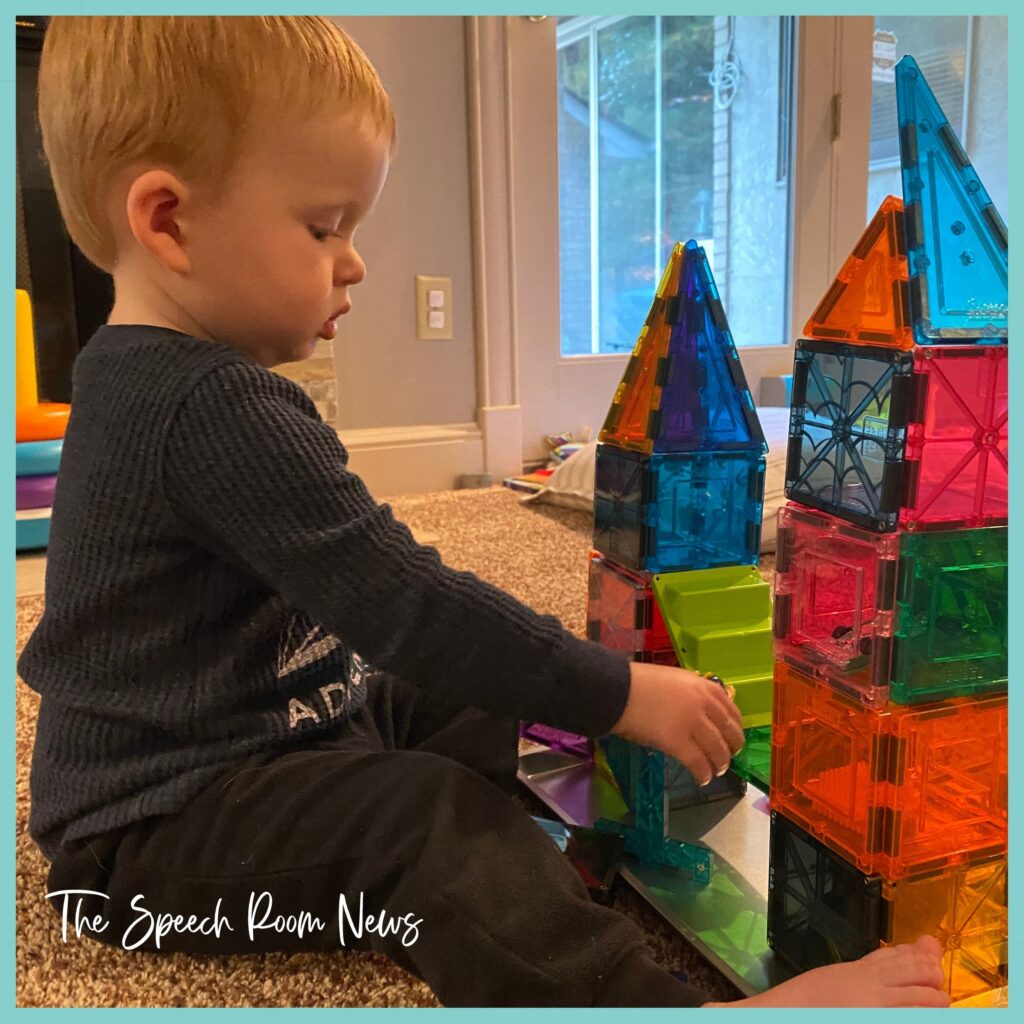
Early childhood educators also echo these sentiments, highlighting the cross-disciplinary benefits. Ms. Clara Henderson, an early childhood specialist, notes, "These tiles are fantastic for developing fine motor control, visual-spatial awareness, and creative thinking, all of which are foundational skills that complement language development. They bridge the gap between structured learning and imaginative play seamlessly."
Parents often report positive experiences, observing an increased willingness from their children to participate in home-based language practice when magnetic tiles are involved. "My son, who often gets frustrated with traditional speech exercises, absolutely loves building with magnetic tiles," shares Sarah Miller, a parent of a child receiving speech therapy. "His therapist uses them to practice new words, and he’s so focused on creating his structures that he practices without even realizing it. It’s made a huge difference in his progress."
Broader Implications and Future Outlook
The increasing adoption of magnetic tiles in speech-language pathology signifies a broader trend in pediatric therapeutic practices: a move towards holistic, child-led, and contextually rich interventions. This approach not only makes therapy more enjoyable and effective but also empowers children by fostering their natural curiosity and creativity.
From an economic perspective, while the initial investment in a quality set of magnetic tiles can be substantial, their exceptional durability and versatility make them a cost-effective, long-term asset for both therapy rooms and homes. They can be used with a wide age range and for myriad goals, reducing the need for a constant rotation of new, specialized therapeutic toys.
Looking forward, there is a clear call for more dedicated empirical research to quantify the specific impacts of magnetic tile play on various speech and language outcomes. Such studies would further solidify their evidence-based practice and potentially lead to even more innovative therapeutic protocols. In an increasingly digital world, the enduring value of tangible, open-ended manipulatives like magnetic tiles serves as a powerful reminder of the irreplaceable role of hands-on play in foundational development and specialized therapeutic intervention.
In conclusion, magnetic construction tiles have transcended their role as mere children’s toys to become an indispensable and dynamic tool in pediatric speech-language pathology. Their inherent ability to engage, motivate, and provide concrete contexts for abstract language concepts positions them as a cornerstone of modern, play-based therapeutic approaches, fostering essential communication skills in a joyful and effective manner.
