

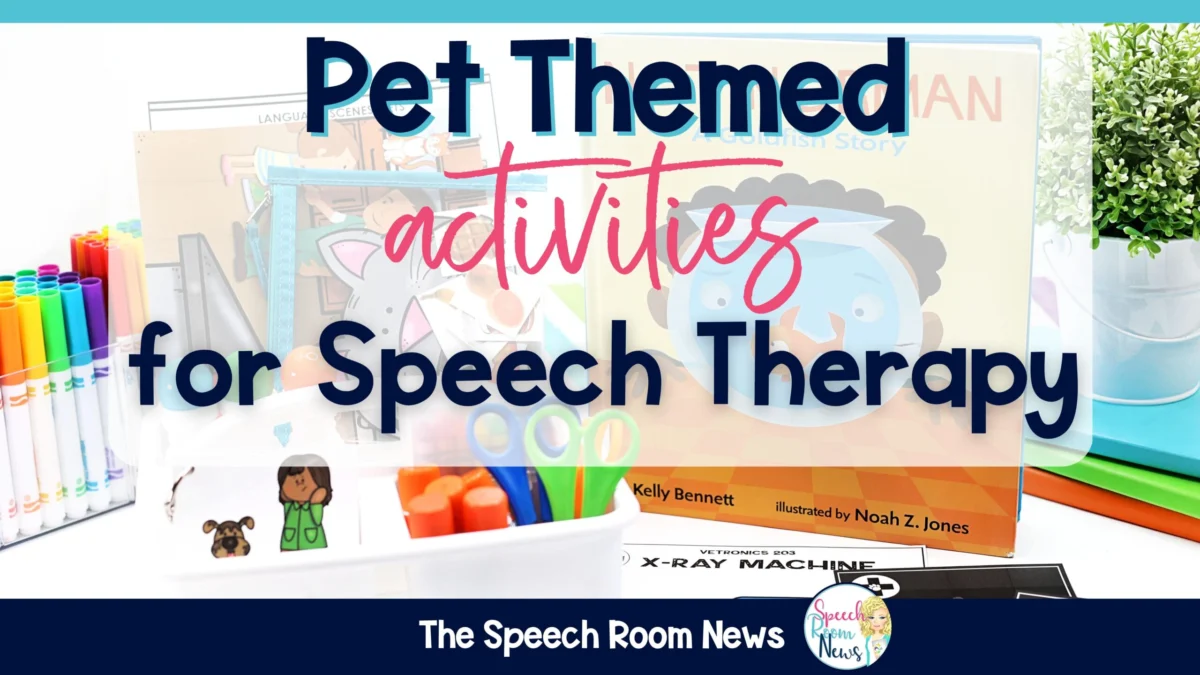
The landscape of pediatric speech and language therapy is continuously evolving, with a discernible shift towards engaging, evidence-based methodologies designed to maximize therapeutic outcomes. Among these, the adoption of thematic units has emerged as a particularly effective strategy, offering a structured yet flexible framework for addressing diverse communication needs. This article delves into the pedagogical advantages and practical applications of year-round speech therapy themes, with a specific focus on the highly engaging and versatile "pets theme," illustrating how it can significantly enrich the therapeutic experience for young learners.
The Foundational Efficacy of Thematic Therapy
Thematic instruction, a pedagogical approach wherein various academic subjects are integrated through a central theme, holds profound benefits within speech and language pathology. For speech-language pathologists (SLPs), integrating themes into their year-round practice offers substantial advantages, primarily in terms of preparation efficiency and student engagement. Unlike holiday-specific themes, which are limited in their seasonal applicability, evergreen themes such as "pets" can be revisited multiple times throughout the academic year, thereby extending the utility and return on investment for prepared materials. This flexibility translates into significant time savings for SLPs, as activities are pre-prepped and readily accessible, streamlining lesson planning and allowing more direct therapeutic interaction.
Beyond logistical benefits, the core strength of thematic units lies in their capacity to create a cohesive and immersive learning environment. When lessons are woven around a familiar and intrinsically motivating topic like pets, children are more likely to remain attentive, participate actively, and generalize newly acquired skills. This heightened engagement is critical for children undergoing speech and language intervention, as it fosters a positive association with therapy and accelerates skill acquisition. From a developmental perspective, themes provide a natural context for introducing new vocabulary, reinforcing grammatical structures, developing narrative skills, and practicing articulation targets within a meaningful framework. The predictability and repetition inherent in thematic units also support cognitive organization and memory retention, crucial for children with language processing challenges.

Designing a Comprehensive "Pets Theme" for Speech Therapy
A well-constructed "pets theme" can serve as a robust platform for targeting a broad spectrum of speech and language goals across various developmental levels, particularly within preschool and early childhood settings. The versatility of the theme allows for the integration of multiple modalities, including literature, music, interactive games, imaginative play, hands-on crafts, and sensory experiences, ensuring a holistic and multisensory approach to learning.
Literary Integration: Books as Catalysts for Language Development
Children’s literature forms a cornerstone of any thematic unit, providing rich narrative contexts and vocabulary opportunities. For a pets theme, several titles stand out for their therapeutic potential:
-
"Not Norman" by Kelly Bennett: This humorous narrative explores the story of a boy who initially disdains his goldfish, Norman, in favor of a more "exciting" pet. The story arc—from disappointment to acceptance and appreciation—is a powerful tool for targeting emotional vocabulary (e.g., frustrated, happy, disappointed, proud), narrative sequencing (beginning, middle, end), problem-solving skills, and perspective-taking. SLPs can use this book to discuss character feelings, predict outcomes, and encourage students to describe their own preferences and experiences with pets, real or imagined. The narrative also lends itself to exploring concepts of responsibility and the unique qualities of different animals.

-
"Some Pets" by Angela DiTerlizzi: Characterized by its vibrant illustrations and diverse representation of children and their animal companions, this book is exceptional for expanding vocabulary related to various pets (dogs, cats, birds, bunnies, fish), their actions (barking, purring, flying, hopping), and descriptive adjectives (furry, scaly, soft, tiny). Its repetitive structure and clear illustrations make it ideal for reinforcing early vocabulary, practicing categorization (e.g., "pets that fly," "pets that swim"), identifying attributes, and developing basic sentence structures. SLPs can prompt students to describe the pets, identify similarities and differences, and discuss the responsibilities associated with pet ownership.
-
"Lola Gets a Cat" by Anna McQuinn: Lola’s journey from fantasizing about owning a cat to realizing the practical responsibilities involved provides a realistic portrayal of pet ownership. This story is excellent for addressing future tense verbs (e.g., "Lola will play with her cat"), contrasting imaginative play with reality, and discussing cause-and-effect relationships. It also offers opportunities to target concepts of responsibility, patience, and the emotional aspects of caring for an animal. SLPs can facilitate discussions about expectations versus reality, sequence events in Lola’s day, and encourage children to articulate what they would do if they had a pet.
-
Interactive Vocabulary Book about Pets: Often a custom-designed resource, an interactive vocabulary book focused on pets can be tailored to target specific vocabulary relevant to animal care, animal types, and actions. These books frequently incorporate elements such as matching activities, picture-to-word associations, and fill-in-the-blank sentences, making them highly effective for direct vocabulary instruction, receptive and expressive language development, and early literacy skills. When paired with a "critter vet clinic" toy, such books seamlessly integrate into imaginative play scenarios, reinforcing learned vocabulary in a functional context.
Auditory and Rhythmic Engagement: Songs for Enhanced Learning
Music is a powerful therapeutic modality in speech and language intervention, particularly for young learners. Pet-themed songs, with their often-simple lyrics, repetitive phrases, and engaging melodies, are invaluable for developing phonological awareness, practicing articulation targets, enhancing auditory processing, and expanding vocabulary.

- "I Have a Pet": This song can be used to practice the verb "have," introduce various pet names, and encourage simple descriptive phrases (e.g., "I have a dog, it barks").
- "Do You Have a Pet?": Ideal for question-answering practice, turn-taking in conversation, and initiating social interactions about pets.
- "I Love Dogs": Fosters the expression of preferences, introduces action verbs associated with dogs (e.g., run, jump, fetch), and allows for the description of dog characteristics.
- "Wag Your Tail": Excellent for targeting action verbs, body parts, and encouraging imitative movements, thereby supporting motor planning and expressive language.
These songs, with their inherent rhythm and repetition, facilitate the acquisition of new words and phrases, improve intonation patterns, and provide a fun, low-pressure environment for verbal participation.
Interactive and Digital Learning: Games for Skill Reinforcement
In today’s digital age, interactive games offer dynamic and motivating avenues for speech therapy.
-
Color and Play Pets Bingo: This game is remarkably versatile. It can target color identification (e.g., "Find the red dog"), animal naming, descriptive language (e.g., "I see a furry cat"), and following multi-step directions. For articulation, SLPs can require students to produce target sounds as they identify pictures or mark their cards. The game format also naturally promotes turn-taking and attention skills.
-
Feed the Dog Articulation Boom Cards: Digital platforms like Boom Cards have revolutionized articulation therapy. This interactive game allows students to "feed" a virtual dog with digital representations of words containing their target speech sounds. The immediate auditory feedback (a "crunch" sound) enhances motivation and provides positive reinforcement. SLPs can easily customize these decks to address specific phonemes at various levels (isolation, syllables, words, phrases, sentences), making articulation practice engaging and efficient.

Hands-On and Imaginative Play: Pet-Themed Toys
Play is the primary occupation of childhood and a crucial vehicle for language development. Pet-themed toys facilitate imaginative play, role-playing, and the natural acquisition of social and communication skills.
-
Critter Clinic Toy Vet Set: This popular toy, featuring small doors, locks, stuffed animals, and veterinary tools, is a powerhouse for language intervention. It allows for extensive role-playing scenarios (e.g., vet, pet owner, assistant), targeting:
- Vocabulary: Medical terms (stethoscope, bandage, thermometer, sick, healthy), animal names, body parts.
- Action Verbs: Open, close, lock, unlock, examine, treat, feed.
- Social Scripts: Greeting, asking questions, giving instructions, expressing empathy.
- Narrative Skills: Creating storylines for the animals’ ailments and recovery.
- Problem-Solving: Deciding how to "treat" the animals.
The toy’s adaptability extends beyond a simple vet clinic, as demonstrated by its transformation into a "Gingerbread House" for other themes, highlighting its long-term utility.
-
Hape Family Pet Houses: These miniature play sets, complete with small animal figures and accessories, are excellent for fostering imaginative play and targeting a range of language goals:
- Prepositions and Spatial Concepts: Placing animals "in" the house, "on" the bed, "under" the table.
- Descriptive Language: Describing the animals (e.g., "fluffy," "striped"), their homes, and their accessories.
- Narrative Development: Creating simple stories about the pets’ daily lives, interactions, and adventures.
- Question-Answering: "Where is the cat?" "What is the dog doing?"
The small pieces also inherently support the development of fine motor skills, which are often co-occurring goals for children in early intervention.
Creative Expression: Crafts for the Pet Theme

Craft activities offer a tangible outcome for therapeutic sessions, reinforcing concepts and providing opportunities for following directions, sequencing, and fine motor development.
- Clifford the Big Red Dog Craft: A paper plate craft inspired by Clifford, the beloved big red dog, is a wonderful addition to a pet theme. It can be paired with reading Clifford books, allowing children to connect the craft to a familiar literary character. This activity targets:
- Color and Shape Recognition: Identifying red, circles, etc.
- Following Multi-Step Directions: "First, cut the ears. Next, glue them on."
- Vocabulary: Body parts (ears, nose, eyes), actions (cut, glue, paint).
- Fine Motor Skills: Cutting, pasting, coloring.
Sensory Exploration: Sensory Play for Deeper Engagement
Sensory bins are highly effective for engaging multiple senses and promoting language development through exploratory play.
- DIY Pet-Themed Sensory Bin: Creating a sensory bin filled with kinetic sand, small pet figures (e.g., miniature dogs, cats, fish), and pet-related accessories (tiny bowls, bones, balls) offers a rich sensory experience.
- Preparation: Fill a bin with kinetic sand, then hide the small pet figures and accessories within.
- Therapeutic Applications:
- Descriptive Language: Encouraging students to describe what they feel (e.g., "soft sand," "hard bone"), what they see sticking out (e.g., "I see a pointy black ear"), and the textures of the items.
- Vocabulary: Naming the pets and accessories as they are discovered.
- Requesting: "More sand," "find the cat."
- Prepositions: "The dog is under the sand," "The bone is in the bowl."
- Social Interaction: Turn-taking in searching, sharing discoveries, and discussing findings.
Streamlining Practice: Comprehensive Thematic Kits
Recognizing the significant time demands on SLPs, comprehensive thematic kits, such as the "Pet Themed Speech Therapy Kit," offer a practical solution for implementing these strategies. These kits often provide a full month (four weeks) of pre-planned lessons and activities, encompassing therapy printables, interactive play resources, structured circle time lessons, parent handouts for home practice, craft templates, and book companions. Such all-inclusive resources alleviate the burden of extensive planning, allowing SLPs to focus their energy on direct intervention and individualized student needs. The provision of parent handouts is particularly valuable, as it facilitates carryover of learned skills into the home environment, thereby maximizing therapeutic impact.

Broader Implications and Future Trends
The strategic use of thematic units, especially those as universally appealing as pets, underscores a broader trend in early intervention towards highly engaging, play-based, and child-centered approaches. This methodology not only enhances speech and language acquisition but also fosters critical cognitive skills (e.g., categorization, problem-solving), social-emotional development (e.g., empathy, turn-taking), and a general love for learning. The professional development implications are also noteworthy; comprehensive kits and thematic resources empower SLPs, particularly those with heavy caseloads or less experience, to deliver high-quality, structured, and stimulating therapy sessions consistently.
As research continues to highlight the importance of early intervention and the efficacy of context-rich learning environments, the adoption of well-designed thematic units is poised to become an even more integral component of pediatric speech and language therapy, ensuring that children receive engaging and effective support on their communication journeys. The "pets theme," with its inherent appeal and vast potential for skill development, stands as a prime example of this evolving best practice.
