

Approximately 10-15% of toddlers are identified as "late talkers," exhibiting fewer words than their peers. While some of these children may eventually catch up to their peers without formal intervention, a significant portion faces persistent language delays, underscoring the critical need for early identification and targeted support. Speech-language pathologists (SLPs) and developmental experts consistently emphasize that proactive steps taken by parents and caregivers can profoundly impact a child’s communicative trajectory, potentially averting more significant academic, social, and emotional challenges later in life. The journey for parents navigating a child’s speech development can often be fraught with worry and uncertainty, even for those with professional expertise in the field, highlighting the universal nature of this parental concern.
Understanding Expressive Language Delays in Young Children
An expressive language delay typically refers to a child who, by 18-24 months of age, has a limited vocabulary (fewer than 50 words) and/or does not combine words into two-word phrases. It’s crucial to differentiate between "late bloomers," who spontaneously catch up to their peers, and children with persistent language delays, who require intervention. Research suggests that about 50-70% of late talkers will resolve their delays by age three or four. However, predicting which children will spontaneously catch up is challenging, making a "wait-and-see" approach risky. Studies have indicated that children with expressive language delays who do not receive intervention are at a higher risk for ongoing language and learning difficulties throughout their school years. These difficulties can manifest as challenges with reading, writing, attention, and social interaction.
Key Developmental Milestones: A Chronological Guide
Understanding typical communication milestones provides a critical framework for parents and caregivers to monitor their child’s development. While every child develops at their own pace, significant deviations from these guidelines warrant professional attention.
- Birth to 6 Months: Infants typically begin cooing, gurgling, and turn their heads towards sounds. They may smile or laugh in response to interaction.
- 6 to 12 Months: Babbling becomes more complex, often using consonant-vowel combinations like "bababa" or "dadada." They respond to their name, recognize common words like "bottle" or "mama," and begin to use gestures like waving "bye-bye" or pointing.
- 12 to 18 Months: Children typically speak their first meaningful words (often "mama," "dada," or common nouns) and can follow simple one-step commands. Vocabulary may range from 1 to 20 words, primarily nouns.
- 18 to 24 Months: A critical period where vocabulary expands significantly, often reaching 50 or more words. Children begin to combine two words into simple phrases (e.g., "more milk," "daddy up"). They can follow two-step commands and understand simple questions.
- 24 to 36 Months: Vocabulary continues to grow rapidly, with many children using 200-300 words or more. They form three-to-four-word sentences, ask "what" and "where" questions, and are generally understood by familiar listeners.
When a child consistently falls behind these benchmarks, particularly by 18-24 months, it is a strong indicator to seek professional evaluation.
The Imperative of Early Intervention
The consensus among developmental scientists and medical professionals is that early intervention is paramount for children exhibiting speech and language delays. The first three years of life represent a critical period for brain development, particularly for language acquisition. During this time, the brain’s plasticity is at its peak, making it highly receptive to new learning and experience. Interventions provided during this window can capitalize on the brain’s natural ability to form and strengthen neural connections, leading to more profound and lasting improvements in communication skills.
The Centers for Disease Control and Prevention (CDC) actively promotes its "Learn the Signs. Act Early." campaign, urging parents to trust their instincts and seek help if developmental concerns arise. This initiative underscores that waiting to see if a child "grows out of it" can mean missing crucial opportunities for intervention. Studies have shown that children who receive early speech and language therapy are more likely to achieve age-appropriate communication skills, experience greater academic success, and develop stronger social competencies compared to those whose delays are left unaddressed. Early intervention also reduces the likelihood of requiring more intensive or prolonged support later on.
Initial Steps and Professional Pathways to Support
For parents concerned about their child’s language development, taking swift and informed action is crucial.
-
Consult a Pediatrician and Obtain a Hearing Screening: The first essential step is a comprehensive hearing screening performed by a pediatrician or an audiologist. Hearing difficulties, even subtle ones, can profoundly impact a child’s ability to perceive and produce speech sounds. Children with a history of recurrent ear infections (otitis media) are particularly susceptible to temporary or chronic conductive hearing loss due to fluid in the middle ear, which can mimic or exacerbate language delays. Addressing any hearing impairment is foundational to effective speech development.
-
Contact Early Intervention Services: Parents are strongly encouraged to contact their state’s Early Intervention (EI) program. These programs, mandated by federal law (Part C of the Individuals with Disabilities Education Act – IDEA), provide evaluations and services for children from birth through age three who have developmental delays. Crucially, a physician’s referral is often not required to initiate an evaluation through Early Intervention. This direct access empowers parents to act proactively, even if their pediatrician initially advises a "wait-and-see" approach. The evaluation process typically assesses multiple developmental domains, including communication, cognitive, physical, social-emotional, and adaptive development, to determine eligibility for services.
Strategies for Fostering Language Development at Home

Beyond professional intervention, parents and caregivers play an indispensable role in creating a language-rich environment that supports their child’s communication growth.
-
Intentional Language Modeling: Integrate consistent and intentional language modeling into daily routines. This involves narrating actions using short, complete sentences (e.g., "Mommy is washing your hands," "You are eating your snack"). This technique, often referred to as "self-talk" (describing your own actions) and "parallel talk" (describing the child’s actions), provides a continuous stream of language input in context, helping children connect words to actions and objects. Simplification of sentence structure, while avoiding "baby talk," ensures that the language input is comprehensible and digestible for the child.
-
Engaging Communication Techniques:
- Use a "Sing-Song" Voice and Varied Inflection: Modulating pitch and rhythm can capture a child’s attention more effectively than a monotone voice. This "parentese" or "child-directed speech" naturally highlights key words and helps children attend to speech sounds.
- Incorporate Gestures and Facial Expressions: Non-verbal communication serves as a powerful bridge to verbal expression. Pointing, waving, shaking one’s head, or using expressive facial cues (e.g., surprise, happiness) helps children understand meaning and encourages them to mimic these actions, which often precede verbal attempts. Encouraging imitation of gestures lays a foundation for later imitation of words.
-
Interactive Play and Reading:
- Get Down to Their Level: Engaging in floor play with your child is vital. Narrate their play activities, offering simple, descriptive language (e.g., "The car is going fast," "The block is up high"). This shared focus and interaction foster both language development and the parent-child bond.
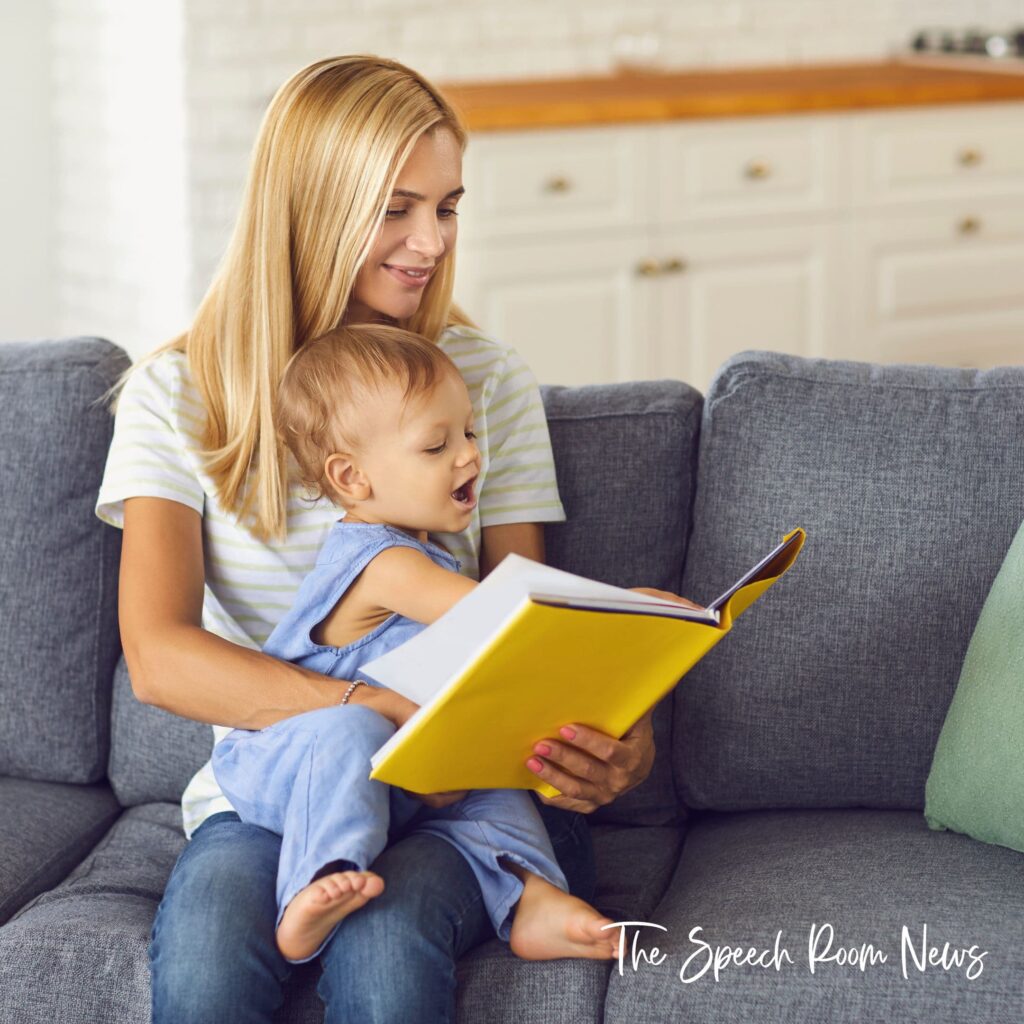
- Make Reading a Daily Ritual: Beyond bedtime stories, scatter books throughout the house and make reading a frequent, interactive activity. Point to pictures, ask simple questions ("What’s that?"), and encourage your child to turn pages or make sounds related to the story. Exposure to a wide variety of books tailored for toddlers can significantly expand vocabulary and introduce narrative structures.
-
Repetitive Language Exposure During Play: Children thrive on repetition. When playing, don’t shy away from modeling a single target word repeatedly. If a child is stacking blocks, consistently say "up" each time a block is added. If they’re pushing a car, say "go" or "vroom." This focused repetition helps cement new words into their vocabulary through meaningful and engaging contexts.

-
Encourage Pre-Linguistic Sounds: Encourage the imitation of sound effects (e.g., "boom," "pop"), environmental noises (e.g., "beep-beep" for a car), and animal sounds (e.g., "moo," "woof"). These sounds are often easier for children to produce than full words and can serve as stepping stones to more complex verbalizations, building oral motor skills and an understanding of sound-meaning associations.
-
Track Progress Systematically: Utilize tracking sheets or simple notebooks to document your child’s emerging words, sounds, and gestures. This record provides valuable insights into their progress, helps identify new vocabulary, and serves as concrete data to share with speech-language pathologists or other developmental specialists. Tools like the free Early Intervention First Words Tracker can be invaluable for parents in this process.
Debunking Common Misconceptions
Many parents hear well-meaning but often unhelpful advice such as "boys are always later than girls" or "they’ll just grow out of it." While there is some variation in developmental timelines, significant delays should not be dismissed based on gender or the hope of spontaneous recovery. Professional guidance from organizations like the American Speech-Language-Hearing Association (ASHA) consistently advises against a passive "wait-and-see" approach, emphasizing that early intervention offers the best outcomes. Delaying assessment and intervention can prolong a child’s communication difficulties and potentially impact their overall development.
Broader Impact and Implications
The implications of unaddressed expressive language delays extend beyond immediate communication challenges. Children with persistent delays are at an increased risk for:
- Academic Difficulties: Challenges in reading, writing, and overall academic performance, as language forms the foundation for literacy and learning.
- Social-Emotional Development: Difficulties in expressing needs, desires, and emotions can lead to frustration, behavioral issues, and challenges in forming peer relationships.
- Self-Esteem: A child’s inability to communicate effectively can impact their confidence and self-perception.
Conversely, early and effective intervention can significantly mitigate these risks, supporting a child’s holistic development and fostering a more positive trajectory for their future.
In the intricate journey of nurturing a child’s speech and language development, early intervention and proactive approaches are pivotal. Parents and caregivers are the first and most important advocates for their children. Trusting one’s instincts, seeking timely professional evaluation, and consistently implementing evidence-based strategies at home can create a powerful, communication-friendly environment. Every child has a unique developmental timeline, and while some may catch up independently, proactive support ensures that all late talkers have the opportunity to reach their fullest potential, celebrated at every milestone, big or small.
