

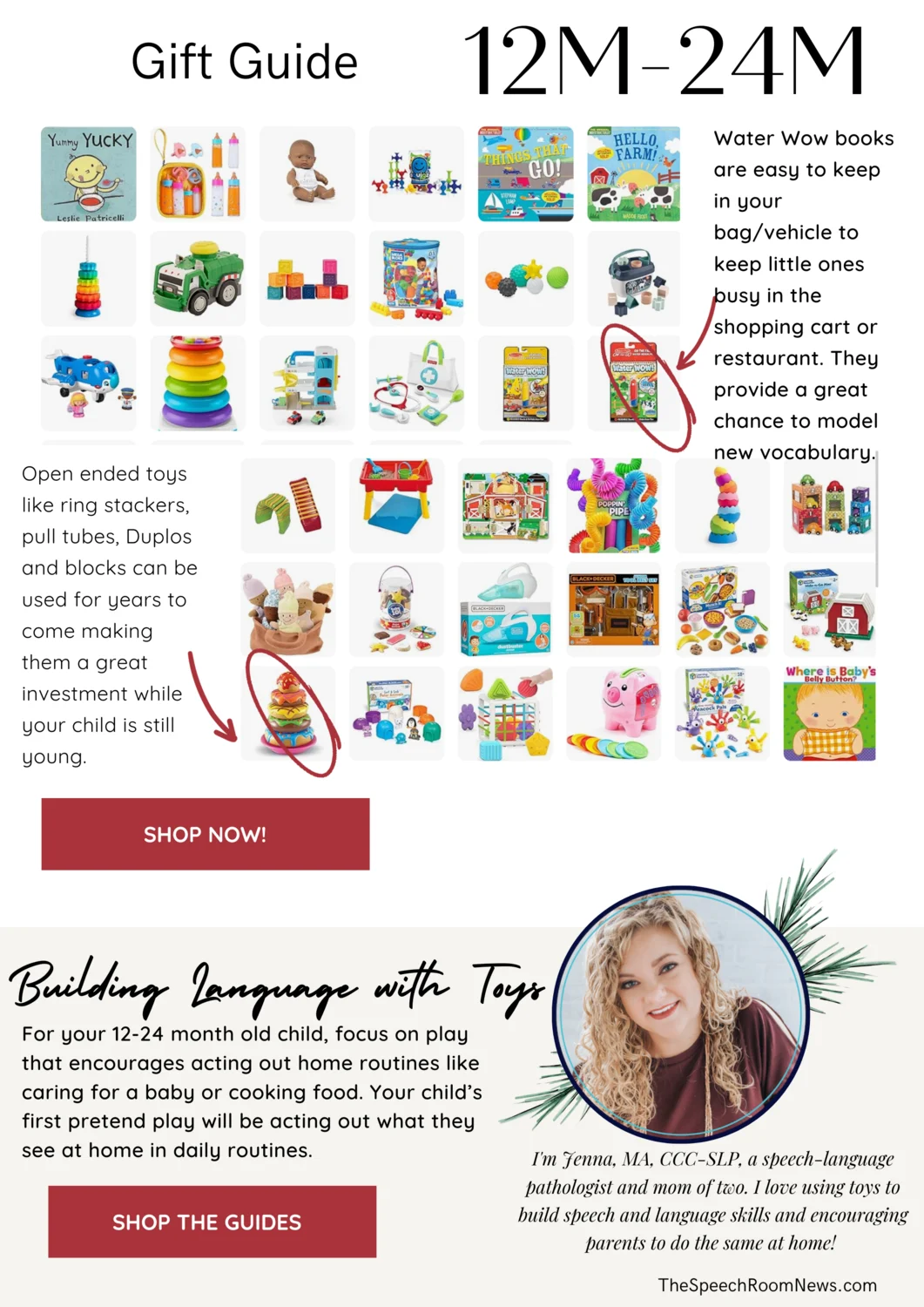
In anticipation of the crucial holiday gift-giving season, Jenna Kirk, MA, CCC-SLP, a distinguished pediatric speech-language pathologist and mother, has released a comprehensive series of gift guides designed to assist parents and caregivers in selecting toys that actively support and enhance children’s speech and language skills. The initiative, accessible through curated Amazon Gift Guides and a downloadable PDF, provides a specialized resource for families navigating the vast market of children’s toys, particularly for those seeking developmentally beneficial options. Ms. Kirk, whose personal journey includes raising a child diagnosed with Childhood Apraxia of Speech (CAS), brings a unique blend of professional expertise and firsthand parental insight to these recommendations, underscoring the profound impact of intentional play on linguistic development.
The Crucial Role of Play in Language Acquisition
Child development experts universally recognize play as a cornerstone of learning, particularly in the acquisition of speech and language. Through play, children naturally engage in communicative interactions, develop imaginative scenarios, and experiment with vocalizations and vocabulary. This unstructured, child-led activity provides fertile ground for cognitive, social, and emotional growth, all of which are intrinsically linked to language development. For infants and toddlers, sensory play fosters early vocalizations and object recognition, laying the groundwork for first words. As children mature, symbolic play, such as pretend cooking or building elaborate structures, encourages narrative skills, turn-taking in conversation, and the use of descriptive language. Research consistently demonstrates that children who engage in diverse and interactive play experiences exhibit stronger language comprehension and expressive language skills compared to their peers with less varied play opportunities. The American Speech-Language-Hearing Association (ASHA) frequently highlights the importance of play-based therapy and intervention, emphasizing that engaging activities are often more effective in promoting communication skills than rote drills.

Understanding Speech-Language Pathology and Childhood Apraxia of Speech
Jenna Kirk’s professional background as a pediatric speech-language pathologist (SLP) positions her as a critical resource for families. SLPs are highly trained healthcare professionals who diagnose and treat communication disorders, including speech, language, voice, fluency, and swallowing difficulties. Their scope of practice encompasses a wide range of developmental and acquired conditions, from articulation disorders and phonological processes to expressive and receptive language delays, and complex conditions like Childhood Apraxia of Speech (CAS). CAS is a neurological speech sound disorder in which a child has difficulty making accurate movements when speaking. The brain struggles to plan and program the precise movements of the tongue, lips, jaw, and soft palate needed for speech, resulting in inconsistent errors and difficulty with prosody (rhythm and intonation of speech). It is distinct from other speech sound disorders because it involves a motor planning deficit rather than muscle weakness or cognitive impairment. Approximately 1 to 2 children per 1,000 are estimated to have CAS, making early diagnosis and targeted intervention, often involving intensive speech therapy, crucial for improving outcomes. Ms. Kirk’s personal experience as a mother of a child with CAS provides an invaluable layer of empathy and practical understanding to her professional recommendations, directly addressing the unique needs and challenges faced by families navigating this specific diagnosis.

Strategic Toy Selection: Beyond Entertainment
When curating her holiday gift guides, Ms. Kirk emphasizes a deliberate approach to toy selection that transcends mere entertainment value. While the specific criteria she focuses on were not explicitly detailed in the initial announcement, common principles adhered to by speech-language pathologists typically include:

- Open-Ended Play: Toys that can be used in multiple ways, such as building blocks, dolls, or play-doh, encourage imagination, problem-solving, and the development of varied narratives, thereby stimulating language use.
- Interactive Potential: Toys that facilitate interaction between the child and a caregiver or another child promote turn-taking, social communication skills, and joint attention—all foundational for language development. Examples include board games, puppets, or simple ball games.
- Vocabulary Building: Toys that represent a wide range of objects, actions, and concepts (e.g., farm animal sets, kitchen playsets, picture books) provide opportunities to introduce and reinforce new vocabulary in a meaningful context.
- Cause and Effect: For younger children, toys that demonstrate clear cause-and-effect relationships (e.g., pop-up toys, musical instruments, shape sorters) help develop early cognitive skills that underpin language understanding.
- Sensory Engagement: Multi-sensory toys that involve touch, sight, and sound can enhance engagement and provide different avenues for learning new concepts and words.
- Fine Motor Skill Development: While seemingly unrelated, toys that require fine motor manipulation (e.g., puzzles, lacing beads, stacking toys) can support oral motor development indirectly by strengthening control over small muscles, which can be beneficial for articulation.
- Emotional and Social Development: Toys that encourage role-playing, emotional expression, and cooperative play help children understand and articulate feelings and social cues, fostering pragmatic language skills.
These principles guide the selection process, transforming ordinary playthings into powerful tools for therapeutic and developmental support.
The Structure and Accessibility of the Gift Guides

The newly released gift guides are meticulously organized to maximize utility for parents and caregivers. Available as easily navigable Amazon Gift Guides and a downloadable PDF, the resources are segmented by age group, recognizing the distinct developmental milestones and learning styles prevalent at different stages of childhood. This age-based categorization ensures that recommendations are appropriate and maximally beneficial for the child’s current stage of speech and language acquisition. For instance, guides for infants might prioritize sensory and cause-and-effect toys, while those for preschoolers could focus on imaginative play and early literacy. The inclusion of stocking stuffer ideas further broadens the scope, offering practical suggestions for smaller, impactful items suitable for the entire family, promoting communication in everyday contexts. By leveraging platforms like Amazon, Ms. Kirk ensures wide accessibility, allowing parents to easily browse, select, and purchase recommended items directly. This streamlined approach minimizes the effort required for parents to make informed choices, a significant benefit during the often-hectic holiday season.
Broader Implications: Empowering Parents and Early Intervention

The introduction of these expert-curated toy guides carries significant implications for both individual families and the broader landscape of early childhood development. Firstly, they empower parents by demystifying the process of selecting toys, transforming a potentially overwhelming task into an opportunity for informed decision-making. In a market saturated with options, having recommendations from a qualified SLP provides a trusted filter, ensuring that gifts contribute positively to a child’s developmental trajectory.
Secondly, these guides tacitly promote the principles of early intervention. Identifying and addressing speech and language delays or disorders early in a child’s life is paramount for better long-term outcomes. While professional therapy remains essential for diagnosed conditions, integrating developmentally supportive toys into daily play can serve as a powerful adjunct, reinforcing therapeutic goals in a natural, engaging environment. For children with conditions like CAS, where consistent practice is vital, these toys offer creative avenues for repetition and skill-building outside of formal therapy sessions.

Furthermore, the initiative highlights the growing recognition of the interconnectedness between play, development, and professional guidance. It bridges the gap between clinical recommendations and practical application within the home environment, fostering a more holistic approach to child development.
Expert Perspective and Community Response

While specific official statements from external organizations were not part of the initial release, the professional community of speech-language pathologists and early childhood educators would likely commend such an initiative. Resources like these align with best practices in promoting language-rich environments and advocating for informed consumer choices. Ms. Kirk’s proactive step reflects a broader trend among healthcare professionals to disseminate accessible, evidence-based information to the public, empowering families to take an active role in their children’s developmental journeys. The anticipated response from parents is expected to be overwhelmingly positive, as the guides address a common need for clear, reliable advice in an area critical to a child’s future success. The ability to consult a trusted expert, even indirectly through curated lists, offers reassurance and practical direction, particularly for those whose children may be facing communication challenges.
In conclusion, Jenna Kirk’s holiday gift guides represent more than just a list of toys; they embody a thoughtful, professionally informed effort to integrate therapeutic principles into everyday play. By providing accessible, age-appropriate, and developmentally targeted recommendations, Ms. Kirk offers invaluable support to parents and caregivers, transforming holiday gift-giving into a meaningful opportunity to foster robust speech and language development in children across all stages. This initiative underscores the enduring power of play as a fundamental driver of learning and communication, reinforcing the critical role of expert guidance in nurturing the next generation’s linguistic potential.
