

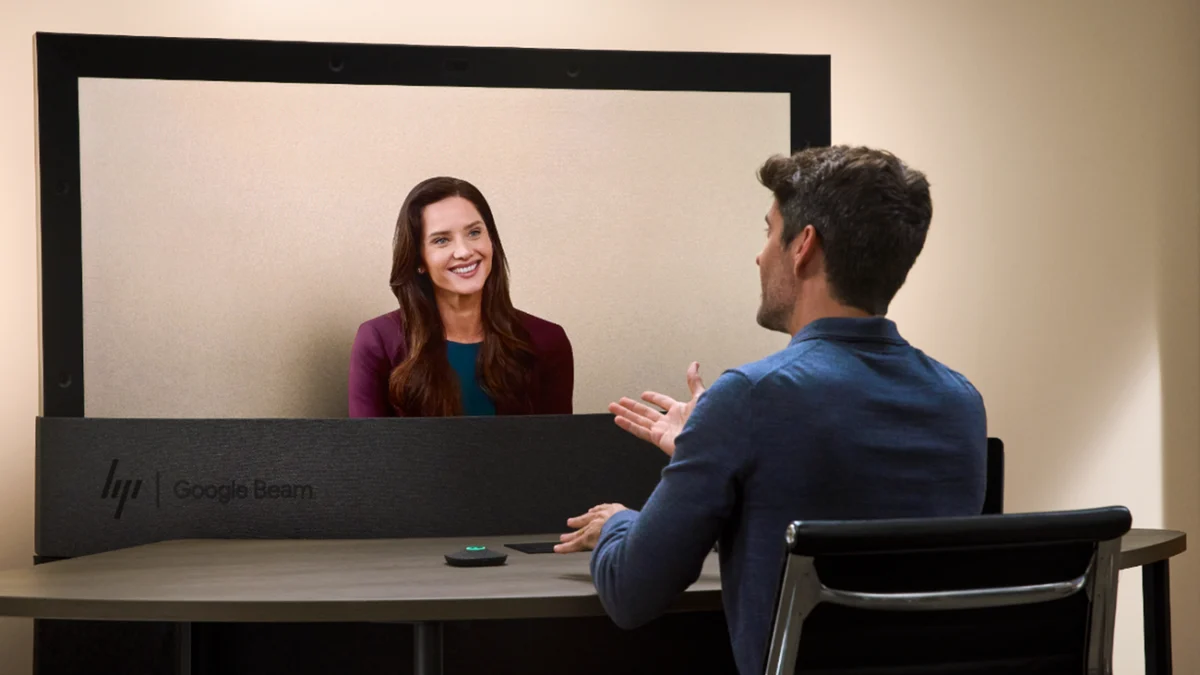
The landscape of corporate communication is undergoing a significant transformation as Google officially announces the global expansion of Google Beam, its advanced telepresence technology designed to simulate face-to-face interactions. Moving beyond its initial pilot phase, Google has confirmed that Google Beam hardware is now shipping to customers across six major markets: the United States, Canada, the United Kingdom, France, Germany, and Japan. This rollout is supported by a newly established ecosystem of 18 channel partners and a strategic collaboration with HP, which is delivering the experience through its "HP Dimension" hardware line. By integrating with established platforms like Google Meet and Zoom, Google Beam aims to bridge the gap between physical and digital presence, addressing the long-standing limitations of traditional video conferencing.
The Evolution of Presence: From Project Starline to Google Beam
To understand the significance of this expansion, it is necessary to look at the technological lineage of Google Beam. The project originated from Google’s "Project Starline," a research initiative first unveiled at Google I/O in 2021. The objective was to use high-resolution sensors, depth-mapping cameras, and light-field displays to create a "magic window" effect, where participants feel as though they are sitting across from one another in three-dimensional space.
The transition from a laboratory experiment to a commercial product required significant engineering refinements. While the early prototypes of Project Starline were room-sized installations requiring specialized booths and massive computational power, the current iteration—commercialized as HP Dimension with Google Beam—has been streamlined for the modern enterprise environment. This evolution reflects a broader trend in the technology sector: the movement away from immersive headsets (VR/AR) toward "glass-free" holographic experiences that do not require participants to wear cumbersome hardware.
Strategic Global Distribution and the HP Partnership
The current expansion is anchored by a robust distribution strategy. Google has moved away from a direct-to-consumer model, instead leveraging a global network of 18 audiovisual (AV) integrators and distributors. These partners are specialized in deploying high-end enterprise technology, ensuring that organizations can integrate Google Beam into their existing office infrastructures with professional support.
The partnership with HP is a cornerstone of this commercial phase. By branding the hardware as HP Dimension, Google is utilizing HP’s manufacturing scale and enterprise reputation. The hardware is designed to be compatible with the most widely used video conferencing software, specifically Google Meet and Zoom. This interoperability is a critical factor for adoption, as most large-scale enterprises operate within multi-platform environments and are hesitant to invest in "walled garden" technologies that do not communicate with existing systems.
Empirical Data: Measuring the Impact of "Co-presence"
Google’s decision to move into a full-scale rollout is backed by extensive internal and external data. As the workforce has shifted toward hybrid models, "Zoom fatigue" and a lack of emotional connection have become documented productivity hurdles. To quantify the effectiveness of Google Beam, Google conducted an eight-week internal study involving its own global teams.
The data gathered from this study suggests that the "co-presence" offered by Beam significantly outperforms traditional 2D video calls in several key metrics:
- Enhanced Connection: Participants reported feeling 50% more connected to their colleagues during Beam sessions compared to standard video conferencing.
- Improved Communication Clarity: Teams found it 33% easier to ensure that their feedback and nuances were clearly understood, likely due to the technology’s ability to transmit subtle body language and maintain eye contact.
- Operational Efficiency: Perhaps most notably for the corporate bottom line, the study observed a 21% decrease in the need for follow-up meetings. This suggests that the high-fidelity nature of the interaction leads to faster consensus and fewer misunderstandings.
These findings align with psychological research into "social presence theory," which posits that the more a medium can simulate the physical presence of a communicator, the more effective the communication becomes.
Field Testing in Recruitment and Client Relations
Beyond internal testing, Google has engaged with high-profile "leaned-in" partners to test real-world applications. Bain & Company, a leading global management consulting firm, utilized HP Dimension with Google Beam to revolutionize its campus recruiting and candidate interview processes.
In the consulting industry, where interpersonal skills and client-facing presence are paramount, traditional video calls often fail to capture the nuances of a candidate’s personality. Keith Bevans, Executive Vice President and Partner at Bain & Company, noted that the technology allows the firm to virtually assess how candidates will engage with clients in person. According to Bevans, the ability to observe body language and eye contact is "critically important" for assessing a candidate’s potential for success within the firm.
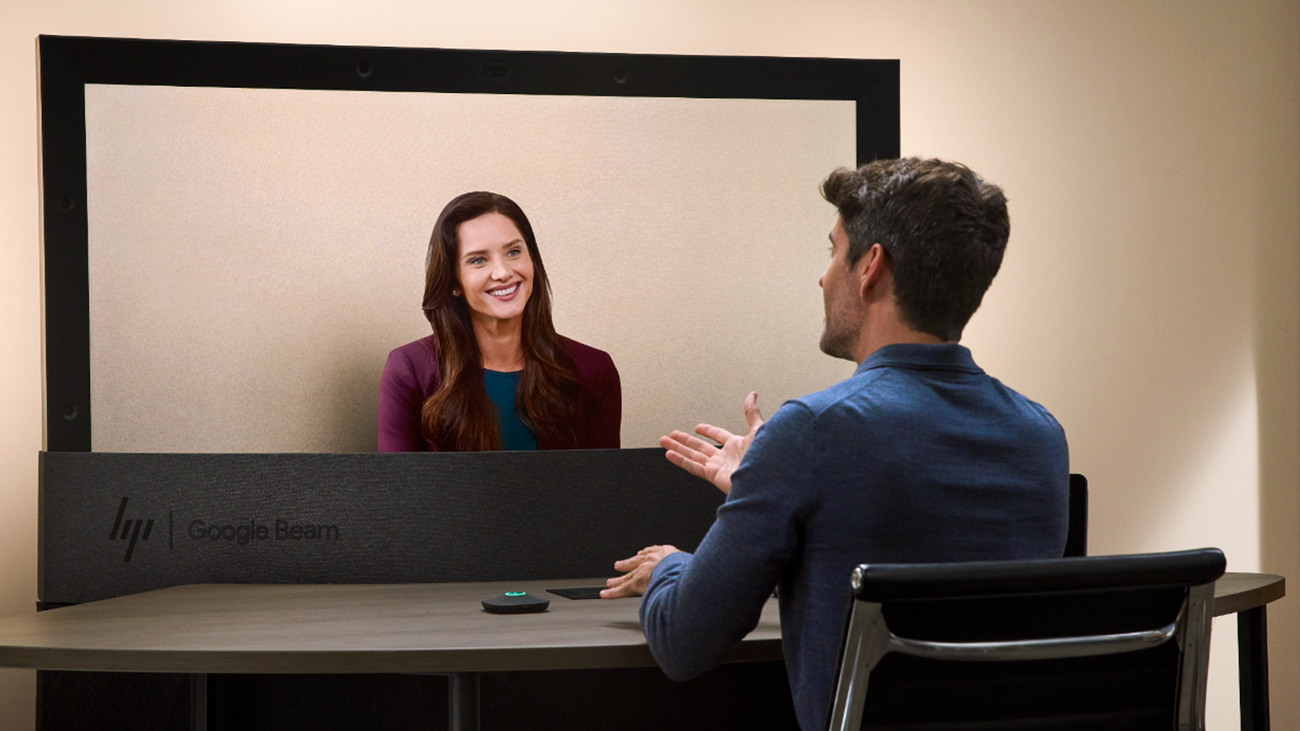
By using Google Beam, Bain & Company was able to conduct high-stakes interviews globally without the logistical costs and environmental impact of extensive air travel. This use case has resonated with other early adopters, including Netflix and Capital Group, who are now integrating the technology to connect their distributed global workforces.
The Industrious Partnership: Creating an Extended Network
In a move to democratize access to the technology, Google has announced a partnership with Industrious, a global operator of premium flexible workspaces. This collaboration marks the launch of the first-ever "Beam extended network."
Starting in October, HP Dimension with Google Beam units will be available for booking at select Industrious locations in major U.S. hubs, including New York City, Chicago, Atlanta, and Palo Alto. This strategy addresses a significant barrier to entry: the capital expenditure required for high-end telepresence hardware. By placing Beam units in shared workspaces, Google is making the technology accessible to startups, small businesses, and freelance consultants who may not have the budget for a permanent installation but require high-quality remote communication for client consultations or investor pitches.
A pilot program conducted earlier this year at Industrious locations revealed that distributed teams used the technology for a variety of purposes, ranging from manager check-ins to sensitive client negotiations. The "pay-per-use" or "membership-access" model provided by Industrious could serve as a blueprint for how high-end enterprise tech is consumed in an increasingly gig-oriented and decentralized economy.
Industry Implications and Market Context
The expansion of Google Beam comes at a pivotal moment for the telecommunications industry. While the initial surge in video conferencing adoption was driven by the necessity of the COVID-19 pandemic, the current phase is driven by the search for quality and sustainability.
- The Travel Reduction Mandate: Many corporations are under pressure to reduce their carbon footprints. Business travel is a major contributor to corporate emissions. Technologies like Google Beam provide a viable alternative to "fly-in" meetings, offering a level of intimacy that standard video calls lack.
- The Talent War: As companies struggle to attract and retain top talent, the ability to offer seamless hybrid work environments becomes a competitive advantage. Google Beam allows for "remote-first" hiring without sacrificing the cultural cohesion that typically requires physical office presence.
- Competition in the Space: Google is not alone in this pursuit. Companies like Cisco (with Webex Hologram) and various startups are exploring 3D telepresence. However, Google’s integration with HP and its focus on software interoperability (Meet/Zoom) positions it as a frontrunner in terms of practical, scalable deployment.
Technical Analysis: How It Works
The efficacy of Google Beam lies in its sophisticated array of hardware and software. Unlike 360-degree cameras or standard webcams, Beam uses depth sensors to create a real-time 3D model of the user. This model is then compressed and transmitted over standard high-speed internet. On the receiving end, the 3D data is rendered on a specialized display that uses lenticular or light-field technology to provide depth perception without the need for 3D glasses.
Spatial audio further enhances the immersion. In a Google Beam session, the sound is processed so that it appears to be coming directly from the mouth of the person on the screen. This directional audio cues the brain to perceive the digital image as a physical person, reducing the cognitive load required to process the interaction.
Chronology of Major Milestones
- May 2021: Google unveils Project Starline at Google I/O, demonstrating the technology as a research prototype.
- 2022-2023: Internal testing expands within Google offices in Seattle, New York, and Mountain View.
- Early 2024: Partnership with Bain & Company begins, focusing on recruitment use cases.
- May 2024: Google announces the commercialization of the technology in partnership with HP.
- September 2024: Official announcement of expansion into six countries and the launch of the Industrious partnership.
- October 2024: Google Beam becomes available for booking at select Industrious locations.
Conclusion: The Future of Human Connection
As Google Beam reaches more regions and partners, the broader implication is a shift in how society defines "being there." The expansion into the U.K., France, Germany, and Japan suggests that Google sees a global appetite for high-fidelity communication that transcends regional business cultures.
The move to integrate with Industrious further suggests that the future of work may not be tied to a single office, but rather to a network of high-tech nodes that allow for seamless human connection across continents. While traditional video conferencing will likely remain the standard for routine updates, Google Beam is positioning itself as the gold standard for high-value interactions—the interviews, the negotiations, and the creative brainstorms that require the full spectrum of human expression.
As the technology continues to evolve and costs likely decrease over time, the "magic window" of Google Beam may eventually become as common in the workplace as the laptop or the conference phone, fundamentally altering the geography of the modern enterprise. For more information on real-world applications and deployment, interested parties are directed to the official platform at beam.google.
