


Ten years ago, the Atlas of Emotions was introduced to the world, a groundbreaking initiative born from a unique collaboration between renowned psychologist Dr. Paul Ekman, his daughter Dr. Eve Ekman, and His Holiness the Dalai Lama. This ambitious project aimed to meticulously map the complex landscape of human emotion, grounding its framework in robust scientific inquiry while ensuring its accessibility to a broad audience. Today, a decade after its initial launch, the Atlas of Emotions has transcended its origins, its influence now a palpable force within educational institutions, therapeutic settings, cutting-edge research laboratories, and the everyday discourse surrounding human feelings globally.
The genesis of the Atlas of Emotions was rooted in Dr. Paul Ekman’s extensive research into universal human emotions. His seminal work, including a comprehensive survey of nearly 250 emotion scientists, revealed a significant consensus on the nature and universality of certain emotional states. This foundational agreement provided the bedrock upon which the Atlas was constructed, a testament to the power of interdisciplinary collaboration and the pursuit of shared understanding. The project artfully wove together rigorous psychological research, sophisticated graphic design principles, and the profound contemplative wisdom of His Holiness the Dalai Lama, creating a tool that is both intellectually stimulating and emotionally resonant.
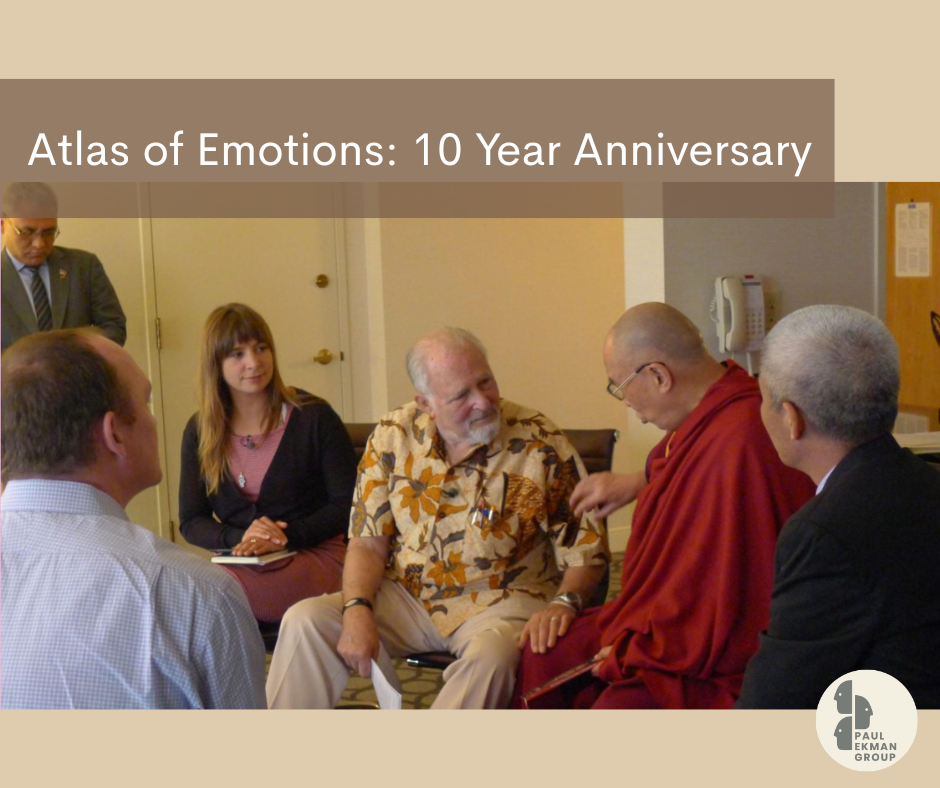
To commemorate this significant anniversary, a rare glimpse into the project’s formative stages has been unveiled: previously unseen footage from a working meeting involving Dr. Paul Ekman, Dr. Eve Ekman, and His Holiness the Dalai Lama as they collaboratively reviewed the Atlas in its developmental phase. This intimate documentary material captures the spirit of collaborative inquiry that defined the project from its inception. It underscores the interdisciplinary approach, bridging the empirical rigor of psychological science with the visual language of design and the deep introspective insights offered by His Holiness. The footage offers a tangible connection to the foundational moments of this influential endeavor, illustrating the careful consideration and shared vision that guided its creation.
From Inception to Global Recognition: The Atlas of Emotions’ Journey
The Atlas of Emotions officially launched in 2016, rapidly capturing international attention. Its innovative approach to visualizing and understanding emotions garnered significant media coverage, notably from The New York Times. The publication highlighted the Atlas’s pioneering method of mapping emotional states and its success in demystifying complex psychological concepts for the general public. This early validation played a crucial role in fostering widespread adoption and engagement with the Atlas.
Over the past decade, the Atlas of Emotions has demonstrated remarkable versatility and impact across a diverse range of applications. Its structured framework has provided educators with a powerful tool to foster emotional literacy among students. In classrooms worldwide, the Atlas has been instrumental in helping young learners identify, articulate, and manage their emotions, laying the groundwork for healthier social and emotional development. This pedagogical application is particularly significant in an era increasingly focused on holistic education that extends beyond academic achievement to encompass well-being.
Within the realm of mental health, therapists and counselors have integrated the Atlas of Emotions into their practice. The visual and conceptual clarity of the Atlas serves as a valuable aid in therapeutic dialogues, enabling clients to gain deeper insights into their internal experiences. By providing a shared language and a structured way to explore emotional nuances, the Atlas facilitates more effective communication between therapist and client, often accelerating the process of healing and self-discovery. Research into the efficacy of such tools in therapeutic settings continues to grow, with preliminary findings suggesting positive correlations between the use of emotion-mapping frameworks and improved therapeutic outcomes.
The impact of the Atlas extends into the academic and scientific communities as well. Researchers have utilized the Atlas as a foundational element in their studies of affect, cognition, and interpersonal dynamics. Its comprehensive categorization of emotions and their interconnectedness provides a valuable analytical tool for researchers exploring the complexities of human experience. The Atlas has been cited in numerous academic papers and has contributed to the ongoing dialogue within psychology, neuroscience, and even fields like artificial intelligence, where understanding human emotion is increasingly critical.
Beyond formal settings, the Atlas of Emotions has permeated everyday conversations and personal reflection. Individuals have reported using the Atlas to better understand their own emotional responses, improve their relationships, and navigate challenging situations with greater emotional intelligence. The accessibility of the online platform has democratized access to sophisticated psychological concepts, empowering individuals to engage with their inner lives in a more informed and nuanced way. This grassroots adoption speaks to the fundamental human need to understand ourselves and connect with others on a deeper emotional level.
A Decade of Impact: Statistical Insights and Future Trajectories
While precise global usage statistics for an open-access online tool can be challenging to quantify definitively, indicators of the Atlas of Emotions’ reach are substantial. The website hosting the Atlas has experienced consistent traffic growth since its inception, with millions of unique visitors accessing the resource annually. Furthermore, the numerous academic publications and presentations referencing the Atlas suggest a broad scholarly impact. The translation of key Atlas components into multiple languages further amplifies its global accessibility, reaching diverse cultural contexts.
The foundational research underpinning the Atlas, particularly Dr. Paul Ekman’s work on universal emotions, has been widely cited and is considered a cornerstone in the field of affective science. His earlier research identified a set of universally recognized facial expressions associated with basic emotions, a finding that has been replicated across diverse cultures and has significantly influenced our understanding of nonverbal communication. The Atlas of Emotions builds upon this established scientific foundation, offering a more granular and relational exploration of the emotional spectrum.
Engaging the Community: Shaping the Future of Emotional Understanding
As the Atlas of Emotions marks its tenth anniversary, a forward-looking initiative has been launched, inviting the community to contribute to its ongoing development. The creators are actively soliciting feedback on how individuals and organizations have utilized the Atlas, seeking to understand its practical applications, the insights it has facilitated, and the changes it has inspired. This call for user experiences is a crucial step in ensuring that the Atlas remains relevant and responsive to the evolving needs of its users.
"We are at a pivotal moment," stated a representative from the Paul Ekman Group. "Having established a robust framework over the past decade, we are eager to hear directly from those who have engaged with the Atlas. Their stories will not only validate our efforts but also provide invaluable direction for the next phase of this important work. Understanding how the Atlas has helped individuals see, comprehend, or transform their emotional lives is paramount to its continued evolution."
The feedback mechanism, channeled through a dedicated online form, allows for structured input, gathering specific examples and testimonials. This data will be instrumental in informing future updates and expansions of the Atlas, ensuring that it continues to serve as a dynamic and impactful resource.
The Road Ahead: Evolution of the Atlas and a New Literary Endeavor
The celebration of this milestone is not solely a retrospective; it is also a prelude to exciting future developments. Significant updates to the online, interactive Atlas of Emotions are in the pipeline, promising enhanced functionality and an enriched user experience. These enhancements are expected to deepen the exploration of emotional landscapes and introduce new interactive features designed to foster greater engagement and understanding.
In parallel, Dr. Eve Ekman is currently undertaking the ambitious project of developing an "Atlas of Emotions" book. Scheduled for release in 2027, this forthcoming publication is poised to expand significantly upon the original Atlas. It will delve deeper into the theoretical underpinnings, offer updated insights informed by a decade of application and research, and introduce novel approaches to interacting with the emotional tapestry that defines human existence. This book represents a significant opportunity to consolidate and disseminate the knowledge and insights accumulated through the Atlas project, making it accessible to an even wider audience in a comprehensive, narrative format.
This new literary work aims to provide a more in-depth exploration of the principles and applications of the Atlas of Emotions, serving as a definitive guide for individuals, educators, and professionals alike. By bridging academic rigor with relatable narratives, the book is expected to further solidify the Atlas’s position as a leading resource for emotional intelligence and well-being.
For those interested in staying informed about the release of the "Atlas of Emotions" book and future updates to the online platform, an announcement list has been established. This proactive communication strategy underscores the commitment to ongoing engagement with the community and ensures that those invested in the Atlas of Emotions remain at the forefront of its advancements. The continued evolution of this influential project signals a sustained commitment to fostering a more emotionally aware and resilient world, one insight at a time.
