

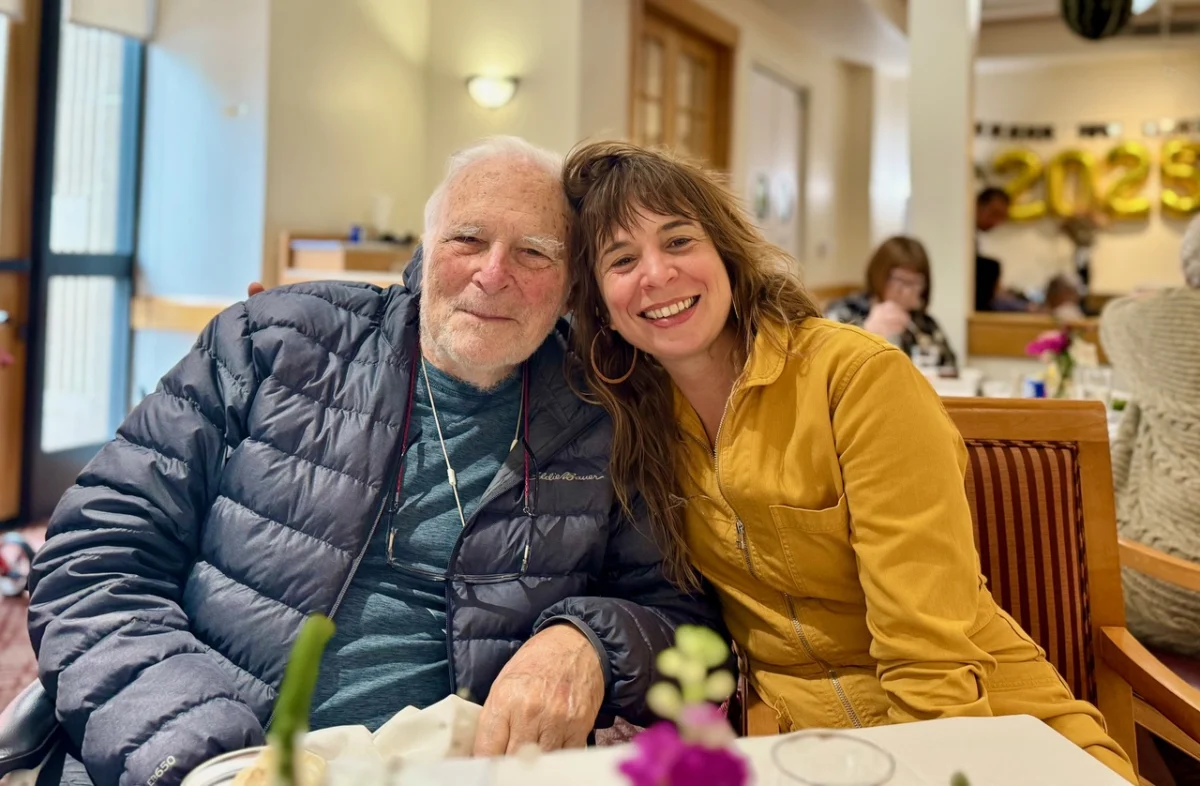
The passing of Dr. Paul Ekman, a towering figure in the field of emotion research and a pioneer in the study of facial expressions, has prompted widespread reflection on his profound contributions to science and his personal journey of transformation. While obituaries have acknowledged his groundbreaking work, his daughter, Eve Ekman, has offered a more intimate and comprehensive perspective, emphasizing not only his scientific achievements but also his deeply personal evolution, his commitment to reducing suffering, and his enduring legacy of love and collaboration. This expanded narrative provides a richer understanding of a man whose life was dedicated to unraveling the complexities of human emotion and fostering greater compassion in the world.
A Life Shaped by Trauma and a Quest for Understanding
Paul Ekman’s early life was marked by significant trauma and loss. The profound impact of these childhood experiences, which he often referenced, served as a powerful catalyst for his lifelong dedication to understanding human emotion. Eve Ekman’s account highlights how these formative years instilled in him a deep commitment to becoming the kind of present, loving, and supportive parent he himself had lacked. This personal imperative fueled his research, driving him to explore the universality of emotional expression and the underlying mechanisms of emotional experience.
His academic career, spanning decades, saw him become a leading authority on microexpressions, facial muscle movements that betray fleeting emotions. His research, initially focused on identifying universal emotional expressions across cultures, laid the groundwork for numerous applications in fields ranging from psychology and neuroscience to law enforcement and national security. Ekman’s work posited that certain basic emotions – such as happiness, sadness, anger, fear, surprise, and disgust – are expressed through universally recognizable facial configurations, a theory supported by extensive cross-cultural studies. For instance, his research in the 1960s and 70s, conducted in remote villages in Papua New Guinea, provided some of the earliest empirical evidence for the universality of these expressions, challenging prevailing anthropological views that all human behavior was entirely culturally determined.
The Transformative Encounter in Dharamsala
A pivotal moment in Dr. Ekman’s life and career occurred in 2000 at a historic meeting in Dharamsala, India. This gathering, orchestrated by the Dalai Lama, brought together leading scientists and contemplatives to explore the nature of "Destructive Emotions." For Paul Ekman, this experience was not merely an intellectual engagement but a deeply transformative personal encounter. Having openly acknowledged his own struggles with anger earlier in life, the meeting provided him with an unprecedented, embodied understanding of what it might feel like to live with less reactivity.
This profound shift was not easily articulated, even by Ekman himself, who often spoke of the "unmistakable, embodied sense" he gained. It marked a significant turning point, moving his research beyond the purely scientific analysis of emotions to an exploration of their alleviation and the cultivation of inner peace. The Dalai Lama’s philosophy, which emphasizes the reduction of suffering through emotional understanding, a calm mind, and the practice of kindness, resonated deeply with Ekman. He recognized the immense potential for integrating ancient contemplative wisdom with modern scientific inquiry.
Cultivating Emotional Balance and Global Understanding
The synergy between Dr. Ekman’s scientific rigor and the contemplative insights gained in Dharamsala led to the development of crucial initiatives aimed at helping individuals manage their emotions and reduce suffering. Alongside Alan Wallace, he co-created "Cultivating Emotional Balance" (CEB), an evidence-based training program designed to foster emotional regulation and compassion. This program, which has been offered globally, represents a tangible application of his lifelong pursuit of understanding and mitigating negative emotional states.
Furthermore, Dr. Ekman collaborated with his daughter, Eve Ekman, a clinical social worker with expertise in trauma, to create the "Atlas of Emotions." Commissioned by the Dalai Lama in 2016, this free online tool aims to build a shared vocabulary for describing the vast landscape of human emotional experience. The Atlas provides users with a framework for understanding their emotions, their triggers, and their potential pathways. Its upcoming relaunch for its ten-year anniversary underscores its enduring relevance and the ongoing commitment to making emotional literacy accessible to a global audience. Both CEB and the Atlas of Emotions stand as testaments to Dr. Ekman’s final decades’ dedication to empowering individuals with the tools to understand and manage their emotions, thereby fostering greater well-being for themselves and others.
Addressing Scientific Discourse and Misrepresentations
Eve Ekman’s account also addresses what she perceives as a misrepresentation of her father’s legacy in certain media, specifically referencing a New York Times obituary that, in her view, overemphasized "controversy" by centering on a single scientist’s critique. She asserts that this selective focus overshadows the vast body of peer-reviewed research that has replicated, expanded, and refined the field Dr. Ekman helped establish. While acknowledging that scientific disagreement is inherent to the process, she argues that presenting his life’s work primarily through a singular critical lens fails to capture the breadth and depth of his contributions and the extensive scientific consensus that built upon his foundational findings.
The implications of this critique extend beyond a personal defense of her father’s work. It highlights a broader challenge within scientific communication: the tendency to sensationalize or focus on outlier opinions rather than the cumulative weight of evidence. Dr. Ekman’s research, which has profoundly influenced fields as diverse as psychology, neuroscience, medicine, anthropology, national security, and even animation, is a testament to its robust empirical foundation and widespread acceptance. The ability to accurately portray the evolution of scientific understanding, acknowledging both foundational contributions and subsequent refinements, is crucial for public comprehension of complex fields.
A Personal Transformation and Enduring Love
Beyond his scientific accolades, the narrative of Paul Ekman is one of profound personal transformation. Eve Ekman eloquently describes her father as a man who, despite overcoming immense childhood adversity, rebuilt himself into a loving husband, father, and friend. His 41-year marriage to his wife, who also pursued a distinguished academic career at UC Berkeley, exemplified a deep partnership and mutual support. Her passing in 2020 left a void, but his enduring love and gratitude for their life together remained a constant.
His journey of personal growth was characterized by a willingness to be present, curious, loving, and supportive. He fostered a relationship with his children that was not only parental but also a true friendship and collaboration, marked by "fierce loyalty and genuine delight." His lessons extended from rigorous critical thinking and questioning assumptions to the importance of dedicating oneself to work that serves others, a deep appreciation for music, and even the practical skill of parallel parking on steep San Francisco hills. These personal anecdotes paint a vivid portrait of a complex, imperfect, yet deeply admirable human being.
The Broader Implications of Ekman’s Work
Dr. Paul Ekman’s legacy extends far beyond the laboratory. His research has fundamentally altered our understanding of how humans communicate and connect. The identification of universal facial expressions provided a common language for studying emotions across cultural and linguistic barriers, facilitating international research and communication. His work has had tangible applications in areas such as:
- Mental Health: Understanding emotional expression is critical for diagnosing and treating mental health conditions, including depression, anxiety, and post-traumatic stress disorder.
- Law Enforcement and Security: The ability to detect deception and understand emotional states has been invaluable in interrogation, threat assessment, and national security.
- Human-Computer Interaction: Researchers are using Ekman’s insights to develop more intuitive and emotionally intelligent AI systems.
- Arts and Entertainment: Animators and actors have utilized his research to create more realistic and emotionally resonant characters and performances.
- Interpersonal Communication: His work has empowered individuals to better understand their own emotions and those of others, leading to improved relationships and communication.
The integration of scientific research with contemplative practices, as championed by Ekman in his later years, offers a compelling model for addressing the complex emotional challenges of the 21st century. In a world often characterized by division and conflict, his emphasis on emotional understanding, self-awareness, and compassion provides a roadmap for fostering greater empathy and reducing suffering.
A Continuing Influence
The "awesome and loving dad, husband, and friend" that Eve Ekman describes was also a scientist of immense influence. His life story is a testament to the human capacity for growth, learning, and profound change. He demonstrated that even in the face of significant personal challenges, it is possible to cultivate a life of purpose, connection, and deep commitment to the well-being of others. His dedication to understanding emotion and expanding compassion ensures that his influence will continue to be felt for generations to come. The well wishes and messages of appreciation from near and far are a testament to the significant impact he had on countless individuals and the broader scientific community. Paul Ekman’s legacy is not just one of scientific discovery, but of a life lived with intention, vulnerability, and an unwavering commitment to making the world a more understanding and compassionate place.
