

The intersection of historical narrative and modern leadership development takes center stage in the latest installment of Anecdotally Speaking, where hosts Mark and Shawn dissect the psychological mechanisms behind how individuals and leaders frame their reality. Released on February 24, 2026, by Anecdote International, Episode 284 utilizes the harrowing yet profound life of Tsutomu Yamaguchi to illustrate a fundamental principle of narrative intelligence: that while facts remain immutable, the meaning derived from those facts is a choice that dictates resilience and organizational integrity. The episode provides a comprehensive look at how the stories we tell ourselves influence decision-making and the ability to lead through periods of intense change.
The Dual Survival of Tsutomu Yamaguchi: A Chronology of Fortitude
The core of the discussion centers on the life of Tsutomu Yamaguchi, a Japanese engineer whose life became a testament to human endurance and the complexities of "luck." In August 1945, Yamaguchi was a 29-year-old employee of Mitsubishi Heavy Industries, concluding a three-month business trip to Hiroshima. His experiences over the span of three days remain one of the most remarkable documented instances of survival in modern history.
The chronology of events as discussed in the episode follows a precise and devastating timeline:
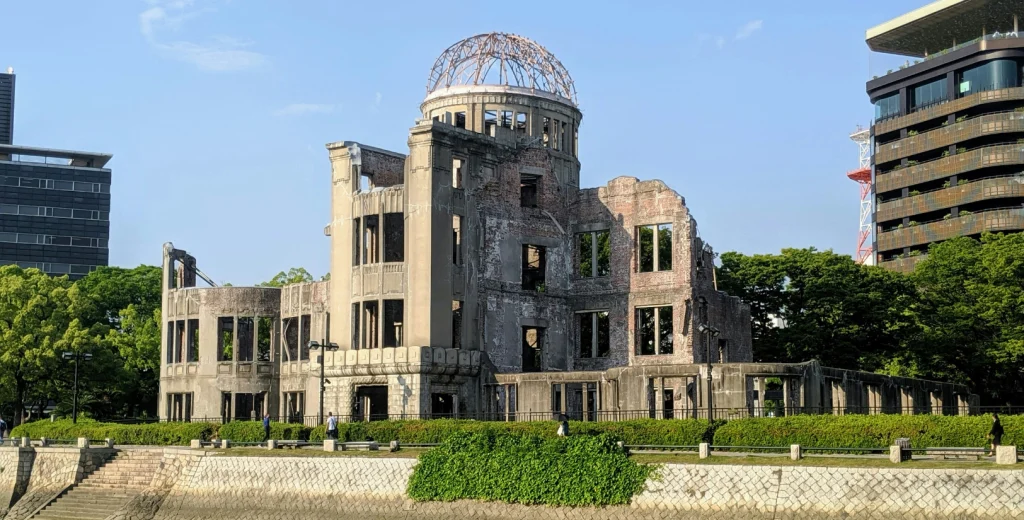
August 6, 1945 – Hiroshima: At approximately 8:15 a.m., Yamaguchi was walking toward the Mitsubishi shipyard to finalize paperwork before his scheduled return home. He realized he had forgotten his "hanko" (a personal seal) and was heading back to collect it when the American B-29 bomber, the Enola Gay, dropped the "Little Boy" atomic bomb. Yamaguchi was approximately three kilometers from ground zero. He recalled seeing a "great flash in the sky" before being blown into a potato patch by the shockwave. The blast resulted in ruptured eardrums, temporary blindness, and serious thermal burns across the left side of his upper body. Despite the devastation, he managed to find a shelter and spend the night in the city.
August 7–8, 1945 – The Journey to Nagasaki: On the morning of August 7, Yamaguchi navigated the ruined landscape of Hiroshima, crossing rivers filled with debris and casualties to reach the railway station, which miraculously remained functional on the outskirts. He boarded a train filled with other wounded survivors and traveled overnight to his hometown of Nagasaki. Upon arrival on August 8, he sought medical treatment for his burns, which were so severe they had begun to turn septic.
August 9, 1945 – Nagasaki: Despite his injuries, Yamaguchi reported to the Mitsubishi office in Nagasaki on the morning of August 9 to brief his supervisor on the destruction of Hiroshima. Historical records and the podcast narrative note the bitter irony of this moment: his supervisor reportedly expressed disbelief, questioning how a single bomb could level an entire city. As Yamaguchi was attempting to explain the magnitude of the blast, the second atomic bomb, "Fat Man," was detonated over Nagasaki. Once again, Yamaguchi was roughly three kilometers from the epicenter. He survived a second nuclear blast, though his bandages were blown off and he suffered a further bout of radiation sickness.
Historical Context and Statistical Significance
To understand the weight of Yamaguchi’s story, it is necessary to examine the broader context of the hibakusha—the survivors of the atomic bombings. According to data from the Radiation Effects Research Foundation, the Hiroshima blast killed an estimated 140,000 people by the end of 1945, while the Nagasaki blast claimed approximately 74,000 lives.
While many individuals were affected by both bombings (often those who fled Hiroshima for Nagasaki), Yamaguchi is unique as the only person officially recognized by the Japanese government as a nijū hibakusha (double survivor) for both explosions. This recognition did not come until 2009, just one year before his death at the age of 93.
The podcast highlights that Yamaguchi’s story is often framed through two competing lenses: was he the unluckiest man in the world for being present at both detonations, or the luckiest for surviving both? This dichotomy serves as the foundation for the episode’s exploration of narrative framing. In his later years, Yamaguchi chose to view his survival not as a burden of trauma, but as a "destiny" to advocate for the total abolition of nuclear weapons.
Narrative Framing and the Psychology of Resilience
Mark and Shawn explore how the internal narrative constructed by Yamaguchi allowed him to transition from a victim of circumstance to a leader in the global peace movement. In the realm of narrative psychology, this is often referred to as "meaning-making." The facts of the two bombings are static, but the "story" Yamaguchi told himself evolved.

In a professional and leadership context, this concept is vital. Resilience is often defined not by the absence of adversity, but by the ability to frame that adversity in a way that allows for forward momentum. The podcast notes that leaders who frame challenges as "opportunities for growth" rather than "insurmountable threats" are more likely to maintain team morale and drive innovation during crises.
The episode identifies several key storytelling techniques that facilitate this framing:
- Foreshadowing: By identifying early signs of change or potential disruption, leaders can prepare their organizations for "plot twists." This technique helps in reducing the shock of sudden shifts in the market or internal structure.
- Audience Participation in Meaning-Making: Effective leaders do not simply dictate the meaning of an event; they provide the framework that allows the audience (employees or stakeholders) to reach that conclusion themselves. This creates a shared sense of purpose and ownership over the organizational narrative.
- Reframing the "Why": Just as Yamaguchi reframed his survival as a mission, leaders can reframe corporate setbacks as necessary lessons that refine the company’s long-term strategy.
Leadership Integrity in Communicating Unpopular Decisions
A significant portion of Episode 284 is dedicated to the challenge of "authentic communication." Leaders are frequently tasked with delivering news or implementing decisions they may not personally support—such as layoffs, restructuring, or shifts in corporate policy mandated by a board of directors.
The podcast suggests that maintaining integrity in these moments requires a delicate balance of honesty and alignment. Mark and Shawn discuss how leaders can communicate these decisions without appearing "two-faced." The strategy involves:
- Acknowledging the Duality: Being honest about the difficulty of the decision while explaining the objective logic behind it.
- Focusing on the "Larger Story": Placing the unpopular decision within the context of the organization’s long-term survival or mission.
- Empathetic Delivery: Using storytelling to humanize the impact of the decision, showing that the leader understands the consequences for the individuals involved.
This approach prevents the "us vs. them" mentality that often arises when management communicates top-down directives. By utilizing the principles of narrative, leaders can bridge the gap between corporate necessity and human impact.
Broader Implications for Modern Organizations
The lessons drawn from Tsutomu Yamaguchi’s life and the analysis provided by Anecdote International suggest that storytelling is not merely a "soft skill" but a core competency for modern leadership. In an era characterized by rapid technological change and global volatility, the ability to maintain a coherent and resilient narrative is a competitive advantage.
Data from various leadership studies support the podcast’s premise. According to research by the Harvard Business Review, employees are significantly more engaged and productive when they feel they are part of a meaningful narrative. Furthermore, companies that prioritize transparent and narrative-driven communication see higher levels of trust and retention.
Anecdote International, through its global network of partners, emphasizes that "bringing humanity back to the workforce" requires a departure from sterile, data-only communication. While data provides the "what," stories provide the "why." As demonstrated by the story of Yamaguchi, the "why" is what enables individuals to survive the unthinkable and emerge with a sense of purpose.
Conclusion: The Story Bank as a Leadership Tool
Episode 284 concludes by encouraging listeners to add Yamaguchi’s story to their "story bank"—a collection of narratives that can be deployed to illustrate complex concepts like resilience, change, and perspective. The episode serves as a reminder that the stories we choose to tell—both to ourselves and to others—shape the reality of our work environments.
Tsutomu Yamaguchi’s legacy is not just one of physical survival, but of narrative triumph. By choosing to see himself as a messenger for peace rather than a victim of war, he changed the impact of his life’s facts. Leaders today face different "explosions" in the form of market disruptions and organizational shifts, but the fundamental tool for navigation remains the same: the power of a well-framed story.
As Anecdote International continues to explore these themes, Episode 284 stands as a poignant analysis of how the past can inform the future of leadership, ensuring that even in the face of overwhelming adversity, meaning can be found and shared.
