

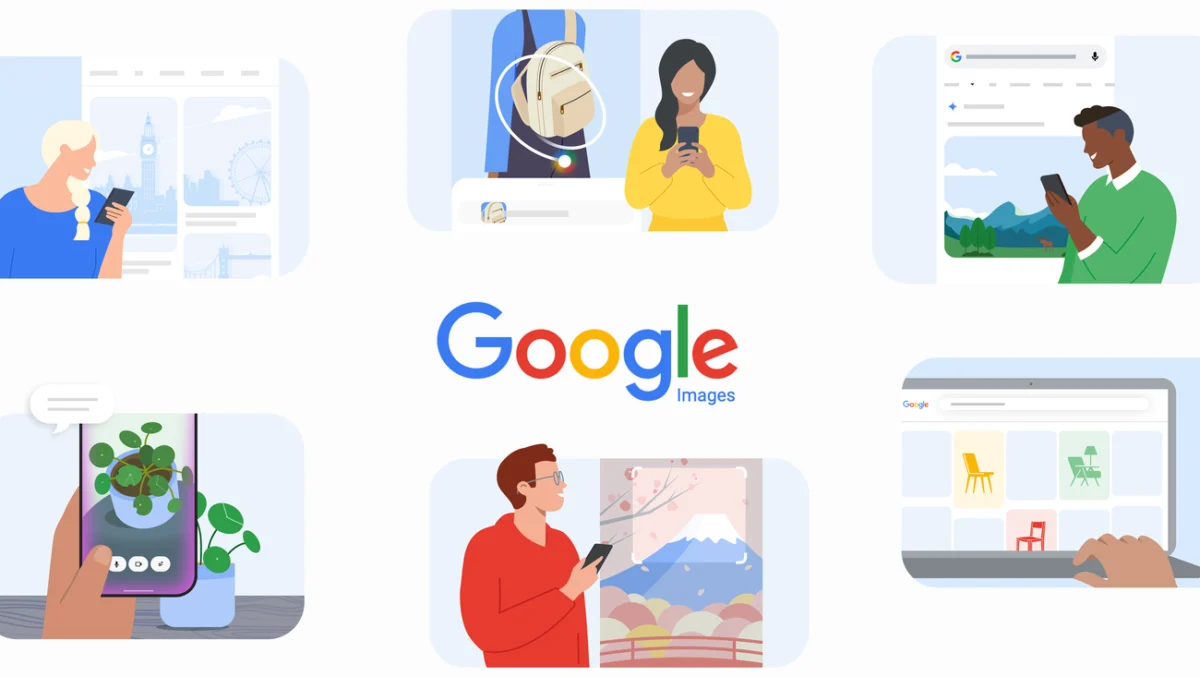
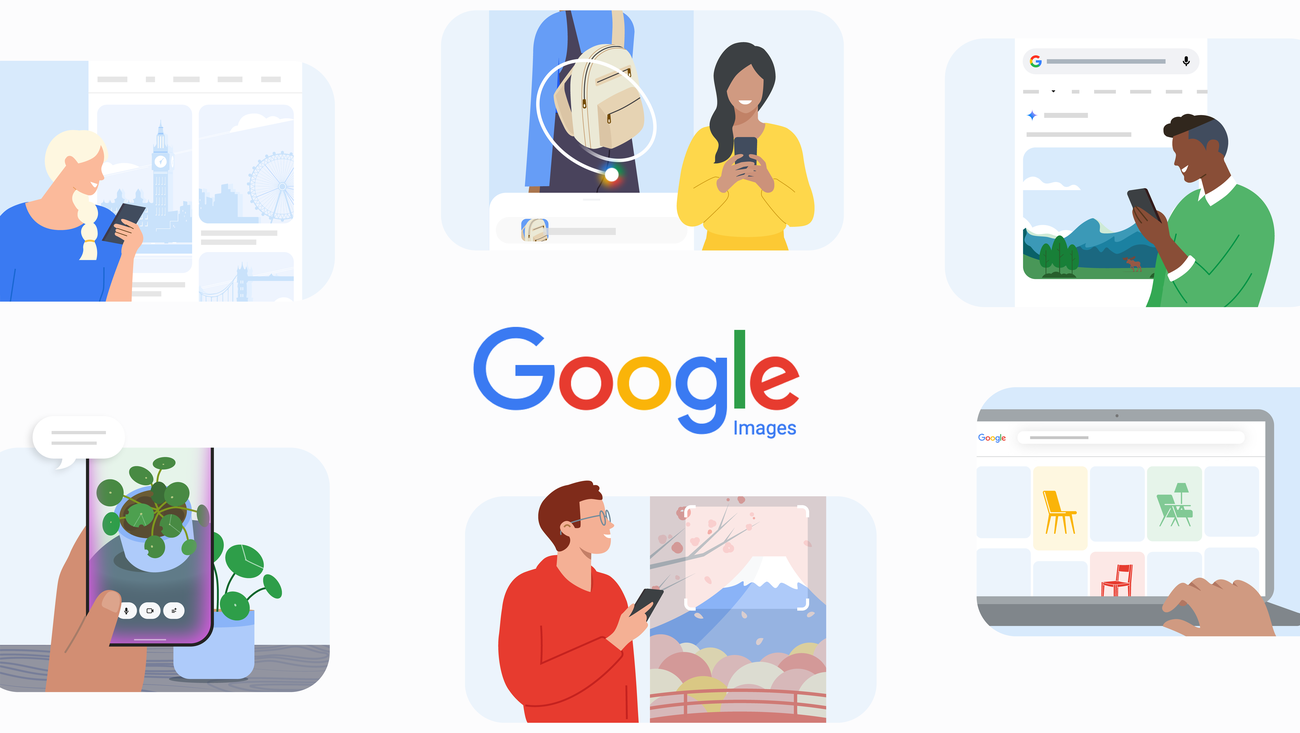
Google has officially marked the 25th anniversary of Google Images, a milestone that underscores the search giant’s transition from a text-centric index to a sophisticated, multimodal ecosystem driven by artificial intelligence. To commemorate a quarter-century of visual discovery, the company has announced a series of significant updates to its search interface, including a reimagined homepage for Google Images and the integration of generative AI directly into the visual search experience. These advancements, spearheaded by Google’s Senior Engineering Director of Search, Brad Kellett, represent a broader strategy to harmonize human imagination with machine learning, allowing users to move beyond merely finding existing images to creating entirely new ones from scratch.
A New Immersive Gateway for Visual Discovery
Central to the anniversary celebration is the introduction of a new, browseable home for Google Images. For the first time in several years, the interface is undergoing a fundamental shift toward an immersive, dynamic gallery. This new "home" is designed to act as a living canvas, featuring content from across the web that is updated in real-time. Unlike the static grids of the past, this new gallery is intelligently tailored to the individual interests of the user, leveraging Google’s deep learning algorithms to surface content that aligns with previous search behaviors and saved inspirations.
A key feature of this redesign is the enhanced integration with Google Collections. As users browse the immersive gallery and save ideas—ranging from interior design concepts to fashion trends—these selections will appear as accessible tabs above the main gallery. This architectural change is intended to facilitate "search journeys," allowing users to jump back into specific projects or interests without having to re-type queries. According to the company, this feature will roll out over the coming weeks on desktop platforms for users in the United States, specifically for those searching in English.
Bridging Imagination and Reality with Generative AI
Perhaps the most technically significant announcement is the integration of image generation directly into Search via AI Overviews. While Google has previously explored generative AI in standalone products, this update embeds the capability into the core search workflow. Utilizing the "Nano Banana" model—the latest in Google’s suite of compact, high-efficiency AI models—Search can now transform a text prompt into a high-quality, custom visual.
This feature is designed for scenarios where the "perfect" image does not yet exist on the open web. For instance, a user seeking a specific comparison of interior design elements, such as "a visual that compares a small bathroom with dark green and butter yellow walls," can now generate that specific visualization on the fly. This capability is expected to roll out in the coming weeks in English-speaking regions that currently support AI Mode, marking a significant step in the evolution of Search from a retrieval engine to a creative partner.
A Chronology of Innovation: From JLo to AI Mode
The current state of visual search is the result of twenty-five years of iterative technological breakthroughs. The history of Google Images is often cited as one of the most reactive developments in tech history, born out of a specific cultural moment that the existing search infrastructure was unable to handle.
2001: The Launch of Google Images
The genesis of Google Images dates back to the 2000 Grammy Awards. When Jennifer Lopez appeared in a green Versace silk chiffon dress, the surge in search volume was unprecedented. However, at the time, Google Search only returned a list of blue text links. Users were not looking for articles about the dress; they wanted to see it. Recognizing this gap, Google launched Google Images in July 2001, providing access to 250 million images indexed from the web.
2009–2011: Moving Beyond Text
In 2009, Google introduced "Similar Images," a feature that allowed users to navigate the visual web using images as the primary signal rather than text. This was followed in 2011 by "Search by Image," commonly known as reverse image search. By allowing users to upload a file or paste a URL into the search bar, Google enabled the identification of image sources and the discovery of visually related content, a tool that has since become essential for fact-checking and copyright verification.
2018–2022: The Mobile and Multimodal Shift
With the launch of Google Lens in 2018, search moved into the physical world. Lens utilized the smartphone camera as a search input, allowing for real-time translation, object identification, and product sourcing. In 2022, "Multisearch" further refined this by allowing users to search with text and images simultaneously. This was a critical milestone in multimodal AI, enabling queries like snapping a photo of a pattern and typing "wallpaper" to find a corresponding product.

2024–2026: The Era of Intelligent Interaction
The last three years have seen an acceleration in how users interact with visual data. "Circle to Search," launched in 2024, eliminated the need to switch apps, allowing Android users to highlight anything on their screen to initiate a search. As of late 2024, this feature is available on more than 580 million devices globally.
In 2025 and 2026, Google introduced "Search Live" and "Multi-Object Recognition." Search Live enables a video-call-like experience with AI Mode, where the user shares their camera feed and talks to the AI to troubleshoot complex tasks in real-time. Multi-Object Recognition, powered by a "visual image fan-out" technique, allows the AI to deconstruct a single image into dozens of sub-queries, identifying every item in a scene—such as every piece of clothing in an outfit—simultaneously.
Technical Analysis: The Visual Image Fan-Out
A major technical driver behind these recent advancements is the "visual image fan-out" technique. Traditional image search often relies on a single global descriptor of an image, which can miss granular details. The fan-out method, however, allows the AI to segment an image into multiple components, processing each as an individual query while maintaining the context of the whole.

This technique is what enables the "Intelligent Search Box" introduced in 2026. By tapping a plus icon, users can upload multiple images at once and ask nuanced, comparative questions. The AI processes these inputs not as separate files, but as a collective dataset, providing responses that require deep reasoning and visual synthesis. This represents a move toward "Search as an Operating System," where the interface understands the world with the same multi-layered complexity as the human eye.
Broader Impact and Industry Implications
The evolution of Google Images from a simple index to a generative AI powerhouse has profound implications for several sectors, most notably e-commerce and digital marketing. By making visual exploration "shoppable," Google is positioning itself as a direct competitor to social discovery platforms like Pinterest and Instagram. The ability for a user to describe a specific item—such as "barrel jeans that aren’t too baggy"—and receive a grid of shoppable, AI-curated results shifts the power dynamic from keyword-based advertising to intent-based visual matching.
Furthermore, the integration of the Nano Banana model into Search signals a move toward more efficient, localized AI processing. As these models become more sophisticated yet less resource-intensive, the speed of visual search is expected to increase, further lowering the friction between a user’s curiosity and the information they seek.

However, this transition also raises questions regarding the provenance of visual information. As Google integrates AI-generated images into the same interface as indexed web images, the distinction between "captured" reality and "generated" visuals becomes increasingly important. Google has indicated that these updates are built on a foundation of responsibility, though the industry at large continues to grapple with the ethics of AI-generated content in public search results.
Conclusion
As Google Images enters its second quarter-century, the focus has clearly shifted from "finding" to "understanding and creating." The journey from a single green dress to a multimodal AI that can "see" a live video feed and troubleshoot equipment in real-time reflects the rapid trajectory of computer vision. With 25 years of data and innovation as a foundation, Google is no longer just indexing the world’s images; it is providing the tools for users to reimagine the world through a digital lens. The next phase of visual search promises to be even less about the query and more about the context, as Search becomes an invisible, intelligent layer over our daily visual experiences.
