

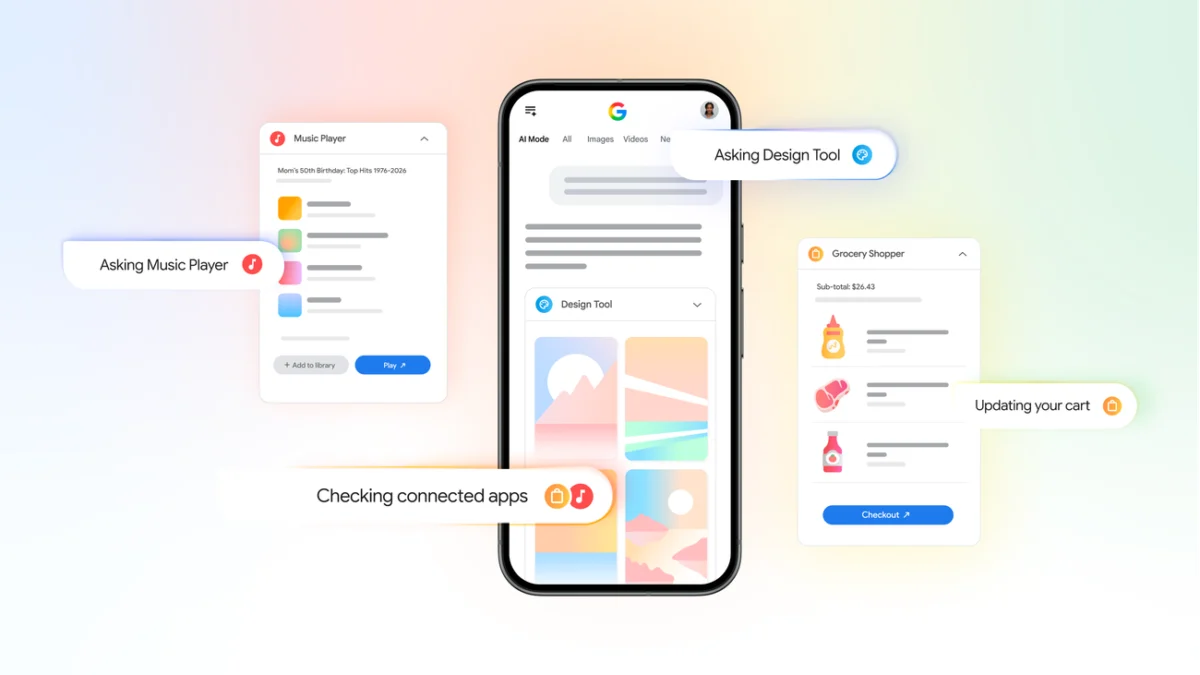
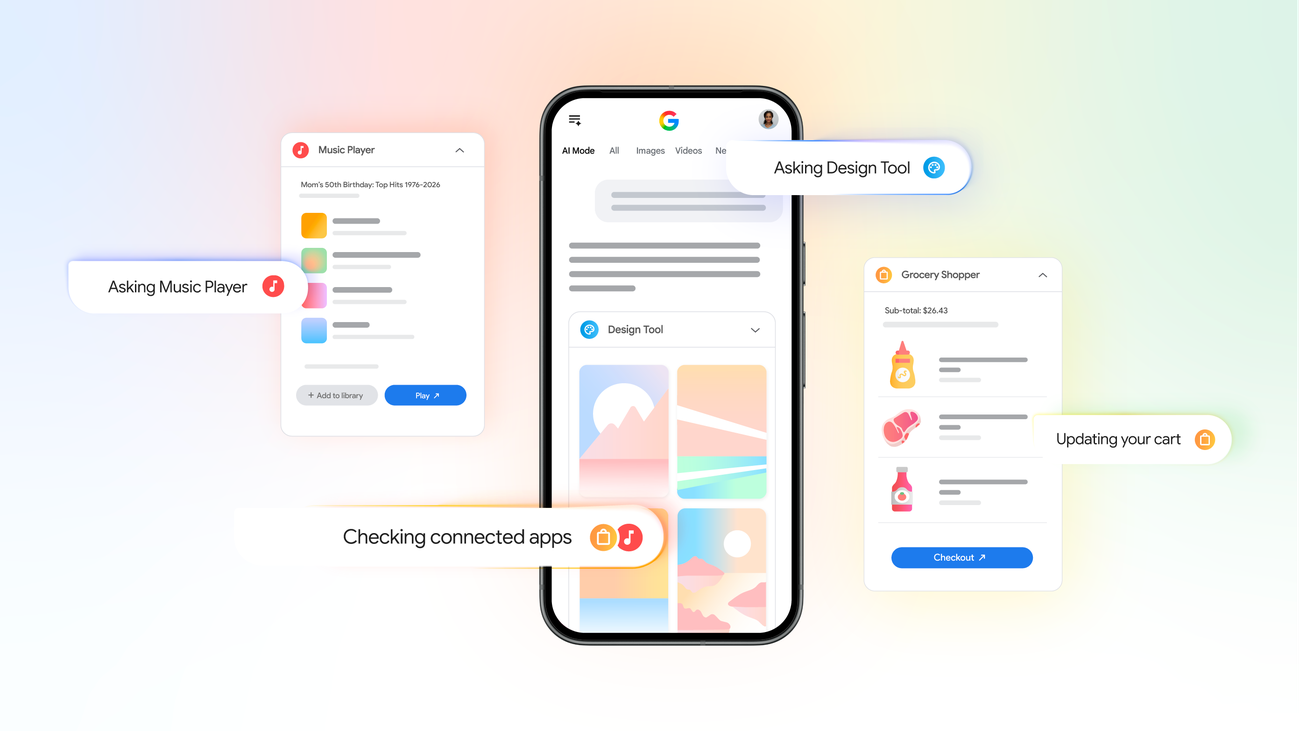
The new functionality allows for secure linking between a user’s Google account and a suite of popular external services. By integrating these tools directly into the search results page, Google aims to reduce the "app-switching" friction that often occurs when users attempt to complete complex tasks. For example, a user planning a social gathering can now generate a grocery list via AI and immediately populate an Instacart cart without leaving the Google ecosystem. Similarly, creative workflows are being streamlined through partnerships with design platforms like Canva, and entertainment discovery is being enhanced via YouTube Music.
The Evolution of Search: From Information to Execution
For over two decades, Google Search has functioned primarily as a discovery tool—a sophisticated index that points users toward relevant websites. However, the advent of generative artificial intelligence and Large Language Models (LLMs) has fundamentally altered user expectations. Modern users increasingly seek "answers" rather than "links," and more recently, they seek "solutions."
The introduction of AI Mode in Search (formerly referred to during its experimental phase as the Search Generative Experience or SGE) was the first step in this transformation. By synthesizing information from across the web into a coherent summary, Google reduced the cognitive load on the user. The latest announcement regarding connected apps takes this a step further by introducing "Personal Intelligence." This layer of the search experience uses the context of a user’s query and their connected account data to offer tailored, actionable responses.
This transition follows a clear chronological path. In late 2023, Google introduced "Extensions" for its Gemini (then Bard) chatbot, allowing it to pull data from Workspace, Maps, and YouTube. Earlier in 2024, these capabilities were expanded to include third-party services within the Gemini app. Bringing these capabilities into the core Search product—the primary entry point for billions of internet users—marks the most significant expansion of Google’s "action-oriented" AI strategy to date.
Strategic Partnerships and Use Cases
The initial rollout focuses on three distinct sectors: e-commerce, creative productivity, and digital media. Each partnership highlights a specific way in which AI can facilitate "task completion."
1. E-commerce and Logistics: Instacart
The integration with Instacart is perhaps the most practical application for daily life. When a user asks Google’s AI Mode for help planning a meal or a barbecue, the AI can now do more than suggest recipes. It can identify the necessary ingredients and, if the user has linked their Instacart account, add those items directly to a virtual shopping cart. This integration leverages Instacart’s vast database of local grocery inventory, providing real-time utility.
2. Creative Productivity: Canva
As the "creator economy" continues to grow, Google is positioning Search as a starting point for design projects. By asking AI Mode to help create a flyer, presentation, or social media post, users can view Canva templates that match their specific requirements. This bypasses the need for the user to navigate to Canva, search for a template, and then begin the design process. It effectively turns the search bar into a creative prompt.
3. Digital Entertainment: YouTube Music
The synergy between Google’s AI and its own media ecosystem is further tightened with YouTube Music. Users can request the curation of specific soundtracks—such as "a 90-minute upbeat playlist for a housewarming party"—and have that playlist instantly saved to their library. This utilizes Google’s internal recommendation algorithms to bridge the gap between a verbalized desire and a digital asset.
Technical Infrastructure and Personal Intelligence
At the heart of this update is what Google calls "Personal Intelligence." This is not a single feature but a framework that allows the AI to understand the user’s intent more deeply by accessing permissioned data from connected apps. This framework relies on a complex array of APIs (Application Programming Interfaces) and secure authentication protocols, such as OAuth, to ensure that data exchange remains private and under the user’s control.
From a technical standpoint, when a user queries AI Mode, the system determines if a connected app can fulfill a part of the request. If so, it generates a "function call"—a specific instruction that the external app’s API can understand. The response from the app is then integrated back into the AI’s conversational output. This requires a high degree of low-latency processing to ensure that the search experience remains fast and responsive.
Security and Data Privacy Considerations
In an era of heightened scrutiny regarding data privacy, Google has emphasized that these connections are secure and user-initiated. The "securely link" terminology used by Mistry and Araújo suggests that users must explicitly grant permission for Google to interact with third-party accounts. Furthermore, Google’s privacy policy dictates that information shared through these integrations must be handled in accordance with strict data protection standards.
The challenge for Google lies in balancing personalization with privacy. To provide "tailored responses," the AI requires access to user preferences and history. Google has implemented "AI Mode" settings that allow users to manage their connected apps, view what data is being shared, and opt out of the service at any time. This transparency is vital for maintaining user trust as the search engine moves deeper into the personal lives of its users.
Market Context and Competitive Landscape
Google’s move to integrate apps into Search is a direct response to a rapidly changing competitive landscape. While Google remains the dominant force in global search with a market share consistently hovering around 90%, new challengers are emerging.
AI-native search engines like Perplexity AI have gained traction by providing direct answers with cited sources, while OpenAI has recently tested "SearchGPT," a prototype that integrates real-time web information with conversational AI. Furthermore, Microsoft’s Bing has integrated Copilot (powered by GPT-4) to offer similar task-oriented features.
By bringing app integrations to the core Search product, Google is leveraging its greatest asset: its massive user base. While a user might go to a specialized AI site for a specific query, they are already on Google for hundreds of other tasks. By making those tasks more efficient through app connections, Google increases "user stickiness" and reinforces its position as the central hub of the internet.
Implications for the Digital Ecosystem
The broader implications of this shift are profound for both developers and the "open web."
For developers and businesses, this creates a new frontier for SEO and user acquisition. Traditionally, businesses optimized their websites to rank high in search results to drive traffic. In the new "AI Mode" era, businesses may need to optimize their APIs to be "AI-friendly" so that Google’s Personal Intelligence can easily interact with their services. This could lead to a shift in how digital marketing is measured, moving from "clicks" and "page views" to "API calls" and "in-search conversions."
However, there are concerns regarding the impact on the open web. If users can complete tasks like grocery shopping or playlist creation entirely within the Google Search interface, they may spend less time visiting individual websites. This "zero-click" trend has been a point of contention for publishers and web creators who rely on direct traffic for advertising revenue. Google’s counter-argument is that these integrations provide high-intent leads to partners like Instacart and Canva, potentially increasing conversion rates even if total site traffic fluctuates.
Chronology of Google’s AI Integration Journey
To understand the significance of this week’s rollout, one must look at the timeline of Google’s recent AI milestones:
- May 2023: Google announces the Search Generative Experience (SGE) at its I/O developer conference, introducing the concept of AI-generated snapshots in search.
- September 2023: Bard (now Gemini) Extensions are launched, allowing the AI to access personal data from Gmail, Drive, and Docs.
- February 2024: Google rebrands its AI efforts under the "Gemini" name and launches a dedicated mobile app with advanced multimodal capabilities.
- May 2024: Google announces "AI Overviews" for general search results in the U.S., signaling the transition of AI features from experimental to mainstream.
- Late 2024: The current rollout of "Connected Apps" in AI Mode begins, marking the transition from "AI as a researcher" to "AI as an assistant."
Future Outlook
Google has confirmed that the current rollout in the U.S. is just the beginning. The company is actively working with a range of partners to bring more apps into the Search ecosystem. Potential future integrations could include travel booking services (allowing users to book flights directly from a search query), financial tools for real-time budget tracking, or healthcare platforms for scheduling appointments.
The ultimate goal, as suggested by the involvement of senior engineering and product leadership, is to create a "truly helpful" search engine. As Mistry and Araújo noted, the focus is on "streamlining your day." By transforming the search bar into a command center for the digital world, Google is not just helping users find information; it is helping them manage their lives.
As this technology matures, the distinction between a "search engine," an "operating system," and a "personal assistant" will continue to blur. For the millions of users who rely on Google daily, the ability to connect their favorite apps to Search represents a significant step toward a more integrated and efficient digital experience. The success of this initiative will likely depend on Google’s ability to maintain a high standard of security while continuing to add partners that provide genuine value to the user’s daily routine.
