

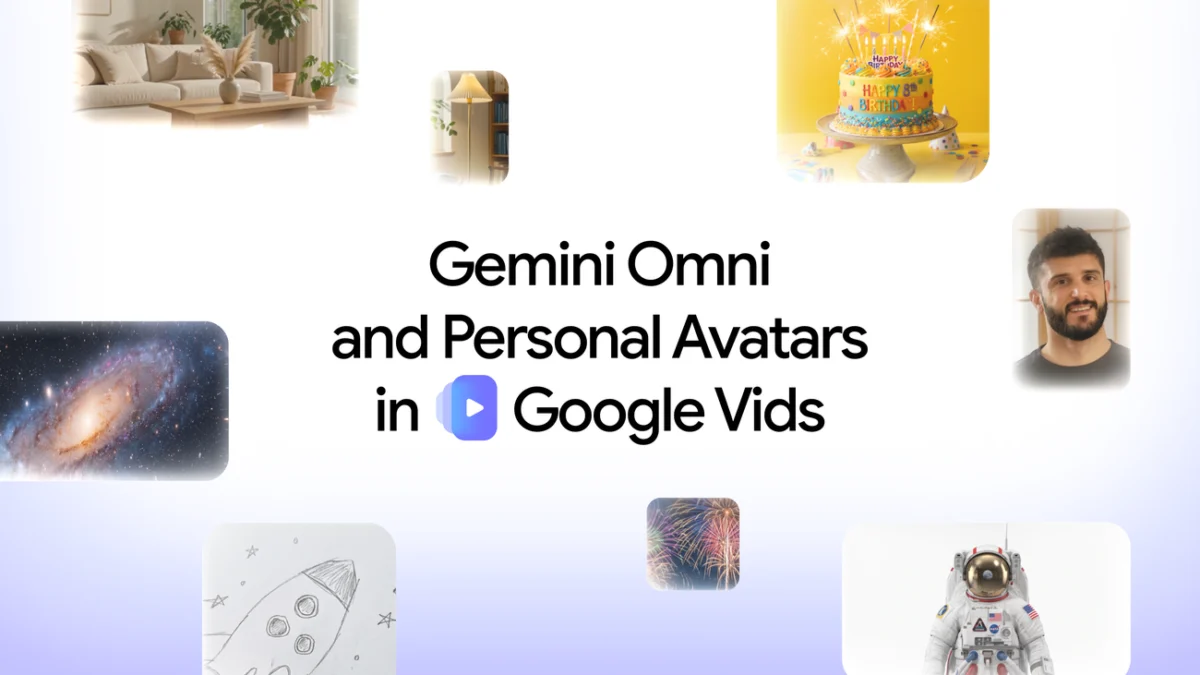
Google has officially expanded the capabilities of its AI-native video creation platform, Google Vids, by integrating the Gemini Omni model and a new personal avatar feature. These updates represent a significant leap in the company’s efforts to democratize professional-grade video production for enterprise and business users. By allowing creators to generate, edit, and star in high-quality video content using simple natural language prompts and digital likenesses, Google is positioning Vids as a central pillar of the modern productivity suite.
The rollout follows a period of rapid iteration for the platform, which was first introduced as a new category of app for Google Workspace earlier this year. With the addition of Gemini Omni, the editing process is transitioned from a manual, time-consuming task into a conversational experience. Simultaneously, the introduction of personal avatars addresses a common friction point in corporate communications: the time and technical setup required for on-camera appearances.
The Evolution of Google Vids and the Role of Gemini Omni
Google Vids was originally conceived to serve as a video-based storytelling tool for the workplace, designed to sit alongside established applications like Google Docs, Sheets, and Slides. Since its initial announcement at Google Cloud Next in April 2024, the platform has evolved through several testing phases. The latest update integrates Gemini Omni, a multimodal model capable of processing and generating content across various media formats simultaneously.
The integration of Gemini Omni allows users to generate and refine video clips through natural language instructions. Unlike traditional video editing software, which requires a deep understanding of timelines, keyframes, and layering, Gemini Omni enables a "chat-to-edit" workflow. For instance, a user can provide a rough sketch or a reference photo and describe the desired outcome. The AI then synthesizes these inputs to create a cohesive video clip that aligns with the user’s vision.
This capability extends to post-production refinements. Users can now prompt the system to perform complex tasks such as swapping backgrounds, adjusting lighting parameters, or applying specific visual effects by simply describing the change. This step-by-step editing capability ensures that creators are not forced to start from scratch when a single element of a video needs modification, a common limitation in earlier generative AI models.
Personal Avatars: The Digitization of the Corporate Spokesperson
Perhaps the most significant addition to the Google Vids toolkit is the "personal avatar" feature. This technology allows users to create a digital twin that mimics their physical appearance and vocal characteristics. To generate a personal avatar, a user uploads a high-resolution selfie and a brief audio recording of their voice. Once the system processes these assets, the avatar can deliver any scripted message provided by the user.
This feature is designed to streamline the production of personalized updates, training modules, and executive announcements. By removing the need for professional lighting, cameras, and multiple takes, Google aims to increase the frequency and quality of internal communications. The company has specified that these avatars are strictly linked to the user’s Google Account and are restricted to the account holder’s likeness to prevent unauthorized use or the creation of misleading content.
The use of digital avatars in business is not entirely new—competitors like Synthesia and HeyGen have pioneered this space—but Google’s integration of this technology directly into the Workspace ecosystem provides a level of accessibility and integration that was previously unavailable to the average corporate employee.
Technical Foundations and Transparency with SynthID
The power behind these new features stems from Google’s advanced generative models, including Veo 3.1, which was rolled out to Vids users earlier this year. Veo serves as the foundational engine for high-fidelity video generation, while Gemini Omni provides the reasoning and multimodal understanding necessary for complex editing tasks.

Recognizing the potential risks associated with AI-generated content, particularly regarding deepfakes and misinformation, Google has implemented several safety measures. Every video clip generated or edited through these new tools includes a SynthID digital watermark. Developed by Google DeepMind, SynthID is an invisible watermark embedded directly into the pixels of the video. It is designed to be resilient against common editing techniques such as cropping, resizing, or color adjustments, allowing viewers to verify the AI-generated nature of the content even if it is shared outside of the Google ecosystem.
Market Context and the Shift Toward Video-First Communication
The expansion of Google Vids comes at a time when video content is becoming the dominant form of communication across both consumer and professional sectors. According to industry data from Wyzowl’s 2024 Video Marketing Statistics report, 91% of businesses now use video as a marketing tool, and 88% of video marketers report that video is a vital part of their strategy. Furthermore, internal data from productivity platforms suggests that employees are increasingly favoring asynchronous video updates over traditional long-form emails or synchronous meetings.
Google’s strategy involves capturing this shift by lowering the barrier to entry. By automating the technical hurdles of video production, the company is targeting the "non-pro" creator—the project manager, the HR specialist, or the sales executive—who needs to produce compelling visual content without the budget or skills of a professional video editor.
The competitive landscape is also a driving factor. Microsoft has been integrating AI capabilities into its Clipchamp editor, and Adobe has recently announced the integration of the Firefly Video Model into its Creative Cloud suite. Google’s advantage lies in its deep integration with the existing Workspace data, allowing Vids to pull information directly from documents and presentations to build storyboards and scripts.
Subscription Tiers and Regional Availability
Access to Gemini Omni and the personal avatar feature is currently tiered. These updates are available to subscribers of Google AI Pro and Ultra plans, as well as Google Workspace business customers. The personal avatar feature, however, is subject to stricter rollout parameters. It is currently limited to users who are 18 years of age or older and is only available in specific geographic regions where Google has cleared the regulatory and privacy requirements for biometric-based AI generation.
This phased rollout allows Google to monitor the usage of the technology and address any unforeseen ethical or technical challenges before a broader global release. The company has emphasized that user privacy remains a priority, stating that the data used to train and generate personal avatars is handled in accordance with strict enterprise-grade security standards.
Industry Implications and Future Outlook
The introduction of these tools is likely to have a profound impact on corporate productivity. Analysis from McKinsey & Company suggests that generative AI could add the equivalent of $2.6 trillion to $4.4 trillion annually across various use cases, with content creation being a primary beneficiary. In the context of Google Vids, the productivity gain is measured in the reduction of "time-to-publish."
However, the rise of digital avatars and AI-edited video also raises questions about the future of authenticity in the workplace. As it becomes easier to synthesize a person’s presence, the value of "live" interaction may shift. Analysts suggest that while AI will handle the bulk of routine communication, human-led interaction will remain the premium standard for high-stakes negotiations and sensitive leadership moments.
Looking ahead, Google is expected to continue refining the "Omni" experience. Future updates may include even deeper multimodal capabilities, such as the ability to generate entire video sequences from complex datasets or spreadsheets. As the line between static documents and dynamic video continues to blur, Google Vids is positioned to become the primary canvas for the next generation of digital storytelling.
By combining the reasoning power of Gemini with the creative potential of Veo and the security of SynthID, Google is not just adding features to a video editor; it is redefining the workflow of the modern professional. The rollout of Gemini Omni and personal avatars marks a turning point where the ability to create high-quality video content is no longer a specialized skill, but a standard capability for every user in the Google Workspace ecosystem.
