

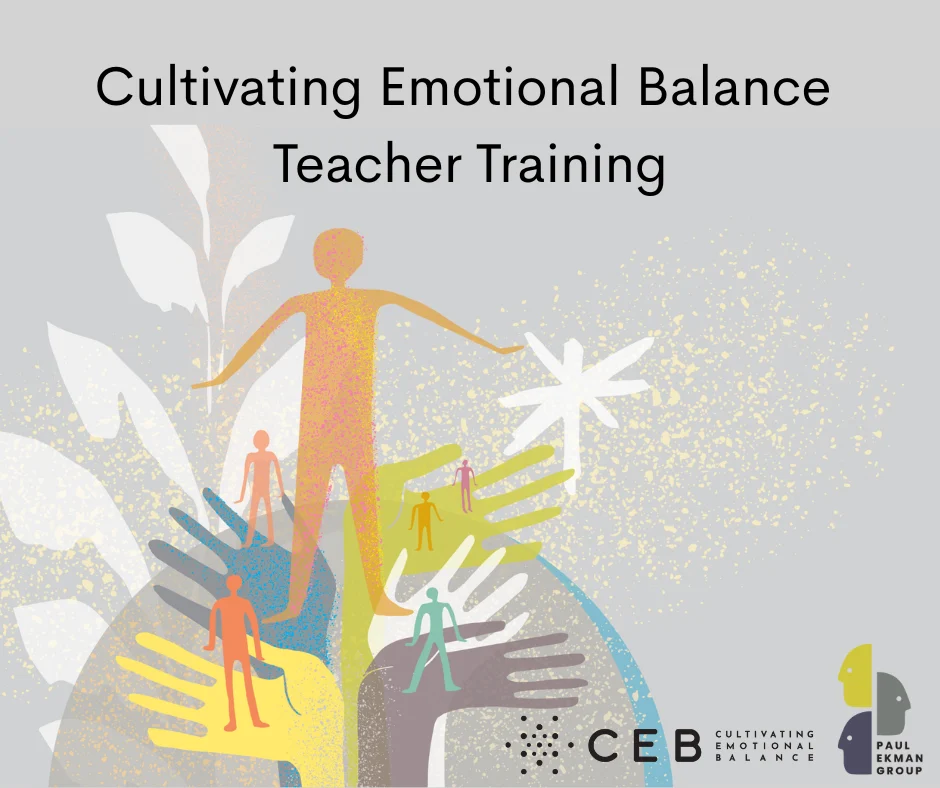
The world, increasingly characterized by pervasive stress, heightened emotional reactivity, and a growing sense of disconnection, urgently calls for the cultivation of inner emotional balance. To address this profound societal need, the Cultivating Emotional Balance (CEB) program, a unique synthesis of cutting-edge emotion science and time-tested contemplative practices, has opened applications for its 2025-2026 Teacher Training program. This comprehensive, year-long initiative aims to equip individuals with the knowledge and skills to foster clarity, empathy, and resilience, not only within themselves but also within their communities and professional spheres.
The Genesis of CEB: A Landmark Convergence of Science and Contemplation
The origins of the Cultivating Emotional Balance program can be traced back to a pivotal event in the year 2000. This landmark occasion was a historic meeting convened by His Holiness the 14th Dalai Lama, bringing together leading Western scientists and esteemed Buddhist scholars. The objective was to explore the intersections of scientific understanding of the mind and contemplative traditions, with a particular focus on the nature and management of emotions.
Among the distinguished participants was Dr. Paul Ekman, a pioneering psychologist whose foundational research on universal facial expressions of emotion, the physiological underpinnings of emotional states, and the identification of emotional triggers provided crucial scientific insights. Working collaboratively with scholars such as Dr. Alan Wallace, a renowned Buddhist scholar and translator, and other experts in psychology, neuroscience, and contemplative practice, a shared vision began to crystallize. This vision was to develop a practical, accessible training program that could empower individuals to reduce emotional suffering by integrating rigorous scientific knowledge with experiential contemplative practices.
"We hoped to develop a training that could foster greater emotional insight and compassion for anyone, not just scientists or monastics," Dr. Ekman stated in a retrospective reflection on the program’s inception. This aspiration underscored the program’s commitment to secular accessibility, aiming to translate complex scientific findings and profound contemplative wisdom into universally applicable tools for emotional well-being. The program was designed to bridge the perceived gap between empirical research and introspective wisdom, offering a holistic approach to understanding and navigating the human emotional landscape.
Understanding Cultivating Emotional Balance (CEB)
Cultivating Emotional Balance is a secular, evidence-based program designed to guide participants through a deep exploration of their emotional lives. It invites individuals to:
- Investigate the nature of emotions: Participants learn to identify, understand, and differentiate various emotional states, recognizing their triggers, physiological manifestations, and behavioral consequences. This involves dissecting the complex interplay between thoughts, feelings, and bodily sensations.
- Cultivate mindful awareness of emotional patterns: The program emphasizes developing a non-judgmental awareness of recurring emotional responses and habitual patterns. This practice of metacognition—thinking about one’s thinking and feeling—is crucial for recognizing when automatic emotional reactions take hold.
- Develop skillful regulation of emotional reactivity: CEB provides practical techniques, drawing from both mindfulness and cognitive reappraisal strategies, to help individuals respond to challenging emotions with greater equanimity and intentionality, rather than being overwhelmed by them. This includes learning to pause before reacting and to choose a more constructive response.
- Foster compassion for oneself and others: A central tenet of CEB is the cultivation of empathy and kindness. By understanding their own emotional struggles, participants are better equipped to extend compassion to others, recognizing the shared human experience of emotional challenges.
- Enhance emotional resilience: Through consistent practice, individuals develop a greater capacity to bounce back from adversity, adapt to changing circumstances, and maintain psychological well-being in the face of life’s inevitable difficulties.
By harmoniously blending theoretical scientific frameworks with practical methods of self-inquiry and meditation, CEB offers a distinctive and highly effective pathway for individuals seeking to work with their emotions in a more profound and transformative way. The program’s emphasis on both understanding the “why” and practicing the “how” of emotional regulation distinguishes it in the field of mental and emotional well-being.
The 2025-2026 CEB Teacher Training Program: A Path to Becoming an Educator
The Cultivating Emotional Balance Teacher Training (CEBTT) program is now actively accepting applications for its 2025-2026 cohort. This rigorous, year-long professional development program is meticulously structured to empower participants to not only deepen their personal practice of CEB but also to gain the essential skills and confidence to teach the program effectively to others.
The curriculum is designed to provide an immersive experience, blending theoretical knowledge with extensive practical application. Key components of the 2025-2026 CEBTT program include:
- In-depth exploration of CEB curriculum and pedagogy: Participants will receive comprehensive training on the core principles, techniques, and theoretical underpinnings of the CEB program, along with guidance on effective teaching methodologies. This includes understanding how to adapt the material for diverse audiences.
- Intensified personal practice and contemplative development: The program requires significant dedication to personal meditation practice and self-reflection, fostering a deep personal embodiment of the CEB principles. This ensures that teachers are authentic practitioners.
- Supervised teaching practice and feedback: Trainees will engage in supervised teaching opportunities, receiving constructive feedback from experienced CEB trainers. This practical component is vital for honing teaching skills and addressing individual learning needs.
- Community building and peer support: The program fosters a supportive learning environment where participants can connect with fellow trainees, share experiences, and build a network of like-minded professionals. This collaborative aspect is crucial for ongoing development and mutual encouragement.
- Ethical considerations and professional development: Participants will explore the ethical responsibilities of teaching CEB, including maintaining professional boundaries and ensuring the well-being of students. This aspect is crucial for responsible dissemination of the program.
This comprehensive educational modality enables participants to significantly deepen their own practice while concurrently acquiring the specialized skills necessary to share the transformative benefits of CEB. Graduates are prepared to disseminate the program across a wide spectrum of settings, including clinical environments for mental health professionals, educational institutions for teachers and counselors, organizational settings for leadership and employee development, and broader community outreach initiatives focused on well-being.
The Enduring Influence of Dr. Paul Ekman’s Research on CEB
It is crucial to clarify that the Cultivating Emotional Balance program operates independently from the facial expression recognition or lie detection training often associated with Dr. Paul Ekman’s work. While distinct, CEB is deeply indebted to and directly informed by the core emotional science developed by Dr. Ekman over several decades. His groundbreaking research has provided a robust scientific foundation for understanding the fundamental aspects of human emotion, which CEB then translates into practical contemplative tools.
Key contributions from Dr. Ekman’s work that underpin the CEB program include:
- The universality of basic emotions: Dr. Ekman’s research identified a set of universal basic emotions (such as happiness, sadness, anger, fear, surprise, and disgust) that are expressed and recognized across different cultures through distinct facial expressions. This foundational understanding helps participants identify and label their emotional experiences.
- The micro-expression research: His work on micro-expressions—fleeting, involuntary facial expressions that reveal a person’s true emotions—contributes to a nuanced understanding of emotional leakage and the subtle cues of emotional states.
- The physiology of emotion: Understanding how emotions manifest physically in the body (e.g., changes in heart rate, breathing, muscle tension) is a critical component of CEB’s emphasis on embodied awareness.
- Emotional triggers and appraisal: CEB integrates Dr. Ekman’s insights into how specific events or thoughts (appraisals) trigger particular emotional responses, allowing participants to identify and potentially modify these triggers.
- The concept of emotion families: Recognizing that emotions are not isolated events but exist within broader "families" of related feelings, CEB helps participants appreciate the nuances and variations within each basic emotion.
CEB translates this rich scientific understanding into a grounded framework for practical application. It guides participants through contemplative introspection to observe these emotional processes within themselves, mapping their unique emotional landscapes. Furthermore, it equips them with strategies for skillful engagement with everyday emotional experiences, transforming theoretical knowledge into lived wisdom.
"Understanding emotion is not enough," Dr. Ekman emphasized. "We must cultivate awareness, compassion, and the ability to respond constructively. That’s what CEB is designed to do." This statement encapsulates the program’s pragmatic and action-oriented approach, moving beyond mere intellectual comprehension to foster tangible changes in emotional behavior and well-being.
Exclusive Discount for PaulEkman.com Applicants
PaulEkman.com is demonstrating its commitment to fostering the next generation of CEB teachers by offering a significant financial incentive. New applicants who specifically reference PaulEkman.com in their applications for the 2025-2026 CEB Teacher Training Program will be eligible for an exclusive $500 discount on their tuition fees. This initiative aims to encourage individuals inspired by Dr. Ekman’s work to pursue advanced training in emotional balance and contribute to its wider dissemination.
For those with a profound passion for emotional learning, the practice of mindfulness, and a desire to share tools that demonstrably enhance lives, the CEB Teacher Training Program represents a compelling next step. With its deep-seated roots in both rigorous scientific inquiry and profound contemplative practice, this program transcends mere certification. It offers a transformative path toward cultivating greater personal well-being and contributing to a more emotionally balanced and compassionate collective future.
Detailed information regarding the CEBTT 2025-2026 program outline and application process can be found at: https://cultivating-emotional-balance.org/cebtt-2025-outline/.
The implications of widespread emotional literacy and regulation are far-reaching. In an era marked by increasing societal polarization and mental health challenges, programs like CEB offer a scalable solution. By training individuals to become teachers, the program amplifies its impact exponentially. Each trained teacher can, in turn, reach numerous individuals, fostering a ripple effect of enhanced emotional intelligence, improved interpersonal relationships, and a more resilient society. The integration of scientific evidence with ancient wisdom traditions continues to prove its efficacy in addressing some of the most pressing human concerns of our time.
