

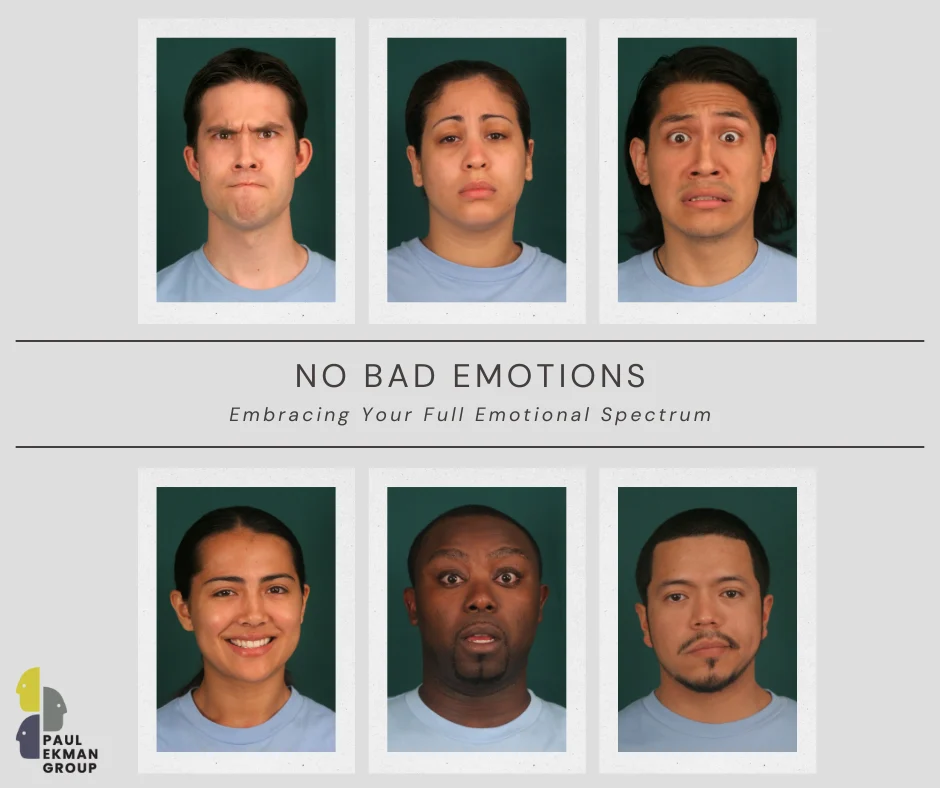
The human experience is a complex tapestry woven with a vast array of emotions, yet societal norms and individual inclinations often lead us to categorize these feelings into a simplistic dichotomy of "positive" and "negative." This ingrained tendency, while understandable in our pursuit of comfort and avoidance of distress, fundamentally misinterprets the intrinsic value and evolutionary purpose of every emotion we encounter. The assertion that "there are no bad emotions" is not a platitude, but a foundational principle for developing robust emotional intelligence and a more resilient, fulfilling life. Each emotion, regardless of its perceived pleasantness or unpleasantness, serves as a crucial signal, offering invaluable information about our internal states and external environments.
The Evolutionary Imperative of All Emotions
From a biological and psychological standpoint, emotions are not random occurrences but sophisticated survival mechanisms that have been honed over millennia. They are deeply embedded in our neurobiology, acting as rapid communication systems that alert us to significant shifts, opportunities, and threats. Dr. Paul Ekman, a renowned psychologist and pioneer in the study of emotions, has consistently emphasized that emotions are fundamentally adaptive. They evolved to help us navigate the world, ensuring our survival and facilitating our growth.
Consider the emotion of frustration. Far from being a purely negative state to be suppressed, frustration can be a powerful catalyst for personal and societal progress. It often arises when our goals are obstructed or when our deeply held values are challenged. This discomfort signals that a current approach is ineffective or that a change is necessary. By acknowledging and investigating the source of frustration, we can identify the specific obstacles, re-evaluate our strategies, and discover innovative solutions. For instance, a team facing repeated project delays might experience frustration, prompting a re-examination of their workflow, resource allocation, or communication protocols, ultimately leading to greater efficiency. Historical accounts are replete with examples of innovation spurred by collective frustration with existing limitations, from the development of labor-saving devices to the impetus for social reform movements.
Similarly, the feeling of loneliness, while often profoundly uncomfortable, serves a vital evolutionary purpose: it highlights our innate need for social connection. In ancestral environments, isolation was a significant threat to survival. Loneliness acts as an internal alarm, urging us to seek out and strengthen our social bonds. It can motivate us to reach out to friends and family, join communities, or engage in activities that foster a sense of belonging. In modern society, increased awareness of the detrimental health effects of chronic loneliness—linked to higher risks of cardiovascular disease, depression, and cognitive decline, as evidenced by numerous public health studies—underscores the critical importance of heeding this signal. Rather than viewing loneliness as a personal failing, recognizing it as a signal for connection can lead to proactive steps toward building and maintaining a supportive social network.
Unlocking Insights: The Learning Potential of Difficult Emotions
The pervasive tendency to label emotions as "good" or "bad" often leads to avoidance, particularly of those feelings we deem "negative." This avoidance, however, can significantly curtail our capacity for emotional self-awareness and hinder the development of resilience. When we shy away from emotions like anger, sadness, or fear, we miss out on the rich information they contain. This learned avoidance can create a feedback loop, where suppressed emotions may resurface in less constructive ways, manifesting as irritability, anxiety, or physical symptoms.
Conversely, when we approach our emotional landscape with curiosity and a willingness to investigate, we unlock profound insights. This process of "emotional investigation" involves paying mindful attention to our emotional triggers, the bodily sensations associated with specific feelings, and our typical patterns of response. By understanding what we feel, why we feel it, and how we typically react, we gain the clarity needed to respond more wisely and effectively. For example, understanding the triggers for anger—perhaps feeling disrespected or unfairly treated—allows us to develop strategies for assertiveness rather than aggression. Similarly, recognizing the early signs of sadness can prompt us to engage in self-care activities or seek support before the emotion becomes overwhelming.
While it is natural and desirable to cultivate experiences of contentment, gratitude, joy, and awe, these "positive" emotions gain their depth and meaning through contrast. The richness of a full emotional life is not about experiencing only pleasant sensations, but about appreciating the spectrum. The profound relief that follows sorrow, the exhilaration of overcoming fear, or the deep satisfaction of resolving conflict would lose their resonance if we never experienced their counterparts. This interplay of emotions allows for a more nuanced understanding of ourselves and others, fostering empathy and a deeper appreciation for the human condition. Scientific research in positive psychology, for instance, highlights that while positive emotions contribute to well-being, a balanced emotional life that acknowledges and processes all emotions is key to long-term flourishing.
Developing Emotional Regulation: A Skill for Constructive Response
The ultimate goal in navigating our emotional lives is not to eliminate unpleasant feelings but to develop the capacity to regulate them constructively. This involves learning to acknowledge and honor the presence of an emotion without allowing it to dictate our actions. It is the difference between being swept away by a feeling and consciously choosing how to respond to it. This skill set is a cornerstone of emotional intelligence and is cultivated through mindful attention and consistent practice.
Emotional regulation is not about repression or rejection. Instead, it is about engaging with emotions in a way that is both respectful of their message and aligned with our values and long-term well-being. This might involve techniques such as deep breathing exercises during moments of anxiety, journaling to process feelings of sadness, or practicing assertive communication to address sources of anger. These are not methods to "get rid of" emotions, but tools to manage their intensity and impact, allowing us to respond in ways that are productive rather than purely reactive.
A significant body of research in clinical psychology and neuroscience underscores the benefits of effective emotional regulation. Studies have shown that individuals with strong emotion regulation skills are better equipped to handle stress, maintain healthy relationships, and achieve their goals. Conversely, difficulties in emotional regulation are often associated with mental health challenges such as anxiety disorders, depression, and personality disorders. The development of these skills is therefore not merely a matter of personal preference but a crucial component of psychological health.
Emotional Awareness: The Foundation of a Healthy Inner Life
At its core, emotional awareness is about cultivating a comprehensive understanding and acceptance of our entire emotional spectrum. It is not a pursuit of perpetual happiness, which is an unrealistic and ultimately unsustainable goal. Instead, it is about embracing the full range of human feeling—the joys and the sorrows, the triumphs and the setbacks—with an open and accepting heart. This acceptance allows us to engage with our emotions authentically, learning from their messages and integrating them into a richer, more resilient sense of self.
The journey of developing emotional awareness is ongoing. It requires consistent self-reflection, a willingness to confront uncomfortable feelings, and a commitment to learning from every emotional experience. By reframing our understanding of emotions—moving away from a judgmental dichotomy and towards an appreciation of their informational and adaptive value—we empower ourselves to live more fully, respond more wisely, and build a more robust and meaningful life.
In conclusion, the notion that "there are no bad emotions" serves as a guiding principle for cultivating profound emotional intelligence. Every feeling, from the most exhilarating joy to the most challenging distress, is a valuable signal. When we learn to listen to, understand, and integrate these signals, we unlock the potential for personal growth, enhanced resilience, and a more authentic and fulfilling existence. This paradigm shift in our understanding of emotions is not merely an academic concept but a practical pathway toward a healthier, more integrated human experience.
