

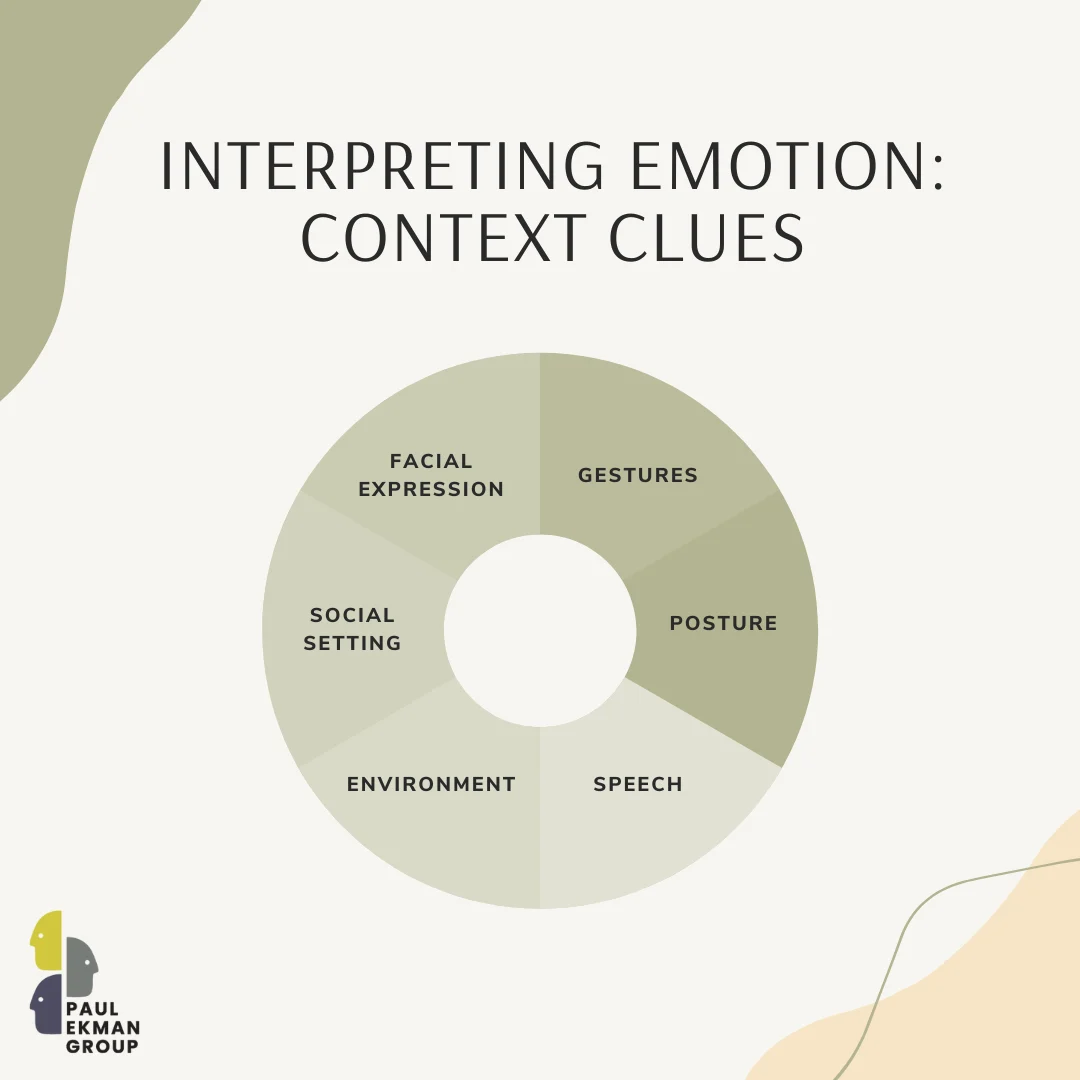
The nuanced tapestry of human communication is intricately woven with the silent language of facial expressions. While often considered a primary conduit for emotional understanding, the effectiveness and accuracy of interpreting these expressions are profoundly influenced by their surrounding context. Research consistently demonstrates that isolated facial cues, stripped of their social and situational anchors, convey a diminished capacity for conveying precise emotional information, a phenomenon with significant implications for interpersonal dynamics, trust, and even the detection of deception.
The Contextual Imperative in Emotional Interpretation
The human face is a remarkably expressive canvas, capable of broadcasting a wide spectrum of emotions. However, when these expressions are presented in isolation, divorced from the rich contextual information that typically accompanies them, their interpretive power wanes. This contextual richness includes not only vocalizations and body language but also environmental details, the observer’s prior relationship with the individual, and any shared history or future intentions. Without these crucial elements, the observer’s ability to accurately gauge the underlying emotional state or intent is significantly hampered.
Consider the everyday experience of encountering someone on the street. Even a fleeting glance at a stranger’s face provides a wealth of contextual data. Their attire, their gait, the time of day, and the general demographics of the location all contribute to an implicit understanding of the situation and, by extension, a more informed interpretation of any observed facial expression. To present a facial expression in a vacuum, devoid of these familiar environmental and relational cues, places the observer in an unusual and disorienting position. It removes the very signals that humans have evolved to rely upon for deciphering intent, assessing authenticity, and navigating social interactions.
The Intrinsic, Yet Imperfect, Language of the Face
Despite the critical role of context, it is important to acknowledge that facial expressions do possess an inherent, albeit imperfect, capacity to convey emotional information independently. These expressions, even when viewed in isolation, offer a window into certain emotional domains. However, the accuracy of the information conveyed is a separate and complex issue. Pioneering research, including that conducted by Dr. Paul Ekman, has illuminated the human capacity to deliberately manipulate facial expressions, effectively masking true emotions or feigning others. This capability underscores the challenge in relying solely on outward displays for definitive emotional assessment.
A significant area of research has focused on the phenomenon of deception. Studies have indicated that a considerable proportion of individuals can successfully "lie with their facial expressions." This means that the emotion displayed on the face may not align with the individual’s genuine internal state. However, this does not render facial analysis entirely futile. The key lies in the ability to observe with meticulous attention and, crucially, to be trained in the recognition of microexpressions.
Microexpressions: The Fleeting Windows to True Emotion
Microexpressions are brief, involuntary facial expressions that occur when a person attempts to conceal or suppress a genuine emotion. These expressions typically last for a fraction of a second, making them incredibly difficult to detect without specialized training. Unlike deliberate or "macro" facial expressions, microexpressions are thought to be largely uncontrollable and thus serve as potent indicators of hidden feelings or attempts at deception.
The scientific basis for microexpressions stems from the understanding that different emotional states activate distinct patterns of facial musculature. When an individual attempts to mask an emotion, their brain may still trigger the muscles associated with that emotion, even if only momentarily. These fleeting displays, therefore, can betray an underlying emotional truth that the individual is trying to conceal. Training in microexpression recognition, as developed and taught by experts like Dr. Ekman, empowers individuals to identify these subtle cues, thereby enhancing their ability to discern genuine emotions from feigned ones.
The Broader Implications of Facial Expression Interpretation
The ability to accurately interpret facial expressions, particularly when armed with an understanding of contextual influences and the nuances of microexpressions, has far-reaching implications across various spheres of human interaction.
In Interpersonal Relationships and Communication
In personal relationships, a heightened awareness of facial cues can foster deeper empathy and understanding. Being able to recognize subtle shifts in expression can help individuals navigate disagreements more effectively, offer support during times of distress, and build stronger bonds of trust. When individuals feel understood and validated, their willingness to communicate openly and honestly increases.
In Professional Settings
The professional world also stands to benefit significantly from enhanced facial expression interpretation skills. In fields such as sales, negotiation, and customer service, understanding a client’s or customer’s emotional state can lead to more successful outcomes. For law enforcement and security personnel, the ability to detect deception through microexpressions can be a vital tool in investigations and threat assessment. In human resources, recognizing subtle expressions of stress or discomfort in employees can inform strategies for workplace well-being and conflict resolution.
In Therapeutic and Clinical Applications
For mental health professionals, the interpretation of facial expressions is a cornerstone of diagnosis and treatment. Subtle changes in a patient’s facial affect can provide crucial diagnostic information and help therapists gauge the effectiveness of interventions. Understanding how emotions are expressed facially can also aid in teaching patients to better recognize and manage their own emotional states.
The Challenge of Cultural and Individual Variation
It is crucial to note that while certain basic facial expressions of emotion are considered universal (e.g., happiness, sadness, anger, fear, surprise, disgust), there can be cultural and individual variations in their display and interpretation. Cultural "display rules" dictate how emotions are expressed in different social contexts, and individual differences in personality and upbringing can also influence expressive styles. Therefore, a comprehensive understanding requires not only recognizing universal patterns but also appreciating these contextual and individual divergences.
Advancements in Understanding and Training
The scientific community continues to advance our understanding of facial expressions through various research methodologies. Techniques such as facial electromyography (fEMG) allow for the precise measurement of subtle muscle movements associated with emotional expressions. Neuroimaging studies are exploring the brain mechanisms underlying emotional processing and expression.
Furthermore, the development of specialized training programs, often rooted in the research of pioneers like Dr. Ekman, has made the skills of microexpression recognition and emotional interpretation more accessible. These programs typically involve:
- Visual Training: Exposure to a wide array of facial expressions, often presented in controlled environments.
- Contextual Analysis: Learning to integrate facial cues with other forms of communication and situational information.
- Deception Detection Modules: Specific training focused on identifying inconsistencies between expressed emotions and other behavioral indicators.
- Practice and Feedback: Utilizing interactive exercises and real-world scenarios to hone observational skills.
The Future of Facial Expression Research
As technology continues to evolve, so too will the methods and applications of facial expression research. The integration of artificial intelligence and machine learning is enabling the development of sophisticated systems capable of analyzing facial expressions with increasing accuracy. While these technological advancements hold immense promise, it is crucial to maintain a human-centered approach, recognizing that the deepest understanding of human emotion will likely always require a blend of scientific insight, contextual awareness, and empathetic human connection. The ongoing exploration of facial expressions promises to deepen our comprehension of ourselves and the intricate web of human interaction.
