

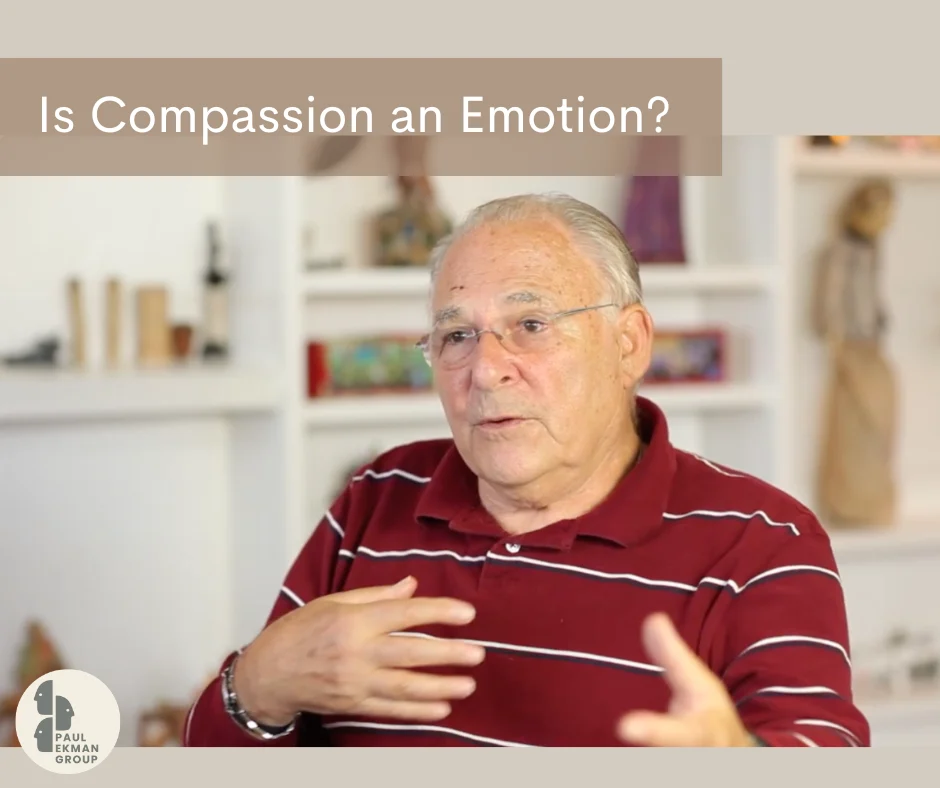
While the act of compassion often elicits a sense of well-being, a deeper examination reveals that compassion is a distinct human capacity, separate from the broader spectrum of universal emotions. Understanding this fundamental difference is crucial for appreciating its profound significance and recognizing that cultivating compassion is not only possible but an essential endeavor for individuals and societies alike. Unlike transient emotional states, which can be triggered by a myriad of stimuli and serve diverse psychological functions, compassion possesses a singular and focused objective: the recognition of suffering and the innate drive to alleviate it. This inherent focus on ameliorating distress distinguishes compassion as a uniquely constructive force, devoid of any potential for harm and solely oriented towards positive intervention.
The Focused Nature of Compassion: A Drive to Relieve Suffering
At its core, compassion is defined by its direct engagement with suffering. While emotions such as joy, anger, fear, or sadness can arise from a wide range of experiences and motivations, compassion is invariably ignited by the presence or perception of pain, hardship, or distress. This psychological definition underscores a deliberate orientation, a mental and emotional posture that actively seeks to diminish or eradicate suffering. Emotions, in their inherent variability, can be neutral, constructive, or even destructive. Compassion, by its very definition, operates exclusively within the realm of the constructive. Its intention is never to inflict pain or contribute to hardship; rather, it is fundamentally aimed at providing relief and fostering well-being. This inherent purpose makes compassion a powerful catalyst for positive change, both on an individual and collective level. The psychological literature, including extensive research by figures like Paul Ekman, has consistently highlighted this distinction, emphasizing that while emotions are often reactive and varied, compassion is a proactive and directed response to the suffering of others.
The Spectrum of Compassion: From Biological Imperative to Conscious Choice
The human capacity for compassion manifests in a spectrum of forms, each rooted in different aspects of our biology, psychology, and social development. These can be broadly categorized into three distinct, yet interconnected, forms: familial compassion, stranger compassion, and sentient compassion.
Familial Compassion: The Evolutionary Imperative for Kin Protection
The most primal and perhaps most universally recognized form of compassion is familial compassion. This refers to the profound concern and protective instinct experienced towards one’s children and close biological relatives. This type of compassion is not a learned behavior; it is an ingrained, involuntary biological drive deeply embedded within our species’ evolutionary heritage. The immediate, unthinking reaction of a parent to shield a child from imminent danger, such as rushing into a busy street to prevent a car accident, exemplifies this instinctual response. In such moments, deliberation is absent; the action is automatic, a visceral response driven by an imperative to protect offspring. When questioned about such a profound act of self-sacrifice, the only honest explanation often boils down to an undeniable, "I had to."
The evolutionary underpinnings of familial compassion are evident across numerous species, particularly in those with extended periods of infant dependency. Human beings, with one of the longest childhood dependency phases on Earth, rely on this powerful biological drive to ensure the survival and well-being of their young. This prolonged period of vulnerability necessitates an equally robust innate mechanism for protection. Furthermore, a significant portion of parental compassion is not merely reactive, addressing suffering already present, but proactively preventive. For instance, a parent insisting on a child wearing a helmet while cycling is not responding to current pain but rather employing cognitive foresight to avert potential future suffering. This anticipatory aspect of familial compassion is a critical component of successful parenting, ensuring safety and development even in the absence of immediate threat. Research in evolutionary psychology consistently points to the survival advantage conferred by such strong kin-selection mechanisms.
Stranger Compassion: The Cultivated Empathy for the Unconnected
In contrast to the automatic nature of familial compassion, compassion extended to strangers is a deliberate and conscious choice. This form of compassion is not hardwired into our biology in the same involuntary manner. It arises from a conscious decision to engage with the suffering of individuals with whom we have no direct biological or social ties. Examples abound: donating to disaster relief funds for distant communities, volunteering time at refugee camps for individuals displaced by conflict, or offering assistance to a person encountered only fleetingly. These actions are not dictated by instinct; they represent a conscious choice to act, a choice that could easily have been forgone.
Stranger compassion, unlike familial compassion, is not universally practiced. While societies may exhibit varying levels of charitable giving and volunteerism, the extent to which individuals actively engage in helping strangers is not uniform. However, the potential for its widespread adoption remains significant. Were stranger compassion to become a more pervasive norm, the global landscape of human interaction and support would undoubtedly be transformed. This distinction is a key reason why compassion cannot be equated solely with emotion. While emotions are a universal component of the human experience, stranger compassion is something that individuals and societies actively choose to cultivate and nurture. The growth of non-governmental organizations (NGOs) and international aid efforts over the past century can be seen as societal-level manifestations of an increasing capacity for stranger compassion, driven by global communication and a growing awareness of interconnectedness.
Sentient Compassion: The Expansive Concern for All Feeling Beings
The broadest and perhaps most aspirational form of compassion is sentient compassion. This represents a deep concern for the suffering of all sentient beings – all creatures capable of experiencing feelings and sensations. This profound ethical stance is a central tenet in many Buddhist traditions, where it is cultivated through rigorous practice and meditation. Charles Darwin, a titan of scientific thought, alluded to this expansive form of concern, referring to it as humanity’s highest virtue.
Sentient compassion transcends species boundaries, recognizing the inherent value and capacity for suffering in all beings. It does not prioritize one species over another but extends its reach equally to any entity capable of experiencing pain or distress. While naturally occurring sentient compassion at this profound level is rare, history and contemporary accounts offer examples of individuals who embody this all-encompassing empathy. The ethical frameworks that advocate for animal welfare and environmental protection are often rooted in this principle of sentient compassion. The challenge lies in bridging the gap between this ideal and widespread practice, a journey that requires significant personal growth and societal evolution.
The Capacity for Expanded Compassion
Human beings are universally equipped with the capacity to experience fundamental emotions such as fear, anger, joy, and sadness. This shared emotional foundation inherently enables us to empathize with one another – to understand and share the feelings of others. However, this inherent capability does not automatically translate into consistent or widespread compassionate action. For many, empathy, and by extension compassion, is often narrowly confined to those who share similar characteristics, reside in close proximity, espouse congruent values, or belong to one’s immediate social circle. The significant moral and ethical imperative of our time lies in the deliberate expansion of this circle of concern, extending empathy and compassion to encompass all individuals, regardless of their background or affiliation.
This expansion, however, is not without its complexities. The modern era, characterized by unprecedented global connectivity and instantaneous information flow, exposes us to a volume of suffering that far exceeds anything encountered in our ancestral environments. A brief perusal of news media can inundate us with images and narratives of pain and hardship from across the globe, presenting a daunting challenge to our capacity to respond effectively without succumbing to overwhelm or emotional burnout. The psychological phenomenon of "compassion fatigue" is a recognized consequence of this constant exposure to suffering, highlighting the need for strategies that foster resilience and sustainable engagement.
The Significance of Differentiating Compassion from Emotion
Understanding compassion as a distinct capacity, separate from the ebb and flow of everyday emotions, holds profound implications. It reveals that while familial compassion may operate on an instinctual, automatic level, compassion for strangers and sentient beings are not predetermined outcomes. Instead, they are capacities that can be intentionally developed, honed through dedicated training, and strengthened through consistent practice. This understanding empowers individuals and communities to actively cultivate these essential qualities.
In an increasingly interconnected world where suffering is both pervasive and highly visible, the ability to extend compassion – to actively engage with and seek to alleviate the distress of others – without becoming paralyzed by the sheer magnitude of it, is arguably one of the most critical skills for human flourishing. It is a skill that requires conscious effort, ethical reflection, and a commitment to expanding our moral horizons. The development of programs focused on mindfulness, emotional intelligence, and ethical reasoning in educational institutions and workplaces can be seen as practical steps towards fostering this vital capacity. The ongoing research into neuroplasticity further suggests that the brain can indeed be rewired to enhance compassionate responses through targeted interventions and consistent practice. As global challenges, from climate change-induced displacement to ongoing humanitarian crises, continue to demand collective action, the cultivation of robust and far-reaching compassion becomes not just a virtue, but a necessity for navigating the complexities of the 21st century.
