

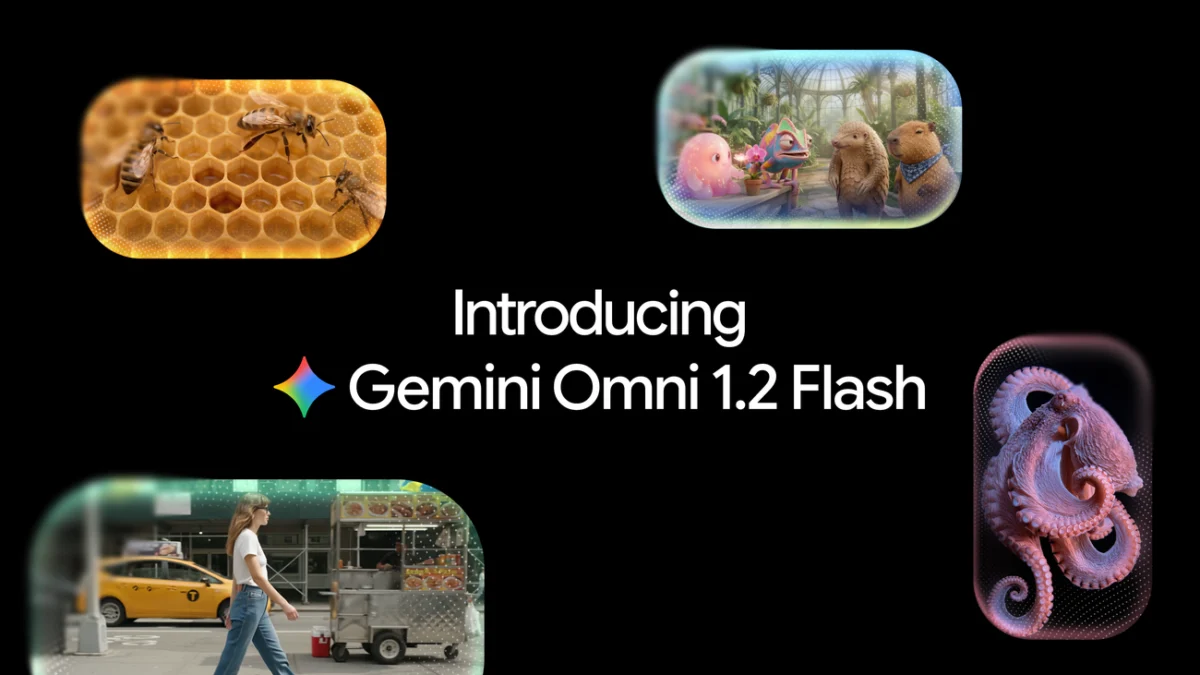
The release of Gemini Omni 1.2 Flash arrives at a time when the digital advertising and content creation industries are seeking ways to reduce the overhead associated with high-quality video assets. Traditionally, producing a 15-second social media spot or a product explainer required significant investment in photography, motion graphics, and post-production. Google’s new model aims to compress this workflow into a single, iterative process that allows users to generate, edit, and upscale content within a unified ecosystem.
Technical Enhancements and the 15-Second Threshold
One of the most notable upgrades in Gemini Omni 1.2 Flash is the extension of video duration. While version 1.1 was limited to 10-second segments, the 1.2 Flash update allows for native generation of clips up to 15 seconds. While a five-second increase may seem incremental, it is a critical threshold for professional creators. Most social media advertisements, product demos, and narrative "beats" are timed to the 15-second mark. By allowing users to specify duration in one-second increments from 3 to 15 seconds, Google provides the flexibility needed to tell a complete story with a defined beginning, middle, and end.
The technical challenge of extending video duration lies in maintaining temporal consistency—ensuring that characters, objects, and environments do not "morph" or drift visually as the seconds tick by. Gemini Omni 1.2 Flash addresses this through enhanced reference adherence. The model can now ingest character sheets, product photography, and even short three-second motion clips to serve as anchors for the generation. This ensures that a brand’s specific packaging typography or a character’s unique facial features remain stable across various camera angles and lighting conditions.
A New Paradigm in Conversational Video Editing
Perhaps the most disruptive feature of the 1.2 Flash update is the introduction of multi-turn conversational editing. Historically, AI video generation has been a "one-shot" process: if a user was dissatisfied with a specific detail, they often had to re-generate the entire clip from scratch, consuming more tokens and time. Gemini Omni 1.2 Flash changes this by allowing users to refine an existing clip through natural language prompts.
In practice, a creative director can generate a 15-second scene of a person walking through a city and then, in a subsequent "turn," ask the model to change the weather to rain or swap the background for a futuristic skyline. The model retains the core performance and framing of the original generation while modifying only the requested elements. This "director-to-editor" relationship significantly lowers the barrier to entry for complex video production, enabling rapid prototyping and the creation of multiple ad variants for different target demographics without increasing the production budget.
Economic Implications and Pricing Strategy
Google has made a clear play for market share by dropping the price of generation to $0.07 per second for 720p video. This 30% reduction from the 1.1 version is paired with a tiered workflow designed to minimize waste. Developers can now draft concepts at lower resolutions (360p or 720p), use conversational editing to perfect the details, and only commit to the cost of 1080p or 4K upscaling once the final creative direction is locked.
For a 15-second clip at 720p, the cost of generation sits at approximately $1.05. When compared to the traditional costs of a physical film shoot or high-end 3D animation, the value proposition for enterprises is substantial. This pricing model, combined with "Provisioned Throughput" for high-volume users, suggests that Google is targeting the "content factory" segment of the market—agencies and brands that need to produce hundreds of localized or personalized video assets daily.
Chronology of Google’s Generative Video Progress
The journey to Gemini Omni 1.2 Flash has been characterized by rapid iteration within Google DeepMind. The timeline of development reflects the broader industry’s race to solve the "video problem" in generative AI:

- Early Research (Pre-2024): Google began exploring video generation through models like Lumiere and VideoPoet, which focused on motion synthesis and stylistic consistency.
- The Rise of Gemini (Mid-2024): The integration of video capabilities into the Gemini ecosystem allowed for multimodal inputs, where the model could "see" and "hear" before it could reliably "create."
- Gemini Omni 1.1 Flash (Late 2024): This version introduced the "Flash" architecture, designed for low-latency and cost-effective generation, albeit with shorter clip limits and occasional visual artifacts.
- Gemini Omni 1.2 Flash (Current): The current release marks the transition to "General Availability," signaling that the model has met the security, stability, and quality benchmarks required for enterprise use.
This progression shows a move away from purely "experimental" outputs toward "controllable" outputs. While early models were celebrated for their surrealism, the 1.2 Flash model is celebrated for its ability to follow a brand’s style guide and maintain a "cinematic look" with steady camera movements.
Industry Use Cases: From E-Commerce to Corporate Communication
The practical applications of Gemini Omni 1.2 Flash are already being felt across several sectors. In e-commerce, the model’s ability to perform "virtual try-ons" is a significant advancement. By combining a single photo of a model with front-and-back product shots of a garment, the AI can generate a 15-second sequence showing the clothes in motion, capturing the specific drape and texture of the fabric as the model turns. This reduces the need for expensive studio sessions for every new item in a catalog.
In the realm of corporate communication, Google is integrating these capabilities into "Google Vids." This allows business users to create polished video explainers and training materials with multi-speaker dialogue and expressive lip-syncing. The model’s improved audio reference adherence means that voices can be routed to specific characters with natural comedic timing and inflection, making AI-generated avatars feel significantly less "robotic."
Furthermore, the "cinematic look" enhancements allow for complex camera movements that were previously difficult for AI to render. FPV (First-Person View) drone flights, dramatic orbits, and "crash zooms" can now be executed with fewer jump cuts and more consistent scaling. This makes the model an attractive tool for real estate tours, architectural visualizations, and cinematic storytelling.
Security, Watermarking, and Ethical Considerations
As generative video becomes more indistinguishable from reality, the issue of digital provenance has moved to the forefront of the conversation. Google has addressed these concerns by embedding "SynthID" watermarks into the outputs of Gemini Omni 1.2 Flash. This technology applies an imperceptible watermark to the pixels of the video, which remains detectable even if the clip is cropped, compressed, or edited.
By backing the model with Google Cloud’s enterprise-grade infrastructure, the company is also providing assurances regarding data privacy and security. For many global brands, the hesitation to use AI has stemmed from concerns about their proprietary assets being used to train public models. The general availability of Gemini Omni 1.2 Flash within the Google Cloud environment ensures that enterprise data remains siloed and protected.
Broader Impact and Future Outlook
The release of Gemini Omni 1.2 Flash is a clear signal that the "video-as-a-service" market is maturing. By focusing on the "Flash" aspect—speed and cost—Google is differentiating itself from competitors who may offer higher-fidelity but more computationally expensive and slower models. The 1.2 Flash update suggests that for the majority of commercial use cases, "good enough" high-quality video that is cheap and fast is more valuable than "perfect" video that takes hours to render.
However, the team at Google DeepMind acknowledges that the technology is still evolving. Challenges remain in simulating complex physics, rapid script changes, and high-intensity sports action. Despite these limitations, the current model provides a robust foundation for developers to build upon.
As we look toward the future, the implications of Gemini Omni 1.2 Flash extend beyond mere cost savings. We are entering an era where video content can be as dynamic and personalized as text. Imagine a world where every viewer of a digital ad sees a version of the video tailored specifically to their location, language, and interests—generated in real-time by a model like Gemini Omni. With the 1.2 Flash update, Google has moved one step closer to making that highly personalized, AI-driven future a reality for businesses and creators worldwide.
