

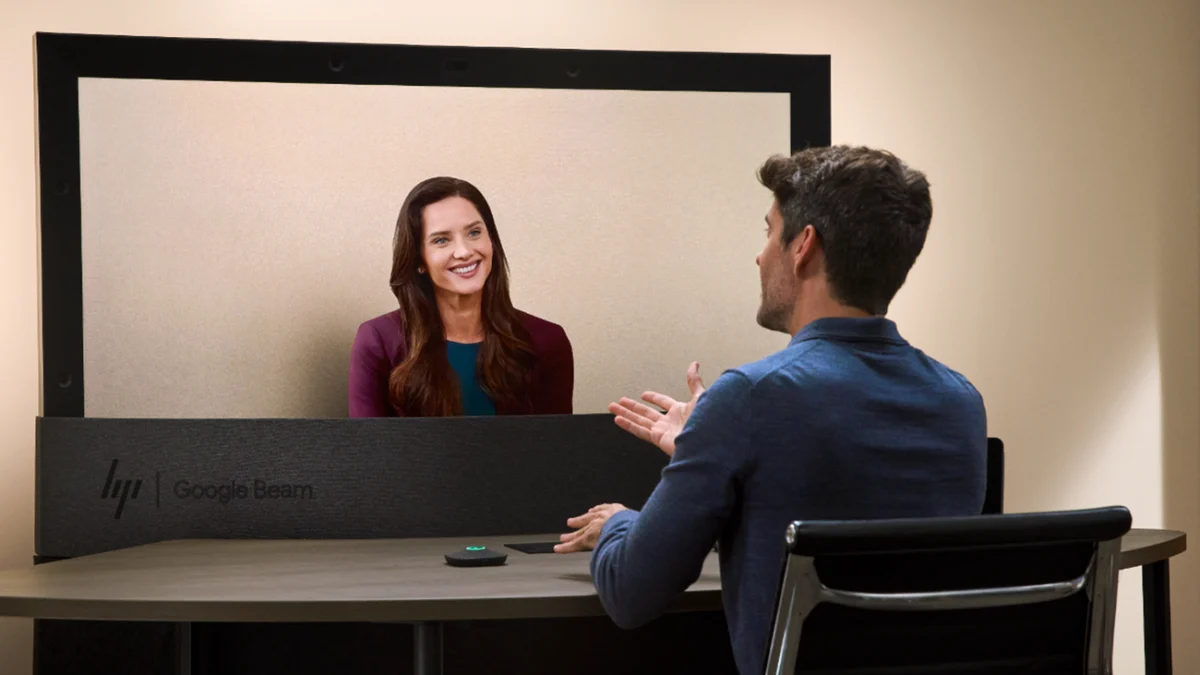
The landscape of corporate communication is undergoing a significant transformation as Google officially announces the global expansion of Google Beam, its advanced spatial communication technology. Previously known during its developmental phase as Project Starline, Google Beam is transitioning from a specialized internal tool to a commercially available enterprise solution. This expansion includes the deployment of units across six major international markets, the establishment of a robust partner ecosystem, and the launch of a first-of-its-kind extended network through a partnership with Industrious. By integrating high-fidelity 3D imaging with existing communication platforms, Google aims to bridge the gap between remote and in-person interactions, addressing the long-standing limitations of traditional two-dimensional video conferencing.
Global Market Entry and the HP Partnership
The commercial rollout of Google Beam marks a pivotal moment in the technology’s lifecycle. Google has confirmed that Beam units are now shipping to customers in the United States, Canada, the United Kingdom, France, Germany, and Japan. This multi-region launch is supported by a network of 18 global channel partners, consisting of audiovisual integrators and distributors. These partners are tasked with the deployment, installation, and ongoing technical support of the systems, ensuring that large-scale enterprises can integrate the technology into their existing office infrastructures.
A cornerstone of this expansion is the strategic hardware partnership with HP. The technology is being delivered to the market as "HP Dimension with Google Beam." This collaboration leverages HP’s extensive hardware manufacturing capabilities and enterprise reach, while Google provides the sophisticated software, computer vision, and machine learning algorithms that power the 3D experience. Notably, the system has been designed for interoperability; it integrates seamlessly with industry-standard platforms such as Google Meet and Zoom. This compatibility is intended to reduce friction for organizations, allowing them to upgrade their "high-stakes" meeting rooms without necessitating a complete overhaul of their existing software ecosystems.
The Evolution of Copresence: A Chronology of Google Beam
The journey of Google Beam began in the research labs of Google, where engineers sought to solve the "flatness" of digital communication.
In May 2021, at the Google I/O developer conference, the company first unveiled Project Starline. The initial prototype was a massive, booth-like structure filled with specialized sensors and infrared projectors. It utilized light-field display technology to create a sense of volume and depth without the need for specialized glasses or headsets. Early testers described the experience as looking through a "magic window," where the person on the other side appeared life-sized and three-dimensional.
By 2023, Google had significantly refined the technology. The hardware footprint was reduced from a room-sized installation to a more compact system, roughly the size of a large television, making it more practical for standard office environments. This era of development focused on "AI-powered compression," which allowed the massive amount of 3D data to be transmitted over existing fiber networks without perceptible latency.
In May 2024, Google announced that it would move Project Starline into a commercial phase in partnership with HP. The rebranding to Google Beam signifies the transition from an experimental "project" to a scalable business "product." The current 2024 expansion represents the culmination of years of internal testing and pilot programs with Fortune 500 companies.
Quantifying the Impact: Data-Driven Results
The push for Google Beam is backed by rigorous internal and external data. As hybrid work models become permanent fixtures in the global economy, businesses are grappling with "video conferencing fatigue" and a perceived loss of cultural cohesion. Google’s internal studies suggest that spatial communication may provide a viable solution.
In a recent eight-week internal study conducted at Google, teams utilizing Beam reported a 50% increase in their sense of connection to their colleagues compared to those using standard 2D video calls. The study also highlighted improvements in operational efficiency: participants found it 33% easier to ensure their feedback was clearly understood, likely due to the preservation of subtle non-verbal cues such as eye contact and micro-expressions. Perhaps most significantly for corporate productivity, the study recorded a 21% decrease in the need for follow-up meetings, suggesting that the clarity provided by 3D interaction leads to faster consensus and fewer misunderstandings.
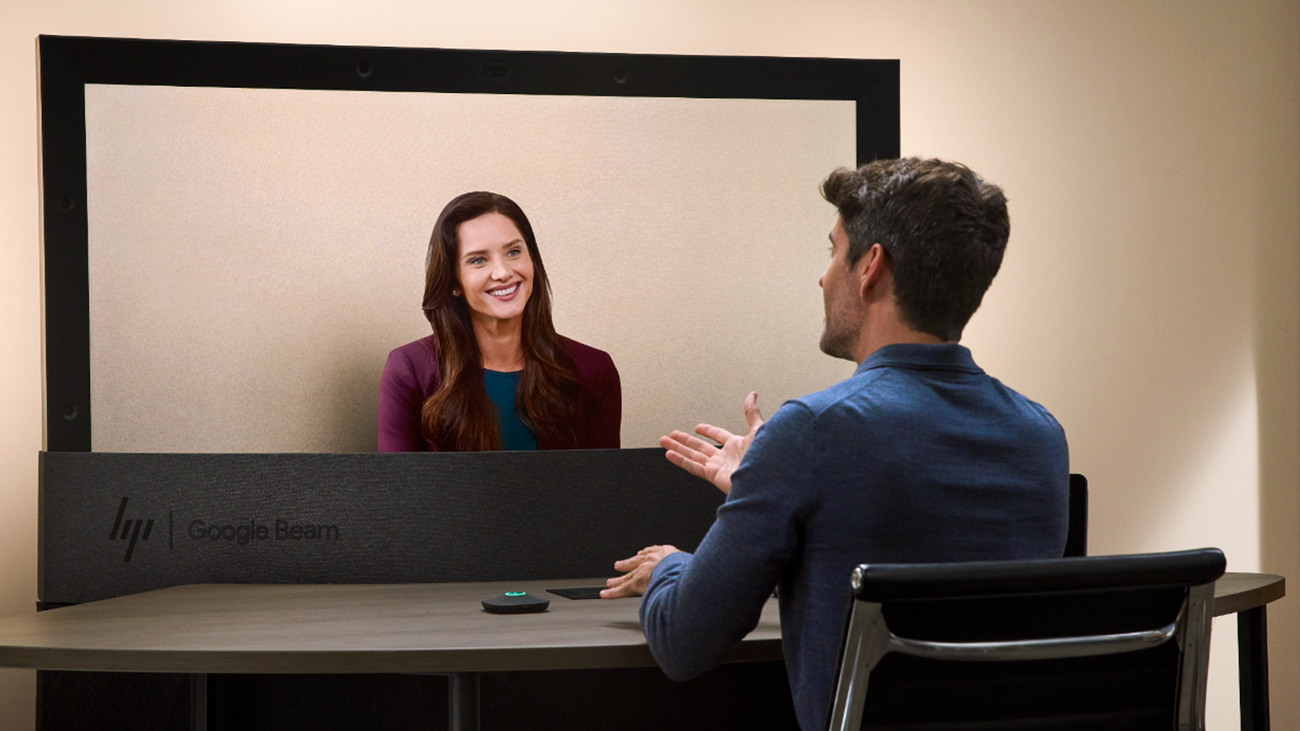
External validation has come from early adopters like Bain & Company. The global management consulting firm utilized HP Dimension with Google Beam to modernize its campus recruiting and candidate interview processes. In the consulting industry, where client-facing interpersonal skills are paramount, traditional video calls often fail to capture a candidate’s full presence.
Keith Bevans, EVP and Partner at Bain & Company, noted that assessing how candidates will interact with clients is one of the firm’s greatest challenges. He stated that the nuances of body language and eye contact provided by Google Beam allow the firm to virtually understand how people will engage in person, which is critical for their mission. By utilizing Beam, Bain was able to conduct high-stakes interviews with candidates globally while significantly reducing the costs and environmental impact associated with executive travel.
Strategic Infrastructure: The Industrious Extended Network
Recognizing that the capital expenditure required for 3D communication hardware may be a barrier for smaller firms or distributed teams, Google has partnered with Industrious to create the "Beam Extended Network." Industrious is a leading provider of premium flexible workspaces, and this partnership marks the first time Google Beam will be available on a "pay-per-use" or membership basis.
Starting in October 2024, HP Dimension with Google Beam systems will be available at select Industrious locations in major U.S. hubs, including New York City, Chicago, Atlanta, and Palo Alto. This initiative allows startups, small businesses, and satellite offices of larger corporations to access "copresence" technology without a permanent installation.
The pilot program for this network revealed that distributed teams primarily used the technology for high-value interactions, such as manager-employee check-ins, client consultations, and final-round job interviews. By placing Beam in co-working spaces, Google is effectively democratizing access to high-end spatial computing, moving it beyond the boardrooms of the world’s wealthiest corporations.
Broader Implications for the Future of Work
The expansion of Google Beam arrives at a time when the tech industry is divided on the future of remote work. While some firms are mandating a return to the office, others are leaning into "spatial computing" to make remote work more sustainable. Google’s approach with Beam differs from the "Metaverse" or VR-headset-based solutions promoted by competitors like Meta or Apple. Instead of requiring users to wear hardware that obscures the face, Beam focuses on "natural" interaction, where the technology fades into the background.
The implications for the global economy are multifaceted:
- Reduction in Corporate Travel: As Beam becomes more accessible, the necessity for short-term international travel for "handshake meetings" may diminish. This has direct implications for the airline and hospitality industries, as well as for corporate ESG (Environmental, Social, and Governance) targets regarding carbon footprints.
- Global Talent Acquisition: Companies can now recruit from a truly global talent pool without sacrificing the intimacy of the interview process. This could lead to a more geographically diverse workforce for major tech and consulting firms.
- Enhanced Training and Mentorship: In industries like medicine, engineering, or high-end consulting, mentorship often relies on "observational learning." The 3D nature of Beam allows for a more effective transfer of soft skills and technical demonstrations than 2D screens.
- Technological Standardization: By partnering with HP and integrating with Zoom and Google Meet, Google is positioning Beam as a potential standard for the next generation of office hardware. If successful, 3D communication could eventually become as ubiquitous as the webcam.
Conclusion and Outlook
As Google Beam begins its journey into the global market, the company is positioning it not merely as a luxury upgrade, but as a necessary tool for the modern, distributed enterprise. The combination of hardware reliability from HP, the accessibility of the Industrious network, and the proven productivity gains from internal studies suggests that Google is confident in the market’s readiness for "copresence."
While the initial rollout targets high-value enterprise use cases, the trajectory of the technology suggests an eventual move toward broader applications. For now, the focus remains on helping the world’s largest organizations—including new customers like Netflix and Capital Group—maintain human connection in an increasingly digital world. As Aaron Luber, Director of Business Development for Google Beam, emphasized, while the way we work continues to evolve, the fundamental human need for genuine connection remains constant. With the expansion into six countries and the launch of the extended network, Google is betting that the "magic window" will soon become a standard feature of the global workplace.
