

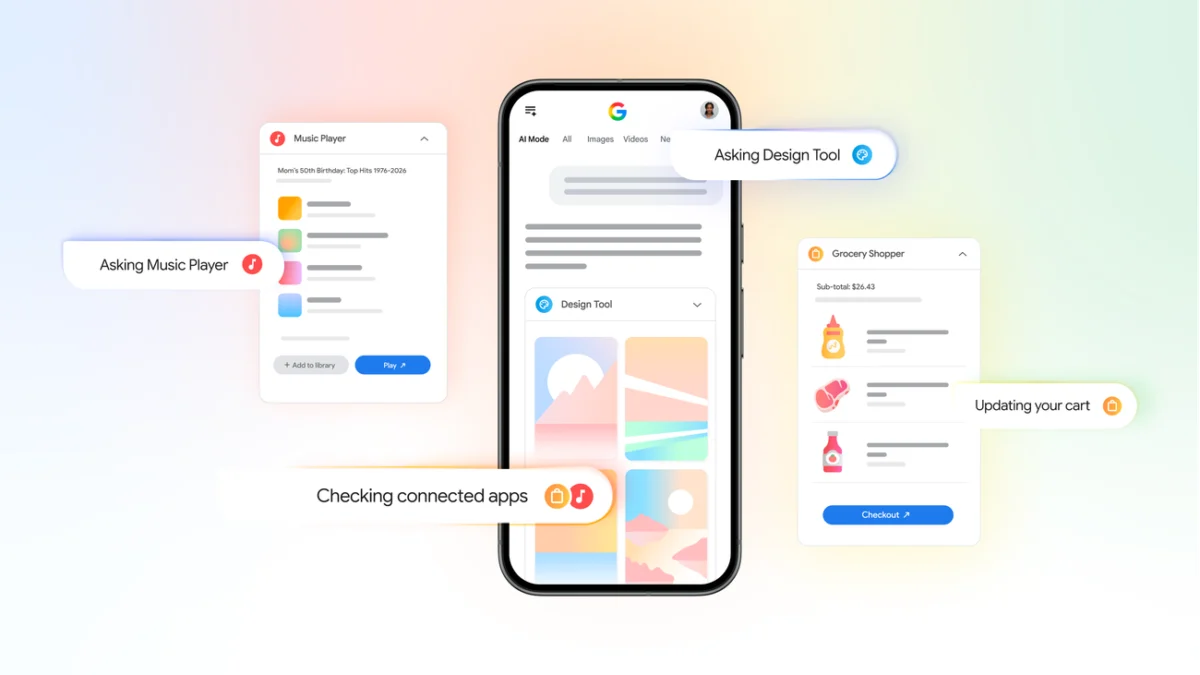
Google has officially announced a significant update to its search ecosystem, enabling users to securely link and interact with third-party and first-party service providers directly within the platform’s "AI Mode." This strategic shift, led by Senior Product Manager Chips Mistry and Engineering Lead Biharck Araújo, represents a fundamental transition for the world’s most popular search engine, moving it from a repository of information to a functional "action engine" capable of executing tasks across different software environments. Starting this week, users in the United States will begin seeing these integrations, which allow for a seamless transition between querying information and completing complex workflows, such as grocery shopping, graphic design, and media curation.
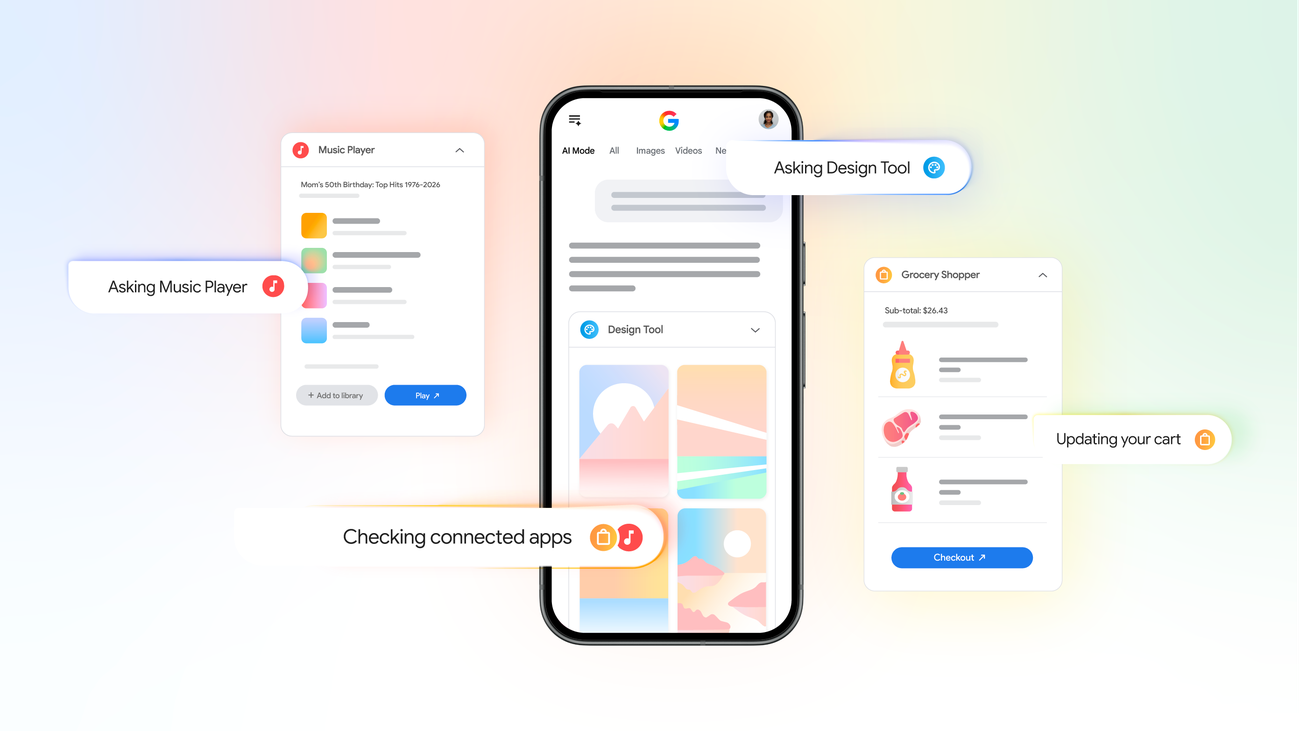
The core of this update lies in the integration of "Connected Apps," a feature that allows Google’s generative AI to bridge the gap between a user’s intent and the final transaction or creation. By connecting services like Instacart, Canva, and YouTube Music, Google is positioning its AI Mode as a central hub for digital productivity. For instance, a user planning a social event can now generate a grocery list via AI and, with a single prompt, transfer those items directly into an Instacart shopping cart for checkout. Similarly, the integration with Canva allows users to request specific design templates for projects like event flyers, while the YouTube Music connection enables the immediate creation and playback of personalized playlists based on conversational prompts.
A Chronological Shift: From Information Retrieval to Agentic Action
To understand the magnitude of this update, it is essential to view it within the broader timeline of Google’s technological evolution. For over two decades, Google Search operated primarily as an indexing service—a digital librarian that directed users to relevant websites. The introduction of the Knowledge Graph in 2012 began the transition toward providing direct answers, reducing the need for users to click through to external sites. However, the current "AI Mode" era, which gained momentum following the 2023 launch of Search Generative Experience (SGE) and the subsequent rebranding of its AI efforts under the Gemini umbrella, marks the third major epoch of search.
In early 2024, Google began integrating its internal Workspace tools—such as Gmail, Docs, and Drive—into its AI interfaces, allowing users to summarize emails or find files through natural language. The current rollout of third-party integrations with Instacart and Canva represents the first major expansion of this capability to the broader commercial internet. This move signals Google’s intent to compete in the burgeoning field of "Agentic AI," where artificial intelligence does not merely provide information but acts as an agent on behalf of the user to perform tasks across a fragmented app landscape.
Supporting Data and Market Context
The integration of third-party apps into Search comes at a time of intense competition in the artificial intelligence sector. Market data suggests that the global generative AI market is expected to reach nearly $1.3 trillion by 2032, with a significant portion of that growth driven by productivity-enhancing tools. Google’s move is a direct response to the rise of specialized AI competitors like Perplexity AI and OpenAI’s SearchGPT, both of which are experimenting with ways to make search more conversational and utility-focused.
Furthermore, consumer behavior studies indicate a growing preference for "zero-click" searches. According to industry analysis, over 50% of mobile searches now result in no click-through to a traditional website because the user finds the answer directly on the search results page. By integrating apps like Instacart and Canva, Google is evolving the "zero-click" model into a "one-stop" model. Instead of losing traffic to external apps, Google retains the user within its ecosystem while providing a direct conduit to the service the user requires. This maintains Google’s dominance as the primary entry point to the internet while offering third-party partners a high-intent channel for customer acquisition.
Technical Infrastructure and User Privacy
A critical component of this rollout is the focus on security and user consent. Chips Mistry and Biharck Araújo emphasized that the linking of these services is "secure," utilizing modern authentication protocols such as OAuth to ensure that Google does not gain unauthorized access to a user’s external accounts. Users must proactively choose to connect their apps, and they retain control over what data is shared between the search interface and the third-party provider.
Technologically, these integrations rely on advanced Large Language Models (LLMs) that can interpret natural language and map it to specific API (Application Programming Interface) calls. When a user asks AI Mode to "add the ingredients for a vegan lasagna to my Instacart cart," the AI must identify the necessary ingredients, cross-reference them with Instacart’s database, and trigger the correct "add-to-cart" function. This requires a high degree of interoperability between Google’s neural networks and the proprietary software of its partners.
Industry Reactions and Strategic Implications
While Google has framed the update as a win for user convenience, industry analysts are closely watching the implications for the broader digital economy. For partners like Instacart and Canva, the integration offers a powerful way to meet customers at the exact moment of need. An Instacart spokesperson (inferred from general industry sentiment regarding such partnerships) would likely highlight the reduction in "friction" between a user’s culinary inspiration and the physical delivery of goods.
However, some digital rights advocates and smaller developers have expressed concerns about the "walled garden" effect. By making Google Search the primary interface for other apps, there is a risk that smaller companies without the resources to build complex AI integrations may be left behind. Furthermore, the reliance on a few major partners could consolidate power among a handful of tech giants.
From a strategic perspective, this update is a clear attempt to defend Google’s core advertising business. By making Search more useful and "sticky," Google ensures that users continue to start their journeys on its platform. Even if the AI provides a direct path to a third-party app, the engagement occurs within Google’s environment, allowing the company to maintain its massive data advantage and advertising relevance.
Broader Impact on the Future of Digital Assistance
The long-term implications of connecting apps to Search extend far beyond grocery lists and flyer designs. This rollout is a precursor to a future where "Personal Intelligence" becomes a standard feature of the digital experience. As AI becomes more adept at handling multi-step tasks across different platforms, the traditional boundary between an operating system and a web browser will continue to blur.
We are moving toward a paradigm where the "interface" is no longer a screen full of icons, but a single conversational bar. In this future, the AI serves as a universal translator for the digital world, managing a user’s schedule, shopping, work, and entertainment through a unified portal. The inclusion of YouTube Music in this initial rollout is particularly telling, as it demonstrates Google’s ability to leverage its own vast media library to create a more immersive AI experience than competitors who lack a native content ecosystem.
Looking Ahead: The Expansion of the Partner Network
Google has indicated that the current lineup of Instacart, Canva, and YouTube Music is only the beginning. The company is actively working with a range of additional partners to bring more services into AI Mode. Potential future integrations could include travel booking platforms (allowing users to book flights and hotels directly from a search query), financial services (for checking balances or making payments), and healthcare portals (for scheduling appointments).
As these capabilities expand, the challenge for Google will be balancing the utility of these features with the complexity of the user interface. Providing too many options can lead to "choice paralysis," while too few can make the AI feel limited. The success of the "Connected Apps" initiative will ultimately depend on how intuitively the AI can predict which service a user needs at any given moment.
In conclusion, Google’s latest update to Search is a landmark development in the evolution of artificial intelligence. By transforming Search from a passive information tool into an active participant in a user’s daily tasks, Google is redefining the relationship between humans and their digital tools. As this technology continues to roll out across the U.S. and eventually to global markets, it will likely set a new standard for what consumers expect from a search engine in the age of generative AI. The era of the "Action Engine" has officially arrived, and with it, a new chapter in the history of the internet.
