

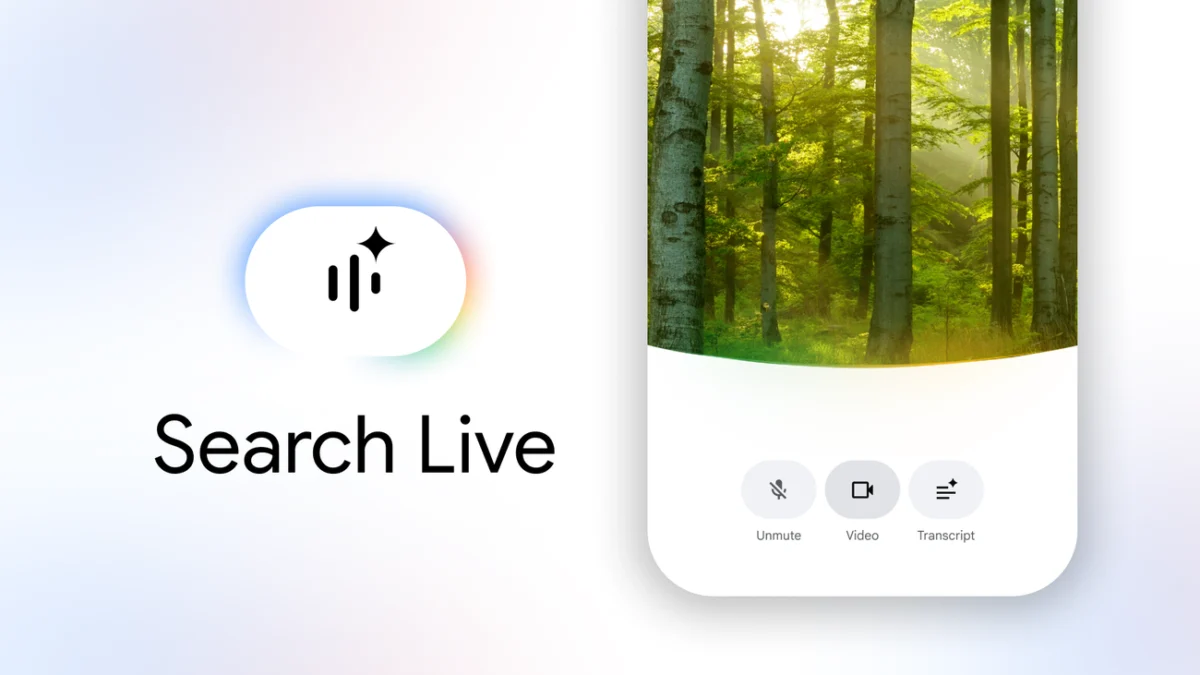
Google has officially announced the global expansion of Search Live, a sophisticated multimodal interface that allows users to engage in real-time, interactive conversations with Google Search using voice, text, and camera input. This rollout extends the feature to all languages and locations where Google’s "AI Mode" is currently supported, effectively reaching more than 200 countries and territories. By leveraging the latest advancements in large language models (LLMs), specifically the Gemini 3.1 Flash Live architecture, Google aims to transform the traditional search engine from a static query-and-result tool into a dynamic digital assistant capable of understanding visual and auditory context.
The expansion marks a significant milestone in the company’s "AI-first" strategy, which has seen the rapid integration of generative artificial intelligence across its core product suite. Under the leadership of Liza Ma, Director of Product Management for Search, the company is positioning Search Live as the primary solution for complex, real-world tasks where typing is either inefficient or impossible. The update is now live for users on both Android and iOS platforms via the Google app, signaling a departure from the experimental phases of Search Generative Experience (SGE) toward a fully integrated global standard.
Technical Architecture and the Gemini 3.1 Flash Live Model
The backbone of this global expansion is the Gemini 3.1 Flash Live model. Developed by Google DeepMind, the Flash series of models is specifically optimized for low latency and high-speed processing, which is critical for maintaining the "live" feel of a conversation. Unlike larger, more compute-intensive models that might take several seconds to process a query, Gemini 3.1 Flash Live is designed to respond with near-human speed, allowing for fluid, back-and-forth dialogue.
One of the most notable technical achievements of the 3.1 Flash Live model is its inherent multilingualism. Rather than relying on a separate translation layer, the model is trained on a massive, diverse dataset that allows it to understand and generate responses in dozens of languages natively. This reduces the risk of "lost in translation" errors and ensures that cultural nuances and regional dialects are better preserved during interactions. For users in diverse markets across Asia, Europe, and Africa, this means the search experience feels localized and intuitive rather than like a translated version of a US-centric product.
The multimodal nature of the model also allows for "cross-modal reasoning." This means the AI can process a visual stream from a smartphone camera while simultaneously listening to a voice query and referencing the vast index of the web. For example, if a user points their camera at a complex mechanical component and asks, "How do I loosen this?" the model identifies the object visually, understands the spatial relationship of the parts, and provides a verbal instruction based on technical manuals indexed in Google Search.
Enhancing the User Experience: Voice and Visual Integration
Search Live is accessed via a dedicated "Live" icon situated beneath the standard search bar in the Google app. Once activated, the interface transitions to a conversational mode. Users can ask questions out loud, and the AI responds with synthesized speech that mimics natural human prosody. This feature is particularly useful for hands-on tasks, such as cooking, DIY repairs, or navigating unfamiliar environments.
The integration with Google Lens further enhances the utility of Search Live. By tapping the "Live" option within the Lens interface, users can maintain a continuous video feed of their surroundings. This "visual context" allows the AI to see what the user sees. During a demonstration of the technology, Google showcased a user installing a floating shelf. Instead of searching for "how to install a shelf" and scrolling through video timestamps, the user pointed their camera at the brackets and asked, "Which way does this go?" The AI was able to identify the specific brand of the shelf and provide real-time orientation advice.
Furthermore, the conversational nature of the tool allows for follow-up questions without the need to repeat the original context. If a user asks about a historical monument while standing in front of it, they can follow up with, "Who built it?" or "Is it open on Sundays?" and the AI understands that the "it" refers to the monument currently in the camera’s view.
Historical Context and the Evolution of Google Search
To understand the significance of the Search Live expansion, it is necessary to view it within the broader chronology of Google’s search evolution. For over two decades, Google Search operated primarily on a "ten blue links" model, where users entered keywords and were directed to external websites. The introduction of the Knowledge Graph in 2012 began the shift toward providing direct answers, but the underlying technology remained largely deterministic.
The landscape shifted dramatically in late 2022 and early 2023 with the rise of conversational AI. Google responded by introducing the Search Generative Experience (SGE) in May 2023 at its I/O developer conference. SGE was an experimental phase that allowed a limited number of users to test AI-generated overviews. Over the following year, Google iterated on these models, eventually rebranding its primary AI efforts under the "Gemini" umbrella.

The global launch of Search Live represents the maturation of these experiments. It signifies that Google is now confident enough in the safety, accuracy, and scalability of its generative models to deploy them to billions of users. This timeline shows a rapid acceleration of product development:
- May 2023: Introduction of SGE in the US.
- Late 2023: Expansion of AI overviews to Japan and India.
- Early 2024: Rebranding of Bard to Gemini and integration of Gemini into the Google app.
- Late 2024: Launch of Gemini 3.1 Flash and the global rollout of Search Live in over 200 countries.
Market Analysis and Competitive Implications
The global rollout of Search Live is a strategic move to defend Google’s dominant market share in the search industry, which currently stands at approximately 90% globally. However, the rise of AI-native search engines like Perplexity AI and the integration of SearchGPT by OpenAI have created a new competitive frontier.
Industry analysts suggest that the "search" paradigm is shifting from "finding information" to "completing tasks." By integrating voice and vision, Google is attempting to capture the "intent" of the user more effectively than a text-only interface can. For Google, the stakes are high; as younger demographics increasingly turn to social media platforms like TikTok or Instagram for visual discovery, Search Live serves as a high-tech countermeasure to keep users within the Google ecosystem.
Supporting data suggests that voice search is on a steep upward trajectory. According to recent market research, approximately 50% of the global population uses voice search features daily, primarily on mobile devices. By making these interactions more conversational and context-aware, Google is tapping into a pre-existing user behavior and enhancing it with generative capabilities.
Official Perspectives and Industry Reactions
While Liza Ma’s statement focused on the helpfulness and natural feel of the tool, internal sources at Google indicate that the global expansion is also a massive stress test for the company’s localized AI safety filters. Deploying generative AI in 200 countries requires the model to navigate a complex web of cultural sensitivities, legal regulations, and linguistic nuances.
Reactions from the tech community have been largely positive regarding the technical feat of low-latency multimodal search. However, some SEO (Search Engine Optimization) experts and digital publishers have expressed concern. If Search Live provides immediate, audio-visual answers to complex questions, there is a risk that click-through rates to original content sources could decline. Google has addressed this by ensuring that Search Live still provides "helpful web links" within the interface, encouraging users to "dive deeper" into the source material.
Broader Impact on Accessibility and the Digital Divide
Beyond convenience, Search Live has profound implications for digital accessibility. For individuals with visual impairments, the ability to point a camera at an object and receive a detailed audio description or set of instructions is transformative. Similarly, for users with motor impairments who find typing difficult, the natural voice interface provides a more equitable way to access the wealth of information available on the web.
In emerging markets, where "mobile-only" internet usage is the norm and literacy rates may vary, a voice-and-vision-first search engine can lower the barrier to information. By supporting a vast array of global languages through Gemini 3.1 Flash Live, Google is effectively democratizing access to complex AI tools that were previously restricted to English-speaking markets.
Future Outlook and Privacy Considerations
As Search Live becomes a standard feature for millions, Google faces the ongoing challenge of balancing utility with privacy. The feature requires access to a user’s microphone and camera to function in multimodal mode. Google has stated that these streams are processed to provide real-time help, but the company must remain transparent about data retention and how these interactions might be used to further train its models.
Looking ahead, the integration of Search Live into wearable technology, such as smart glasses, appears to be the logical next step. A hands-free, heads-up version of Search Live would fulfill the ultimate goal of "ambient computing," where the world’s information is available not just at one’s fingertips, but through one’s very eyes and ears.
The global expansion of Search Live is more than just a software update; it is a fundamental redesign of how humanity interacts with the collective knowledge of the internet. By breaking down the barriers of language and input method, Google is attempting to ensure that its search engine remains the primary gateway to the world, regardless of how or where a user asks a question.
