

Google has officially announced the launch of the Fairwind Program, a specialized initiative designed to provide governments, critical infrastructure providers, and trusted enterprise partners with early access to the company’s most sophisticated artificial intelligence and cybersecurity tools. This program marks a significant shift in the digital arms race, moving beyond traditional threat detection toward a model of autonomous, agentic remediation. By integrating the latest advancements in large language models (LLMs) with secure cloud infrastructure, Google aims to provide defenders with a decisive advantage against increasingly automated cyber threats.
The Fairwind Program is built on the realization that modern defenders face a persistent dilemma: they must either deploy massive, resource-intensive frontier models that are difficult to integrate into existing codebases or rely on smaller models that lack the reasoning capabilities required to fix complex software vulnerabilities. Google’s new initiative seeks to bridge this gap by offering Gemini 3.8 Flash Cyber, a model specifically fine-tuned for security operations, alongside CodeMender, a specialized harness designed to verify and deploy code patches autonomously.
The Evolution of Autonomous Cyber Defense
The core of the Fairwind Program is the transition from passive monitoring to proactive, "agentic" defense. Historically, cybersecurity has functioned on a reactive basis. When a vulnerability—such as a memory leak or a buffer overflow—is discovered, security teams often spend weeks or even months analyzing the code, writing a patch, testing it for regressions, and finally deploying it. During this window of exposure, attackers have ample time to exploit the flaw.
The Fairwind Program aims to shrink this window from weeks to minutes. By utilizing Gemini 3.8 Flash Cyber, the system can perform specialized reasoning to identify vulnerabilities within an organization’s internal codebase. However, the true innovation lies in the CodeMender harness. Unlike standard AI assistants that merely suggest code, CodeMender acts as an agent that can write, validate, and test patches within a secure, isolated cloud environment. This ensures that the generated fixes are not only accurate but are also ready for immediate deployment without compromising the integrity of the broader system.
This level of automation is essential in an era where bad actors are increasingly using AI to scan for vulnerabilities at scale. The Fairwind Program provides "trusted defenders" with a vital adaptation window, allowing them to harden their systems before external threats can capitalize on new exploit techniques.

Strategic Partnerships and Global Participation
At launch, the Fairwind Program includes more than 650 participating partners globally, ranging from national government agencies to the world’s leading cybersecurity firms. The program is intentionally restrictive, focusing on organizations that are critical to societal resilience, such as those managing public services, national security, and critical infrastructure.
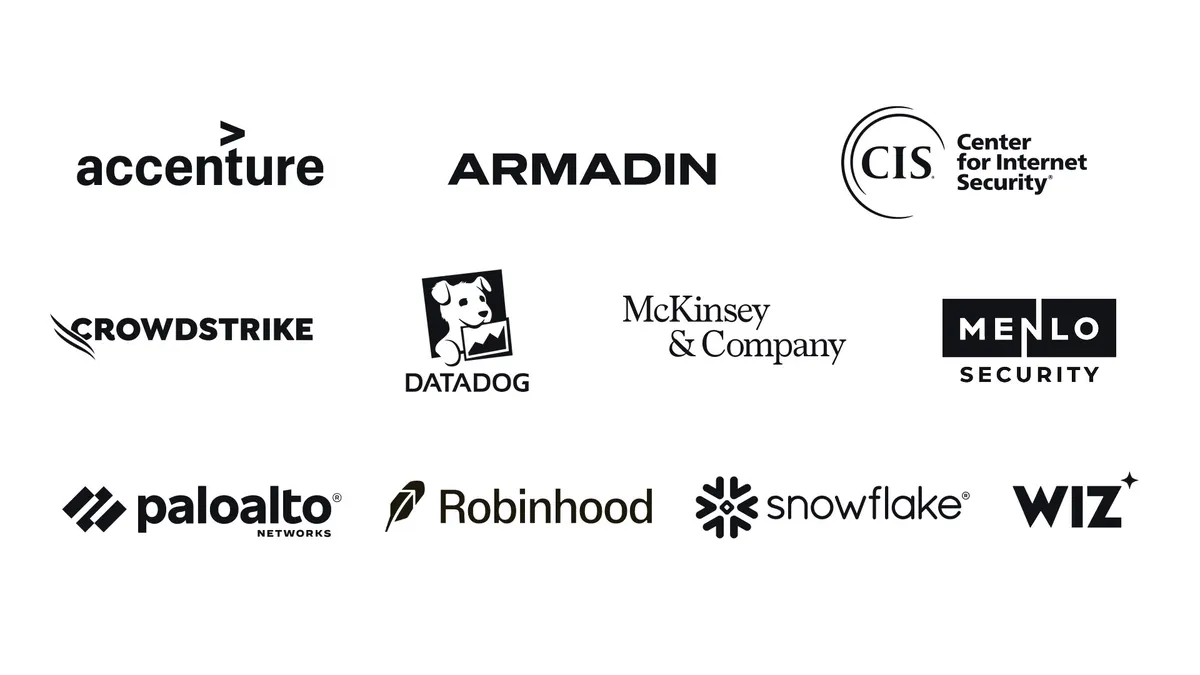
Several industry leaders have already integrated these capabilities into their workflows. Palo Alto Networks, CrowdStrike, Wiz, Snowflake, and Armadin are among the early adopters utilizing Gemini 3.8 Flash Cyber to enhance their own security offerings. These partnerships represent a collaborative effort to establish a unified front against global cyber threats. By sharing insights and refining the AI’s reasoning capabilities across different environments, Google and its partners aim to create an ecosystem-wide impact.
To ensure the responsible use of these powerful autonomous tools, Google has implemented strict operational standards for all Fairwind Program participants. Organizations must agree to limit access to specialized internal teams, such as incident response and penetration testing units. Furthermore, the deployment of these tools requires rigorous security protocols, including multi-factor authentication (MFA) and isolated execution environments, to prevent the AI from being co-opted or misused.
Historical Context: Google’s Long-Term Commitment to Security
The Fairwind Program is the latest milestone in Google’s decades-long history of pioneering cybersecurity architecture. The initiative draws heavily from the company’s experience in developing "Zero-Trust" frameworks, most notably the BeyondCorp model, which moved security away from traditional perimeter-based defenses toward a model where no user or device is trusted by default.
For years, Google has utilized advanced AI to protect its own vast ecosystem, which includes billions of user accounts across Search, Gmail, and Android. The company’s built-in defenses currently block millions of phishing attempts and malware distributions daily. The Fairwind Program represents the externalization of these internal capabilities, providing the same level of protection to external organizations that Google uses to secure its own global operations.
In addition to the technological launch, Google has reaffirmed its financial commitment to global cyber resilience. Through Google.org, the company’s philanthropic arm, Google has now committed more than $100 million to cybersecurity funding globally. This funding is directed toward fortifying "grassroots" defense, ensuring that even organizations with limited resources can defend themselves against sophisticated attacks.
Supporting Data: The 2026 US Cybersecurity Impact Report
Accompanying the launch of the Fairwind Program is the release of the 2026 Google.org US Cybersecurity Impact Report. This document provides a data-driven look at how Google’s investments are affecting the security landscape at the local and regional levels.
Key findings from the report include:
- Funding Allocation: To date, $36 million has been allocated to support 35 cybersecurity clinics across the United States.
- Service Reach: These clinics have provided free, hands-on security support to over 1,250 organizations.
- Sector Focus: The primary beneficiaries of this support include public school districts, municipal utilities, and rural hospitals—sectors that are frequently targeted by ransomware attacks but often lack the budget for high-end security consulting.
- Workforce Development: The program has helped train a new generation of cybersecurity professionals, providing students with real-world experience while helping vulnerable public institutions.
This broader commitment suggests that while the Fairwind Program targets high-level government and enterprise needs, Google is simultaneously working to raise the "security floor" for the entire digital ecosystem.
Analysis of Implications for the Cybersecurity Industry
The introduction of the Fairwind Program and the Gemini 3.8 Flash Cyber model signals a shift in the economic reality of cybersecurity. Traditionally, the advantage has resided with the attacker; it is far cheaper and easier to find a single flaw than it is to defend every possible entry point. However, by providing autonomous patching at a fraction of the cost of manual labor, Google is attempting to flip this "defender’s dilemma."
Industry analysts suggest that the move toward "agentic" security will likely force a consolidation in the cybersecurity market. Companies that cannot provide automated, AI-driven remediation may find themselves unable to compete with the speed and efficiency of platforms like Google Cloud’s AI Threat Defense. Furthermore, the focus on "open-weight" vs. "frontier" models highlights an ongoing debate in the tech community regarding the balance between accessibility and security. Google’s approach with Fairwind is to prioritize controlled access for the most advanced models while allowing the broader community to utilize standard models through the Gemini Enterprise Agent Platform.
The emphasis on "sovereign" and "secure cloud" environments is also a response to the growing demand from governments for data residency and localized control over AI assets. By allowing organizations to run CodeMender within their own secure cloud environments, Google is addressing the privacy concerns that have previously hindered the adoption of AI in sensitive sectors like national defense.
Future Outlook and Scaling the Program
The Fairwind Program is designed to be iterative. Google has stated that the program will evolve based on the feedback and emerging needs of its partners. As the capabilities of the Gemini models grow, the scope of autonomous remediation is expected to expand beyond code patching to include network configuration, real-time threat hunting, and automated incident post-mortems.
For Google Cloud customers not currently in the limited-access Fairwind Program, the company is offering alternative paths to proactive defense. CodeMender is becoming available through the Gemini Enterprise Agent Platform, and the AI Threat Defense suite continues to integrate industry-leading security solutions for a wider audience.
In conclusion, the Fairwind Program represents a significant leap forward in the application of generative AI for national and corporate security. By moving toward a model of autonomous, agentic defense, Google is providing a blueprint for how the next generation of cyber threats can be managed at scale. As the digital landscape becomes increasingly complex, the ability to shrink the time between detection and remediation will remain the most critical factor in maintaining a secure and resilient global infrastructure.
